In this interview, AZoMaterials speaks with Ingo Stahlkopf, Head of Sales, and Torsten Czech, Head of Marketing, at Optris GmbH about infrared measurement, non-contact temperature sensing, emissivity, wavelength selection, and the importance of accurate temperature monitoring in industrial processes.
Can you please tell us about your roles at Optris?
Ingo Stahlkopf: As Head of Sales at Optris, I work closely with customers across a wide range of industries, helping them identify the right infrared measurement solutions for their applications.
Torsten Czech: I am the Head of Marketing at Optris. My role focuses on communicating the benefits of infrared measurement technologies and supporting customers with educational and application-focused content.
Watch the Full Webinar
Could you provide an overview of Optris and the solutions the company offers?
Ingo Stahlkopf: Optris was founded in 2003 and is headquartered in Berlin, Germany, where our production facilities are also located. Today, we employ approximately 115 people and offer around 3000 products for non-contact temperature measurement applications.
Our portfolio covers temperature ranges from -50 °C to over 3000 °C and includes infrared pyrometers, thermal imaging cameras, software, and accessories. Temperature measurement requirements vary significantly across industries, so we offer a broad range of solutions tailored to specific application needs.
What industries rely most heavily on infrared measurement technologies?
Torsten Czech: Infrared measurement is used across a surprisingly broad range of industries. In the metals sector, it is used to monitor processes involving extremely high temperatures and even liquid metals. In plastics manufacturing, temperature is often one of the most important parameters influencing product quality and process consistency.
The same applies to glass production, whether we are talking about container glass or flat glass. We also see many applications in electronics manufacturing, utilities, and even pharmaceutical production. The common factor across these industries is that temperature plays a critical role in maintaining stable and efficient processes.
What are the main advantages of non-contact infrared measurement?
Ingo Stahlkopf: One of the biggest advantages is that the measurement is completely non-contact. That means there is no disturbance of the process and no heat transfer between the sensor and the object being measured.
In many applications, particularly those involving high voltages, moving targets, or extreme temperatures, non-contact measurement is the safest and most practical solution. Infrared technology is also extremely fast. Our pyrometers can achieve response times down to 90 microseconds, while infrared cameras can operate at frame rates up to one kilohertz.
Another key advantage is precision. Modern infrared systems can measure very small targets and detect extremely small temperature differences, making them suitable for demanding industrial applications.
Can you explain the basic principles behind infrared temperature measurement?
Torsten Czech: Every object emits infrared radiation as a function of its temperature. Infrared sensors and thermal imaging cameras detect this radiation and convert it into temperature information.
In a typical setup, the sensor is positioned at a distance from the object being measured and aligned with the target area. The resulting signal can then be displayed, recorded, or integrated directly into a control system. While the principle itself is straightforward, obtaining accurate measurements requires an understanding of factors such as emissivity, wavelength, detector technology, and environmental influences.
Why is emissivity one of the most important concepts in infrared measurement?
Torsten Czech: Emissivity is one of the most important factors affecting measurement accuracy. In theory, a perfect black body absorbs and emits radiation equally. In reality, however, most industrial materials do not behave like perfect black bodies.
Many surfaces reflect radiation from their surroundings. The sensor simply detects the radiation that reaches it and cannot distinguish between energy emitted by the object and energy reflected from the environment. If emissivity is not accounted for correctly, the measured temperature can differ significantly from the actual temperature.
Understanding the material and surface conditions is therefore essential for accurate infrared measurements.
Could you share the aluminum cube demonstration and what it revealed about measurement accuracy?
Ingo Stahlkopf: During a recent webinar, we demonstrated this using a heated aluminum cube with different surface finishes. One area of the cube was covered with an emissivity reference sticker, while another remained as polished aluminum.
The reference area measured approximately 67 °C. However, when we measured the shiny aluminum surface using the same settings, the reading dropped to around 35 °C. This was not because the surface was cooler, but because the polished metal reflected radiation from its surroundings.
Once the emissivity setting was adjusted correctly, the measured temperature matched the actual temperature. It was a simple yet effective demonstration of the importance of emissivity when working with reflective materials.
Why are shiny metal surfaces particularly challenging to measure?
Torsten Czech: Highly polished metals can behave almost like mirrors in the infrared spectrum. Instead of primarily emitting radiation, they reflect a significant amount of radiation from the surrounding environment.
This can make accurate measurement difficult. In some applications, users apply emissivity stickers or coatings to create a reliable measurement point. Surface geometry can also help. During the webinar, we demonstrated how deep holes or cavities can provide more accurate readings because reflections inside the cavity effectively increase the apparent emissivity.
The material itself, the surface finish, and even the shape of the object can all influence measurement performance.
How does wavelength selection influence infrared measurement performance?
Ingo Stahlkopf: Wavelength selection is one of the most important considerations when choosing an infrared measurement solution. Different materials behave differently across the infrared spectrum, so selecting the correct wavelength can significantly improve accuracy.
The relationship between temperature and emitted radiation has been described by scientists such as Max Planck, Wilhelm Wien, Josef Stefan, and Ludwig Boltzmann. Their work showed that as an object becomes hotter, the peak of its emitted radiation shifts toward shorter wavelengths.
Understanding these relationships allows us to select the most suitable spectral range for a particular material and application, which ultimately improves measurement reliability.
What role do infrared cameras and pyrometers play in modern process control?
Torsten Czech: Today, infrared measurement devices are much more than simple temperature indicators. They provide real-time data that can be integrated directly into industrial automation systems.
Temperature signals can be used for closed-loop process control, quality assurance, alarm systems, and predictive maintenance strategies. When combined with accessories such as cooling systems, mounting solutions, and dedicated software, infrared cameras and pyrometers become integral parts of modern manufacturing operations.
What advice would you give to engineers implementing infrared measurement systems for the first time?
Ingo Stahlkopf: The most important step is understanding the application itself. Before selecting a sensor, engineers should consider the material, temperature range, surface condition, measurement distance, environmental influences, and required accuracy.
Infrared measurement is an extremely powerful technology, but factors such as emissivity, wavelength selection, spot size, and reflections must all be considered. When these factors are properly understood, infrared measurement provides a fast, safe, and highly reliable method for monitoring and controlling industrial processes.
About Ingo Stahlkopf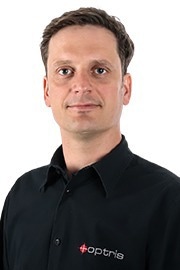
Ingo Stahlkopf, Head of Sales at Optris GmbH, dived into the world of non-contact temperature measurement in 2014. Before this, he began his career in 2008 as a Product Manager at a battery manufacturer after studying economics and engineering at the University of Applied Sciences in Berlin, Germany.
The main topics in this position were the technical part of large-scale backup solutions in international projects, mainly in the energy sector. At Optris, he was active for four years as regional sales manager before he became head of the sales team and its activities in 2018.
About Torsten Czech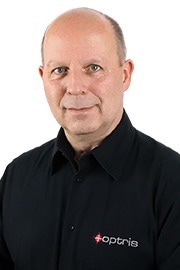
Torsten Czech, Head of Marketing at Optris GmbH, was studying electrical engineering in Berlin and has been working in the infrared technology business for over 28 years. After some years in various sales positions, he worked as a Product Manager for infrared thermometers and cameras before becoming Head of Marketing at Optris in 2019.

This information has been sourced, reviewed, and adapted from materials provided by Optris GmbH & Co. KG.
For more information on this source, please visit Optris GmbH & Co. KG.
Disclaimer: The views expressed here are those of the interviewee and do not necessarily represent the views of AZoM.com Limited (T/A) AZoNetwork, the owner and operator of this website. This disclaimer forms part of the Terms and Conditions of use of this website.