The obstacles to replacing fossil fuels are widely acknowledged within the hydrogen sector. Some of the key difficulties for hydrogen engineers involve high production expenses and storage challenges.
For clean hydrogen to render fuel sources like oil obsolete, engineers require assistance in discovering more economical production methods for H2. Numerous research initiatives are currently investigating the chemistries and processes involved in hydrogen generation, aiming to develop cost-effective clean hydrogen technologies.
Electrolysis Research Example
The innovative strategies under examination in research illustrate some of the inherent complexities and compromises involved.
For instance, anion exchange membrane water electrolysis (AEMWE) is a two-stage chemical process that separates water molecules and generates hydrogen gas. However, this process is more complicated than it may appear.
Researchers at Tohoku University conducted a study on this technology and detailed the challenges encountered during their experiments. They found that output is compromised if either stage slows, and that many current catalysts enhance only one of these stages.
As a result, the researchers focused on synchronizing both stages in tandem. They developed an advanced catalyst employing an “auxiliary-driving strategy” that combines ruthenium (Ru) and vanadium dioxide (VO2). This strategy facilitated accelerated water dissociation and regulated hydrogen absorption.
They attributed the effectiveness of this approach to their testing, noting the enhanced reaction kinetics observed in laboratory evaluations translated to device-level performance.
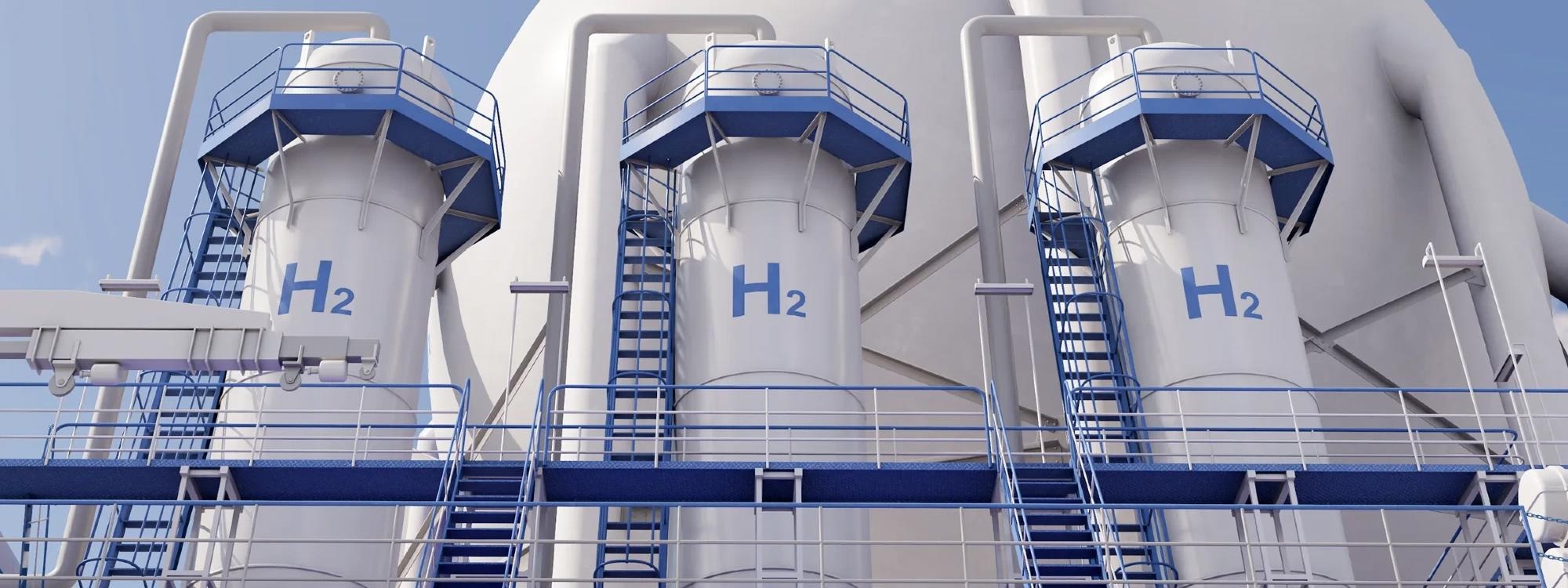 Image Credit: Alicat Scientific
Fuel Cell Technology Advancement and Investment
Progress is also being made in fuel cell technology. While fuel cell science has not undergone radical transformations since the 1960s, it remains an efficient technology and is recognized by the United States Department of Energy as a key solution for achieving a sustainable and equitable clean energy future.
For fuel cell technology to serve as a viable substitute for fossil fuels, it requires further development and rigorous testing for durability, efficiency, and sustainability.
To support research and development in fuel cell technology, the US Department of Energy updated a Fuel Cell Technologies subprogram in 2024. The objective of this subprogram was to finance 55 projects to develop fuel cell technologies that can compete with established and emerging technologies across various applications.
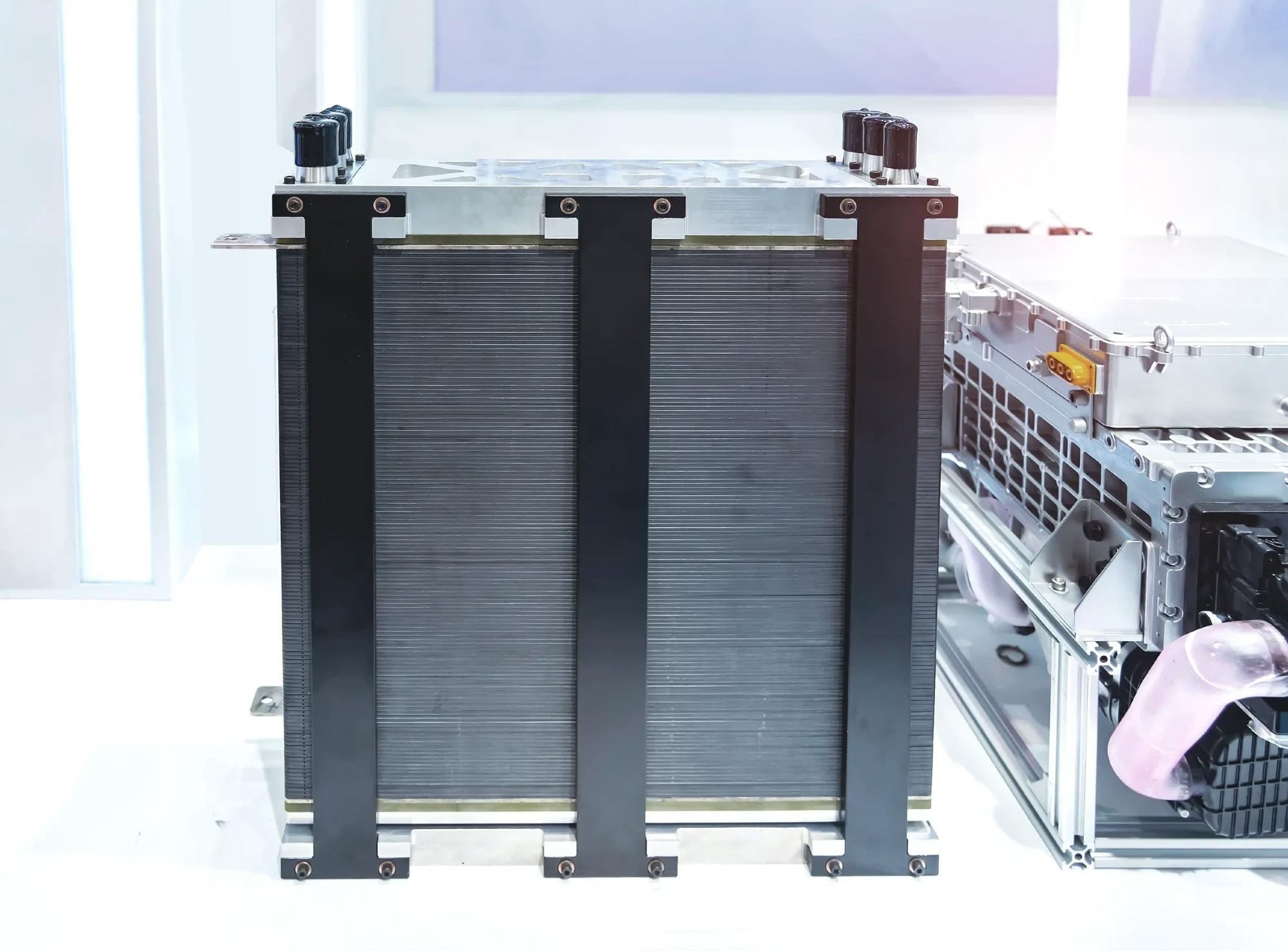
Image Credit: Alicat Scientific
Flow Control and Measurement Considerations in Fuel Cell Test Stands
The necessity for more sophisticated and accurate measurements in hydrogen operations was identified within the DoE Fuel Cell Technologies program. One research project reported that quality control standards and baselines should be established, especially when considering materials from different vendors. This will help to enhance the robustness of the automation process.
Similar to electrochemical investigators, systems engineers face challenges related to flow and measurement in their operations, all while working within market-defined budgetary constraints. Fuel cell membranes and electrolysis membranes can incorporate expensive materials, such as platinum (Pt) and specialized ceramics.
Hydrogen laboratories face another potential obstacle, as these environments may present hazardous industry classifications (such as Class 1 Division 2 or ATEX Zone 0, 1, or 2) due to the presence of explosive gases. Safety engineers striving to adhere to industry safety standards are focused on protecting personnel, operations, and valuable equipment.
Jesse Arenstein, Fuel Cell Market Manager for Alicat Scientific, explains that systems engineers must address several questions when selecting components: “What test stand are you going to use? What kind of data must it provide? Does using the component put my own equipment at risk?”
To address these concerns, testing equipment must be optimized for precision and include features necessary for automation.
Flow Control and Measurement in Electrolysis
Continuous monitoring and measurement of a PEM electrolyzer system’s inputs, outputs, and leaks (waste) are crucial, given the risks associated with the gases involved. Several issues arise, including cross-contamination, temperature fluctuations, and high pressure.
In one instance, a PEM electrolyzer system was engineered with devices that measured hydrogen and oxygen output, alerting operators to any cross-contamination. The system also needed to meet the requirements for hazardous operations. For the PEM electrolyzer designer, this was resolved by installing intrinsically safe mass flow meters at each outlet during the design phase.
This approach had the additional advantage of achieving a more precise measurement of the gases’ mass flow, as meters equipped with relative humidity sensors could use the humidity data to account for the vapor volume in the gas stream,
Intrinsically safe flow meters can offer multivariate reporting, encompassing temperature, pressure, flow rate, totalized flow, and more. For automation and data logging, the integrator communicates with the flow sensors via MODBUS RTU and ASCII protocols.
By digitally querying the system’s laminar differential-based flow meters, continuous reporting on flow rate, pressure, dew point, and temperature conditions was provided. Technicians could then confirm that their purity sensors were supplied with a stable, well-defined gas stream.
From this, they could determine if the crossover rate was as anticipated or if a deviation occurred, which might indicate membrane wear or an imbalance in water.
Flow Control and Measurement in Fuel Cell Technology
Fuel cell technicians manage the ratios and distribution of oxidants and reactants, and their stacks require consistent and responsive flow regulation. They also need to maintain precise back-pressure control, with high temperatures, humidity, and moisture posing potential challenges.
Different conditions and measurement needs necessitate distinct solutions, making it crucial to understand the most effective methods. When process conditions involve high pressures and low flow rates, a Coriolis mass flow controller presents a dependable, high-accuracy option.
For higher flow rates in primary processes, a differential pressure (DP) mass flow controller can be used to regulate pressure while simultaneously measuring mass flow across a broad spectrum of flow rates.
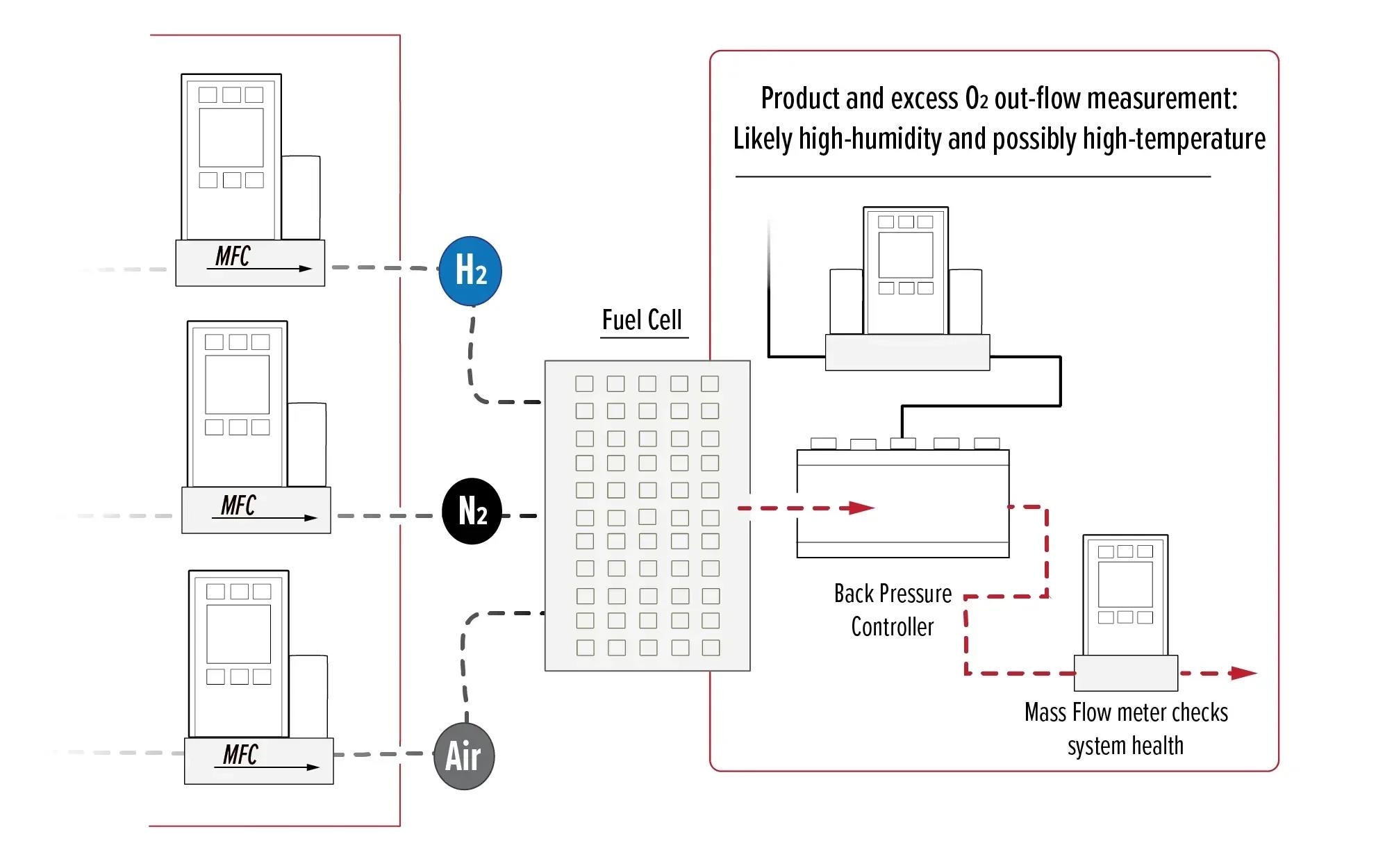
Image Credit: Alicat Scientific
Case Study Featuring High-Precision Devices
When verifying a PEM device, the team at Nel Hydrogen measures the hydrogen output flow rate. For a considerable period, the company used ball-type rotameters for these measurements. However, the rotameters proved cumbersome, and the team sought a device that would measure flow more easily and accurately.
The team ultimately opted to replace their rotameters with digital mass flow meters for testing their S, H, and C PEM electrolyzers. This decision yielded several advantages.
This has helped us simplify our test setups, increase reading accuracy/reduce variability, [and] is much easier for our technicians performing the test.
Philip Levesque, Nel Hydrogen Manufacturing Engineer
Automating Testing Solutions for Hydrogen Lab Operations
Technicians require both consistency and efficiency, though the latter has not always been the case in hydrogen production. Older test stands demanded significant manual intervention to reconfigure for different tests, creating a complex “rat’s nest of tubing and wiring,” as described by Darryl Ludlow, PhD, founder of Ludlow Electrochemical.
This was prohibitive in labor and time. Replacing the stands with digital flow control instruments was the only way for technicians to keep up with our customer’s 24/7 testing requirements.
Darryl Ludlow, PhD, Founder of Ludlow Electrochemical
The adoption of digital flow control instruments capable of digital automation offers a multitude of benefits:
- Scripted and responsive control of flow and pressure
- Continuous logging of process condition data
- Enhanced control over chemical proportionality
When executed in a remotely controlled, non-manual manner, parallel testing and continuous automated iterations of variable testing become feasible.
Automation can also be implemented through a PLC or other networked control systems, enabling multiple test stands to operate concurrently. System integrators work with industrial PLC protocols such as MODBUS TCP/IP. These are widely regarded as the most efficient methods for automating multiple instruments within a system.
Conclusion: Opportunities in Hydrogen Processes
Opportunities exist in the hydrogen energy industry, a topic of global discussion. According to a Science Direct report, national strategies worldwide have proven that hydrogen is crucial to energy transition initiatives. The article concludes that this development is driven by technological potential, economic prospects, and the climate crisis.
Any hydrogen operation, whether developing fuel cell or electrolysis processes, necessitates testing platforms that function optimally under all conditions. The performance of flow measurement and control is pivotal to achieving electronic precision in both electrolysis and fuel cell test stands.
Automating these systems presents the most effective solution for refining hydrogen processes by enabling parallel testing, round-the-clock operation, and automated setup for incremental variable testing.
Optimizing the cost-effectiveness of hydrogen processes will be enhanced by current devices and future advancements, ensuring a range of high-return-on-investment options for control and automation of clean fuel processes. This will be supported by leadership dedicated to establishing a robust infrastructure and a clear pathway toward realistic energy transition initiatives.

This information has been sourced, reviewed, and adapted from materials provided by Alicat Scientific.
For more information on this source, please visit Alicat Scientific.