Businesses operating in the food and nutrition space face increasing pressure to scale up production in seasonal periods, launch products to market faster, and meet regulatory, nutritional, and allergen standards with specialized machinery. All of this must be accomplished while continuing to minimize costs.
Many companies are turning to outsourced production to help meet these increasingly complex challenges around food and nutrition processing.
Straits Research states that the global market for nutraceutical contract manufacturing services was valued at USD 182.47 billion in 2024, growing to USD 207.03 billion in 2025 and potentially reaching USD 403.53 billion by 2033. This ongoing growth is primarily attributed to health and wellness trends.
Many food and nutrition businesses can benefit from outsourcing processing. For example, businesses may lack specialist equipment, internal capacity, or knowledgeable teams. Businesses may also be over capacity, require a contingency plan, or lack the industry accreditation required to bring a product to market.
Hosokawa Micron Limited has produced a guide outlining the value of third-party material-processing organizations in outsourcing for the food and nutrition powder-processing sectors.
These third-party organizations can play an overarching role, supporting the often challenging safety, regulatory, and maintenance compliance requirements faced by food manufacturers. Contract processing is a flexible, efficient, and smart choice for food and nutrition manufacturers.
This article and the attached guide look at how working with Hosokawa Micron Limited can help ensure efficient, compliant outsourced production.
The Benefits of Contract Processing
Contract processing is also known as contract manufacturing. It is the process by which a company partners with a third-party provider to support final product development by processing materials to meet precise customer specifications.
This approach allows companies without in-house processing infrastructure to transform raw materials into refined, specification-ready products.
Advanced technologies such as milling, micronization, and other size-reduction tools are key to the handling of a wide range of food materials in contract processing for food and nutrition, most notably in terms of ingredient classification and particle-size reduction.
These methods can achieve precise particle sizes down to the micron level, a central requirement for applications such as texture optimization, functional ingredient incorporation, and nutrient bioavailability.
Contract processing supports the conversion of powders, granules, and bulk solids across a wide range of industries, such as food and nutrition, into consistent, high-quality final forms.
This type of processing offers reliability across food and nutrition outsourcing activities, solving challenges such as the need for capital investment in specialized equipment. This alone provides significant value because the food sector requires advanced processing technologies that are only accessible through expensive machinery, such as spray-drying and micronization for functional ingredients.
Other challenges that can be met via contract processing include:
- Increasing production for high-pressure, go-to-market times
- Increasing production based on seasonal demand
- Access to advanced processing technologies
- Improving operational cost efficiency
- Support for manufacturers’ contingency plans
- Faster speed-to-market times
Contract processing can support food and nutrition businesses from independent start-ups to large-scale corporations, with common manufacturing use cases across outsourcing including:
- Nutraceuticals, including vitamins
- Functional food ingredients, including proteins
- Final-form powders and premixes
- Ready-to-eat products
- Plant extracts
Trustworthiness is a key consideration for the food and nutrition sector, because outsourced products are typically used by the general public. Failures in terms of processing, compliance, or quality control can have severe consequences, including financial loss, regulatory action, and potential harm to individual consumers.
A trusting and reliable relationship between the third party and the food/nutrition company is essential to achieving optimal results and delivering them to the end user.
A reliable third-party provider should function as an extension of the company’s own operations, maintaining confidentiality, identifying risks early, and proactively responding to unforeseen challenges and changing requirements. This relationship must be built on a foundation of robust communication and shared quality goals.
Working with the right third party can ensure that food and nutrition companies achieve optimal operational outcomes while maintaining the food product’s safety and efficiency.
Considerations When Outsourcing Food and Nutrition Processing
Outsourcing food and nutrition material processing and powder classification can be advantageous for specialist food and nutrition companies looking to align projects to optimal or tight timelines.
For example, progress can be slowed by internal processes and approvals, while external partners can often offer improved flexibility and an accelerated transition to market for product lines. This is especially important for companies operating in the very competitive and reactive food and nutrition sector.
Many projects also require internal ‘outsourcing’ between departments, for example, transferring work from R&D to scale-up, and then on to manufacturing and quality control.
All these internal transfers can introduce competing priorities, delays, and added complexity, with each handover typically requiring additional alignment, documentation, and approval steps.
Working directly with a reputable contract development and manufacturing organization (CDMO) can streamline this process by consolidating development and manufacturing into a single external partner. CDMOs reduce the need for cross-functional coordination and repeated technology transfers due to their integrated workflows and aligned quality systems.
This approach helps move products smoothly from concept to commercialization, minimizing bottlenecks, accelerating time-to-market, and enhancing scalability and overall project efficiency.
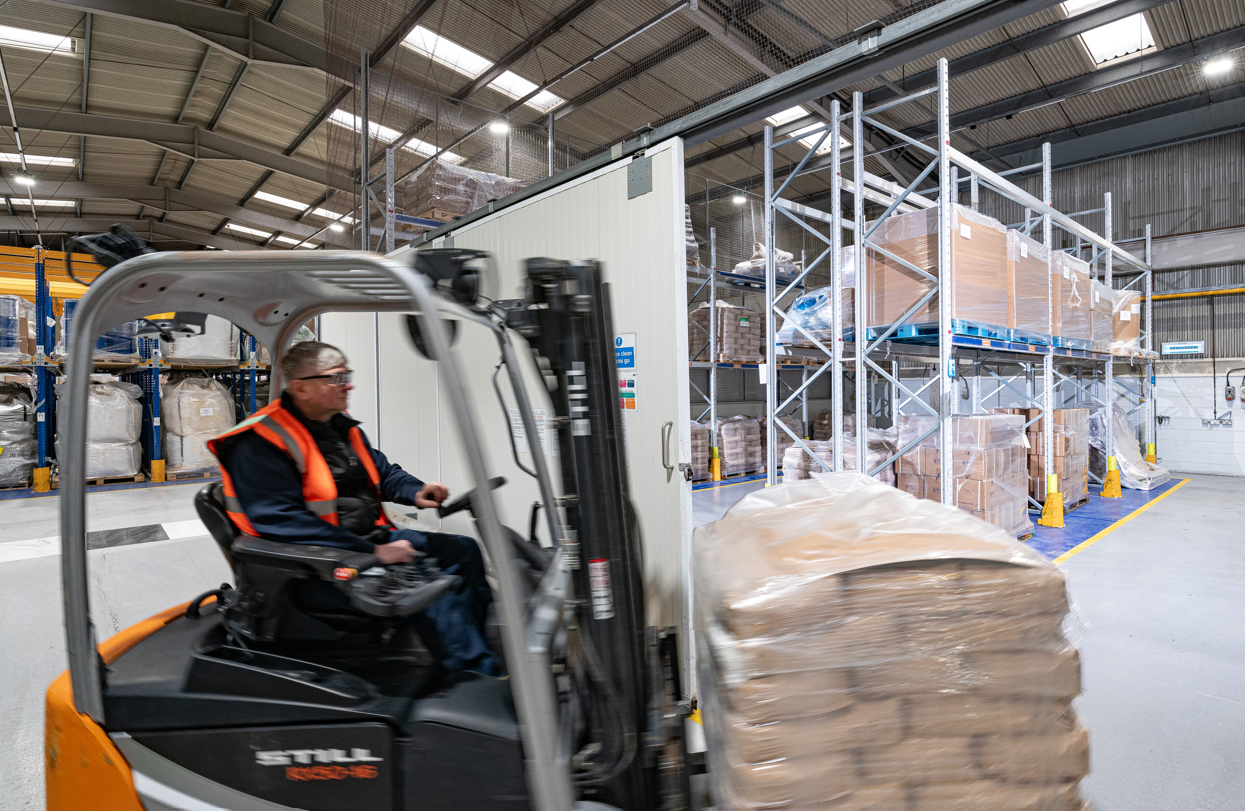
Image Credit: Hosokawa Micron Ltd
Common Manufacturing Challenges
Many organizations are likely to benefit from outsourced food and nutrition powder processing and/or material classification, including:
- Businesses lacking certified facilities, in-house expertise, or specialist equipment
- Businesses that need to be first to market but are lacking in-house equipment
- Companies with short-run or complex production needs that necessitate a flexible approach
- Organizations looking to rapidly scale up or reach the market more quickly while minimizing risk
- Projects requiring experienced partners or advanced processing technologies
Establishing a low-cost, dependable, long-term partnership with a company with long-standing experience and expertise in the sector is advantageous for a diverse range of food and nutrition businesses working toward development and optimization.
Enhancing Contingency Plans with Food and Nutrition Powder Processing
Outsourcing food and nutrition powder processing offers further safety benefits to businesses, particularly when considering speed-to-market compared with other sectors and the downtime during operational shutdowns.
A trustworthy, reliable manufacturing partner can support production in the event of natural disasters, fires, or other production shutdowns, meaning the client can still deliver to customers and maintain brand value.
This contingency plan is generally covered in a business continuity plan (BCP) and is produced in line with accredited business standards.
Allergen Control and Segregation Protocols
Trust and reliability underpin the outsourcing of the food and nutrition industry. Companies must ensure that a selected manufacturing partner has the documentation, credibility, and regulatory compliance to ensure their reputation remains intact.
Manufacturers must also meet allergen requirements and maintain effective segregation protocols, as these two considerations share responsibility for regulatory and safety compliance, product efficacy, and manufacturing reliability.
The United Kingdom Food Standards Agency defines allergen control as “the process of identifying, managing, and labeling allergenic products to prevent accidental consumer exposure, primarily through preventing cross-contamination.”
Segregation protocols are procedures used to prevent foodborne illness and cross-contamination. A number of techniques are routinely employed to ensure that products adhere to allergen control regulations and stringent segregation protocols.
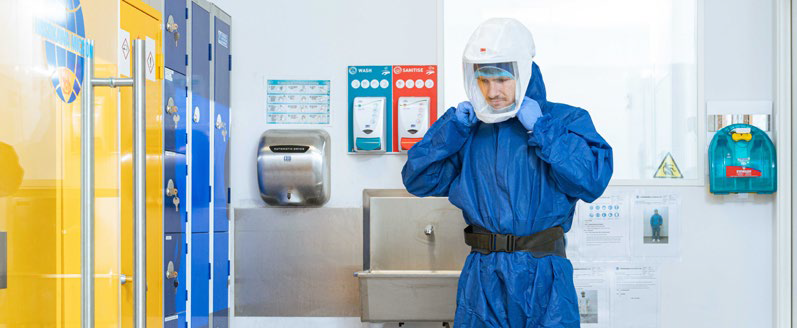
Image Credit: Hosokawa Micron Ltd
Trial Request Forms
A trial request form can be used to ask prospective clients to indicate whether a product contains an allergen. If it does, the contract processing service will be performed in a designated allergen area to prevent cross-contamination.
Designated Allergen Areas and Labeling
Designated allergen areas are zones in food-production facilities where the 14 defined allergenic ingredients and food-intolerance products are handled separately. These products are also correctly labeled to prevent cross-contact, maintain regulatory compliance, and ensure consumer safety.
Gowning Procedures
Different-colored gowns and associated protocols are implemented to ensure that workers wear appropriate protective clothing before entering a controlled or specialized area.
Segregating Equipment and Machinery
Color-coded PPE, tools, and garments are designed for specific rooms, which must be used and powered exclusively within designated areas.
Batch-to-Batch Consistency Testing
Testing throughout the entire batch process is performed every two hours to ensure strict allergen control. This specification will be based on the required particle size.
Download the full article now to learn more

This information has been sourced, reviewed, and adapted from materials provided by Hosokawa Micron Ltd.
For more information on this source, please visit Hosokawa Micron Ltd.