The chemical and fine-chemical manufacturing industry is a demanding space that requires consideration of a range of processing methods and factors. In-house processing capabilities are affected by considerations such as hazardous material handling, tight particle specifications, moisture-sensitive products, and strict downstream requirements.
Many businesses must also manage specialist equipment, maintain stringently controlled environments, and ensure that sufficient technical expertise is available to meet these standards. These challenges are both capital-intensive and operationally complex; despite this, the global contract chemical manufacturing market is rapidly expanding.
This expansion is driven by increasing demand for flexible, specialist processing capacity, with businesses across the sector now looking to outsourced production as a means of accessing advanced classification, milling, and powder-handling technologies.
Outsourcing chemical powder processing removes the burden of purchasing and maintaining equipment in-house while offering a practical means of precise particle control, secure material handling, and documented compliance.
This processing method leverages proven technologies and is delivered by experienced operators, supporting a diverse array of requirements ranging from small-batch specialty runs and one-off pilot trials to regular, high-volume commercial contracts.
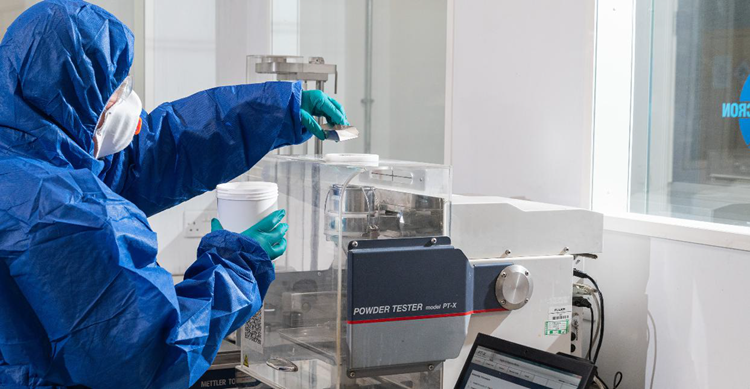
Image Credit: Hosokawa Micron Ltd
Hosokawa Micron Limited has produced a useful guide that showcases the role and benefits of outsourced contract processing in the chemical and fine-chemical sectors.
The guide provides information on technical documentation, infrastructure, and material-handling security that are key to ensuring reliable results. It also outlines how Hosokawa Micron Limited’s dedicated chemical-processing capabilities are ideally placed to support processing operations.
The Importance and Benefits of Contract Processing
Contract processing, also known as contract manufacturing, involves a company partnering with a third party to process materials to precise customer specifications on its behalf, typically supporting a final product’s development or production.
This widely used approach removes the need for considerable upfront investment in terms of operator training and specialist equipment, while ensuring that all required material standards continue to be met.
Contract processing in the context of chemical and fine-chemical processing generally involves size reduction by milling or micronization, screening, classification, blending, and final packaging. Advanced technologies are essential in accommodating chemical powders and achieving precise particle sizes, including micron-level outputs where appropriate.
Contract processing also supports businesses of all sizes, including established manufacturers managing regular commercial contracts and early-stage companies developing new chemical products.
It is a key part of the chemical and fine-chemical sector, offering flexibility, reliability, and access to specialist capabilities that many businesses find challenging to maintain in-house.
Processing chemical powders to tight specifications requires a resource-intensive combination of technical, operational, and commercial factors, especially when volumes fluctuate or production requirements change.
Challenges Potentially Leading to Outsourcing
A number of challenges typically prompt chemical and fine-chemical companies to consider outsourcing their processing.

Image Credit: Hosokawa Micron Ltd
Speed to Market
Speed to market is a critical factor for reformulations, new product launches, or market-gap opportunities where internal timelines may not offer the processing speed required.
Lack of Classification or Internal Milling Expertise
Appropriate expertise is essential, particularly where downstream processing necessitates precise particle-size distribution that is not reliably achievable with existing equipment.
Capital Investment Constraints
Significant capital outlay is required for specialist milling, drying, and classification equipment, which is difficult to justify for low-volume or variable production.
Downstream Processing Requirements
Downstream processing is necessary when the end-use application requires tight specifications. Achieving these specifications commonly requires specialist knowledge and equipment.
Contingency and Business Continuity
Supply chains can be disrupted by planned maintenance periods, unexpected shutdowns, or capacity constraints. A trusted processing partner provides a safety net in this situation.
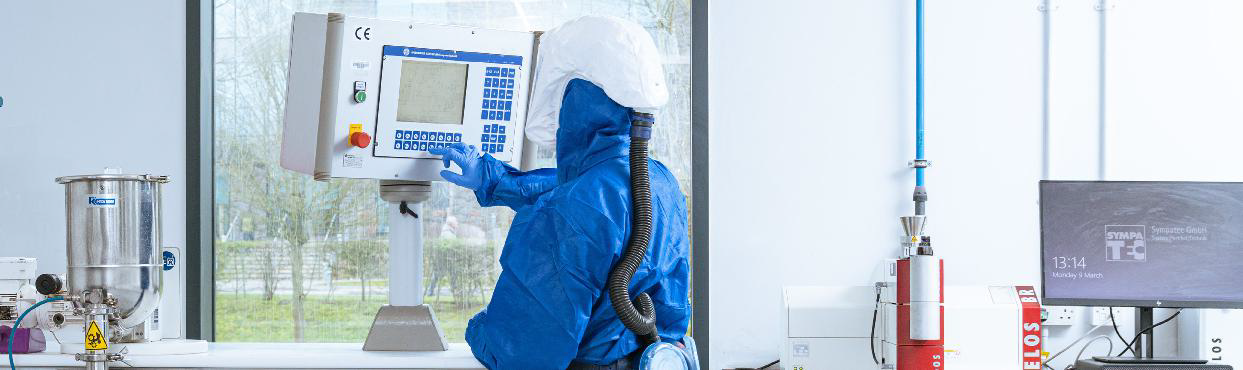
Image Credit: Hosokawa Micron Ltd
Dedicated Chemical-Processing Rooms and Segregation
The facility’s physical infrastructure is one of the most important considerations when outsourcing chemical powder processing. Segregation is key to preventing cross-contamination, maintaining product integrity, and protecting both operators and the material itself.
The primary concern around containment in chemical processing differs from environments like pharmaceuticals and food. For example, the main focus in pharmaceutical and food production is on protecting the product from contamination by the external environment or operator.
Many chemical materials are harmful, however, so the emphasis in chemical processing shifts significantly toward protecting the operator from the product. Fill-way and closed systems are used to ensure the product does not encounter the atmosphere, while also shielding operators from exposure to potentially dangerous materials.
How Segregation Works in Practice
Chemical-processing rooms in a well-managed contract processing facility will be completely separated from other rooms such as pharmaceutical and food areas.
Equipment designated for chemical processing will be exclusively used within those rooms, with operators specifically trained to follow consistent procedures regardless of their area of work.
Maintaining a consistent approach to documentation and training means that key validation steps are followed as standard practice, even when they may not be strictly required for chemical processing (because they are for food or pharmaceutical production).
Operators maintain the same rigorous habits across all areas of the facility, so this approach results in a level of process discipline and documentation that is likely to exceed what many competitors are able to offer.
Fill-weigh systems and closed systems also play an important role in protecting hazardous and moisture-sensitive materials. A range of chemical powders are moisture-reactive, meaning exposure to humidity during transfer or processing can potentially compromise product quality.
Closed systems preserve material integrity by preventing contact with the external atmosphere. These systems also protect operators from exposure to hazardous substances.
Materials Handled Across Specialty Chemicals and Fine Chemicals
The chemical and fine-chemical sector encompasses a diverse range of materials, each with its own end-use applications and processing requirements.
For example, it is advantageous to distinguish between bulk commodity chemicals, such as inorganic minerals used in building materials, and more specialized chemicals. These specialized chemicals are where outsourced contract processing delivers the most value.
Fine and specialty chemicals are manufactured in smaller volumes and to tighter specifications than bulk commodities because these more specialized chemicals are typically employed in controlled or high-value applications that rely on precise particle size, purity, and material consistency.
Examples of Materials Handled
Some of the materials commonly handled in outsourced chemical contract processing include:
- Detergents and surfactants
- Specialty powders
- Additives and pigments
- Catalysts
- Activation materials
- Fire retardants
All these applications depend on reliable processing, precise particle control, and comprehensive documentation. It is also important to note that these end-use applications require consistent, specification-ready products in every instance, and a ‘close-enough’ approach is not sufficient.
Download the full article now to learn more

This information has been sourced, reviewed, and adapted from materials provided by Hosokawa Micron Ltd.
For more information on this source, please visit Hosokawa Micron Ltd.