This article will give insights into the latest particle size reduction technologies for industrial processing.

Size & Particle Reduction: What is Size Reduction & Why Does it Matter?
1.1: What is Size Reduction?
Size reduction is the process of reducing the physical size of solid materials, slurries, suspensions, particles, or substances, typically into smaller, more manageable pieces. This is achieved by using specialized systems such as disintegrators, pre-breakers, and rubber choppers.
Size reduction systems boost product performance while delivering uniformity and meeting industry requirements. Reduced-size materials also satisfy user requirements in relation to how the product behaves or handles in the final application (including solubility, among others).
Size reduction is a key part of the industrial manufacturing process. It is crucial to achieve consistency in the reduction of particle size or substances to deliver uniform and quality products. Size reduction also improves processing efficiency and simplifies the downstream process.
Another important reason for implementing size reduction solutions is waste reduction, transport and storage efficiency, and customization. Manufacturers in the chemical, recycling, pharmaceuticals, and food industries benefit from incorporating customized size reduction solutions to meet their specific process needs and requirements.
Size reduction systems can be readily understood through a simple analogy: Making coffee with whole beans takes time and doesn’t extract much flavor, but when the beans are ground up, the coffee brews faster, tastes stronger, and combines well with water. Size reduction is like grinding coffee; it makes raw materials easier to process, mix, and use effectively.

Image Credit: Hosokawa Micron Ltd
1.2: Why Does Size Reduction Matter?
Size reduction matters because it ultimately enables product uniformity, resolves process inefficiencies, and enhances material quality. This is vital across manufacturing industries as size reduction helps improve quality control and provide greater customer loyalty through better products.
Improving customer loyalty is crucial as customers will, over time, come to trust the products that consistently perform and deliver optimal results, each and every time.
Section 2: What is The Historical & Technological Background of Size Reduction?
2.1 The Key Historical Milestones
Size reduction has advanced alongside major industrial progress, driven by the increased demand for manufacturing efficiency, safety, and regulatory compliance. The Industrial Revolution introduced mechanized milling and crushing machines for large-scale production, such as steam-powered roller mills and jaw crushers.
To demonstrate how size-reduction solutions became popular, we can turn to the 19th century: as chocolate production was being industrialized, the emergence of cocoa press-cake, a by-product of cocoa butter extraction, found new value in food and cosmetic applications.
During the Victorian period, seaweed also saw a boost in popularity due to its skincare benefits, praised for its blend of natural minerals and exfoliating properties.
Both of these examples are tough in their raw form; therefore, they are mechanically preprocessed to prepare them for refinement into high-performance ingredients.
2.2 The Introduction of Real-Time Monitoring
The need for state-of-the-art systems, such as real-time monitoring, drives innovation in modern processing technologies. These advances help prevent product inefficiency. Hosokawa Micron anticipates that, within the next 5 years, AI-driven processes will become the standard, with systems capable of ‘self-control’ through complex control loops and algorithms. These changes will be developed to enhance product quality, minimize waste, and improve efficiencies.
2.3: How Industrial Demands Drive Innovation
Introduced during the Industrial Revolution, manufacturers turned to size-reduction solutions to meet demand for switching from manual to basic mechanical methods to scale industrial production.
Early on, manufacturers implemented simple size reduction machinery before progressing to precision technologies, including disintegrators, pre-breakers, rubber choppers, and granulators.
Sophisticated size-reduction systems are crucial in industries that handle processes such as mixing and dissolving, those concerned with upscaling production, and those that process petrochemicals and recycled materials.

Image Credit: Hosokawa Micron Ltd
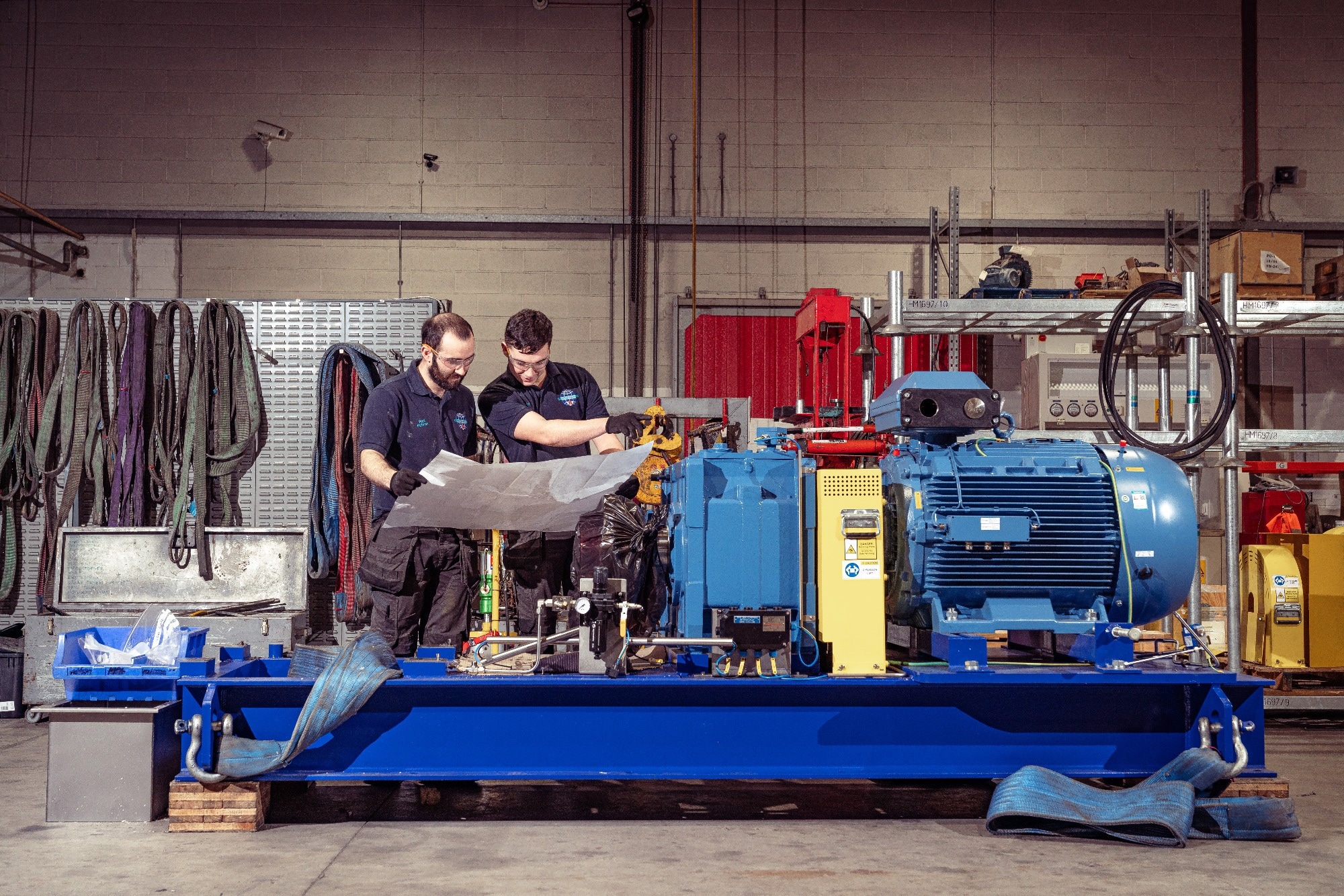
Image Credit: Hosokawa Micron Ltd
Section 3: Hosokawa Micron’s Core Size Reduction Engineering Principles & Design Considerations
3.1: What are the Core Engineering Principles for Size Reduction Solutions?
Size-reduction machinery reduces the physical size of solid materials, particles, or substances into smaller, more manageable pieces. These systems have been developed to deliver safety alongside well-engineered performance.
There are major engineering principles to bear in mind when considering incorporating size reduction solutions. These are as follows:
Energy Efficiency
As size reduction is an energy-intensive process, it directly influences costs. Minimizing energy usage helps reduce operating costs. When considering size-reduction solutions, review the energy required in relation to the materials used and the required fineness.
Material Characteristics
Material properties, such as hardness, toughness, cohesiveness, or moisture content, determine which size reduction methods are necessary, e.g., compression, shear, or impact.
Consistent Particle Size Distribution and Control
Product quality is defined by size distribution and control. The final particle size distribution (PSD) is typically the main objective of the process and determines how suitable the product is for its intended use.
This overview serves as an introduction to the fundamentals of particle and size reduction, from the historical development of size-reduction technologies to the engineering principles that ensure consistent particle size and efficient processing.
But that’s only the start.
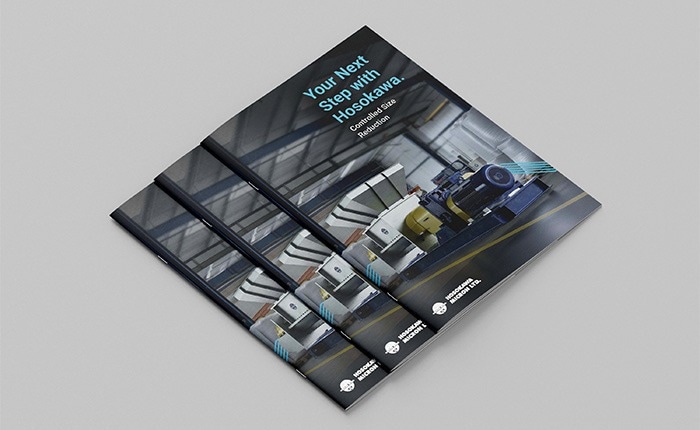
In the Controlled Size Reduction guide, you’ll learn more about how these technologies can be applied across real industrial environments and how manufacturers can implement the right size reduction strategy for their processes.
Inside the guide, you’ll find:
- Detailed industry application examples across chemical processing, recycling, food production, and pharmaceutical manufacturing
- An overview of specialized size reduction equipment, including pre-breakers, disintegrators, rubber choppers, and mixing systems
- Insights into how particle reduction improves product consistency and downstream processing
- Guidance on selecting the right size reduction solution based on material properties, particle size targets, and throughput requirements
- Key regulatory and safety considerations affecting modern particle processing systems
- A step-by-step look at the implementation process, from consultation and system design to installation, testing, and lifecycle support
The guide also details how modern particle-reduction systems incorporate automation, monitoring technologies, and energy-efficient design to help manufacturers improve productivity while meeting increasingly stringent regulatory and sustainability standards.
No matter which industry you work in, this guide offers practical insights into selecting and implementing the right particle size reduction solution for your operation.
Download your copy to explore how controlled size reduction technologies are shaping the future of efficient and reliable material processing.
Download the full guide

This information has been sourced, reviewed and adapted from materials provided by Hosokawa Micron Ltd.
For more information on this source, please visit Hosokawa Micron Ltd.