In this interview, AZoMaterials speaks with Dr. David Trowbridge from Cannon Instrument Company about viscosity measurement of polymer solutions, its role in polymer characterization, and how automation can improve intrinsic viscosity and molecular weight analysis.
Can you please introduce yourself and your role at Cannon Instrument Company?
My background is in polymer science and polymer characterization. I earned my Master of Science and PhD in the Department of Polymer Science at the University of Akron, where my research focused on polymer characterization using dilute solution viscosity, laser light scattering, size-exclusion chromatography, field-flow fractionation, and rheology.
Before joining Cannon, I continued this research at the corporate research center and chemical division of the Goodyear Tire & Rubber Company, focusing on characterizing new and production polymers.
Since joining Cannon, I have provided technical guidance on developing laboratory instruments and their applications. I also contribute to designing and producing standard reference materials that support the company’s quality system.
My work with Cannon’s fully automated viscometers focuses on polymer solution viscosity measurement and how viscosity data can provide information about polymer structure and size.
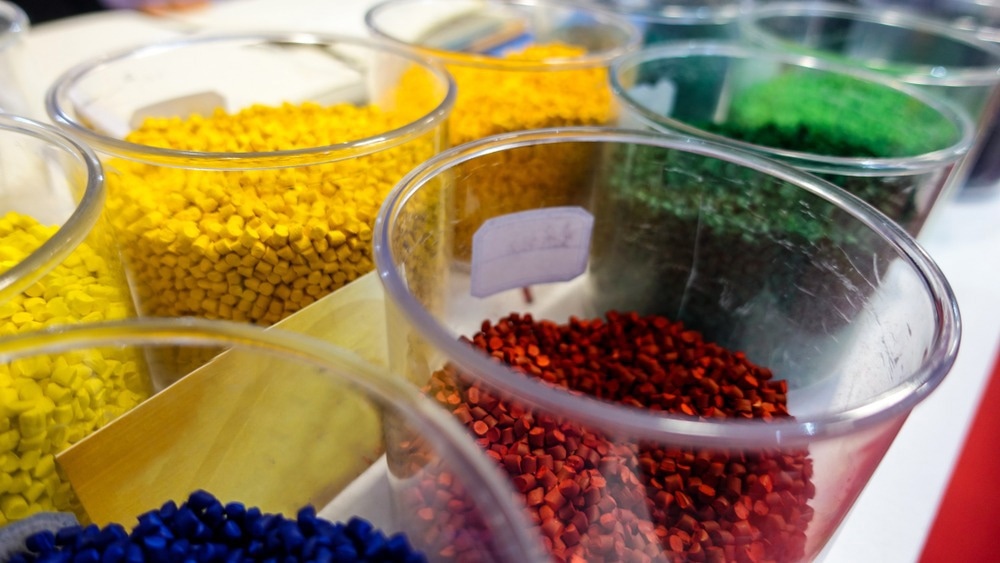
Image Credit: futuristman/Shutterstock.com
Why has viscosity measurement been so important to the development of polymer science?
Viscosity measurement played an important role right at the beginning of polymer science. In the 1920s, scientists disagreed about the structure of these materials. The prevailing idea was that they were colloidal structures made from small molecules aggregated together.
Hermann Staudinger proposed instead that they were large molecules formed from repeated units bonded together covalently. He called these macromolecules.
Staudinger carried out experiments in which he chemically modified these materials. If they were colloidal systems, the expectation was that the modification would cause the aggregates to dissociate and the viscosity to decrease. Instead, he continued to observe high solution viscosities, supporting his concept of large molecules.
He went on to propose that solution viscosity was quantitatively correlated with molecular weight. What was originally called Staudinger’s Index eventually became what we now call intrinsic viscosity. Later work by Mark, Houwink, Kuhn, Sakurada, and others led to a more general relationship that lets us use measured intrinsic viscosity, together with K and A values, to calculate molecular weight.
What information can viscosity measurement provide about a polymer?
I like to think of viscosity as probing polymer properties in solution. The flowing solvent develops a shear field around the polymer molecule. Because the polymer molecule is large, it responds sluggishly, and that response manifests as an increase in viscosity.
This means viscosity measurements contain information about polymer structure and size.
Polymer solution viscosity has two important areas of utility. One is its correlation with performance parameters. Physical and processing parameters correlate with intrinsic viscosity and the other derived viscosities, so we can use those measurements to optimize processing conditions such as spinning, casting, coating, and extrusion. They can also relate to properties such as stress, flex, stiffness, and stability.
The other area is characterization. Polymer solution viscosity correlates with polymer size and shape, which can be expressed in terms of molecular weight, hydrodynamic size, or even the extent of interaction with the solvent.
Why is concentration so important when measuring the viscosity of polymer solutions?
When we measure dilute solution viscosity, we want the polymer chains to be isolated from one another so their response reflects the solvent's flow field rather than interactions with neighboring polymer molecules.
That means concentration is very important.
As polymer concentration increases, we eventually reach a critical concentration where the polymer molecules become close enough to influence and eventually contact one another. This is called the critical concentration or overlap concentration.
Below this point, in the dilute region, chains do not interact. This is the region we want for dilute solution viscosity measurements.
We developed the Solution Preparation System, or SPS, as a companion to the miniPV. It combines a solvent dispenser, analytical balance, and software. The user specifies a target concentration, places the polymer sample in a vial, and the system calculates the solvent volume needed to reach that concentration. Once the polymer has dissolved, the solution is ready for analysis in the miniPV.

Image Credit: Mr_Mrs_Marcha/Shutterstock.com
How does the miniPV automate traditional capillary viscosity measurement?
The traditional glass capillary viscometer is a very simple instrument, but it provides exceptional precision. The liquid flows through a capillary under gravity, and traditionally an operator observes the meniscus as it passes timing marks on the glass.
With automation, we retain the fundamental principles of that measurement while automating each step.
The miniPV uses sensors to detect the fluid and automatically determine flow times. Samples can be introduced through an autosampler, and the system incorporates a constant-temperature bath. Washing is also automated using vacuum and pressure controls, and our VISCPRO software processes the data.
The important point is that the measurements can take place unattended. In one experiment, I measured four concentrations in duplicate. I was not present for any of those measurements. I came back afterward and determined the intrinsic viscosity and molecular weight from the data.
That is one strength of the automation.
How do you calculate intrinsic viscosity and molecular weight from these measurements?
There is a simple three-step route.
First, we determine the flow times for the solvent and polymer solution using the miniPV. From those measurements, we can determine relative viscosity. In many cases, it simply reduces to the ratio of the two flow times.
Next, we combine relative viscosity with concentration. This lets us obtain the derived viscosities and, most importantly, intrinsic viscosity.
Finally, we combine the measured intrinsic viscosity with selected K and A values and use the Mark-Houwink equation to calculate molecular weight.
One example I presented involved polyphthalamide dissolved in phenol/TCE at 30 °C. We measured four concentrations in duplicate and extrapolated the Huggins and Kraemer equations. Both extrapolations converged to a common Y-intercept, giving an intrinsic viscosity of 0.797 dL/g.
Using the appropriate K and a values from the Polymer Handbook, this intrinsic viscosity corresponded to a molecular weight of approximately 20,400 Da.
How does the Huggins-Kraemer approach compare with single-point intrinsic viscosity measurements?
With the Huggins approach, we make several measurements at different concentrations and extrapolate the trend line to zero concentration. The Y-intercept gives us the intrinsic viscosity.
The Kraemer equation can also be extrapolated to zero concentration. We can combine the Huggins and Kraemer equations in a dual extrapolation and obtain a common Y-intercept representing intrinsic viscosity.
There are also single-point approaches. These use one relative viscosity measurement at one particular concentration to estimate intrinsic viscosity. They were developed by manipulating, assuming, and approximating the earlier working equations.
If a particular method requires a single-point approach, then you would use it. But if you choose a single-point approach simply to save time and effort, I recommend first carrying out the more rigorous Huggins-Kraemer analysis. You can then compare the result with the different single-point calculations and determine which corresponds best for your system.
How does dilute solution viscosity compare with SEC or GPC for polymer characterization?
They differ in efficiency, accuracy, precision, and capability.
Dilute solution viscosity is simpler to operate and maintain because there are fewer moving parts. Gravity is the driving force, which is very stable. SEC uses a pump, and it can have issues with consistency and maintenance.
SEC also has several stages that can introduce uncertainty, including decisions about drawing the baseline. Those uncertainties accumulate, and we usually see fewer significant figures from SEC than we obtain with dilute solution viscosity measurements.
DSV also provides flexibility in terms of temperature, concentration, viscosity, and solvent selection.
There is still a reason to use SEC when you need to see features of the actual chromatogram. I see intrinsic viscosity as having a solid place in the laboratory workflow because of its precision, throughput, and reliability. It can also augment SEC and GPC by providing a measurement against which GPC results can be compared.
Why is the precision of intrinsic viscosity particularly useful in polymer research and processing?
One strength of intrinsic viscosity is its precision. It lets us differentiate between very similar samples.
I showed an example involving virgin PET and recycled PET. Researchers measured the intrinsic viscosity of virgin PET pellets and obtained a value of 0.78. They then examined changes after bottle forming and compared the results with several recycled materials and blends of recycled and virgin PET.
They had initially attempted the study using GPC, but the deviation in repeated molecular weight measurements was larger than the differences between the samples. They therefore repeated the study using intrinsic viscosity because it could differentiate the materials at that level.
Parts of the plastics industry also use intrinsic viscosity to categorize materials. PET, for example, can be graded based on relatively narrow ranges of intrinsic viscosity, and those measurements can help determine the applications for which particular materials are suitable.
What other applications demonstrate the value of automated intrinsic viscosity measurement?
Intrinsic viscosity is being applied to recycling polyvinyl butyral recovered from laminated safety glass, where the recovered material can be directed toward different applications based on its intrinsic viscosity.
I also mentioned a company that fully recycles fabric. The material is digested, reformed into fibers, and returned to fabric. Intrinsic viscosity measurements are used to monitor that lifecycle.
Another company is working with microorganisms found in the ocean and converting them into natural polymeric biomaterials for products such as reusable drinking straws. Their polymerization analysis is based on intrinsic viscosity measurements.
We have also used intrinsic viscosity to investigate whether excessive heating during dissolution can degrade a polymer. We dissolved a sample, heated it for a little longer, and measured it again. The analysis indicated a 1.3% decrease in molecular weight. When we looked at the Huggins-Kraemer extrapolations, there was a clear indication that even that short additional heating caused some degradation.
These examples show the level of differentiation that precise intrinsic viscosity measurements can provide.
How do you determine whether a polymer solution is dilute enough for intrinsic viscosity measurement?
A useful rule of thumb is the critical overlap concentration, or C*.
You can estimate the critical overlap concentration as the inverse of the intrinsic viscosity. If you already have an estimate of intrinsic viscosity, you can invert it to estimate the concentration you need to stay below.
This applies to different polymers and also to the same polymer at different molecular weights. At higher molecular weights, the critical concentration becomes lower.
Some standard methods account for this directly. For example, they may specify a lower solution concentration when the molecular weight is expected to be high. If you don't have that guidance, using the inverse of the estimated intrinsic viscosity provides a useful way to estimate the critical overlap concentration.
About Dr. David Trowbridge
Dr. David Trowbridge earned his Master of Science and PhD from the Department of Polymer Science at the University of Akron. His research focused on polymer characterization using dilute solution viscosity, laser light scattering, size-exclusion chromatography, field-flow fractionation, and rheology.
During his time at the University of Akron, he collaborated with corporate sponsors through projects at the Institute of Polymer Science’s Applied Research Group. This work involved physical testing, failure analysis, processing, and molecular characterization of polymers.
Before joining Cannon Instrument Company, Dr. Trowbridge continued his research at the corporate research center and chemical division of the Goodyear Tire & Rubber Company, where his work focused on characterizing new and production polymers.
At Cannon, Dr. Trowbridge provides technical guidance on developing laboratory instruments and their applications. He also contributes to the design and production of standard reference materials used to support the company’s quality system. His expertise spans dilute solution viscosity and other polymer characterization techniques, with particular emphasis on applying viscosity measurements to determine intrinsic viscosity, investigate polymer behavior in solution, and support molecular characterization.

This information has been sourced, reviewed and adapted from materials provided by Cannon Instrument Company®.
For more information on this source, please visit Cannon Instrument Company®.
Disclaimer: The views expressed here are those of the interviewee and do not necessarily represent the views of AZoM.com Limited (T/A) AZoNetwork, the owner and operator of this website. This disclaimer forms part of the Terms and Conditions of use of this website.