In this interview, industry expert Nate Newbury explains how analyzer setup, sample preparation, accessories, and training improve the reliability of handheld XRF across different applications.
To begin, can you explain why choosing the right handheld XRF setup matters so much?
Not all XRF applications are the same, so the analyzer configuration, calibration, and operating mode can make a major difference to the quality of the result. A handheld XRF can be an excellent tool, but it needs to be set up for the material and application being tested.
Different industries use XRF in very different ways. A scrapyard, pawn shop, mine site, or environmental testing workflow may all use similar technology, but the assumptions behind the measurement can change significantly. That is why it is important to know what analyzer you have, what hardware is inside it, what modes are installed, and whether those modes match the samples you want to test.
The right setup helps users get faster, more reliable results, while the wrong setup can lead to misleading data, even if the analyzer itself is working correctly.
How do the Mining and Soils modes differ from Metals modes?
Metals mode makes very different assumptions from the Mining and Soils modes. In Metals modes, we typically use fundamental parameter calibration, a robust mathematical model for fast chemistry results and grade identification. But the key assumption behind a Metals mode is that the sample being tested is 100% metal.
If the sample is not 100% metal, such as an ore sample, the analyzer can give the wrong answer because the physics model is not applied to the correct type of material. Ore, soil, and rock samples are not the same as metal alloys, so they require different modes and calibrations.
Mining mode and Soils mode are designed for these more complex sample types. They are not interchangeable with Metals modes, and users need to select the correct mode before scanning.
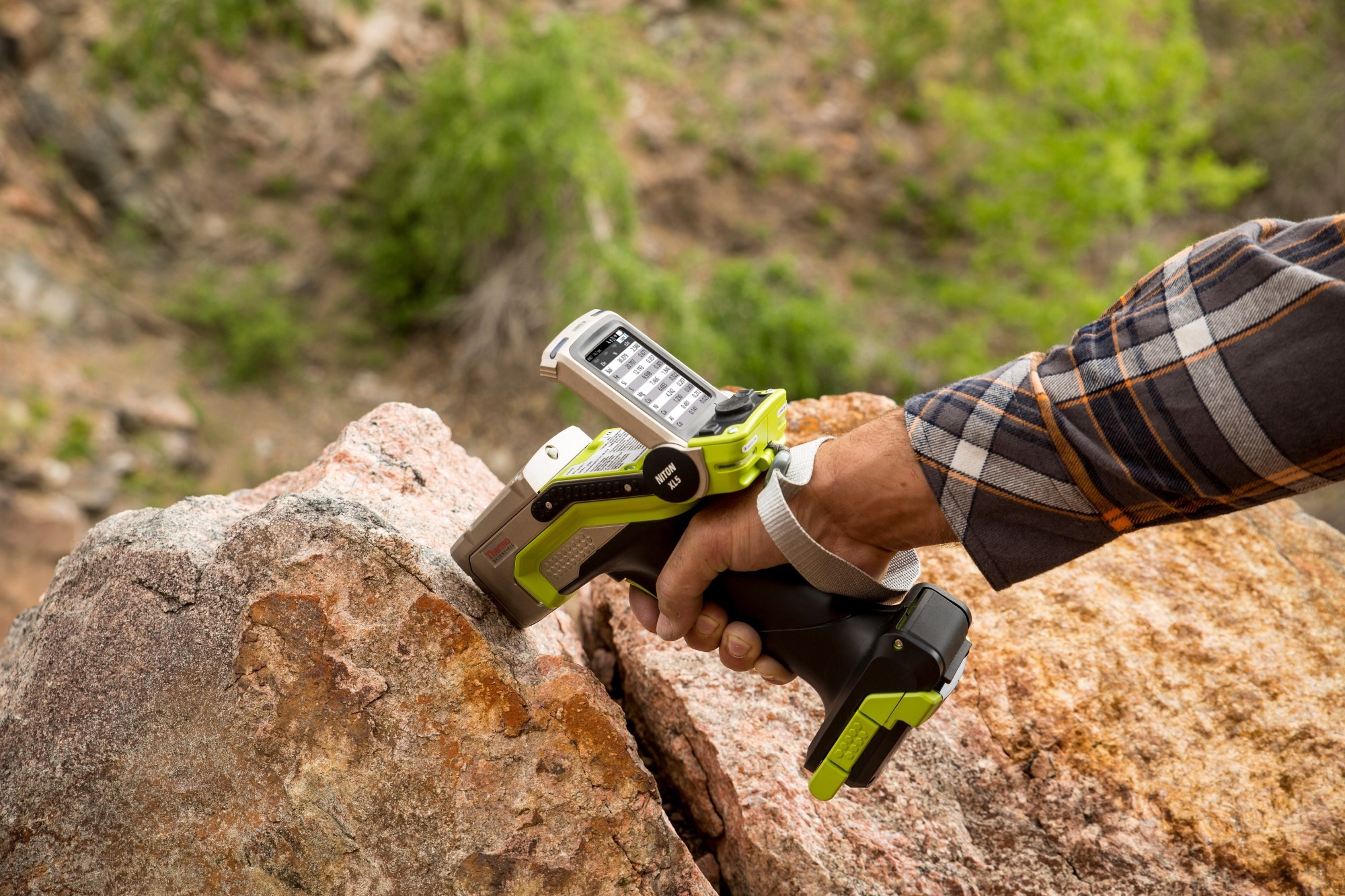
Image Credit: Thermo Fisher Scientific – Handheld Elemental & Radiation Detection
When should users choose Mining mode instead of Soils mode?
A useful rule of thumb is that Mining mode works well for higher concentrations, roughly around 500 parts per million and above. Mining mode is an FP (fundamental parameters) calibration method and tends to yield better results when the concentration of the target element is relatively high.
Soils mode uses a different model called Compton normalization. That approach is very useful for trace elements, especially at lower concentrations. For example, if someone is looking for 30 parts per million lead in soil, Compton normalization can perform very well.
However, every mode has strengths and limitations. Soils mode is useful for trace elements in a soil-type matrix, but it can break down at higher concentrations. In that situation, Mining mode may yield a more accurate result. If an analyzer has both modes, users can cover both trace-level measurements and higher-concentration measurements more effectively.
Click here to watch Analyze That episode 15 - Choosing the right XRF for your application
Why is sample preparation especially important in mining applications?
Sample preparation can be extremely important in mining because ore and rock samples are often complex and non-homogeneous. The element of interest may not be evenly distributed, and it may be bound within the rock or mineral structure.
One example involved a silver mine where the rocks were reading around 200 parts per million with XRF, but refinery results showed 1.5 to 2% silver; that is a very large difference. The issue was that the silver was bound into the stone, so the XRF was not getting a representative measurement from the surface of the rock.
The better approach was to pulverize the rock into a fine, dry powder, place it into a sample cup, and use appropriate XRF film. Once the sample was prepared this way, the XRF results moved much closer to the lab assay results, around 10,000 to 17,000 parts per million. That shows how much sample preparation can affect handheld XRF results in mining.
What should users know about sample cups and XRF film?
For powdered mining or soil samples, a sample cup and XRF film can make a big difference. The goal is to present the analyzer with a consistent, representative sample while minimizing distortion.
There is debate about which XRF film is best, but a four- to six-micron polypropylene film designed for XRF is generally a strong choice. Thinner film helps reduce distortion and gives the analyzer a clearer path to the sample. Thicker films may be acceptable when testing higher concentrations, but if users want the best answer, the four- to six-micron range is a good starting point.
Dryness also matters; the sample should be fine, dry, and as homogeneous as possible. Pulverizing the sample into powder helps create a more representative material for analysis and can significantly improve the quality of the result.
Why is testing enough samples important for mining and soil analysis?
Mining samples can be heterogeneous, and the geology of a region can vary significantly. That means one scan may not represent the whole sample, deposit, or area being evaluated.
In mining exploration, users may be looking for trace elements that indicate a larger deposit or target material below the surface. Those trace elements can be very important, but they require a thoughtful approach to sampling. Users need to consider where the sample came from, how it was prepared, and whether enough scans have been taken to properly represent the material.
Handheld XRF provides speed, but that speed should be used to gather more useful data, not to rely on a single scan at a single location and assume it represents everything.
Click here to watch Analyze That episode 15 - Choosing the right XRF for your application
What are the most important setup considerations before using a handheld XRF analyzer?
Users should start by understanding the analyzer itself. Not all handheld XRF analyzers are the same, even though many look similar. The hardware, detector type, calibration, software, and installed modes can all affect what the analyzer can measure and how it reports results.
Before testing, users should confirm that the analyzer is configured for the application. For example, metals analysis, precious metals, mining, soils, RoHS, catalytic converter recycling, and Light Metal Quick Sort all involve different workflows or assumptions.
The key question is whether the analyzer has the right mode for the sample. If it does not, users may still get a result, but it may not be the right result. A local representative or training provider can help confirm whether the analyzer and mode match the intended application.
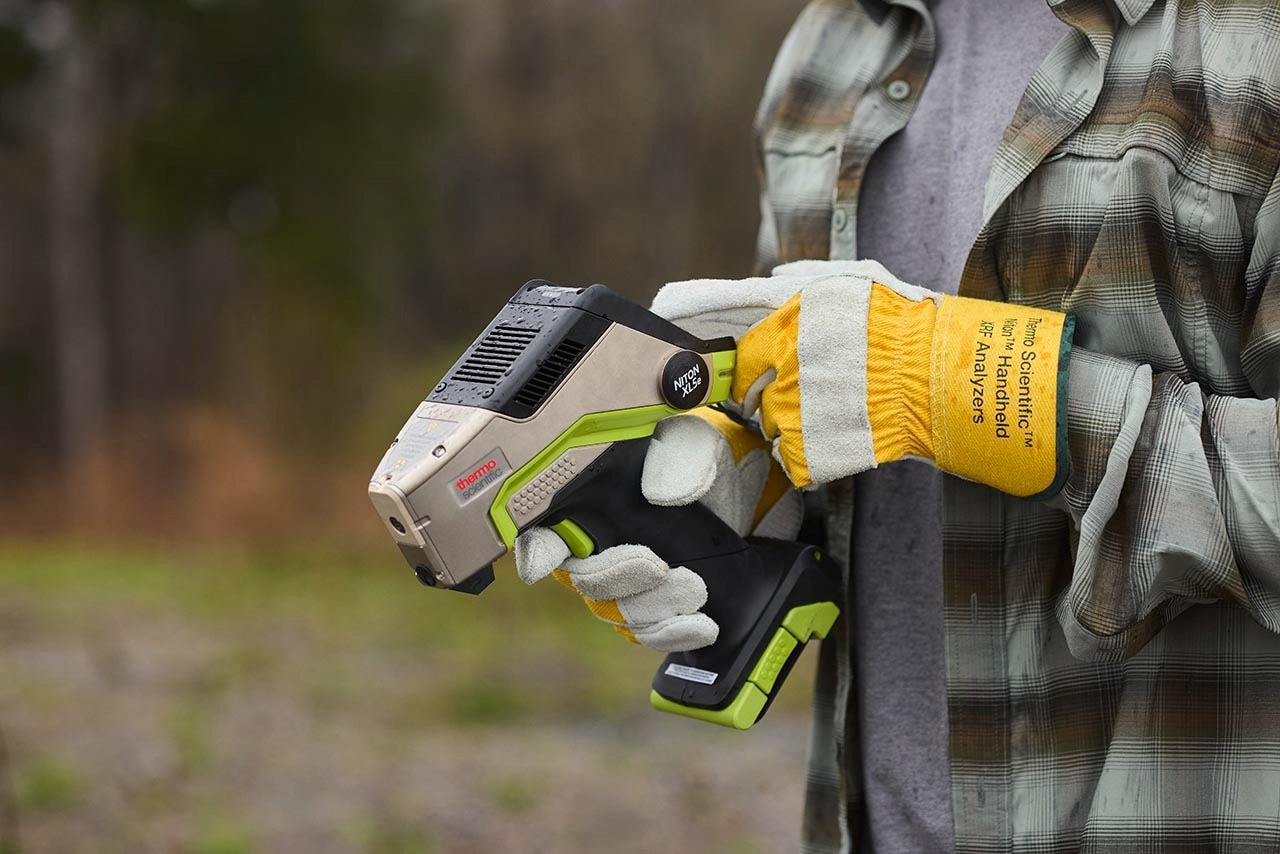
Image Credit: Thermo Fisher Scientific – Handheld Elemental & Radiation Detection
How can users protect the analyzer during routine work?
Analyzer protection is crucial because handheld XRF analyzers are valuable tools in demanding environments. One of the most common ways people damage an XRF analyzer is by damaging something at the front of the device, where the sensitive components are located.
Users should avoid putting compressed air, Q-tips, or other objects into the measurement window. They should also be careful with chips, turnings, powders, and sharp materials that could damage the window or front-end components.
Another simple but important practice is using the wrist strap. Dropping an analyzer is one of the most common ways to damage it, and a wrist strap is an inexpensive way to reduce that risk. Just as people protect a phone with a case, users should protect an XRF analyzer, as it is an expensive and important instrument.
How can accessories such as test stands improve handheld XRF workflows?
Accessories can improve both analytical results and operator efficiency. A test stand is useful when users need more repeatable positioning, better control of small or difficult samples, or longer measurement times.
In mining applications, for example, some samples may require 60-, 90-, or 120-second scans. Being able to clip the XRF into a test stand, run it from a computer, and let it collect data while the operator works on something else can be very valuable. It improves consistency and also recognizes that operator time has value.
Test stands can also help protect the analyzer and improve safe operation, especially when dealing with samples that are hard to hold, difficult to target, or potentially damaging to the front of the device.
Why is training so important for handheld XRF users?
Training is one of the most important parts of getting consistent results. Much of the information users need may be in manuals, but it can be difficult to get an entire team to read and apply it consistently.
Training helps ensure users know how to operate the device safely and properly, select the right modes, understand the settings, and recognize when different beams or filters are in use. For example, users may need to understand heavy-element beams, light-element beams, or other beam settings, depending on the analyzer and application.
When everyone on a team is trained and working from the same process, results become more consistent. Training also helps users avoid preventable mistakes, protect the analyzer, and choose the right workflow for the samples they are testing.
Analyze That episode 15 - Choosing the right XRF for your application
Choosing the right XRF for your application
About Nate Newbury 
Nate Newbury is the Founder and CEO of Alloy Geek, where he helps customers select, use, and maintain metal analysis solutions. He holds a Bachelor’s degree in Materials Engineering: Metals & Polymers from Iowa State University.

This information has been sourced, reviewed, and adapted from materials provided by Thermo Fisher Scientific – Handheld Elemental & Radiation Detection.
For more information on this source, please visit Thermo Fisher Scientific – Handheld Elemental & Radiation Detection.
Disclaimer: The views expressed here are those of the interviewee and do not necessarily represent the views of AZoM.com Limited (T/A) AZoNetwork, the owner and operator of this website. This disclaimer forms part of the Terms and Conditions of use of this website.