Gas pipeline leaks pose substantial challenges to safety, environmental compliance, and operational efficiency. As pipeline networks expand in length and complexity, conventional inspection techniques are no longer sufficient for quick and accurate leak location. In this context, optical gas imaging (OGI) provides an effective solution by visualizing gas leaks directly on pipelines in real time.
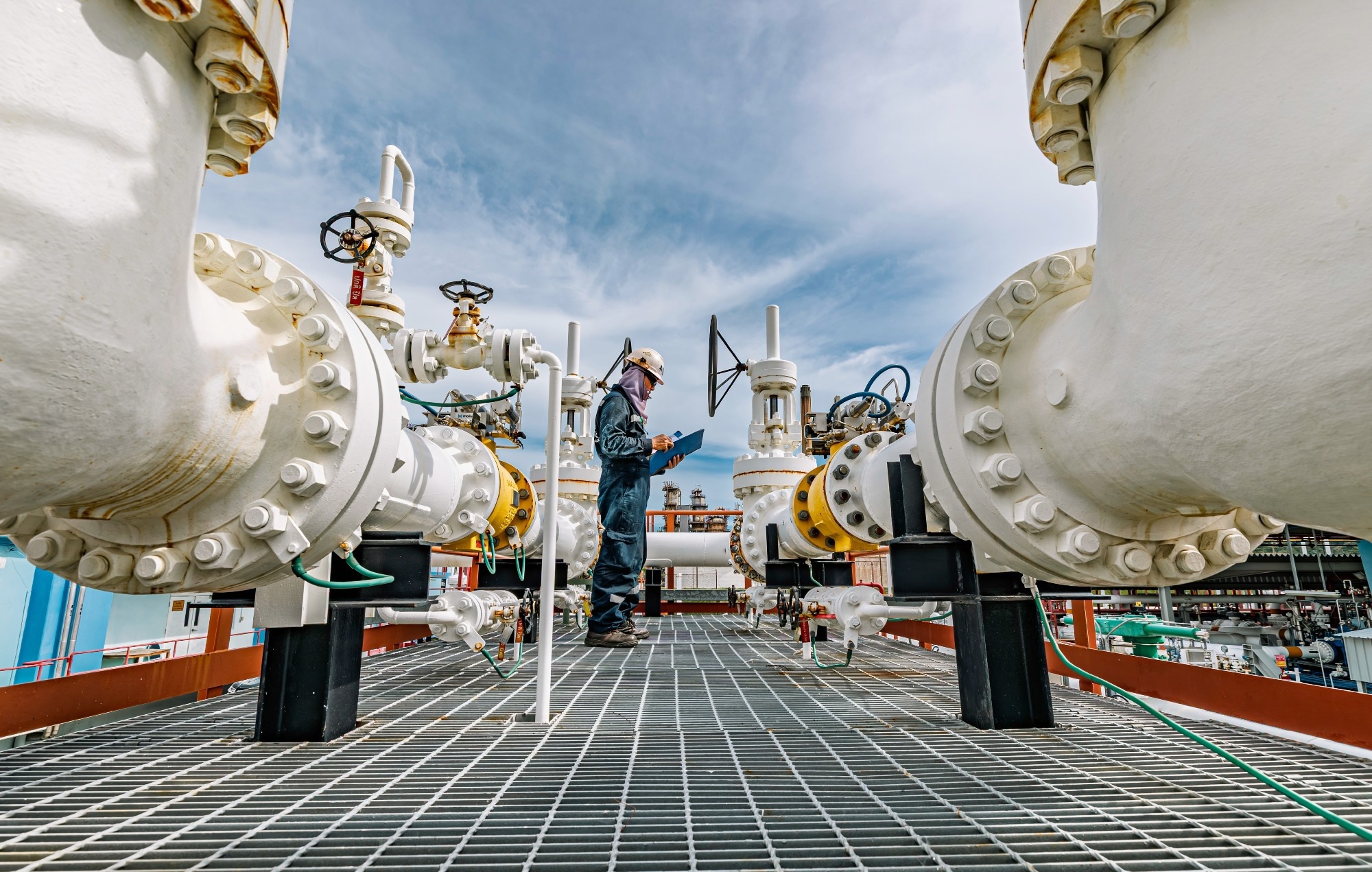
Image Credit: noomcpk/Shutterstock.com
This article outlines how to visualize gas leaks on pipelines using contemporary OGI methods, including handheld, fixed, and aerial strategies.
Why Visualizing Pipeline Leaks Matters
Gas pipelines frequently cover vast distances and operate across diverse environmental settings. Since leak detection alone is not sufficient, operators must rapidly visualize and localize the precise source of emissions to take corrective action.
Key challenges include:
- Long-distance infrastructure coverage
- Restricted physical access to elevated or remote sections
- Environmental interference such as wind and humidity
- Difficulty identifying precise leak locations using conventional instruments
OGI technology offers a more effective method by visualizing gas emissions as colorized plumes, helping operators rapidly identify leaks and prioritize remediation efforts.
What Is Gas Leak Visualization?
Gas leak visualization relies on infrared imaging to render hydrocarbon gases visible. OGI cameras identify specific wavelengths absorbed by gases such as methane and VOCs, transforming them into colorized plumes on a screen.
Rather than relying on numerical readings, operators can:
- Evaluate leak size and behavior visually
- Determine the exact source location
- Observe the leak instantaneously
This approach is particularly important for pipeline inspections, where accuracy and speed are crucial.
Methods to Visualize Gas Leaks on Pipelines
1. Handheld Optical Gas Imaging
Handheld OGI cameras are the most direct method for leak visualization along pipelines.
How it Works:
- The operator scans pipeline components such as valves, joints, and connectors.
- The camera displays gas plumes instantaneously.
- Leaks are localized immediately without requiring extra tools.
Benefits:
- Quick inspection of accessible pipeline sections
- Elevated sensitivity to small leaks
- Safe operation from a distance
Handheld devices are especially effective for maintenance checks and routine inspections along pipeline routes.
2. Long-Range Visualization for Pipelines
Pipelines frequently extend across large or difficult-to-access regions. Long-range OGI abilities enable leak visualization from considerable distances. Detection is possible from tens to hundreds of meters away, minimizing the need for direct access to elevated or hazardous pipeline sections.
Key Technologies:
- Telephoto lenses for long viewing distances
- Spectral filtering to decrease atmospheric interference
- Elevated sensitivity for emission detection in challenging environments
- When the long-range lens is used together with the heavy alkanes filter, operators can reduce the impacts of high humidity, resulting in more effective gas leak visualization.
3. Drone-Based Pipeline Inspection
Aerial systems fitted with OGI cameras offer a scalable solution for long-distance pipeline monitoring. Drone-based visualization is particularly beneficial for offshore or isolated infrastructure, storage tanks, transmission pipelines, and emergency leak assessments. By capturing instantaneous imaging from above, operators can rapidly identify and localize leaks that would otherwise be challenging to detect.
Advantages:
- Quick coverage of large regions
- Access to remote or elevated pipeline segments
- Decreased need for hands-on inspection in challenging terrain
4. Fixed Monitoring Systems for Continuous Visualization
For vital pipeline infrastructure, fixed OGI systems deliver continuous monitoring without hands-on intervention and immediate, automated leak detection. They can also integrate environmental information such as wind direction.
How it Works:
- Cameras and sensors are installed along key pipeline points
- The system continuously scans for emissions
- AI-based analysis detects abnormal leak patterns
Quantifying Pipeline Leaks After Visualization
After leak visualization, quantification becomes crucial for reporting and compliance.
Contemporary OGI systems can estimate leak rates instantaneously, automatically record inspection data, or produce reports to meet regulatory requirements. By combining visualization and quantification, pipeline inspections are transformed from reactive processes into data-driven operations.
Best Practices for Visualizing Pipeline Leaks
By following these best practices, users can maximize the effectiveness of OGI technology to detect pipeline leaks.
- Systematic scanning along pipeline parts and connection points
- Use of long-range capabilities for inaccessible areas
- Use of aerial inspections for large-scale coverage
- Monitoring of environmental conditions to optimize detection precision
- Combination of technologies (handheld, fixed, and drone) for complete coverage
A layered approach helps ensure that no part of the pipeline remains unmonitored.
Conclusion
Visualizing gas leaks on pipelines is no longer a complicated or time-intensive task. Optical gas imaging (OGI) provides real-time detection, localization, and assessment of leaks, even across large and demanding environments.
By integrating handheld devices, long-range imaging, drone inspections, and fixed monitoring systems, organizations can achieve detailed pipeline visibility. This enhances both compliance and safety while also reducing operational expenses and environmental impact.
As pipeline networks continue to grow, implementing sophisticated visualization technologies becomes critical for sustaining efficient, compliant, and dependable operations.
References and Further Reading
- Webinar: Seeing Gas Leaks in Real Time: How Handheld Optical Gas Imaging Improves LDAR
- Flyer: Real-time remote OGI camera streaming
- Video: EyeCGas OGI Camera capabilities
- Thermo Fisher Scientific (2026). Opgal EyeCGas Optical Gas Imaging Camera Resources | Thermo Fisher Scientific - US. Available at: https://www.thermofisher.com/us/en/home/industrial/environmental/air-quality-analysis/industrial-hygiene/opgal-eyecgas-multi/resources.html.
- Thermo Fisher Scientific (2020). Resources for Industrial Hygiene | Thermo Fisher Scientific - US. Available at: https://www.thermofisher.com/us/en/home/industrial/environmental/air-quality-analysis/industrial-hygiene/resources.html.
Acknowledgments
Produced from materials originally authored by Bob Gallagher.

This information has been sourced, reviewed, and adapted from materials provided by Thermo Fisher Scientific – Environmental and Process Monitoring Instruments.
For more information on this source, please visit Thermo Fisher Scientific – Environmental and Process Monitoring Instruments.