Sponsored by MicrotracReviewed by Louis CastelNov 13 2026
Developing stable emulsions, suspensions, and other complex dispersions is a crucial challenge across sectors ranging from batteries and pharmaceuticals to cosmetics and coatings. However, selecting the appropriate stability assessment technique is not always simple.
The best strategy relies on formulation type, instability mechanism, development stage, and decision speed. Instead of depending on a single method, formulation researchers benefit from understanding each technique’s strengths and limitations and aligning them to the questions that must be answered.
Why Stability Testing Matters
Most dispersions are thermodynamically unstable systems. Over time, particles or droplets tend to move, aggregate, or separate as the formulation shifts toward a lower-energy state. Common destabilization mechanisms include sedimentation, creaming, flocculation, coalescence, and Ostwald ripening.1
The challenge for R&D and QC teams is that physical instability frequently develops long before it becomes visible. By the time a formulation exhibits clear phase separation, important development time may have already been lost. This makes the choice of analytical technique especially urgent during formulation screening and optimization.
Limitations of Conventional Stability Assessment
Visual observation remains a commonly used technique for analyzing dispersion stability,2 with samples stored under defined conditions and inspected for signs of phase separation, sedimentation, or creaming.
Its popularity stems from its low cost, user-friendliness, and ability to detect visible changes that impact acceptance. However, this approach identifies instability only after changes become visible and offers limited kinetic or mechanistic data. As a result, subtle differences between formulations may go undetected, especially during early-stage development.
Traditional storage research also remains valuable for shelf-life evaluation but often requires weeks or months to produce meaningful outcomes, restricting its usefulness for rapid formulation screening.
Early-Stage Formulation Screening
An effective stability strategy begins with a clear understanding of the formulation challenge and the decisions that must be made throughout development.
During the early stages, researchers often need to compare several candidate formulations and determine which provides the best stability, identify the most effective additives, and understand the mechanisms driving failure. In these situations, rapid, objective analytical techniques enable teams to identify unstable formulations and concentrate on promising candidates.
Evaluating Formulation Destabilization
To understand how a formulation destabilizes, the selected technique should deliver insight into both particle migration and particle-size alterations. Sedimentation and creaming take place when particles or droplets migrate due to differences in density, flocculation involves particle aggregation, and coalescence results in droplet growth and eventual phase separation.3
Although a number of traditional techniques can detect instability, relatively few deliver the mechanistic insight required for identifying the root cause, making mechanism-focused evaluation a crucial variable in choosing a good stability assessment strategy.
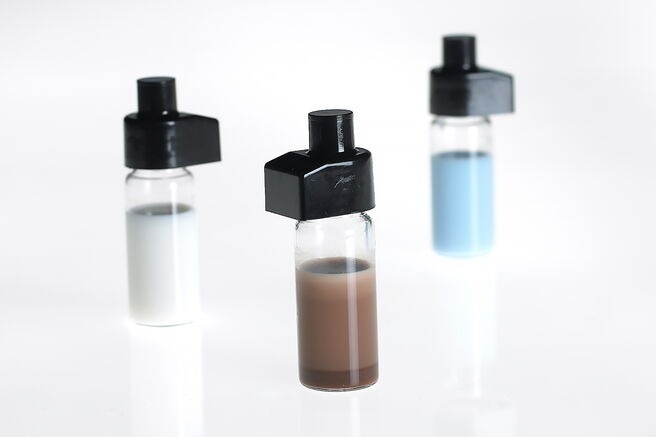
Image Credit: Microtrac
Final Product Validation
At later development stages, regulatory or quality protocols frequently require instantaneous or accelerated storage assessments. These studies remain critical, as they evaluate formulation performance under practical conditions. However, analytical screening narrows formulation choices before storage assessments.
The Role of Instrumental Stability Assessment
Contemporary dispersion evaluation methods deliver quantitative data that complements conventional storage assessment. Among these, static multiple light scattering (SMLS) offers a particularly powerful approach and is the technology employed in TURBISCAN dispersion stability analyzers.
SMLS quantifies transmission and backscattering across the sample, enabling monitoring of alterations in particle concentration and size over time without dilution.4 The ability to evaluate concentrated samples without modification allows instability phenomena to be tracked in their natural state.
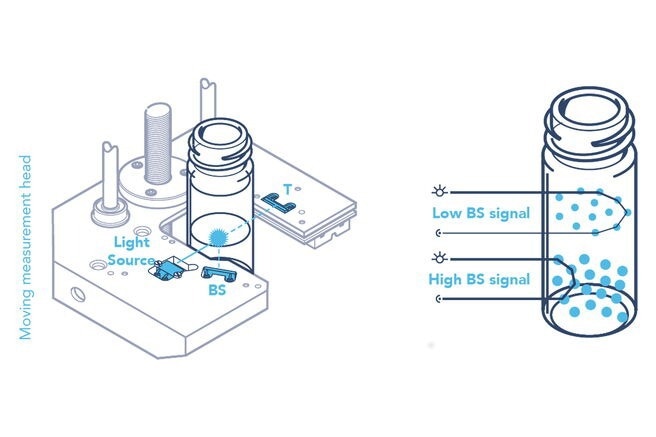
Image Credit: Microtrac
How TURBISCAN Facilitates Technique Selection and Formulation Decisions
TURBISCAN analyzers are specifically designed to characterize emulsions, suspensions, foams, slurries, and other complex dispersions. The technology continuously scans the sample height and measures both transmitted and backscattered light, enabling the identification of physical alterations long before they become visible. This capability offers multiple practical benefits:
1. Early Detection of Destabilization
TURBISCAN detects sedimentation, creaming, flocculation, coalescence, and phase separation by tracking subtle alterations in a dispersion before visible separation occurs. Early identification of destabilization processes allows formulation researchers to objectively analyze and compare formulations, speeding up stability assessment and decision-making.
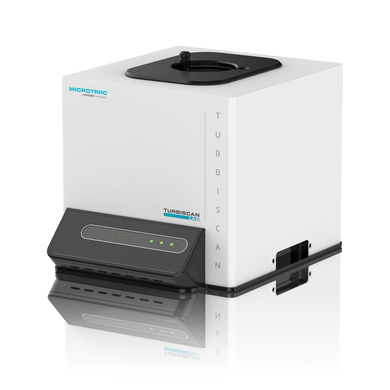
Image Credit: Microtrac
2. Objective Comparison of Formulations
In contrast to visual evaluations, instrumental measurements generate quantitative data. Metrics including the TURBISCAN Stability Index (TSI) enable scientists to compare several formulations using a consistent parameter. This is especially advantageous during formulation screening, where small stability variations can affect ingredient selection.

Image Credit: Microtrac
3. Identification of Failure Mechanisms
The transmission and backscattering profiles are quantified throughout the sample height, enabling researchers to determine whether instability is caused by migration, aggregation, or particle-size growth. This degree of insight allows researchers to make targeted formulation alterations instead of depending on basic pass/fail outcomes.
4. Application Flexibility
TURBISCAN technology is commonly used to assess dispersion stability in battery slurries, pharmaceutical suspensions, cosmetic emulsions, paints and coatings, food dispersions, and nanoparticle formulations.

Image Credit: Microtrac
Its ability to evaluate concentrated samples without dilution or lengthy preparation makes it especially useful for examining formulations in their native state, delivering outcomes that are more representative of real-world product behavior.

Image Credit: Microtrac
Building a Practical Stability Approach
No single technique is universally appropriate for every formulation challenge. Visual observations and storage research remain essential for shelf-life validation and quality control. However, when rapid formulation decisions, objective comparisons, and insight into instability mechanisms are required, instrumental evaluation provides objective, early indicators of instability.
Research teams employ instrumental evaluation to rapidly screen and rank formulations, detect early failure mechanisms, and guide optimization before verifying performance through longer-term storage research.
Instrumental methods such as TURBISCAN offer earlier, objective detection of processes, such as sedimentation, creaming, flocculation, and coalescence.
By pairing quantitative stability metrics with traditional assessment, formulation researchers can make more informed decisions and choose the most suitable analytical method according to the sample type and development stage.
References and Further Reading
- McClements, D.J. (2015). Food Emulsions: Principles, Practices, and Techniques (3rd Edition). CRC Press. DOI: 10.1201/b18868. https://www.taylorfrancis.com/books/mono/10.1201/b18868/food-emulsions-david-julian-mcclements.
- Stockman, J. D, Fochman, R. (1978). Particle Size Analysis, Ann Arbor Science, Ann Arbor, NY.
- Mcclements, D.J. (2007). Critical review of techniques and methodologies for characterization of emulsion stability. Critical Reviews in Food Science and Nutrition, 47(7), pp.611–649. DOI:10.1080/10408390701289292. https://www.tandfonline.com/doi/full/10.1080/10408390701289292.
- Mengual, O., et al. (1999). Turbiscan mA 2000: Multiple light scattering measurement for concentrated emulsion and suspension instability analysis. Talanta, 50(2), pp.445–456. DOI:10.1016/S0039-9140(99)00129-0. https://www.sciencedirect.com/science/article/abs/pii/S0039914099001290.

This information has been sourced, reviewed, and adapted from materials provided by Microtrac.
For more information on this source, please visit Microtrac.