AIMPLAS leads the BIOVALSA project, funded by IVACE+i and ERDF funds, in which FoodUPV, Bioban, Viromii and Prime Biopolymers participate.
The new treatment will reduce the high cost of transforming rice straw and citrus pruning waste into plant-based plastics.
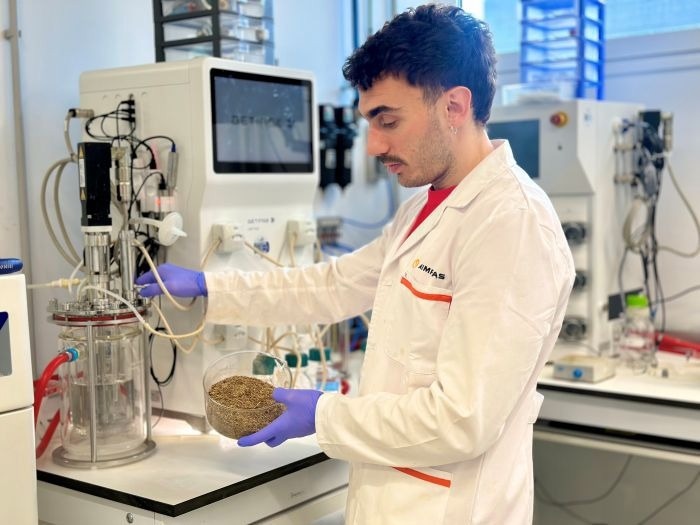 Image Credit: AIMPLAS
Every year, the Valencian agricultural sector generates around 800,000 tons of plant waste, such as rice straw and citrus pruning waste. Currently, the methods for recovering this biomass are costly, as they require commercial enzymes that can represent up to 40 % of the cost of the process, which limits its industrial viability. To solve this problem, AIMPLAS, the Plastics Technology Centre, is leading the BIOVALSA project, an initiative that seeks to develop innovative processes for manufacturing sustainable bioplastics from agricultural waste and pruning residues. The project is funded by IVACE+i Innovation and receives financial support from the European Union through the ERDF Comunitat Valenciana programme for the 2021-2027 period.
BIOVALSA will develop a new process that will enable the use of agricultural waste to manufacture bioplastics, a sustainable alternative to petroleum-based synthetics. This initiative aims to develop alternative routes for recovering value from rice straw biomass, thereby avoiding the use of costly chemical compounds. Specifically, the idea is to replace the usual treatments with others that allow the three fractions (cellulose, hemicellulose and lignin) that make up the lignocellulosic biomass to be recovered for use in various applications of interest to the bioplastics industry.
Cellulose will thus be used to produce lactic acid, a key compound in the manufacture of PLA, the most widely used bioplastic, while hemicellulose is expected to yield succinic acid, which is necessary for the production of PBS, another sustainable biopolymer with greater flexibility and heat resistance.
Finally, the antimicrobial properties of lignin make it suitable for recovery and use as an additive to prevent the proliferation of microorganisms, which increases the market value and expands the potential applications of these biodegradable and compostable materials.
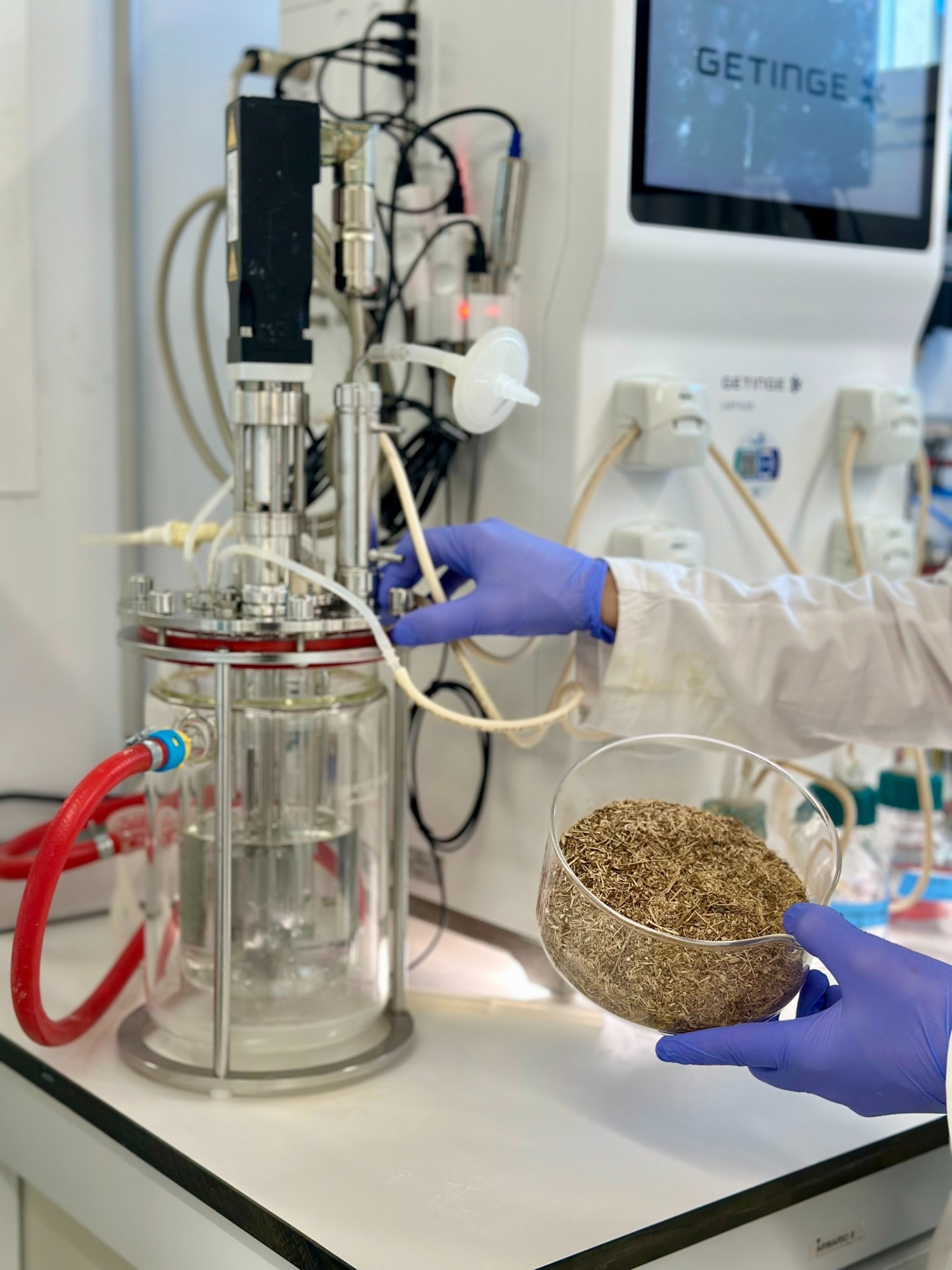
Image Credit: AIMPLAS
Collaborating Companies and Centers
Coordinated by AIMPLAS, which contributes its experience in both waste recovery and biopolymer manufacturing, “BIOVALSA” also brings together specialists from the University Institute of Food Engineering at the Polytechnic University of Valencia (FoodUPV) and three other companies based in the Valencian Community. Bioban will contribute its genomic analysis capabilities to identify the most suitable bacterial strains for carrying out the treatments, while Viromii will study the economic viability of new processes for obtaining biocomposites. Finally, Prime Biopolymers, as the end customer, will be responsible for producing the biomaterials and analyzing applicability of the materials obtained during the project.
The project is in its first year of development, during which progress has been made in separating the components of rice straw using alternative methods that do not involve toxic substances. Different strains of bacteria and microorganisms capable of breaking down cellulose and hemicellulose to generate the lactic and succinic acids necessary for the production of bioplastics are also being tested.
BIOVALSA is aligned with the conclusions of the Strategic Specialized Innovation Committees (CEIE) on Circular Economy and Enabling Technologies, promoted by IVACE+i Innovación. In the first case, it responds to the development of materials and technologies for the production of high added-value products from waste and, in the second, it urges the application of biotechnology to improve processes and products. It also falls within the main axes of the Valencian Community's Smart Specialization Strategy, S3, which is coordinated by the Regional Ministry of Industry, Tourism, Innovation and Trade.