The initiative seeks to reduce development times, minimise formulation errors and move towards a more digital, efficient and environmentally friendly industry.
It involves the participation of Tyris AI and Faperin and seeks to apply AI tools in the industrial sector.
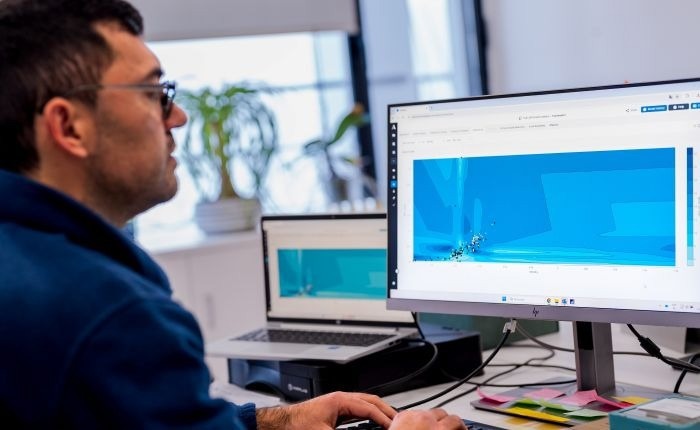 Image Credit: AIMPLAS
With the aim of transforming the design of plastic materials, AIMPLAS, the Plastics Technology Center, has launched the POLY-ML project, an R&D initiative that applies advanced machine learning techniques to predict material properties based on their composition and processing conditions. These techniques make it possible to optimize formulations, reduce the need for experimental testing and improve the efficiency of R&D processes.
The project focuses on the development of predictive models capable of anticipating the mechanical, thermal or physical properties of materials, which will enable faster and more accurate decisions to be made in the early stages of development. This data-driven approach helps to reduce costs, time and waste generation, while improving the traceability and sustainability of processes.
POLY-ML is funded by the Valencian Institute of Competitiveness and Innovation (IVACE+i) and ERDF funds, with the participation of Tyris AI, which specializes in artificial intelligence applied to industry, and FAPERIN, a plastic processing company, mainly polypropylene injection moulding for the automotive sector. On the one hand, FAPERIN provides data from its processes to train models and draw conclusions, while Tyris AI contributes its knowledge in the application of AI in the industrial sector.
The project focuses on a tool that allows models to be developed, even without programming knowledge, in order to facilitate the adoption of artificial intelligence in the plastics sector, promoting its digitalization and competitiveness.
‘With the POLY-ML project, we are taking an important step towards the real application of artificial intelligence in the design of plastic materials. Our goal is for the models to be validated in industrial environments, which will ensure their reliability and usefulness in real operating conditions,’ explains Joan Giner, researcher at the AIMPLAS Characterization Laboratory.
Impact on Sustainability, Occupational Health and the Local Economy
POLY-ML generates significant benefits in terms of environmental sustainability, occupational well-being and economic development. From an environmental perspective, it contributes to reducing laboratory waste and the use of hazardous solvents and additives by avoiding inefficient formulations. In the field of occupational health, it reduces the exposure of technical staff to chemicals and reduces the risks associated with experimental testing. At an economic and territorial level, the project strengthens the competitiveness of the plastics sector in the Valencian Community, boosts the creation of skilled jobs and promotes technological autonomy in the development of new materials.
Furthermore, it is aligned with the RIS3-CV strategy in key areas such as digitalization, sustainability, the circular economy and collaboration between agents in the industrial and research ecosystem, thus consolidating the Valencian Community's position as a benchmark in the application of artificial intelligence to the design of plastic materials.
The project has the support of the Valencian Institute of Competitiveness and Innovation (IVACE+i), through its industrial R&D promotion programs, with funding from the European Regional Development Fund (ERDF).