In this interview, industry expert Lisa Williams explains how artificial intelligence is transforming oil analysis, enabling predictive maintenance, faster insights, reduced downtime, and integrated condition-based monitoring across critical industrial assets.
How is artificial intelligence reshaping the oil analysis industry as a whole, and what trends are you seeing emerge across the sector?
For years, it was a fairly common practice to walk into any oil analysis lab and find a trained analyst reviewing dozens of oil reports, manually writing each one, and sending it to the customer. As the oil analysis industry has grown to nearly a 2 billion dollar industry, the ability to keep up with such practices has become nearly impossible. Downtime on critical equipment has always been a key driver in quickly turning around results, but now the amount of these critical assets has increased, and the manpower to generate the reports in a timely fashion has decreased.
AI models have proven they can analyze more complex data and also utilize more fleet-like analytics to interpret results. Organizations also want to be able to incorporate highly technical CBM data into one platform where they can integrate all CBM data (vibration, infrared, motor circuit analysis, ultrasound, etc) into one place and draw conclusions and patterns from multiple data streams.
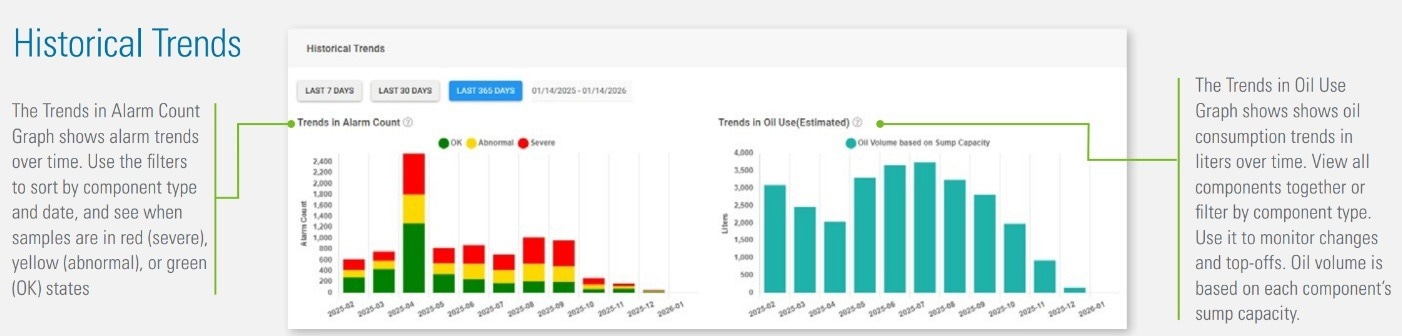
Image Credit: AMETEK Spectro Scientific
What are some of the most pressing challenges in traditional oil analysis that AI technologies are beginning to solve?
The oil analysis industry faces numerous challenges that AI is beginning to address. Organizations are utilizing AI to analyze complex data patterns and larger amounts of data. Additionally, AI models eliminate subjectivity in oil analysis by using data patterns and historical to predict results. It also addresses the current issue of longer lead times for oil samples, which is becoming increasingly unacceptable in supporting CBM goals for an organization. Finally, but perhaps the most important, AI allows the industry to move from diagnostic maintenance (reactive) to truly predictive (forecasting). This supports catching failures well before they become catastrophic.
How important is real-time data in today’s predictive maintenance strategies, especially for industries relying on critical rotating equipment?
Faster data acquisition enables maintenance teams to make more accurate decisions by minimizing the gap between sampling and equipment behavior. Fast, real-time understanding of machine behavior can lead to early detection of anomalies and failures that can drastically reduce downtime and extend Mean Time Between Failure (MTBF) by implementing oil changes, filter changes, or top-ups.
Turning to Spectro Scientific, how does TruVu 360™ fit into this broader transformation in oil analysis and condition-based monitoring?
For years, the industry has had a diagnostic mentality. We have never had many tests or predictive tools that provided the forecasting that the reliability engineer really desired. At Spectro Scientific, TruVu 360 explicitly extends from rule-based diagnostics to predictive/prognostic models that forecast oil degradation and emerging failure states, and then prescribes actions. TruVu 360™ elevates oil analysis from “what’s wrong now” to “what will fail when – and what to do about it.”
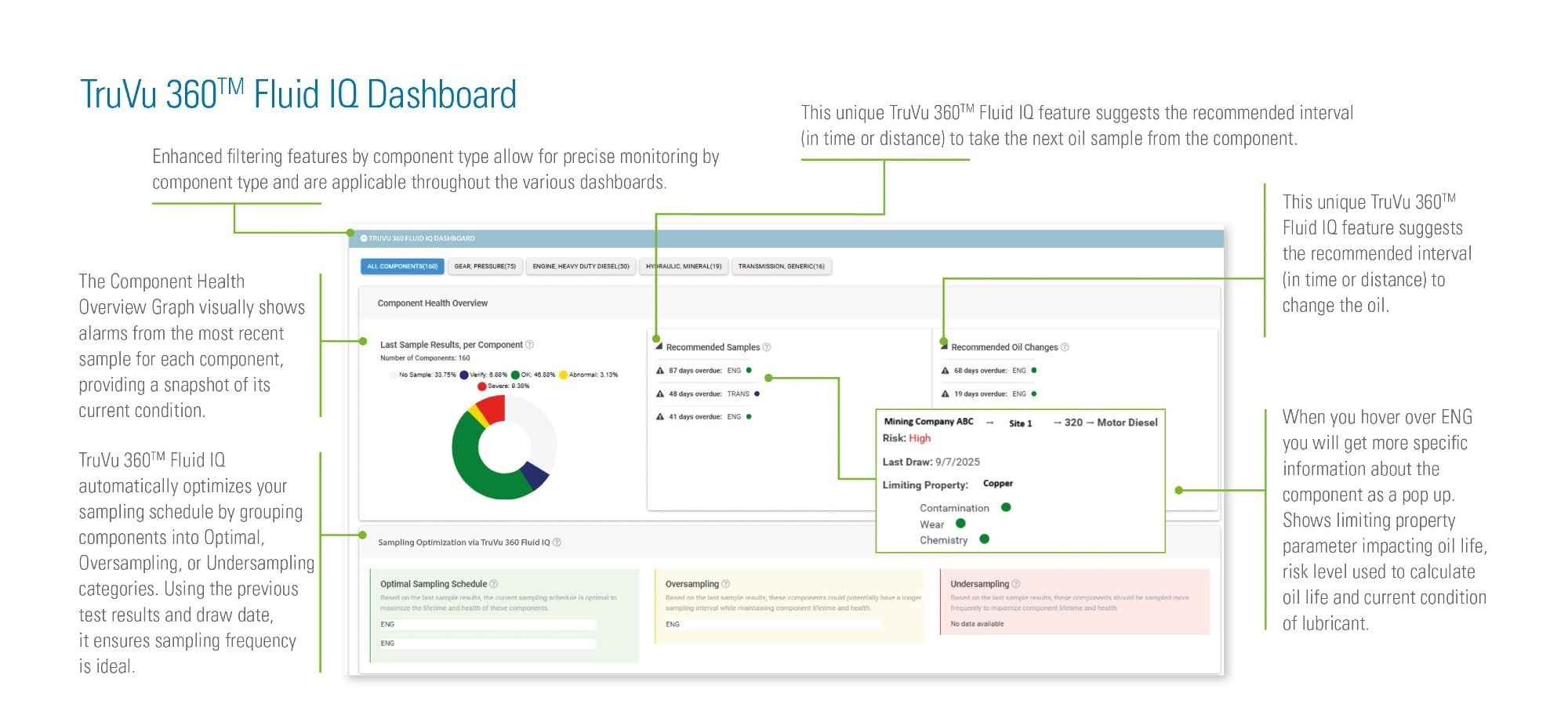
Image Credit: AMETEK Spectro Scientific
Can you walk us through the new AI-driven prediction features being introduced in TruVu 360™, and how they stand out from conventional approaches?
TruVu 360 introduces TruVu 360™ Fluid IQ that moves beyond static diagnostics to truly predictive maintenance concepts.
Key capabilities include:
- Remaining Useful Life (RUL) Prediction
Calculates how long oil will remain within safe operating limits, enabling proactive scheduling of oil changes.
- Sampling Interval Recommendations
Suggests optimal sampling frequency, reducing unnecessary tests while maintaining reliability.
- Site-Level Health Overview
Aggregates data across multiple assets to provide a holistic view of equipment health
- Carbon Footprint Reporting
Quantifies sustainability benefits by tracking oil consumption
Conventional approaches rely on rules-based alarms and static thresholds, which can lead to alarm fatigue where too many assets are alarming. This can lead to the maintenance team being overwhelmed and unable to address the critical assets that need attention immediately. This model also leads to reactive maintenance, where the actions are triggered only after a parameter exceeds a limit.
How does the platform collect and process data to generate predictive insights, and what kinds of failure modes can it detect or forecast?
Oil samples are collected directly from the asset using representative sampling, following established best practices to prevent contamination. On-site testing is conducted with the MiniLab and TruVu 360™, utilizing analytical instruments such as SpectrOil, MiniVisc, LaserNet, FluidScan, and FerroCheck to measure wear metals, particle counts, viscosity, water content, and chemical degradation. When data is uploaded to TruVu 360™, it’s quickly turned into useful insights through advanced analytics. The TriVector™ gives a clear, three-part view of oil health by showing wear, contamination, and chemistry, so users can easily spot any issues. The Adaptive Rules Engine can use ASTM D7720 statistical techniques to recommend alarm setting adjustments based on historical data, reducing unnecessary alerts. TruVu 360™ Fluid IQ goes a step further by forecasting how much life is left on the oil, recommending the best internal for sampling and oil changes.
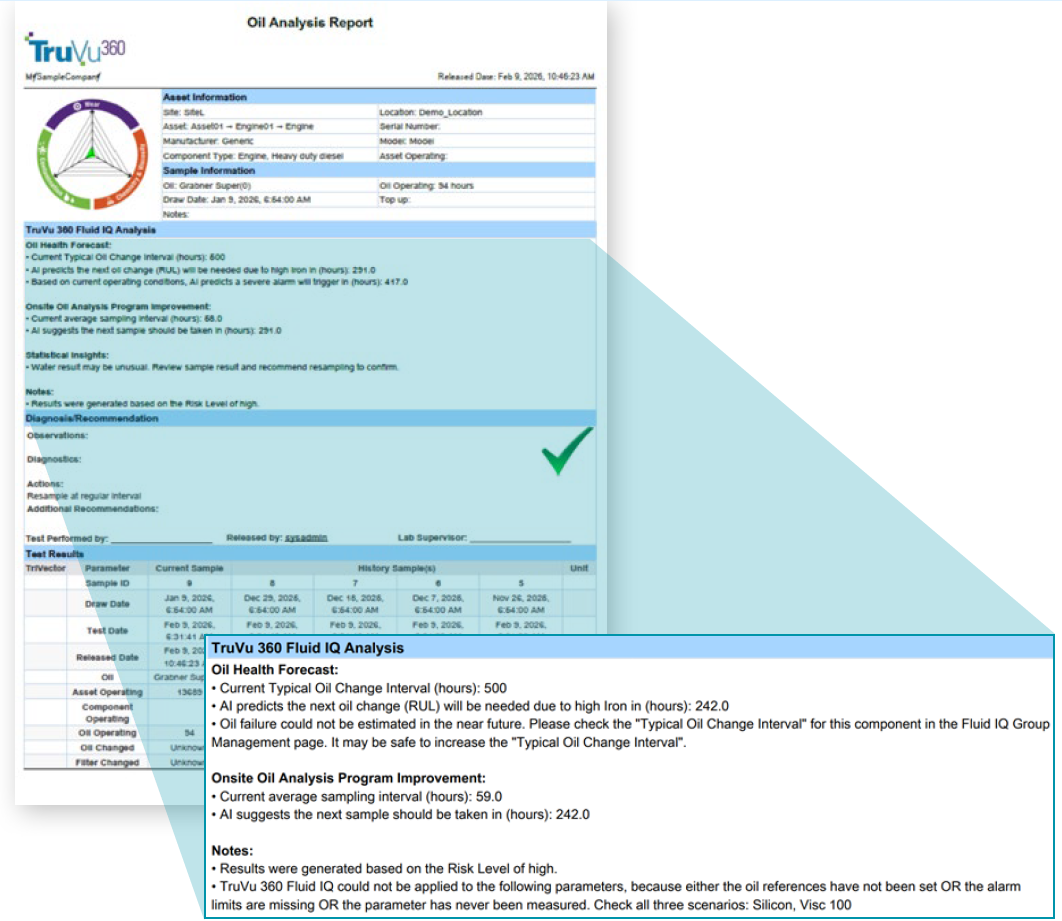
Image Credit: AMETEK Spectro Scientific
What machine learning or statistical models form the backbone of these prognostic features, and how were they trained for reliability applications?
TruVu 360™ Fluid IQ uses advanced data science methodologies, including Monte Carlo statistical analysis, to transform raw oil analysis data into actionable recommendations for maintenance personnel, surpassing the capabilities of conventional laboratory processes.
- Data Science Techniques: TruVu 360™ applies advanced data science to analyze large datasets and generate predictive insights using mathematical models. With thousands anonymized oil samples from more than 60 organizations in our cloud database, our predictions improve as we gather more data. On-site users add value by providing machine runtime and oil analysis data.
- Actionable Maintenance Statements: The platform translates diagnostic information into concise, actionable directives that technicians can implement immediately into their workflow.
- Lab and On-Site Analysis Synergy: While certain evaluations will still require laboratory analysis, the capacity for on-site retesting and process closure offers substantial benefits, particularly in environments demanding high throughput.
In terms of implementation, how scalable is the AI functionality across different types of assets or industries?
TruVu 360™ Fluid IQ is highly scalable across different assets and industries because it uses a cloud-based architecture, modular (add-on feature) licensing, and algorithms that apply broadly to predictive maintenance. It supports multiple asset types – such as bearings, gears, hydraulic systems, and engines – making it adaptable for sectors like power generation, transportation, and manufacturing. User-friendly dashboards and automated features further enable its scalability. Industries with mature maintenance practices and good data discipline will achieve the fastest ROI.
What feedback have you received from customers testing these new features? Do you have any insights on ROI, reduced downtime, or improved maintenance planning?
Feedback from a large mine in South America (beta tester):
“The forecast is very good, both for the next sample and up to the point where the lubricant no longer works and could permanently damage the component. I think it is spectacular. It could give us time to act, design, plan and execute, which is the essence of predictive analysis, arriving before failure.
Excellent data and the best thing is that it is very visual, ideal for weekly and monthly presentations and of course, to generate action plans. This is very good, very visual, with a lot of executive useful information.”
Where can readers find more information?
https://www.spectrosci.com/product/truvu-360
About Spectro Scientific
Ametek Spectro Scientfic is an ISO 9001:2021 certified organization and serves as the industry’s leading supplier of on-site oil analysis equipment, delivering real-time results and improving ROI for Reliability and Condition Based Maintenance Programs worldwide.
About Lisa Williams 
Lisa Williams serves as the Digital Product Manager for TruVu 360™ Fluid Intelligence Software at Ametek Spectro Scientific. With a strong commitment to advancing industry knowledge, she has authored more than 40 technical articles focused on condition-based maintenance and lubrication program management. Williams also acts as the Subcommittee Chair for ASTM D02 CS96, which standardizes best industry practices for global in-service lubrication testing.

This information has been sourced, reviewed and adapted from materials provided by AMETEK Spectro Scientific.
For more information on this source, please visit AMETEK Spectro Scientific.
Disclaimer: The views expressed here are those of the interviewee and do not necessarily represent the views of AZoM.com Limited (T/A) AZoNetwork, the owner and operator of this website. This disclaimer forms part of the Terms and Conditions of use of this website.