Sponsored by RETSCH GmbHReviewed by Emily MageeMar 6 2026
Cyclone separators offer significant benefits when integrated with laboratory mills. While cutting mills and rotor mills are already commonly operated with a cyclone, jaw crushers and disc mills also gain considerable advantages from this configuration.
By incorporating a cyclone, two mills can be directly combined. For instance, a two-stage grinding process using a jaw crusher and a disc mill can be completed in a single operation.
How a Cyclone Works
A cyclone separator is connected to the mill outlet, a vacuum system, and a collection receptacle.
The vacuum draws the air-particle mixture from the grinding chamber into the cyclone, where it enters tangentially and begins to spiral.
Centrifugal forces drive the heavier particles outward, causing them to fall into the connected collection receptacle, while the purified air escapes through the top. The functional principle is depicted in Figure 1.
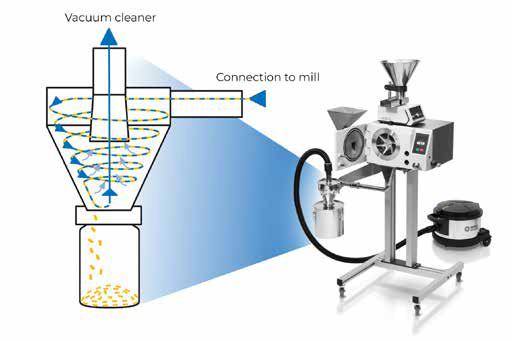
Figure 1. Cross Beater Mill SK 300 mill with a cyclone setup and schematic representation of the functional principle. Image Credit: RETSCH GmbH
Why Use a Cyclone Separator?
A cyclone separator ensures efficient transfer of sample material from the grinding chamber to the collection receptacle. This reduces dust emission and results in cleaner processes, which are reflected in the following practical benefits:
Time and cost efficiency: Reduced cleaning requirements and extended mill service life during operation in a low-dust environment.
Maximum sample recovery: Minimal residue ensures reliable recovery, even for small sample quantities and fine particles.
Safe working conditions: Substantially reduced dust exposure supports a clean and healthy laboratory environment.
Safe sample preparation of temperature-sensitive materials: Minimized heat buildup in the grinding chamber, particularly for milling configurations that use fine sieves or samples that alter characteristics when exposed to elevated temperatures.
Flexibility in placement of collection receptacle and receptacle size: Cyclone-operated sample transport supports collection receptacle volumes ranging from 250 mL glass containers to 30 L receptacles with Retsch systems. The receptacle can be positioned freely, ensuring maximum adaptability.
Factors to Consider When Choosing a Cyclone System
Retsch provides a cyclone solution for every application. A wide range of variants is available, allowing flexible adaptation to specific requirements.
1. Different Variants
The Cutting Mill SM 50 and the Twister are equipped with a particularly compact model, specifically designed for the sample flows generated in these mills. For other mills, cyclone selection depends on the application.
Users can choose between the high-efficiency variant (A) for maximum recovery or the standard version (B). The cyclone variants are displayed in Figure 2.
2. Versatile Mounting Options
Whether installed directly on the machine frame, placed on a stable stand on the lab bench, or connected to the collection container via hose, a suitable solution is available for any laboratory setting.
FDA-compliant hoses, rigid piping, and flexible connection options are all available (see Figure 2 C, D, and E).
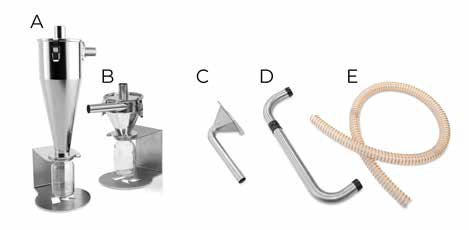
Figure 2. Retsch cyclone variants: high-efficiency version (A) and the standard version (B), as well as options for mounting, such as rigid piping (C), flexibly adjustable connections (D), and FDA-compliant hoses (E) for installation on the sample outlet of the mill. Image Credit: RETSCH GmbH
Suitable Industries for Cyclone Separators
Cyclone separators are suitable for a wide variety of sample types and are utilized across numerous sectors. They are especially effective for dusty or slightly adhesive materials that can stick to mill surfaces.
Problems surface with extremely heavy or very light particles, or when too much sample is fed at once, which can impair efficient transport and separation of the sample material.
Typical industries include the food and chemical sectors, environmental analysis, mining, agriculture, materials research, the pharmaceutical industry, and recycling. Specific examples are outlined below.
1. Crushing Paint Chips with the Ultra-Centrifugal Mill ZM 300
The cyclone prevents sample overheating during grinding.
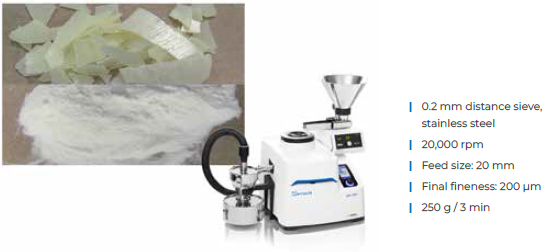
Image Credit: RETSCH GmbH
2. Crushing Cannabis with the Cutting Mill SM 300 Food Grade
The cyclone unit removes residues from sticky grinding materials on the Cutting Mill SM 300 and related surfaces, ensuring clean, efficient sample discharge.
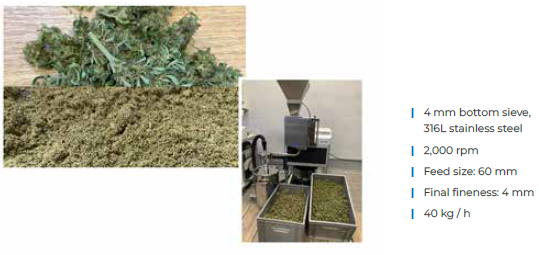
Image Credit: RETSCH GmbH
3. Crushing Individual Root Pieces in the Cutting Mill SM 50
Even with minimal sample quantities, the cyclone unit maximizes sample discharge.
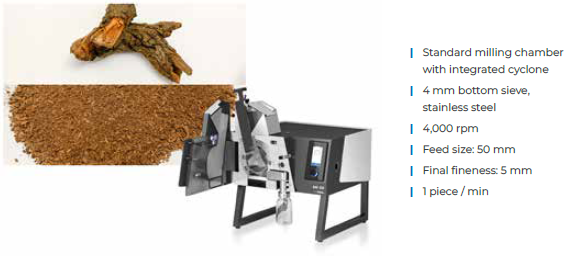
Image Credit: RETSCH GmbH
4. Crushing Bitumen in the Jaw Crusher BB 250
By preventing dust from escaping the Jaw Crusher BB 250, the cyclone enhances workplace safety and extends the service life of bearings and the overall machine.
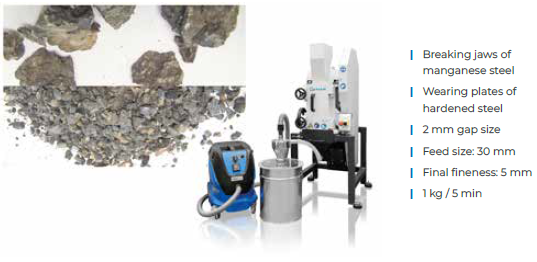
Image Credit: RETSCH GmbH
5. Sieving Pharmaceutical Powder with the Air Jet Sieving Machine AS 200 jet pro
The cyclone ensures reliable collection of the screened fraction.
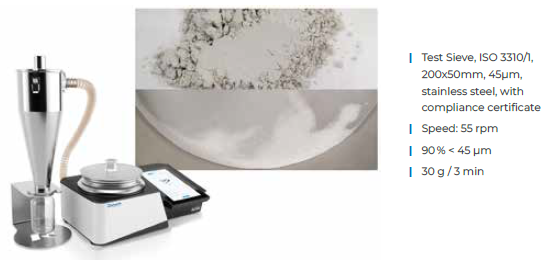
Image Credit: RETSCH GmbH
6. Crushing Biochar in the Hammer Mill HM 200
The cyclone enables the use of a collection receptacle with a volume of 30 L, allowing higher sample throughput.
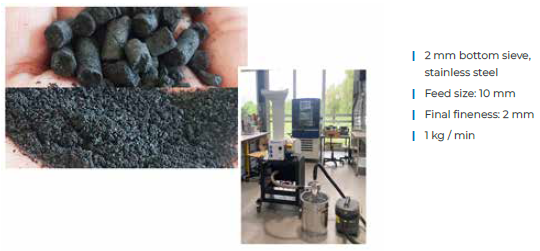
Image Credit: RETSCH GmbH
7. Combination Units for Maximum Efficiency
Preparing fine particles from large pieces of hard, brittle material generally requires two separate steps: jaw crushing followed by disc milling.
With a cyclone separator, these stages can be merged into a single, automated operation.
The cyclone provides reliable, direct transport of material from the jaw crusher to the disc mill, enabling samples with feed particle sizes as large as 60 mm to be ground in a single pass to a final fineness of up to 200 μm, as illustrated in Figure 3.
This configuration removes the need for manual sample transfer and prevents dust from escaping the mills.
This solution is particularly useful when sample splitting is not required, offering a streamlined solution for agriculture applications, cement production, mining, precious metal analysis, materials research, and environmental testing.
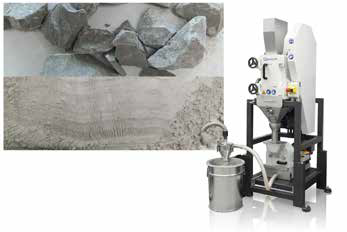
Figure 3. A combination unit consisting of Jaw Crusher BB 250 and Disk Mill DM 200 with cyclone, shown here with an application example for limestone. Image Credit: RETSCH GmbH
Summary
Cyclone separators are a revolutionary enhancement to laboratory milling and crushing processes. They ensure efficient sample recovery, prevent overheating of sensitive samples, and substantially enhance workplace safety.
In addition, they allow the use of larger, more diverse collection receptacles than in standard configurations.
Retsch cyclone separators are compatible with a broad range of applications and are available as accessories for several cutting and rotor mills, jaw crushers, and Retsch air jet sieving machines. They can also be retrofitted at any time.
In addition, the cyclone unit allows a jaw crusher to be combined with a disc mill, enabling direct, dust-free sample transfer between devices and efficient one-pass processing from large pieces to fine particles. Cyclone separators maximize efficiency while preserving sample integrity and reducing dust emissions.

This information has been sourced, reviewed, and adapted from materials provided by RETSCH.
For more information on this source, please visit RETSCH.