It is expected that industrial mining will continue to expand in the future, with current trend forecasts suggesting a 2- to 10-fold increase in demand for a variety of commodities by 2060, most prominently those required for energy transition technologies.
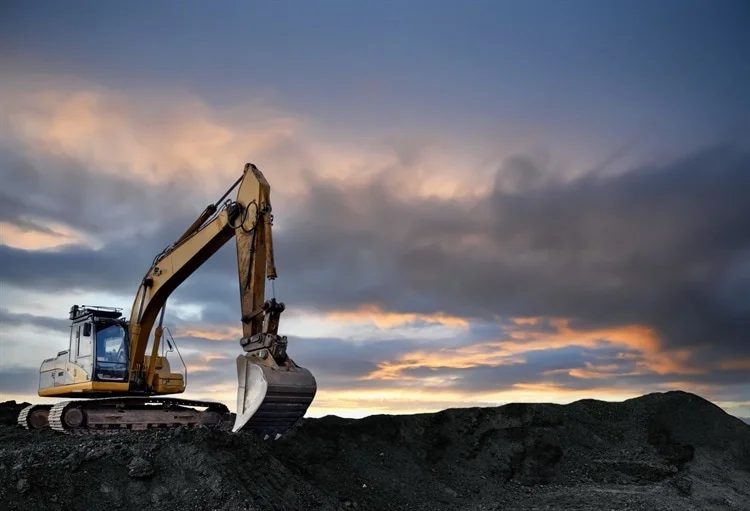
Image Credit: Maksim Safaniuk/Shutterstock.com
‘Ore grades’ refer to the concentrations of the mineral or metal of value: these have declined by 50 % on average for many commodities in the last 40 years. This decline has essentially doubled the amount of mine waste (tailings) that is generated for each unit of valuable material produced.1
Tailings are usually made up of water, finely ground rock particles, and the residual chemicals that are used during the extraction process.
Such residual chemicals are often toxic and include blasting chemicals like nitrate and ammonia, as well as separation chemicals such as the byproducts of petroleum, cyanide, and caustic agents. They may also include leached metals and other elements, including cadmium, copper, arsenic, iron, zinc, lead, manganese, sulfate, and aluminum.1
The Importance of Tailings Management
Environmentally friendly and effective tailings management strategies and processes must be employed to handle, store, and remediate these waste byproducts.
This is increasingly important in current mining operations, with 94 % of organizations expected to invest more in tailings management for a vast range of reasons.1
Environmental Protection
Tailings often contain harmful substances, such as those mentioned above, which, if not properly contained, can leach into the surrounding ecosystem. This has a negative impact on human health, fauna, and flora.
Regulatory Compliance
Governments and regulatory bodies have strict standards and guidelines surrounding the collection and management of mining waste.
The Global Industry Standard on Tailings Management (GISTM) specifies zero harm as the ultimate goal, and non-compliance could result in considerable financial and legal repercussions. These include fines, mine closures, and losses of operating licenses, depending on the relevant geography.
Community Relations
Communities located close to mining operations are often directly affected by the environmental footprint of the mine. Effective tailings management is therefore central to a company’s corporate social responsibility (CSR) commitments and can help mining companies build and maintain constructive relationships with local stakeholders.
Operational Safety
Tailings storage facilities (TSFs) should be meticulously designed, constructed, and monitored to stop failures that may have significant consequences, environmentally, socially, and economically. When such structures fail, the release of mine waste can cause extensive infrastructure damage, loss of life, and long-term effects on the surrounding waterways and ecosystems.
Investing in advanced tailings management technologies and practices is key in mitigating social, financial, and environmental risks, while also aligning companies with the wider shift toward sustainable and responsible mining operations.
Tailings composition monitoring
In recent years, handheld elemental analyzers have become increasingly valuable in mining companies’ tailings composition monitoring, which provides invaluable information for tailings management operations.
Portable instruments such as these have several technical advantages, enabling the detailed and real-time analysis of tailings material in the field at different points of the mining workflow.
X-ray Fluorescence (XRF) Analyzers
XRF analyzers work by directing X-rays onto a sample, eliciting the emission of secondary (fluorescent) X-rays from the elements in the sample. Each element produces a unique spectral fingerprint, enabling precise quantification and identification.
Elemental Composition Analysis
Handheld XRF analyzers enable fast, on-site quantification of tailings’ elemental composition. This ability is crucial because the presence of hazardous elements such as mercury, arsenic, and lead needs to be detected and meticulously managed to prevent environmental contamination.
Material Characterization
An in-depth understanding of tailings’ mineralogical content underpins their appropriate remediation and recycling. As an example, identifying valuable residual minerals can improve resource efficiency by advising secondary recovery processes.
Compliance and Monitoring
Handheld XRF devices enable efficient monitoring of tailings, helping ensure adherence to legal standards and compliance with environmental regulations. This helps prevent sanctions and fines, which could be expensive.
Technical and Operational Benefits
There are many compelling benefits to integrating handheld XRF analyzers into tailings management, particularly their ease of use and portability. These devices can easily be transported and operated directly on site, demonstrating a substantial improvement over more time-consuming legacy methods, which typically require samples to be taken to off-site laboratories and undergo extensive sample preparation.
Removing these inconvenient steps is crucial for unlocking a more efficient and responsive tailings management process.
Furthermore, XRF technology is a non-destructive technique, meaning that sample integrity is maintained during analysis. This is particularly beneficial for ongoing monitoring programs that may require the same sample to undergo multiple rounds of analysis.
This technology helps users gain a more thorough understanding of the tailings material over time without altering or depleting the sample.
Investing in Tailings Management
The implementation of effective tailings management can result in substantial long-term cost savings for mining companies.
Many CSR and environmental benefits are possible, and there is also a possibility of new revenue opportunities by recovering valuable minerals that may have been overlooked during initial processing.
Handheld XRF analyzers play a crucial role in tailings management to identify and quantify residual metals within tailings management, improving resource efficiency, facilitating secondary recovery processes, and generating additional income streams from materials that would probably have been considered waste otherwise.
Illustrating a commitment to sustainable practices can enhance a company’s appeal to investors and its marketability, potentially attracting increased investment and business opportunities as the market continues to grow for environmentally responsible mining operations.
References and Further Reading
- Earthworks. (2022) Safety First: Guidelines for responsible mine tailings management, Earthworks, MiningWatch Canada and London Mining Network. (online) Available at: https://earthworks.org/wp-content/uploads/2022/05/Safety-First-Safe-Tailings-Management-V2.0-final.pdf.
- Darlington, S. et al. (2019). A tidal wave of mud: The Brumadinho disaster in Brazil. (online) Available at: https://www.minesandcommunities.org/article.php?a=13923.
- Robertson, P. et al. (2019). Report of the Expert Panel on the Technical Causes of the Failure of Feijão Dam I | Resolution Copper Project and Land Exchange Environmental Impact Statement. (online) Available at: https://www.resolutionmineeis.us/documents/robertson-et-al-2019.
- The Global Tailings Review. Global Industry Standard on Tailings Management – Global Tailings Review. (online) Available at: https://globaltailingsreview.org/global-industry-standard/.
- Sax, S. (2024). Scientists now know how the Brumadinho dam disaster happened, and the lessons to learn. (online) Mongabay Environmental News. Available at: https://news.mongabay.com/2024/02/scientists-now-know-how-the-brumadinho-dam-disaster-happened-and-the-lessons-to-learn/.
Acknowledgments
Produced from materials originally authored by John Margeson from Thermo Scientific.

This information has been sourced, reviewed and adapted from materials provided by Thermo Fisher Scientific – Analytical Instruments & Solutions.
For more information on this source, please visit Thermo Fisher Scientific – Analytical Instruments & Solutions.