The growing use of inverter-based resources (IBRs), combined with rising electricity demand from artificial intelligence and data centers, is creating new and significant challenges for the modern power grid.
The phase-out of traditional synchronous generation is outpacing the addition of reliable capacity, jeopardizing system stability and elevating the likelihood of large-scale power disruptions. To counter this, grid-forming (GFM) inverter technology could be a vital solution for bolstering system resilience, supplying virtual inertia, and supporting weak grid conditions.
Understanding Grid Forming Technology
As a concept, grid-forming control was introduced for microgrids and islanded systems. However, it has now become indispensable in large, interconnected networks that incorporate significant power-electronics-based generation.
A grid-forming inverter functions as a voltage source and generates the AC voltage reference (frequency & amplitude) rather than simply following the grid, as has been the case with traditional solar and storage inverters for decades. Grid-forming inverters can provide virtual inertia, primary frequency response, voltage regulation, and ride-through capabilities.
As renewable energy's share of grid assets rises, GFM technology is expected to play a significant role in supporting grid reliability and facilitating a stable energy transition. Unlike conventional grid-following (GFL) units, GFM inverters can independently support voltage and frequency and contribute to grid stability amid disturbances or in areas with low short-circuit ratio (SCR).
In essence, grid-forming technologies are fundamental to shaping the future grid. With increasing electrification, the proliferation of decentralized energy resources, and the advancement of digital technologies, the power system is undergoing extensive transformation. GFM inverters will serve as the cornerstone of this evolution, facilitating flexible, decentralized, and resilient control of energy flow.
Grid inertia refers to the energy stored in the rotating components of conventional power plants, which acts as a buffer against fluctuations in grid frequency.
A weak grid is defined as one with high source impedance, low short-circuit ratio (SCR), and is therefore prone to voltage swings and stability issues. Generally, a ‘weak grid’ is characterized as an SCR ≤ 3, a moderately weak one would have an SCR of 3 – 10, and Strong grids have an SCR of ≥ 10. The SCR refers to the ratio of the short circuit capacity of the grid at the Point of Interconnection (POI) to the rated apparent power of the connected inverter-based resource (IBR) or plant.
The Significance of Grid Forming Today
Driven by massive increases in electricity demand from AI and manufacturing, with projections indicating over 800 hours of annual outages by 2030 if capacity is not replaced, the demand for advanced, robust energy solutions is more critical than ever. Given the lower cost of installation and operation of solar and battery energy storage systems (“PVS”) compared to new natural gas plants, and their ability to be deployed much faster, projections from NREL suggest a sharp increase in power supply from IBRs. This underscores the necessity of addressing grid inertia in this rapidly evolving energy-landscape.
To accommodate this growth in load while transitioning to cleaner energy sources, the grid needs flexible, resilient solutions. Grid-forming inverters are a technical enhancement essential for future-proofing the grid. Their ability to stabilize voltage and frequency, even when the system is weak or disturbed, makes them a critical tool for achieving reliable, clean power systems.
Dynapower’s Grid Forming Control Approach
Dynapower’s grid-forming technology is engineered to deliver stability and resilience in challenging or weak grid conditions. It not only introduces virtual inertia to the grid but also provides exceptional active and reactive power dynamics. As a result, these capacities make it ideal for supplying fast-changing loads, such as AI data centers, using renewable energy resources.
Unlike droop control or virtual oscillator methods, Dynapower's grid-forming control employs a model-based, decoupled power-control system operating in the rotating reference frame. The technology eliminates the need for impedance measurement or estimation and enables fast, accurate power tracking without a phase-locked loop (PLL).
It is recognized that grid-following inverters depend on synchronizing with the grid voltage and frequency via a PLL. While this approach works effectively in strong grid conditions, it can pose difficulties for GFL inverters in weak grids, where the grid is more sensitive to changes and may struggle to maintain synchronization. As a result, the conditions may lead to instability or disconnection (see Figure 1).
Contrastingly, a GFM inverter can establish and maintain voltage and frequency references, even in a weak grid (see Figure 2). This characteristic renders them particularly valuable in areas with low short circuit ratios (SCRs). Operation under weak grid conditions is a primary challenge for modern energy systems, and Dynapower’s grid-forming technology addresses this challenge through a robust, self-sustaining control architecture.
Droop control is a method of grid-forming control in which the inverter frequency and voltage are adjusted proportionally to the active and reactive power outputs.
A virtual oscillator is defined as a grid-forming control strategy that causes the inverter to emulate a nonlinear oscillator, naturally synchronizing with the grid and other inverters.
Virtual inertia is a control technique mimicking the inertial response of synchronous machines by temporarily injecting or absorbing power to resist rapid frequency changes.
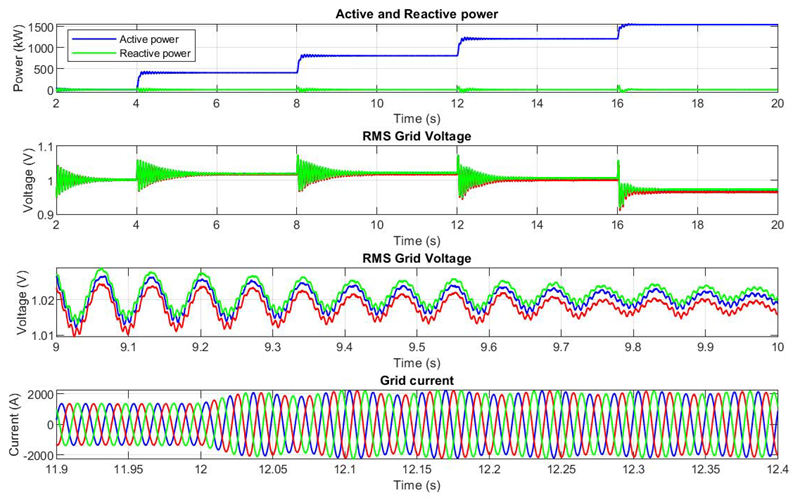
Figure 1. Grid-following inverter under weak-grid conditions. Image Credit: Sensata Technologies, Inc.
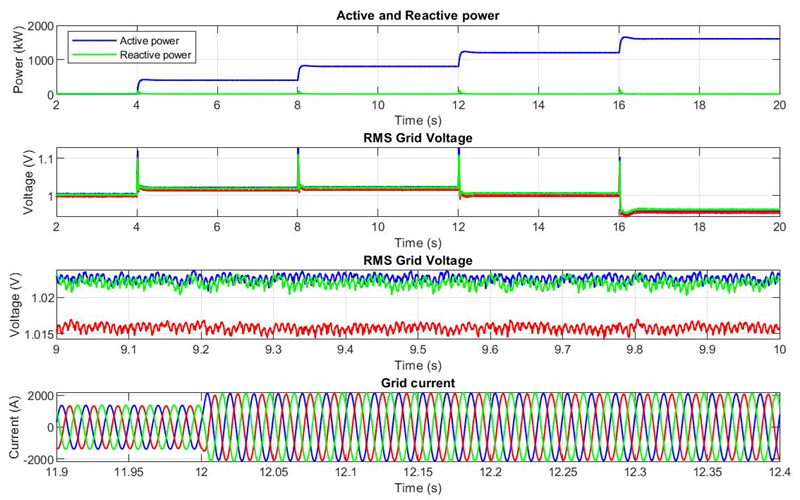
Figure 2. Grid-forming inverter under weak-grid conditions. Image Credit: Sensata Technologies, Inc.

This information has been sourced, reviewed, and adapted from materials provided by Sensata Technologies, Inc.
For more information on this source, please visit Sensata Technologies, Inc.