Automation and digitization are driving a broader shift in how materials testing is carried out in industrial R&D and lab settings. With digital workflows, IoT-enabled instruments, and integrated robotics, it’s becoming possible to build a much more complete picture of material behavior, rather than relying on single-point measurements.

Image Credit: Copy.photography/Shutterstock.com
Melt flow indexing, which is already one of the most widely used techniques for assessing how thermoplastics will process, is starting to take on a more central role within this more connected, data-driven testing environment.
Having access to richer datasets is particularly useful when developing materials for more demanding applications. This often includes high-performance engineering polymers and fiber-reinforced composites, as well as recycled polymer formulations and safety-critical plastics used across industries like automotive, packaging, medical, electronics, and additive manufacturing.
Deeper Polymer Characterization Using Digital MFI
For materials scientists and those working in industrial R&D, melt flow measurements offer useful insight into polymer viscosity, molecular structure, and overall processing performance.
As demand for plastics continues to grow, melt flow testing is being used more widely across both production and research settings. That makes consistency and reliability in measurement results more important than ever.
Load cell-based MFIs that use closed-loop control typically rely on proportional–integral–derivative (PID) algorithms. These systems adjust the applied force in real time to account for small changes in extrusion resistance. As a result, the applied load stays consistent, even when the material shows short-term changes in viscosity, which improves the system’s sensitivity to dynamic shifts in melt flow behavior.
In contrast to traditional systems that depend on a static gravitational load, a digital MFI actively compensates for subtle fluctuations in material resistance during extrusion. This allows it to continuously monitor key parameters such as:
- Applied force
- Extrusion rate
- Melt viscosity behavior
- Piston displacement
- Temperature stability
From an analytical perspective, this enables much deeper insights into material characterization thanks to:
- Precise load conditions that improve force accuracy
- Higher sensitivity that detects smaller variations in melt flow behavior
- Automated force control to enhance repeatability
- Easily adjusted load conditions, which expand test flexibility

Image Credit: zombiemaster/Shutterstock.com
Improving Real World Laboratory Efficiency
One example of a load cell-based melt flow indexer that incorporates these technological shifts is the MP1500. The load is applied by a motor and ball screw system with a PID control feedback. Designed with a weightless force application range of 0.325 - 45 kg, this system performs Melt Index, MFR & MVR in accordance with ASTM D1238 methods A, B, C, D and ISO 1133.
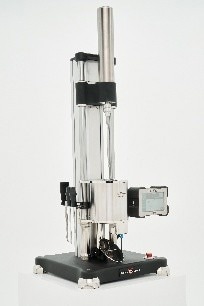
Figure 1. Loadcell-based MFIs, like the MP1500, are meeting the technological shifts of the melt flow test environment. Image Credit: Tinius Olsen
Controlled via a full-color LCD touchscreen, the unit can incorporate a comprehensive software suite, like Horizon, to become a more robust materials testing system. The MP1500’s digital structure provides enhanced control, improved measurement sensitivity, and integrated digital data analysis often required in today’s advanced melt flow index testing.
Consistent Results for Global Applicability
The widespread use of plastics and polymers requires a consistent and reliable way to ensure predictable, repeatable behavior in production environments worldwide. The same level of consistency is important in research and development, where it helps materials scientists confirm that a material is suitable and robust enough for specific or new applications.
Think of the many ways plastic products are formed, and how the length of a polymer’s molecular chain (also known as molecular weight) is related to flow. Fiber spinning, film blowing and thin-walled injection molding use plastics with a shorter polymer chain and simple geometry that have a thinner consistency and less flow resistance.
Longer chains with a high molecular weight and more complex structure will have greater resistance as well as a thicker consistency. This material is used for blow molding, extrusion, and thick-walled Injection molding, for example.
Governed by internationally recognized testing standards, including ASTM D1238-23a and ISO 1133-1:2022, the melt flow index test evaluates how easily a thermoplastic polymer flows under defined temperature and load conditions. The result, expressed in g/10minute, provides a practical indicator of a polymer’s viscosity and molecular weight characteristics. Adherence to these procedures ensures consistent testing conditions across laboratories worldwide.
MFI Today Sets the Stage for Tomorrow
Automation, connectivity, and data intelligence have all quickly become central to ensuring accuracy, compliance, and production efficiency. As a result, materials testing is evolving from a predominantly mechanical discipline into a highly digitized, software-driven ecosystem.
Today’s melt flow indexers provide more reliable measurements, particularly when evaluating advanced polymer formulations or materials with complex rheological characteristics.
Load cell-based MFIs represent this important step forward, combining precise force control, enhanced measurement resolution, and digital data integration. They are contributing to production efficiency as well as advancements in material science to help lay the groundwork for future advancements in the use of plastics and polymers.

This information has been sourced, reviewed and adapted from materials provided by Tinius Olsen.
For more information on this source, please visit Tinius Olsen.