Sponsored by CARBOLITEReviewed by Emily MageeApr 24 2026
Thermal processing is a crucial step in the production of advanced technical ceramics, directly establishing microstructural evolution, residual porosity, phase distribution, shrinkage, dimensional stability, and, ultimately, the component's mechanical, thermal, and electrical properties.
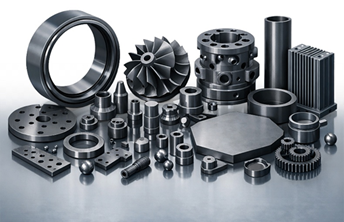
Image Credit: Carbolite
This is especially true for non-oxide ceramics, for which exact temperature control must be paired with strict control of atmosphere, pressure, volatile removal, and material compatibility among the load, process chamber, and hot-zone components.
For systems like SiC, C/SiC, reaction-bonded SiC (RB-SiC), recrystallised SiC (RSiC), pressureless sintered SiC (SSiC), Si3N4, AlN, and related materials, there is a narrower process window compared to oxide ceramics.
Small variations in atmospheric composition, residual oxygen level, or temperature consistency may modify surface chemistry, interfere with reactions, influence the behavior of sintering aids, and change phase formation.
The operational challenge is, therefore, not only achieving a specified temperature, but also maintaining a stable, reproducible thermochemical environment that is compatible with the material system's chemistry.
Debinding, Pre-Treatment, and Volatile Management
Debinding is one of the most sensitive stages of the production process.
In components produced by extrusion, injection molding, pressing, casting, additive manufacturing, or by forming carbonaceous preforms, binders, plasticizers, organic residues, or solvents must be removed at rates suitable with gas diffusion through the green body.
Excessive heating rates or inadequate off-gas removal can cause internal cracking, delamination, uneven porosity, and recondensation of volatiles on colder furnace components.
This cycle often produces water (H2O), carbon monoxide (CO), carbon dioxide (CO2), methane (CH4), and other organic compounds. In carbon-based systems designed for subsequent liquid silicon infiltration, thermal pre-treatment must maintain an open and interconnected pore structure while avoiding residues that would hamper silicon wetting.
Debinding is particularly important in non-oxide ceramics gasses and residual species have a direct influence on downstream reactions.
Operationally, this stage requires:
- Stable thermal profiles with solid uniformity at low to intermediate temperatures
- Optimized flow passthrough chamber and load for efficient transportation of volatile species
- Defined atmospheres, usually nitrogen gas (N2) or argon (Ar)
- Implemented exhaust gas management and safety measures
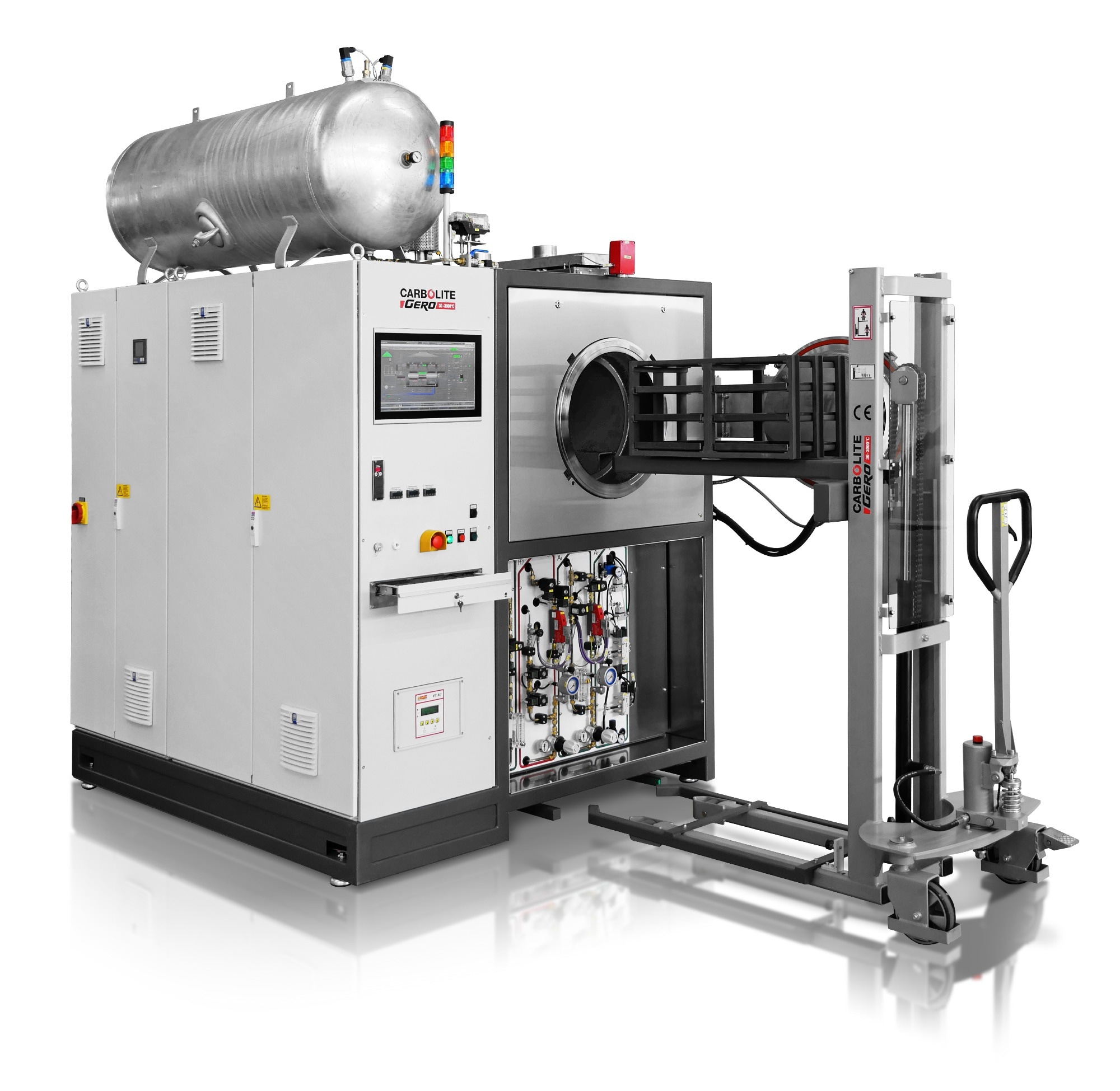
Hot-wall retort furnace for debinding and controlled atmosphere heat treatment. Image Credit: Carbolite
A hot-wall furnace, such as the Carbolite GLO operating under a controlled atmosphere, is ideal for these requirements. Integrated gas monitoring, exhaust control, and interlock systems may be necessary - and are available - for safety-critical processes with a high organic load.
Debinding can also be carried out in a high-temperature cold-wall furnace. This enables debinding and subsequent heat treatment to be performed in a single system, reducing additional handling and cool down time. However, the lack of separation between process phases raises the danger of hot zone contamination by binder residues, which must be carefully considered.
Nitride-Bonded SiC: Nitridation and Nitrogen Control
In nitride-bonded silicon carbide (NSiC), bonding is achieved by turning metallic silicon into silicon nitride in a nitrogen atmosphere.
3 Si + 2 N2 → Si3N4
Processing temperatures are normally around 1400 °C, although essential parameters go beyond temperature alone. Nitrogen availability, temperature uniformity, ramp control, and atmospheric purity all have a direct impact on reaction completion and microstructural homogeneity. Residual oxygen is also an important factor, as it can produce surface coatings that inhibit nitridation or alter the intergranular phase.
NSiC components usually require multiple thermal stages, including preliminary debinding under inert gas and, in certain cases, post-treatment in air to form protective surface layers. These phases are often carried out in separate furnaces because the graphite furnaces used for nitridation are incompatible with air operation.
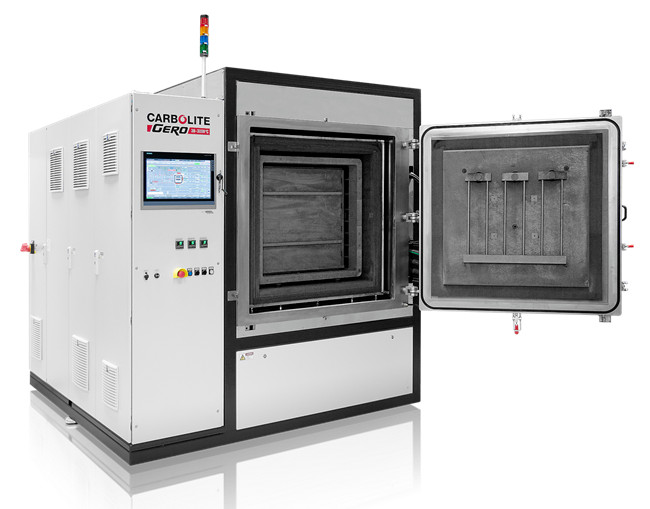
Graphite cold-wall furnace architecture for high-temperature processing under nitrogen and inert gas. Image Credit: Carbolite
Graphite cold-wall furnaces, such as the Carbolite HTK or LHTG, are ideal for nitrogen nitridation because they provide the necessary temperature, homogeneity, and atmospheric control.
RSiC and SSiC: Densification and High-Temperature Processing
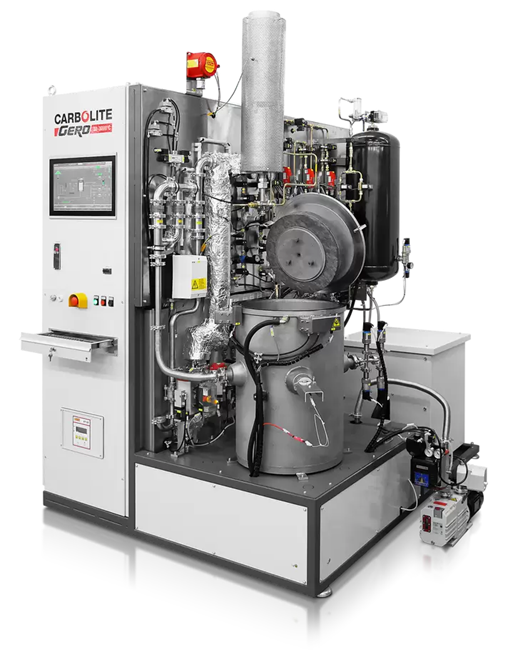
Image Credit: Carbolite
The core challenge when using recrystallised SiC (RSiC) and pressureless sintered SiC (SSiC) is managing densification at extremely high temperatures. Following burn out or pre-sintering, RSiC processing necessitates high temperature treatment, usually in a vacuum or inert atmosphere.
SSiC is even more sensitive, as densification is heavily reliant on cycle precision, sintering aid distribution, free carbon content, and precisely controlled dwell time at peak temperature.
At temperatures from 2000–2400 °C, the nominal setpoint temperature alone is not a reliable performance indication. Small fluctuations in spatial temperature can cause considerable differences in shrinkage, grain growth, local porosity, and mechanical property scatter.
Thus, furnace requirements include:
- Uniform temperature distribution
- Reliable temperature measurement with long-term stability
- Controlled dwell time at peak temperatures
- Chamber designs reduce heating element wear at severe temperatures
- Controlled cooling reduces residual strains
Cold-wall graphite furnaces, such as the Carbolite HTK, HBO, or LHTG, are ideal for final sintering due to their temperature capabilities, atmospheric control, and thermal stability. Debinding steps can be performed independently in a Carbolite GLO hot wall furnace using inert gas.
SiSiC, RB-SiC, and Liquid Silicon Infiltration
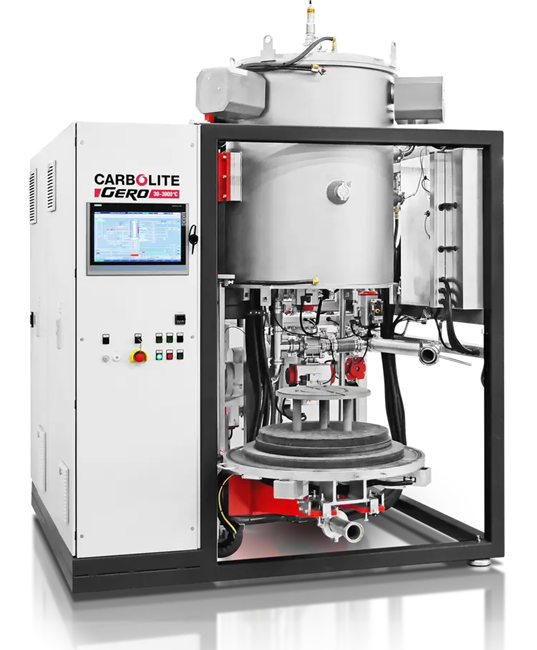
Industrial liquid silicon infiltration setup using bottom-loading graphite furnaces. Image Credit: Carbolite
Liquid silicon infiltration (LSI) is one of the most challenging thermal processes in non-oxide ceramics. Preform capillarity, silicon viscosity, wettability, reaction kinetics, and chamber pressure all interact to determine process behavior.
Typical processing temperatures vary from 1450–1650 °C. The challenge is not just melting silicon, but also maintaining a regulated partial pressure regime that prevents excessive silicon evaporation while allowing adequate mobility for infiltration and reaction.
Operational needs include:
- Effective elimination of volatile species
- Stable and well-controlled partial pressure
- Use of small, well-controlled Ar or N2 fluxes to protect the system
- Low leakage rate
- Hot zone designs for liquid silicon infiltration commonly use graphite heating systems and retorts to protect the furnace structure from silicon reactions
- Reliable temperature control and measuring
Cold-wall graphite furnaces with retort operation and pressure control, such as the Carbolite HTBL or HTK, are suitable for this purpose. To reduce contamination risk and increase process stability, debinding or carbonization should be performed separately from the infiltration stage in most circumstances.
Translating Process Requirements into Furnace Architecture
For non-oxide technical ceramics, furnace selection is restricted by a limited range of truly discriminating factors.
- Ensure consistent and reliable temperature measurement, as reactions and densification rely on local temperature rather than controller setpoints.
- Maintain thermal process stability, especially during longer stay stages.
- Atmosphere control, including consistent gas flows, pressure management, and leak tightness
- Ensure safe off-gas handling during debinding and reactive procedures.
- Sustain material compatibility for chamber and hot zone components with nitrogen, argon, vacuum, and reactive species.
In practice, this results in a clear correlation between process step and furnace type:
- Debinding and pre-sintering under inert gas with high volatile load: Carbolite GLO hot-wall furnaces.
- High-temperature reactions and sintering in graphite furnaces under N2, Ar, or vacuum: Carbolite HTK, LHTG, and HBO cold-wall furnaces.
- Liquid silicon infiltration with pressure control and system protection: Carbolite HTBL or HTK cold-wall furnaces.
- Laboratory and research and development processes requiring flexible gas configurations: Carbolite tube furnace ranges (e.g. TS, TF, TSR series), configured for the specific chemistry.
Modified Atmosphere and Vacuum Options for Carbolite Gero Tube Furnaces
Video Credit: Carbolite
Conclusion
Material behavior when thermally processing non-oxide technical ceramics is determined by a combination of temperature, atmosphere control, pressure, diffusion kinetics, volatile release, and process chemistry compatibility with furnace materials.
Thermal stability, environment control, and exhaust gas handling all affect the final microstructure, as much as the part's composition itself.
Silicon carbide systems are particularly illustrative: reactions, debinding, recrystallization, sintering, and liquid silicon penetration all have separate working windows, but all require careful thermochemical control.
By aligning furnace architecture with the unique requirements of each process stage, material demands may be converted into thermal solutions that are repeatable, stable, and technically sound.

This information has been sourced, reviewed and adapted from materials provided by CARBOLITE.
For more information on this source, please visit CARBOLITE.