Battery manufacturing is an intricate, high-precision process where even minimal contamination poses a risk to safety, performance, and yield.

Image Credit: IM Imagery/Shutterstock.com
With the growing demand for state-of-the-art energy storage, the control and management of particulate and molecular contaminants is crucial to ensure that product quality remains consistent while maintaining operational reliability.
Ensuring good contamination monitoring is in place is significantly valuable as it improves process stability, reduces defects, and prevents costly disruptions, thereby protecting key operational environments.
With decades of grounded expertise, Particle Measuring Systems can deliver the instrumentation, data intelligence, and application knowledge necessary for tackling the wide range of new challenges.
This article offers practical examples showing how contamination control and monitoring operate in battery production environments, exhibiting how data-driven measurement strategies help manufacturers improve safety, deliver quality, and optimize yield across each phase of the manufacturing process.
Introduction
Cleanroom monitoring and control are required across all steps of battery manufacturing processes, including calendaring, cell assembly, coating and drying, cutting electrodes, electrolyte filling and formation, and slurry preparation.
Not only does each phase benefit from monitoring, it also ensures interconnectivity across the entire system. Each process influences the next through air handling or residual particulates.
Therefore, all cleanroom and chemical requirements can be monitored in flux and improved to enhance the quality of products and safety. In a number of cases, byproducts during the manufacturing process are the main source of contamination. Monitoring the effectiveness of cleaning and removal methods is central to managing yield loss and ensuring final product performance.1
Ineffective contamination monitoring and control in battery manufacturing environments can have a detrimental impact on product quality, battery efficiency, and safety (both during production and in end use). The possible impacts are as follows:
- Short circuit: Metal shavings or conductive dust can generate unintended electrical pathways throughout the battery cell, which can cause short circuits resulting in dangerous overheating.
- Thermal runaway: This is a rapid, uncontrolled increase in temperature that can bring about the release of flammable electrolytes, which create the possible conditions for fire or explosion.
- Reduced performance: Contamination can impede the flow of ions and electrons.
- Capacity fading: A battery progressively loses its capability to store and deliver energy, which can lead to a decrease in the overall lifespan of the battery.
- Impaired safety features: Contamination can put safety features at risk, making hazardous situations more difficult to control or contain.
- Quality and consistency: Particle contamination can introduce variations during manufacturing, which can lead to inconsistencies in battery performance and a decline in quality.
- Increased manufacturing costs: Dealing with particle contamination typically requires additional quality control measures, such as implementing strict cleanliness standards, increased frequency of inspection processes, and the use of specialized equipment.
Monitoring Process Overview
The need for regulated battery manufacturing environments is increasing alongside demand for higher quality standards and safer batteries across end-user markets. Figure 1 exhibits the processes within battery manufacturing where contamination and control monitoring methods could or should be applied.
Particle Measuring Systems can support the requirements of battery manufacturing plants through its supply of liquid (blue), aerosol (green), and high-pressure gas (yellow) particulate monitoring, as well as airborne molecular contaminant (purple) monitoring for cleanrooms.2
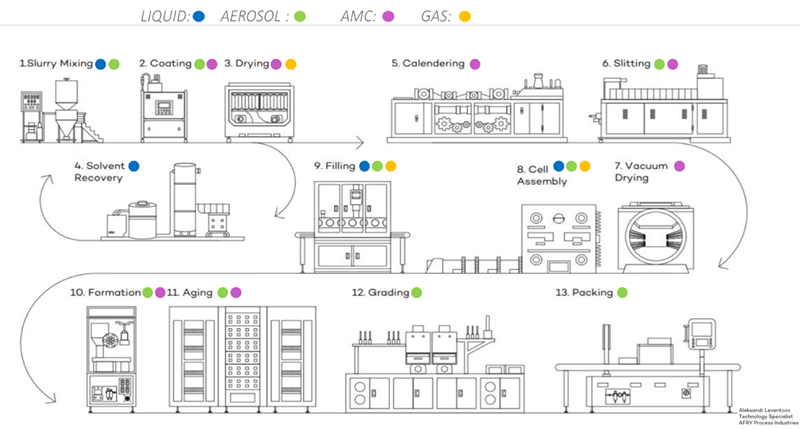
Figure 1. Monitoring Locations for Battery Manufacturing. Image Credit: Leventcov, A. (2024)2
Applications to Increase Yield Quality and Safety
Effective liquid and aerosol monitoring plays a central role in ensuring that the quality and reliability of battery manufacturing are maintained.
As production environments drive toward improved precision, the contamination size considered impacting performance is now approaching 0.1 µm and above. Identifying and controlling particles at this scale is crucial to avoid defects, prolong battery life, and ensure safe operation throughout all stages of manufacturing.
The following case studies demonstrate how targeted monitoring and contamination control strategies have directly led to quantifiable improvements in product quality, yield, and overall safety in advanced battery production environments.
Electrolyte Quality Testing with LiquiLaz
In one case, the PMS LiquiLaz® II monitor was used to sample two industry-standard electrolytes. Contamination was detected at and above the critical size (0.1 µm), which is known to lead to yield loss, product inefficiencies, and safety hazards (Figure 2).
Particle counting across a range of chemistries can help evaluate liquid quality at each process step and confirm the effectiveness of cleanup protocols in preparing the chemistry for use.
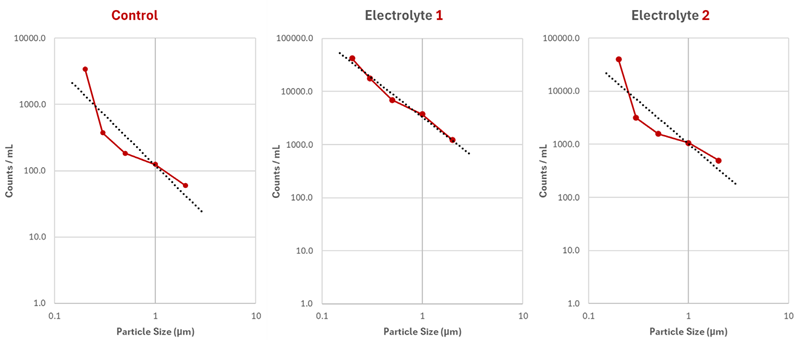
Figure 2. Electrolyte Quality Testing Results. Image Credit: Particle Measuring Systems
Liquid Solvent Monitoring
Solvent recovery and slurry mixing are two more significant steps in battery manufacturing where liquid monitoring can improve yield, quality, and safety. PMS has found application use, with good success, in the monitoring of solutions and solvents such as ultrapure water (UPW), N-methyl-2-pyrrolidone (NMP), isopropyl alcohol (IPA), and many more.
Monitoring particle levels pre- and post-recovery is advantageous for assessing the quality of the recovered solution before it is used in subsequent batches. For further details, see additional application notes from PMS: (‘Monitoring Particles in Process Chemicals, Understanding Nanoparticle Contamination in UPW Systems’).
Aerosol Cleanroom Monitoring in the Battery Manufacturing Process
Overall, cleanroom and process monitoring for aerosol contaminants is an important and well-established practice in battery manufacturing, as it enables control of airborne particles that can compromise product performance and safety.
The IsoAir® aerosol monitors are well-suited for these environments as they offer the requisite flow rates, excellent size sensitivity, and flexible integration with temperature and relative humidity (TRH) probes.
Key process areas where IsoAir units can deliver crucial insights include calendaring, cell assembly, coating, drying, slitting, and filling (Figure 1). Continuous data across these key stages supports early risk detection, allowing manufacturers to maintain process stability and protect both product yield and worker safety.
Monitoring High-Pressure Gas Lines
High-pressure gas inputs are routinely monitored using a High-Pressure Diffuser (HPD) together with an IsoAir or Lasair® Pro particle counter. Figure 3 shows the flexibility of the IsoAir Pro Plus with a High-Pressure Diffuser II (HPD II) on a Clean Dry Air (CDA) line within a battery manufacturing environment.
The data exhibits pump pulses at periodic intervals and the commencement of working conditions, including routine valve manipulations, which offer deeper insight into the source, intensity, and frequency of particle events.
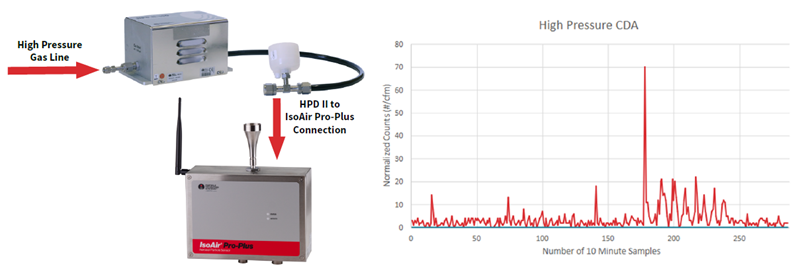
Figure 3. IsoAir Pro-Plus Setup Testing High Pressure CDA with an HPD II. Image Credit: Particle Measuring Systems
Cleanroom Certification
Aerosol instruments not only offer control over clean processes by monitoring critical steps in manufacturing and exposure stages, but they can also help validate and maintain certification of entire cleanroom environments in compliance with ISO 14644 standards.
Conclusion
The global demand for cleaner energy, more sophisticated electronics, and sustainable manufacturing will see growth across both the lithium-ion battery and semiconductor industries in the coming decade. As production volumes increase and precision requirements become more stringent, contamination control will be a critical aspect.
Particle Measuring Systems can deliver the tools and expertise that manufacturers will come to depend on to meet these challenges. With precise and reliable measurements available at every key step, consistent results protect both process and product. In the end, without accurate measurements, there is no control.
References
- Pall Corporation (2024). Powering the Future: Tackling Contamination in Lithium-Ion Battery Manufacturing. Available at: https://www.pall.com/content/dam/pall/chemicals-polymers/literature-library/non-gated/case-study/cell-manufacturing.pdf.
- Leventcov, A. (2024). Clean Room atmosphere requirements for battery production. Available at: https://afry.com/en/insight/clean-room-atmosphere-requirements-battery-production.

This information has been sourced, reviewed and adapted from materials provided by Particle Measuring Systems.
For more information on this source, please visit Particle Measuring Systems.