The Technical Committee (ISO/TC209) responsible for ISO 14644 – the governing standards set for the controlled management of cleanrooms and associated environments – carefully evaluated the need for a new document to support users of airborne particle counters.

Image Credit: Dave Hoeek/Shutterstock.com
This is especially relevant given the recent revision to EU Annex 1 – Manufacture of Sterile Medicinal Products (2022).
The Technical Report (TR) outlines how particle counters are used to monitor and classify cleanroom standards by providing sufficient proof that the cleanroom is functioning within ‘normal’ operating conditions and meeting the required standards.
The document evaluates applications in which particles smaller than 5 µm are of interest as part of an overall sampling program, rather than applications concerned only with large macroparticles (> 5 µm).
It also addresses the misinterpretation of clause C.4.1.2 in Annex C of ISO 14644-1, which recommends the use of 1 m tubing length for macroparticle sampling .
Clause C.4.1.2 also describes the role of any additional functions and their importance to interpreting and understanding the appropriate standards:
- The quality of the sample is key to achieving accurate classification.
- Data quality is vital in monitoring cases where trending must take a central role to understand control.
- Direct sampling without tubing is preferred, but sample tubing may be necessary if it is not possible to position the instrument directly in line with the sample. The tubing should be as short as possible.
- When determining the impact of generated data, a sampling system (comprising inlet probe, tubing, connectors, valves, and instrument) needs to be considered.
When evaluating the spectrum of use for the particle counter, both classification and monitoring are included, and the TR was implemented to better describe these differences.
In part 1 of ISO 14644, there is no provision for the classification of particle populations outside of the table (0.1–5 μm).
During monitoring, a particle counter is used to show that those particle levels associated with the standard conditions do not shift from the range of results as expected; this range may be determined based on historical data trends. The relationship between the data gained at each phase of use is exhibited in Figure 1.
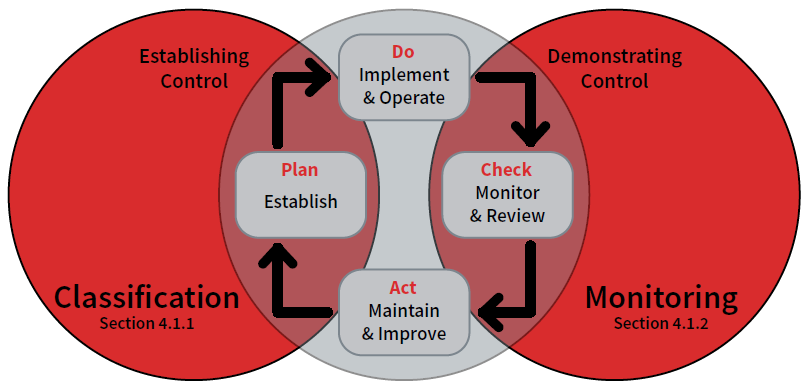
Figure 1. Strategy for Contamination Control. Image Credit: Particle Measuring Systems
Classification and Monitoring
Classification verifies a cleanroom’s cleanliness and sets the parameters for the occupancy state and particle size, in which all particle sizes are measured simultaneously with the same particle counter.
The procedure and formulae detailed in ISO 14644-1 state the minimum number of sampling locations and sample volume required to establish these parameters. To establish control for a specific condition, the method used in ISO14644-1 classification recommends a repeatability of accuracy at each location.
Sample quality and accuracy, and the precision of the recorded values are of utmost importance, as the test references a standard, is conducted at a low frequency, and must also withstand the test of time.
Monitoring is the process of generating data and identifying trends from the particle counter system, and is used to understand variations in particle count over time and its relationship to the cleanliness specifications maintained in the cleanroom.
The collected data, once analyzed, describes how room protocols are implemented to achieve satisfactory cleanliness levels relative to potential risks to finished product quality. Particle count data is often employed alongside monitoring parameters, such as differential pressure, temperature, and airflow, to deliver a wider component for demonstrating control.
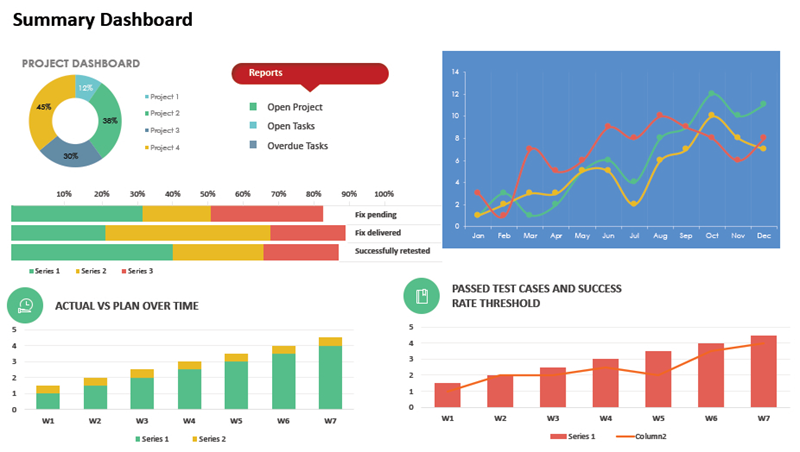
Figure 2. Data, Status, and Information Display. Image Credit: Particle Measuring Systems
The ability to identify changes over time is crucial for effective monitoring, as the errors associated with sampling become a common feature of the sample and are normalized. Analyzing these variations over time fosters a better understanding of the process and helps identify trends for exhibiting the maintenance of control.
Monitoring carried out with a portable particle counter or fixed sensors can be implemented on a periodic or continuous basis in accordance with any risks identified. During monitoring, minor particle loss in the sampling system can be acceptable since this will not influence the trending of results.
Sampling Airborne Particles
Sometimes, sampling cannot be conducted by installing the particle counter on site due to access limitations, instrument size, or the need to avoid disturbing local airflow patterns. In such cases, a sample of the test environment must be taken using tubing.
This sample should be a faithful clone of the original. The following approach should be taken into account:
- The sample drawn through the tubing is representative of the original sample.
- A sufficient sample volume is extracted to ensure statistical confidence in the data.
- Collecting the sample should not impede the operations.
- The particles sampled need to reach the point of measurement at the instrument.
- The location of the particle counter or sensor is not impacted by the sample location.

This information has been sourced, reviewed and adapted from materials provided by Particle Measuring Systems.
For more information on this source, please visit Particle Measuring Systems.