In this interview, industry expert Mariam Mikhael explains how smarter oil condition monitoring helps teams turn analysis data into practical maintenance decisions, supporting better diagnostics, prioritization, and predictive maintenance.
To begin, can you describe the current challenges faced by organizations moving from oil analysis data to real maintenance action?
Organizations today often suffer from what we call analysis paralysis. Many still rely on a one-size-fits-all approach, but this is not right because it ignores the machine's personality, the specific application, and the operating conditions.
At the moment, around 60% of people using oil analysis or oil condition monitoring still work with third-party laboratories, while around 40% are now moving toward in-house oil condition monitoring. This shift is a very positive development because it gives organizations access to faster and more frequent data. However, it has also created a new challenge: there is now more data available than many organizations can realistically process or interpret.
The main challenge is not a lack of data. The real gap is between receiving raw numbers and knowing exactly what to do with them. When oil analysis is carried out in-house, operators receive values and measurements, but if they are not experienced enough in oil analysis, they may not know what the next maintenance action should be. This is one of the biggest challenges when moving from outsourced to in-house oil condition monitoring.
What are the main limitations of traditional oil condition monitoring workflows that rely on fixed thresholds and static reports?
Traditional systems often rely on rigid universal alarms. As I mentioned, this is a one-size-fits-all approach that ignores the machine's personality and operating conditions.
Every machine is different. Factors such as the criticality of the asset, the age of the device, the load condition, and the contamination tolerance of each machine or component can all influence how oil analysis data should be interpreted. If the same fixed limits are used for every component, the system may create false alarms. Even worse, it may miss important failure signs that could be fatal for the machine.
That is why fixed thresholds and static reports can be limiting. They provide values, but they do not always provide the context needed to make the right maintenance decision.
How do eralab OCM and erasoft OCM work together to turn oil analysis results into clear, practical maintenance decisions?
eralab OCM is a complete solution for in-house oil condition monitoring. It supports the operator across the whole workflow, from asset management and planning to sampling, measurement, data evaluation, and reporting. At the end of this process, it produces a report that contains the findings and observations from the oil analysis.
The system consists of two equally important parts. The first part comprises analyzers that capture precise physical and chemical oil parameters. The second part is erasoft OCM, which we describe as the analytical core. erasoft OCM evaluates the data, runs it through evaluation rating rules, and provides a report with actionable recommendations.
This helps operators and industries bridge the gap between simply receiving raw numbers and understanding what those numbers actually mean. The data is measured first, and then erasoft OCM applies the rating rules to identify the findings, explain the possible root cause, and provide recommendations for the maintenance team.
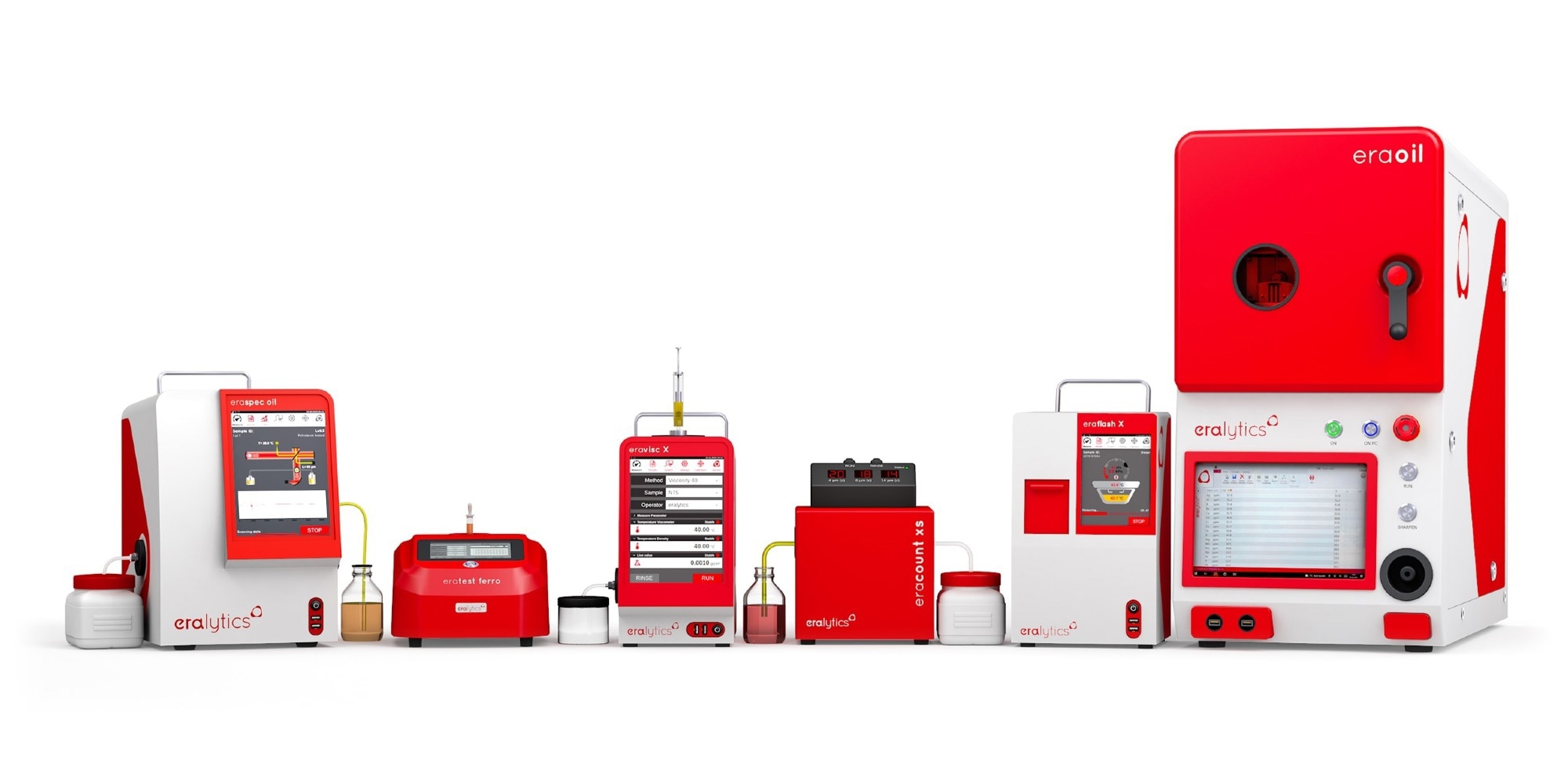
Image Credit: eralytics GmbH
Why is it so important to interpret oil analysis results in the context of the specific machine and application, rather than using one universal standard?
It is important because every machine and every application has its own operating conditions, failure modes, and limits. We deliver default rating rules, but these can then be fine-tuned according to the machine condition and the specific application.
This customization allows the system to reflect real-world operating conditions. Every facility has unique failure modes, equipment ages, and maintenance requirements. By customizing the rating rules and defining specific limits, the system can provide a much more tailored evaluation for each machine.
For example, 80 PPM of iron in a hydraulic system might indicate a catastrophic pump failure. However, the same 80 PPM of iron in a diesel motor could be completely normal, or it may only represent the beginning of a warning. This is why a one-size-fits-all approach does not work for machines. The same value can mean very different things depending on the asset and the application.
How does the erasoft OCM support root cause analysis and prescriptive maintenance actions instead of simply flagging abnormal values?
erasoft OCM uses diagnostic logic and translates the evaluated data into clear written insight.
For example, it not only tells the user that there is a high level of iron; it also helps explain why there may be a high level of iron and what the next maintenance action should be. This could include recommendations such as continuing to monitor the machine, shortening the oil analysis intervals between samples, or taking corrective maintenance action.
In this way, the software supports root cause analysis and prescriptive maintenance. It helps the user move from identifying an abnormal value to understanding its cause and deciding what to do next.
In what ways can internal expertise and field experience be built into the software so that knowledge is shared more consistently across teams?
This is one of the advantages of having customizable rating rules. They allow an organization to build its own knowledge around oil analysis at a specific site. In this way, the software acts as a dynamic knowledge base.
For example, if a senior engineer has strong knowledge and experience with a specific machine, that knowledge can be integrated into the digital rules. The organization can then begin to grow its database around the rating rules and limits for that machine.
Over time, these limits can be fine-tuned so the engineer’s experience is shared. This is important because if only one person has the knowledge, the team can lose a lot of experience when that person retires or leaves. By building that experience into the software, the knowledge is shared across technicians and maintenance teams more consistently. The team does not have to start again from zero, because the system retains and builds on what has already been learned.
One key addition to the erasoft OCM is the Indicator Circle. Can you explain how it helps operators quickly distinguish between wear, contamination, and composition issues?
The Indicator Circle is divided into three main parts: wear, contamination, and composition. It translates complexity into a visual narrative, helping operators quickly understand where the issue is coming from.
In the wear section, the software monitors metallic particles to ensure the lubricant is still preventing metal-to-metal contact. If this section shows yellow, it indicates a warning; if it shows red, it indicates an error. This informs the operator that there may be a wear-related issue requiring attention.
The contamination section tracks external ingression, such as water, dust, soot, or other contaminants that could cause problems. For example, contamination in a component could lead to premature bearing failure.
The chemical life of the oil is monitored by the composition section. It looks at the molecular health of the lubricant, including factors such as additive depletion and oxidation.
When an operator looks at the Indicator Circle, they can immediately see which sector has triggered the most alarms. This helps them determine whether the problem is due to wear, contamination, or composition, and decide how to respond.
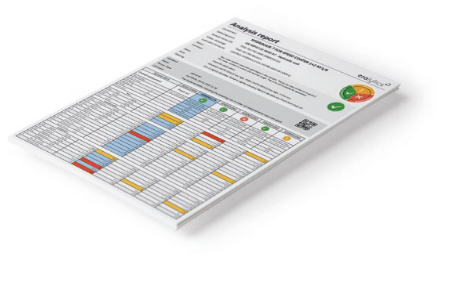
Image Credit: eralytics GmbH
erasoft OCM flags issues using warning and error indicators. How does this help maintenance teams prioritize response and avoid unnecessary intervention?
The warning and error indicators work like a traffic light system. If the result is green, the machine is within the normal baseline, so no immediate action is needed.
If the result is yellow, it indicates the machine is approaching the defined limits. At this stage, the team should take action by increasing the monitoring frequency, but they do not necessarily need to stop the machine. The machine can continue operating while the issue is monitored more closely.
If the result is red, it means a critical limit has been exceeded. In this case, the team needs to take immediate corrective action to help prevent machine failure.
This system helps maintenance teams prioritize their response. They can look at the Indicator Circle, review the data, and use the color-coded status to understand what action is required. This helps avoid unnecessary intervention while still ensuring critical issues are addressed quickly.
What advantages come from comparing current samples against fresh oil references and historical sample data over time?
Comparing samples against a fresh oil reference is very important because each new batch of oil is unique. The fresh oil provides a baseline for understanding chemical changes in the lubricant.
With erasoft OCM, current samples can be compared against the fresh oil reference and up to five historical samples. This allows the operator to see how the oil chemistry has changed over time.
This comparison can show whether certain trends are accelerating. For example, it may show that important additives are being depleted or that wear is increasing rapidly. By comparing the fresh oil reference with current and historical oil samples, operators can build an oil trend and track oil data over time. This provides a much clearer picture of lubricant condition and machine health than looking at a single sample in isolation.
Looking ahead, how do you see smarter interpretation tools changing the future of oil condition monitoring?
I believe this approach will help the industry move from reactive maintenance toward predictive maintenance. Instead of 'firefighting' after a problem has occurred, organizations can build structured operational intelligence around their machines.
For example, instead of changing the oil after a fixed number of operating hours, maintenance teams can make decisions based on oil analysis data. This means the oil can be changed when the data shows it is necessary, rather than according to a fixed schedule.
Smarter interpretation tools can also help mitigate downtime by detecting microscopic wear long before mechanical failure occurs. This gives maintenance teams more time to respond and helps reduce the risk of unexpected machine downtime.
In the future, oil condition monitoring will become less like an isolated laboratory report and more like a real-time mechanical health record. I think this will have a very positive effect on the industry by supporting predictive maintenance, improving resource efficiency, and enabling more informed maintenance decisions.
About Mariam Mikhael 
Mariam Mikhael holds an MSc in International Industrial Engineering and a BSc in Mechanical Engineering from Fachhochschule Technikum Wien. She is currently a Product Manager at eralytics GmbH, where she supports product development and oil condition monitoring solutions.
This information has been sourced, reviewed, and adapted from materials provided by eralytics GmbH.
For more information on this source, please visit eralytics GmbH.
Disclaimer: The views expressed here are those of the interviewee and do not necessarily represent the views of AZoM.com Limited (T/A) AZoNetwork, the owner and operator of this website. This disclaimer forms part of the Terms and Conditions of use of this website.