In this interview, AZoM speaks with R. J. Balch, Senior Writer at Interpower, about designing power connectivity for products sold across international markets. He discusses regulatory requirements, standard versus custom components, key engineering considerations, and how manufacturers can simplify global product design while preparing for changing technologies and requirements.
To begin, could you introduce yourself, explain your role at Interpower, and describe how your work relates to power cord safety and regulatory compliance?
My name is R. J. Balch, and I am a Senior Writer at Interpower Corporation. I help provide customers, staff, and electrophiles with the cord sets, cables, and electrical components they need through our marketing team, via articles, blogs, white papers, video scripts, and advertising copy.
Our Technical Support Guru, Dan Ford, handles the extremely tough questions. Our repository of electrical knowledge is available on our website, which is built around the hundreds of years of accrued staff experience in the cord set, cable, component, and safety agency fields since our founding over half a century ago.
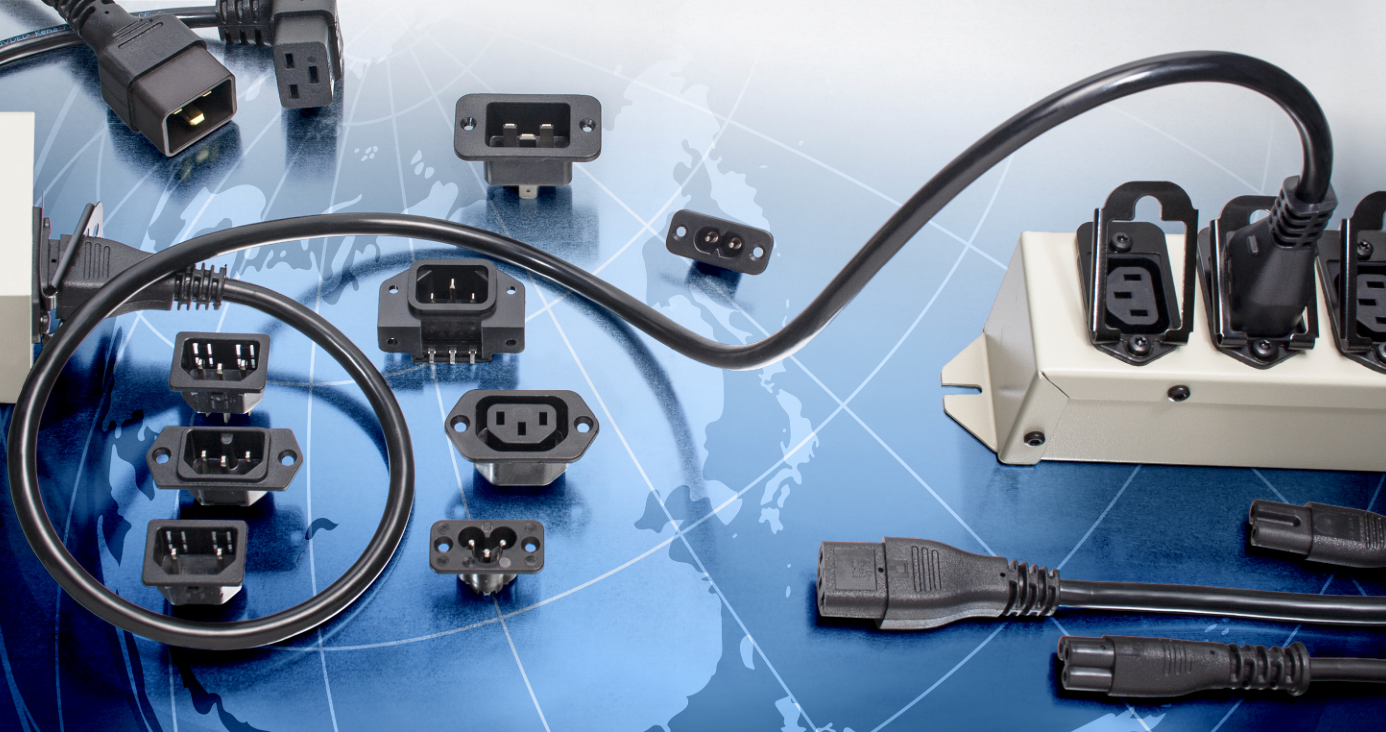 Image Credit: Interpower
What are the main power connectivity challenges that engineering teams face when developing a product to be sold across multiple countries and regions?
First, you will need agency approvals for the countries of export. Second, you will want to avoid reconfiguration unless working on a customized, specialized design. You need the correct country-specific plug for each country/continent, and before IEC 60320 products were marketed, you had to reconfigure your designs to match their design.
Fortunately, as is the case with Interpower, you can manufacture a country-specific cord set using their plug design and an IEC 60320 connector on the opposite end to plug into an IEC 60320 inlet (in a machine or an accessory power strip) and run IEC 60320 jumper cords to multiple machines. It’s seamless and universal, with entire electrical designs built around them. Most customers will purchase them in bulk.
How early in the product-development process should engineers begin considering country-specific plugs, sockets, voltages, frequencies, and regulatory requirements?
Those are all in the initial phase or step. Knowing the electrical standards and plug designs of said country/continent is an immediate concern, as you will need approvals before anything else. You can’t manufacture or distribute what they need if you don’t know the standards/requirements.
We have seen many instances where engineers design based on assumptions, only to reach the end stages and find that the chosen cord doesn’t work because the standards requirements don’t align with their design.
What technical information must engineers establish before they can select the correct power cord, cord set, connector, or power-entry component for an international application?
Much of this information concerns load requirements. For example, consider the power mains you’re dealing with: what are they currently using? Are you using your cords indoors or outdoors? Will the jackets need to be weather- or abrasion-resistant? What are the voltage/amperage ratings per the standards? Again, IEC 60320 covers this.
How can designers create a common product platform for several markets while still accommodating regional differences in power connectivity?
The short answer is that they design power cords for the continent/country where they reside, or for their countries of export. Typically this means a country-specific plug with whatever cable is designated in the standards: NEMA, international, Japanese? IEC 60320 Appliance and Interconnection Couplers will do the rest along with IEC 60320 jumper cords.
What engineering considerations, such as current rating, temperature, grounding, cable construction, strain relief, and operating environment, are most likely to influence the final power solution?
These parameters will all play a role. However, country-specific standards are the prime directive: none of these factors matter if you can’t meet them.
Of these considerations, current rating, cable construction, and operating environment are the three most important. Strain reliefs are typical molds that go along with the plug, so the majority of designs will work. However, specialized strain reliefs offer a larger bend radius.
When is a standard, readily available power component usually the most practical choice, and what advantages can it offer in terms of compliance, cost, and availability?
A well-constructed component that’s been tested and approved trumps cost every time. Cutting cost often means cutting corners, for example by using too much regrind or lower-grade resins, and the same goes for the component dimension tolerances, contacts, conductor wire, and jacket filler.
What product or application requirements typically indicate that a custom power cord or connectivity solution would be more appropriate than a standard option?
Meeting the need for “odd” lengths, such as longer cords, special labeling, and special application requirements (e.g., outdoor or oil-resistant cords). “Custom” can be a subjective word in the electrical cord and component world, as one company’s custom is another’s standard offering.
An example would be Interpower's molded hospital-grade (medical) cords, which are tested beyond medical cord standards and include a stainless steel ring that anchors the conductor wires to prevent pulling out. Our customized cord clip, molded directly onto the cord, takes up slack and prevents tripping, and our quick-change molding process allows us to produce 40 different country-specific cords per week if needed.
Typically, customized power solutions are required when standard electrical designs or components won’t do the job. A simple example may be a manufacturing cell or an office that lacks enough outlets for its machines and devices in a localized area. In such cases, an accessory power system is needed, which requires an accessory power strip (Interpower’s best-selling product) containing an IEC 60320 inlet and IEC Sheet F or J Outlets to plug jumper cords into multiple machines and devices.
These come with both North American and International ratings, and they usually feature four to 10 outlets for multiple devices. Our power distribution units (PDUs) work the same way, only they are rack-mountable for IT purposes. We also offer customizable accessory power strips (APS), and PDUs are constructed of powder-coated steel and are extremely durable.
How should manufacturers evaluate the trade-offs between standard and custom solutions, particularly in relation to engineering flexibility, certification, lead times, inventory, and long-term supply?
Standard items typically have shorter lead times and lower costs than customized products. However, while standard products are usually the fastest option, Interpower also manufactures with short lead times in mind for many value-added requests, including custom lengths, colors, cord clips, and other modifications.
The key is to determine exactly what the customer needs while confirming that all specifications meet the applicable standards. From there, use your system’s algorithms to calculate the right level of safety stock, keeping lead times as short as possible without creating unnecessary inventory.
“Long-term” supply can sometimes feel more mythical than factual, especially given the number of ongoing and historical supply chain disruptions. That said, there are also extended periods when supply chains operate smoothly and predictably.
If a raw materials vendor announces a merger, delays shipments, or indicates longer wait times, increase safety stock where appropriate. Doing so helps ensure product availability, reduces lead time pressure, and provides a buffer against future supply chain disruptions.
Looking to the future, how do you expect global product design and power-connectivity requirements to evolve, and what should engineering teams do now to prepare for those changes?
Everyone, including electrical engineers, is trying to decipher that crystal ball. AI will have a major effect on every question and answer previously discussed. Combined with industrial robots, there will be more productivity, especially if delivery drones can be consistently reliable enough to add to supply chain algorithms.
Trucking logistics should also improve if fleets of larger drones are successfully added by major logistics carriers: diesel costs would decrease due to lower demand, depending on who’s refining your oil.
Also, changing environmental requirements will likely be an issue moving forward. Try a forward-looking approach when eliminating or replacing caustic substances unless no viable alternative exists. Often, it’s not the chemical itself, but the amount of that chemical in the product.
About R.J. Balch
R. J. Balch has been writing cover stories, articles, and advertising copy since the 1990s. Formerly the editor of Business & Industry Magazine, Balch has traveled coast to coast in the U.S. covering multiple industries such as IT, metals, plastics, heavy equipment, and electrical among others. In 2020, he joined the Interpower Corporation in Oskaloosa, Iowa, where he is currently the Senior Writer.

This information has been sourced, reviewed, and adapted from materials provided by Interpower.
For more information on this source, please visit Interpower.
Disclaimer: The views expressed here are those of the interviewee and do not necessarily represent the views of AZoM.com Limited (T/A) AZoNetwork, the owner and operator of this website. This disclaimer forms part of the Terms and Conditions of use of this website.