In this interview, R. J. Balch, Senior Writer at Interpower Corporation, speaks with AZoM about the importance of power cord safety in electronic product design. He discusses key safety standards, common specification and compliance mistakes, product testing, international regulations, and how manufacturers can mitigate electrical and mechanical risks.
To begin, could you introduce yourself, explain your role at Interpower, and describe how your work relates to power cord safety and regulatory compliance?
As a Senior Writer at Interpower Corporation. I help provide customers, staff, and electrophiles with marketing team content via articles, blogs, white papers, video scripts, and advertising copy, which is led by our outstanding Vice President of Marketing, Ralph Bright.
Our repository of electrical knowledge is available on our website, made possible by the hundreds of years of accrued staff experience in the cord set, cable, component, and safety agency fields since our founding over half a century ago.
 Image Credit: Interpower
Why should power cord safety be treated as a fundamental part of electronic product design rather than simply as a component-selection decision?
There are numerous steps in making power cords, cables, and components that involve safety. Electrocution and fires are obvious primary concerns; excessive cord length causes voltage drop, which can cause machines to run improperly and potentially lead to shutdowns or even injuries. You don’t want hospital-grade cords to be longer than 20 feet due to the possibility of leakage current near a patient.
What are the principal safety standards and technical requirements manufacturers must consider when selecting power cords and cord sets for modern electronic equipment?
Every country/continent has its own safety agencies such as UL, VDE, JET, and many others. This includes cords and cord set standards.
The IEC also has its own standards. However, the IEC does not test products like most agencies.
The manufacturer must know which standards they need before exporting globally, and know what their equipment power requirements are; they don’t want too much or too little AC power (amps/volts) going into sensitive equipment that contains microchips and sensors.
They should also know what cord size is needed for their design. In North America, do they need 14, 16, or 18 AWG, or is it something we can customize? For international use, do you need 1.0, 1.5, or 2.0 mm2 cable?
Also, some countries require the use of their own cable, for example, Japan.
How do factors such as voltage, current, cable construction, temperature rating, grounding, strain relief, and the intended operating environment affect the safety of a power connection?
The amperages and voltages will be included in the standards and published in user manuals and on the products themselves. Cable construction varies from PVC to rubber, so one will need to consult standards and drawings. A list of cable material types is listed on our website at power cord composition.
The environment may determine the type of cord you will need; for example, harsh environments may necessitate weather-resistant cords and ingress-protected inlets and outlets to protect from water, dust, and tools you don’t want entering outlets, as well as UV protection.
As for overheating, you don’t want the temperature rising too fast after powering up, which is why we have a temperature-rise station in our Ames testing lab. Under UL 817 (North American) standards, when the rise in electrical continuity is less than 45 °C, the test is successful. Strain reliefs offer flexibility, allowing the cord to bend slightly near the plug without breaking the conductors. All the above involve safety.
Grounding to earth is also key, as it shunts electricity away from the source to the ‘ground’ to help prevent shock or electrocution.
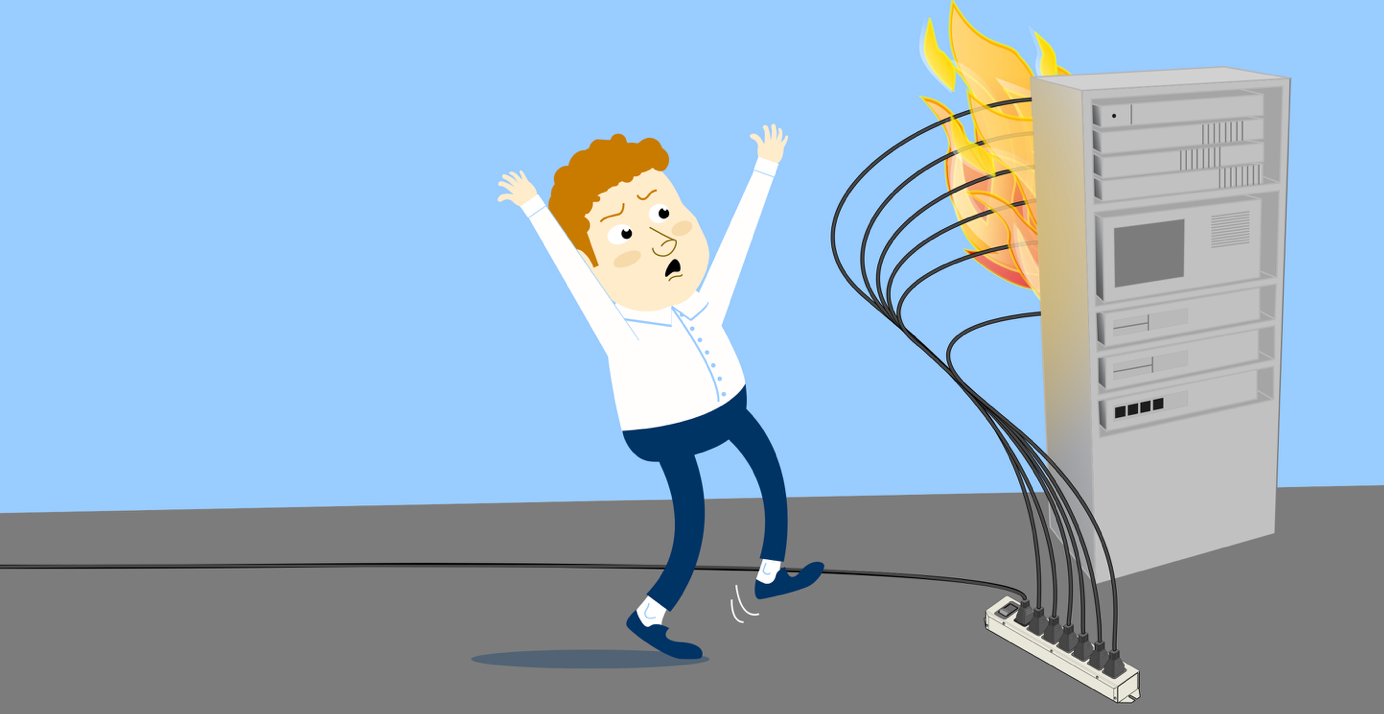 Image Credit: Interpower
What are some of the most common power cord specification or compliance mistakes manufacturers make, and what risks can those mistakes create for users and equipment?
Some of the most common mistakes include leaving cord length considerations until the end of the design process, selecting the wrong cord or cable type, using an incorrect cable size, or working with inaccurate plug, inlet, or outlet dimensions.
Another obvious but important issue is overlooking component ratings. Designers should also ensure they are working from current standards and up-to-date drawings, and that all components and finished products remain within specification. This includes checking details such as plug pin and blade lengths, tolerances, and the overall dimensions of plugs and connectors.
Crimping should also be verified carefully. For example, B-crimps and other crimp types should be measured as well as visually inspected to confirm they are not over-crimped or under-crimped.
Whatever the mistake, it results in rework. The issue must be examined, the fault or defect identified, and the necessary corrections made. This slows production, creates bottlenecks, and can affect delivery timelines.
Manufacturers must also maintain accurate records for safety agency recertifications, which are scheduled periodically and require ongoing proof of compliance.
How can manufacturers assess and mitigate risks such as overheating, electrical shock, fire, mechanical damage, and premature cord failure?
As cord length increases, electrons push harder over distance to reach their destination, which can cause overheating, potentially melting the cord or starting a fire. Such risks can be mitigated by keeping cords under 50 feet; cords exceeding this length are subject to derating under UL standards.
Furthermore, if a plug is not fully inserted but the blades/pins reach just far enough into the outlet’s contacts to draw current, arcing may occur, potentially melting the outlet and thus presenting another fire hazard.
Yanking or pulling cords from an outlet can bend or break plug pins and blades, which may pull away the connected conductors, causing a loss of continuity or exposing bare wire, which may lead to dangerous situations. To mitigate this risk, power cords are fitted with adequate strain relief.
What role does product testing, safety-agency approvals, documentation, and supplier quality controls play in demonstrating that a power cord is suitable for its intended application?
Interpower's product testing goes beyond the testing parameters set by agency standards, ensuring our products are more reliable than the standards require. Every cord and component is tested at every phase of their manufacture, and batch testing is also done on a scheduled basis to ensure electrical continuity.
What's more, having manufacturers test their equipment with the cord they intend to use will help the agency determine whether application use is safe.
For manufacturers selling products internationally, how can differences between national and regional regulations complicate power cord selection and overall product certification?
Typically, country-specific plug parameters are made available by agencies representing specific countries or continents. Besides wall outlets, which are country-specific for mains power, using IEC 60320 products makes connecting to an accessory power strip or power distribution unit universal by using IEC 60320 connectors, plug connectors, inlets, outlets, and jumper cords per the IEC 60320 Appliance and International Couplers sheet.
Nearly every country abides by IEC 60320 standards, making it much easier to export cords and cord sets worldwide.
Certification comes from passing safety agency testing, as addressed earlier. An example from UL: “Listed” means the product is complete in its entirety; “Recognized” means an approved component only.
How should manufacturers monitor regulatory updates and manage existing products when a safety standard, certification requirement, or approved component specification changes?
Safety agencies notify approved manufacturers of changes. Safety agencies also conduct on-site audits that ensure product compliance is maintained and documented. Physical product changes or changes printed on those products require a company to resubmit for approval, and then a certification is granted or denied. Maintaining a current library of the standards that pertain to the equipment is essential.
Looking to the future, how do you expect power cord safety standards, testing practices, and regulatory requirements to evolve as electronic products and their applications become more advanced?
AI will play a key role in documentation, and, of course, in product design and distribution. However, physical inspection will still be needed.
About R.J. Balch
R. J. Balch has been writing cover stories, articles, and advertising copy since the 1990s. Formerly the editor of Business & Industry Magazine, Balch has traveled coast to coast in the U.S. covering multiple industries such as IT, metals, plastics, heavy equipment, and electrical among others. In 2020, he joined the Interpower Corporation in Oskaloosa, Iowa, where he is currently the Senior Writer.

This information has been sourced, reviewed, and adapted from materials provided by Interpower.
For more information on this source, please visit Interpower.
Disclaimer: The views expressed here are those of the interviewee and do not necessarily represent the views of AZoM.com Limited (T/A) AZoNetwork, the owner and operator of this website. This disclaimer forms part of the Terms and Conditions of use of this website.