Sponsored by LabmanReviewed by Olivia FrostNov 12 2026
Labman created the Formulation System in close collaboration with CPI to ensure the safe handling of a wide range of materials, including powders, liquids, slurries, hazardous chemicals, and nanomaterials.
Challenge
Manually creating battery compositions was a time-consuming operation that exposed people to potentially harmful ingredients. CPI required an automated method to increase throughput for experiments and formulations.
The solution required built-in adaptability to support varied workflows, custom-built dispensers capable of handling tough materials, increased user safety, and dependable data.
Solution
The improved capabilities of the Formulation System allow CPI to provide high-throughput formulation, delivering consistent and dependable data to clients across many sectors, particularly the energy materials business.
Results
From the identification of novel substrates to the acceleration of research into more sustainable product formulation, the system is capable of handling a far wider range of projects. It has also considerably enhanced experiment scale-up by increasing speed and repeatability, with sample preparation five times faster than manual methods.
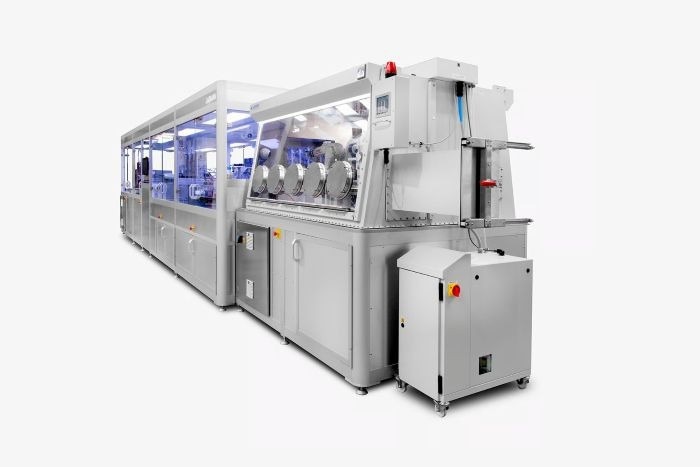
Image Credit: Labman
Building the Formulation System
CPI is a non-profit organization dedicated to supporting the UK's research and development sector. The formulation business unit focuses on formulated products, and CPI's present automation capabilities were unsuitable for the energy materials sector and its advancements.
Prior to collaborating with Labman, sample preparation processes were largely manual, notably dispensing and mixing, with implications for safety. CPI was therefore tasked with reducing manual factors while handling dangerous products.
Confidence in Labman’s Custom Lab Solutions
CPI has previously worked with Labman on projects and was confident in Labman's ability to demonstrate unique solutions throughout the development process.
Their specification was difficult to define since it required flexibility to accommodate further market input, the details of which were unclear. Lynn Donlon, Principal Scientist at CPI, spent about a year conducting ideation sessions to demonstrate that a highly agile set of automation tools was required to support the volume of work they planned to deliver.
The system blends off-the-shelf hardware with custom-built modules to create a versatile, modular platform capable of supporting a wide range of workflows.
During the project's design phase, Labman worked closely with CPI to create two entirely new modules, as well as custom-built dispensers for handling problematic materials including slurries and pastes.
Lynn sent a number of samples to Labman for thorough proof-of-concept testing, and substantial effort was spent ensuring that the most significant risks were avoided.
The Pendant Drop Module and Syringe Transfer Module were the remaining custom-built modules. The Pendant Drop Module enabled CPI to measure the surface tension of liquids, which was previously done manually.
The Syringe Transfer Module enabled formulations to be transferred autonomously from the formulation pot to a syringe that could be used immediately on another Labman system. Lynn called the opportunity to iterate and create the technology 'truly collaborative'.
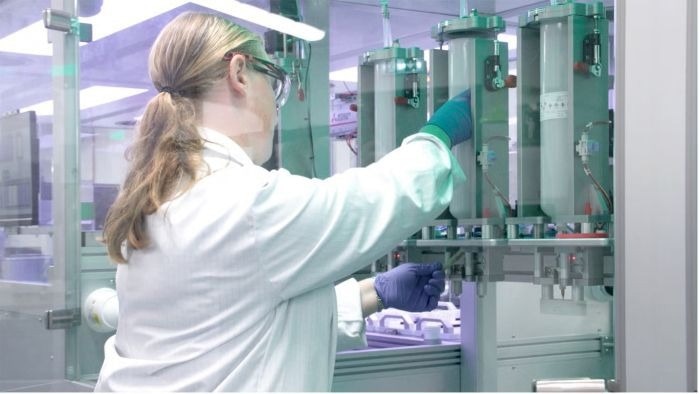
Image Credit: Labman
Boosting Capability to Win More Projects
Adam Todd, a senior scientist and Formulation System expert, discussed how the system has enabled CPI to take on more projects, particularly in the energy business.
The system has become CPI's biggest earner in the automation field, opening up a variety of new prospects. Much of their work is focused on developing more sustainable and high-performing batteries for the EV market.
Glovebox Technology Limited's integrated glovebox has greatly enhanced the system's capabilities, enabling formulations to contain hazardous substances such as nanomaterials, toxic battery-active materials, and solvents.
The glovebox has recently been modified to accommodate argon, allowing for more pharmaceutical projects while also operating in standalone mode for small-scale powder dispensing.
The system is currently completely unique in the UK, and world-leading in the batteries field, which makes CPI an ideal partner for those engaged with battery material development. We’ve also seen some success in applying the system into other industries such as inks and pharmaceuticals, allowing us to maintain the flexibility we need.
Adam Todd, Senior Scientist, CPI
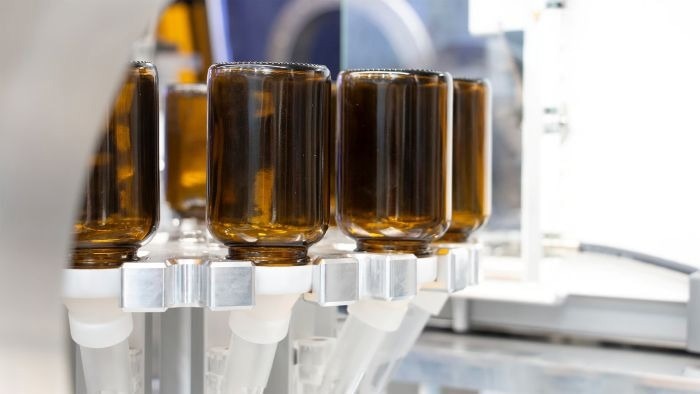
Image Credit: Labman
Better Data for Better Decisions
Greame Cruickshank, Chief Technology and Innovation Officer at CPI, discussed how the system has been thoughtfully constructed to encourage innovation rather than produce predetermined products. End-to-end automation is not appropriate in an R&D setting, which is why modularity and flexibility have been incorporated.
Often it’s the experience of the people using those tools that make the biggest difference. It’s all about identifying what are the bottlenecks and pain points in a process, where automating that step makes the most sense. CPI’s role is to help people make better decisions, faster.
Greame Cruickshank, Chief Technology and Innovation Officer, CPI
While throughput is sometimes overlooked in an innovation setting, it can help to rapidly scale up trials. The system can be utilized as a productivity tool, generating large amounts of data for better decision-making.
On an individual sample level, the Formulation System takes about the same amount of time as a person to develop the formulation, but it can operate continuously overnight, allowing it to prepare many more formulations.
It also frees up the operator's time to do duties that provide more value. CPI estimates that battery slurry formulation is around four to six times faster than manual operation. This results in significant cost savings when operating major campaigns that require the system to run for months at a time.
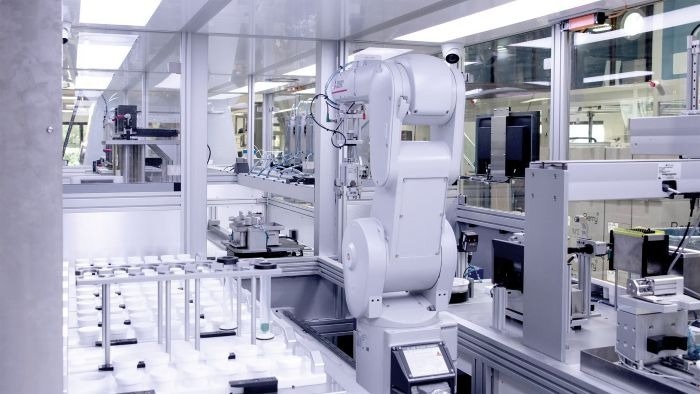
Image Credit: Labman
Future Plans
With other joint projects with Labman underway and plans for more systems to support battery development, this system has been genuinely transformative for CPI.
From a personal perspective, because I was involved in the design from the start, I’m incredibly proud of the system and really pleased with how easy it is to run, the throughput we’ve achieved, and the flexibility as well. There’s a number of projects that we’ve run on the system that I never really envisioned that we would do. Overall, our experience working with Labman has been exceptional.
Lynn Donlon, Principal Scientist, CPI

This information has been sourced, reviewed, and adapted from materials provided by Labman.
For more information on this source, please visit Labman.