What can the chemistry of a microscopic feature reveal about the history of a rock, or the origins of planetary materials?
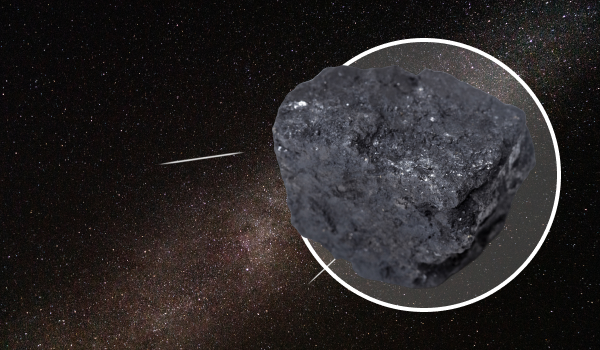
From organic matter in coal and shale to mineral mixtures and organics in meteorites, these materials contain chemical variations that can be difficult to resolve using conventional infrared microscopy. Optical Photothermal Infrared (O-PTIR) spectroscopy brings infrared chemical identification and imaging to the submicron scale, with measurements in non-contact reflection mode, generating FTIR transmission/ATR-like spectra, helping researchers connect molecular composition with visible sample features.
Register now
Join Dr Mustafa Kansiz and guest speaker Christopher Duffey from the University of Central Florida to explore O-PTIR applications across Earth and planetary materials.
The webinar will introduce examples from organic petrology and geochemistry, followed by Christopher’s research on planetary minerals, organic compounds in meteorites and organics embedded in water ice.
Discover how spatially resolved measurements and complementary Raman spectroscopy, can help reveal chemical heterogeneity and the relationships between organic matter and its surrounding matrix.
What you’ll learn:
- How O-PTIR enables submicron infrared spectroscopy and chemical mapping.
- How local chemical measurements can support studies of organic matter in coal and shale.
- How O-PTIR is being applied to planetary minerals, meteorites and organic-bearing ice.
- What organic–mineral associations and complementary IR and Raman measurements can reveal about complex samples.
- Who should attend: Researchers working in organic petrology, geochemistry, geology, planetary science, astrobiology and vibrational spectroscopy.
Can’t attend live? Register anyway to receive access to the recording.
See you there on Thursday, October 15, 2026.
Guest Speaker:
Christopher Duffey, University of Central Florida
Host:
Dr. Mustafa Kansiz, Photothermal Spectroscopy Corp
Register now