Karl Fischer Titration
Determining Sample Size
Karl Fischer titration is a broadly used approach for calculating water content across multiple samples. However, to get accurate and reliable results, it’s essential to follow a proper workflow.
Two approaches are used to calculate water content with Karl Fischer: volumetric and coulometric titration. Coulometric titration is crucial for identifying trace quantities of water, while volumetric titration is important for assessing samples in the range of 100 ppm to 100 %.
Samples are dissolved in a solvent free from water, such as methanol. The titrant, which contains iodine, is administered with a burette and responds to the water inside the sample. The titration’s endpoint is calculated using a sensor when iodine has been added in excess, i.e. the water no longer reacts with iodine added.
Two factors determine how much of the sample is used for titration.
- Expected water content
- Required accuracy and precision
Accuracy increases alongside the amount present in the sample, due to elevated titrant consumption and reduced influence of air moisture. So, calculating sample size by weighing is a critical step in Karl Fischer titration workflows, as it has a direct effect on the analysis’s precision as well as reproducibility.

Image Credit: Mettler-Toledo - Titration
Weighing in Karl Fischer Titration
Optimizing Sample Size
Recommended Sample Size
Balancing Accuracy and Workflow Efficiency
Ideal sample size and titrant concentration varies between the volumetric and coulometric Karl Fischer titration approaches. Using suitable parameters for each of the techniques is crucial for precise water determination.
Volumetric Karl Fischer Titration
The ideal volumetric titration makes use of half of the burette volume. The following formula may be used to calculate the exact sample size:.
(0.5 × burette volume) × titer expected water content (mg/g) = sample size (g)
For higher accuracy, experts recommend a KF titrant with a concentration of 1.0 or 2.0 mg/mL. Larger sample sizes (below 20 mg) are advised in high-water-content samples to avoid small sample sizes.
In samples with exceedingly low water content, the “half a burette volume” rule may not apply, and smaller titration consumption may be required. Table 1 displays recommended sample sizes.
Coulometric Karl Fischer Titration
The ideal coulometric titration sample carries within it 1.0 mg of water. The recommended practical working range is 0.1 to 5 mg, as displayed in Table 2.
Table 1. Source: Mettler-Toledo - Titration
| Expected water content |
Titrant concentration |
| 5 mg/mL |
2 mg/mL |
1 mg/mL |
| Sample size (g) when a standard burette volume of 5 mL is used |
| 100 % |
0.015 |
– |
– |
| 60 % |
0.020 |
0.008 |
– |
| 40 % |
0.030 |
0.013 |
– |
| 30 % |
0.040 |
0.017 |
– |
| 10 % |
0.125 |
0.05 |
0.025 |
| 1 % |
1.25 |
0.5 |
0.25 |
| 0.1 % (1000 ppm) |
12.5 |
5 |
2.5 |
| 0.01 % (100 ppm) |
25 |
25 |
25 |
Table 2. Source: Mettler-Toledo - Titration
| Water content of the sample |
Sample size (g) |
Absolute water quantity (mg) |
| 5 % |
0.1 |
5.0 |
| 1 % |
0.2 |
2.0 |
| 0.1 % (1000 ppm) |
1.0 |
1.0 |
| 0.01 % (100 ppm) |
5.0 |
0.5 |
| 0.001 % (10 ppm) |
10.0 |
0.1 |
| 0.0001 % (1 ppm) |
10.0 |
0.01 |
Legend:
 |
Recommended conditions |
 |
Borderline conditions for accuracy of sample size |
 |
Not recommended |
Weighing in Karl Fischer Titration Workflow
Solid Sample
Weighing varies according to the sample’s nature and its physical state. The backweighing approach is the most appropriate approach for calculating the optimal sample size of the sample transmitted into the titration cell.

Image Credit: Mettler-Toledo - Titration
Legend:
- The sample should be weighed quickly and added to reduce air exposure. It is then weighed into a weighing boat and put on the balance.
- Tare the balance to nil.
- Place the sample in the titration vessel.
- Put the empty weighing boat on the balance and backweigh the empty weighing boat. The absolute value of the weight displayed on the balance is equivalent to the sample size.
- Begin the titration.
Weighing in Karl Fischer Titration Workflow
Liquid Sample
This Backweighing approach can also be used for liquid samples. In this case, the container is first weighed as empty before being weighed again when the liquid sample has been added. The container’s weight is subtracted from the total weight to calculate the liquid sample’s weight.
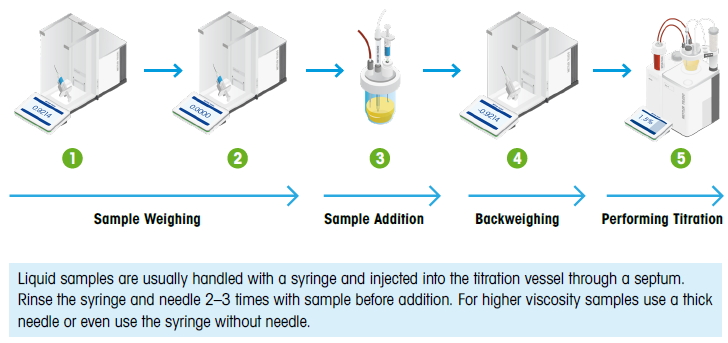
Image Credit: Mettler-Toledo - Titration
Legend:
- Syringe the liquid sample on the balance and weigh.
- Tare the balance to zero.
- Place the sample in the titration vessel.
- Return the empty syringe to the balance and backweigh. The absolute value of the weight displayed on the balance is equivalent to the sample size.
- Begin titration.
Why Precise Weighing is Key
Ensure Reliable Results with the Correct Balance
The Importance of Weighing
In Karl Fischer titration, the quantity of reagents consumed in the reaction determines the amount of water in the sample. If the sample is not weighed with precision, the water quantity in the sample will not be correct, leading to inaccurate results. Deviation of even a few milligrams in the sample weight can produce considerable errors in water content determination.
Choice of the Right Balance
Precise weighing demands the right balance. The choice of balance should be based on:
- The highest quantity to be weighed (including tare container)
- Smallest sample weight (excluding tare container)
- Weighing tolerance of the smallest net sample weight ( maximum permissible error constraints)
- Standards or regulations that should be followed
METTLER TOLEDO provides a free Good Weighing Practice™ Recommendation service to support clients in choosing the best weighing instruments for them. This matches metrological performance to specific measurement needs, ensuring a good fit for Karl Fischer titration.
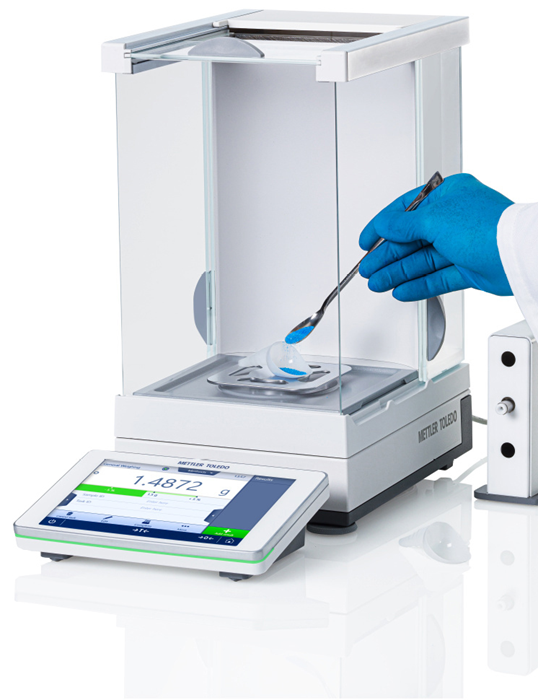
Image Credit: Mettler-Toledo - Titration
The Challenges in the Weighing Process
Reducing Errors and Increasing Precision
Mastering the Accurate Weighing
Weighing is among the most common and crucial tasks undertaken in the lab, so weighing the right way is crucial. Balances have formed to suggest that, overall, they provide precise results in the majority of lab settings.
However, difficulties can still arise throughout the weighing process.
Ensuring Instrument Readiness for Weighing the Innovative Status
A light integrated into the terminal uses color to suggest if there is a green light to start weighing a task: balance calibration and routine tests are updated, and the balance is level and correctly functioning.
External Physical Influences on Weighing Accuracy
External influences like electrostatic charges can skew results. Samples or containers that are electrostatically charged typically lead to issues in balance stability or measurement drift. Promising new advances in weighing technology make it possible for the latest generation of analytical balances to automatically identify and eliminate the presence of electrostatic charges throughout a weighing operation.
Tedious Process of Repetitive Weighing
The low position of a weighing chamber and motorized door may relieve the difficulties involved in the repetitive weighing of multiple samples every day while enabling more efficient and comfortable weighing processes. Because of this, it is possible to both minimize errors and save time.
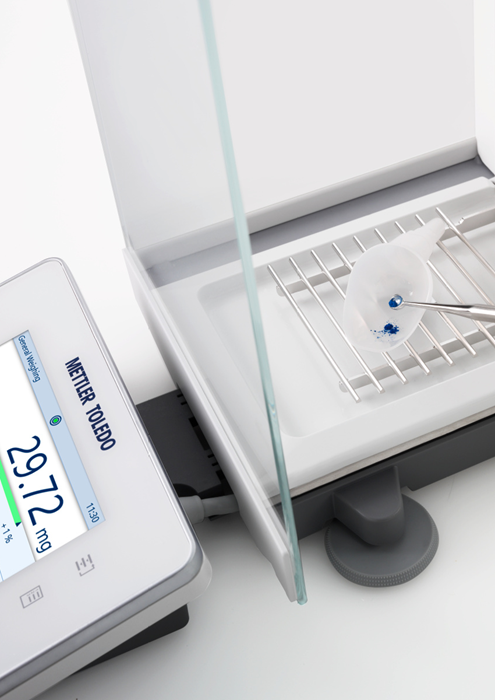
Image Credit: Mettler-Toledo - Titration
Efficient and Convenient Workflow
Weighing Accessories
Choice of Weighing Accessories
METTLER TOLEDO provides a range of weighing accessories to streamline the process. Whether it’s solid or liquid samples, these accessories are specially designed to handle each type, boosting both efficiency and accuracy.
Weighing Directly into Tare Containers
Dosing directly into the tare container removes transfer errors and saves money by reducing sample loss. Direct weighing into tare containers is possible due to weighing accessories such as an ErgoClip syringe, ErgoClip weighing boat, ErgoClip basket titration, or ErgoClip vial. The weighing accessories enable a more convenient, safe, and error-free method for both weighing and transferring samples.
Liquid Samples Weighing
The ErgoClip syringe offers a solution for weighing liquid samples. It permits one-step dispensing directly into the tare container, eliminating the chance of errors. This accessory safely contains one to 10 mL glass or plastic syringes in the optimal position on the XPR analytical balance, enabling convenient and reliable weighing and thus resulting in a significantly streamlined process.
Solid Samples Weighing
The ErgoClip weighing boat supports solid sample weighing and thus provides a safer dosing approach. It significantly lowers the risk of contamination, enables fast dosing processes, and heightens productivity. ErgoClips can be assembled with ease on all Excellence analytical balances.

Image Credit: Mettler-Toledo - Titration
Automatic Sample Weight Transfer
Efficient and Error-Free Sample Handling
Automated Data Transcription
Transferring weighing data to a titrator and determining weight manually can often result in errors, such as transcription mistakes, and is also time-consuming.
An optimized combination of balance and KF titrator guarantees traceability. Weighing results are immediately sent from the balance to the titrator. This leads to improved output and efficiency.
Compatible Instruments for the Lab
METTLER TOLEDO EVA Karl Fischer titrators offer a reliable solution. With a direct connection and an integrated function that streamlines the transfer of sample weight from balance to titrator, these instruments eliminate the risk of mistakes and guarantee precise measurements every time.
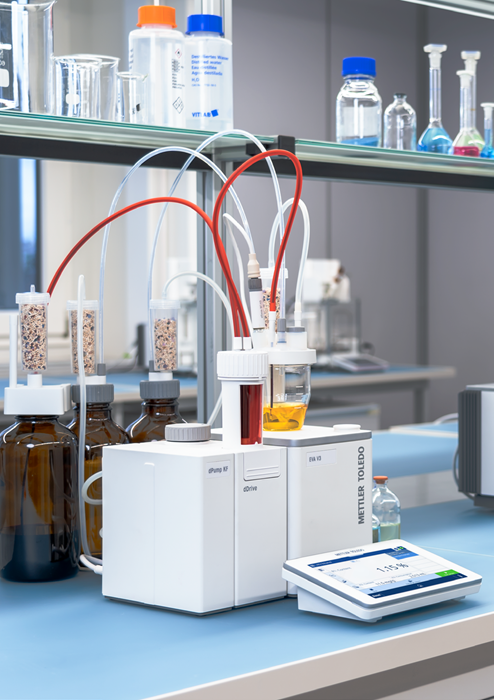
Image Credit: Mettler-Toledo - Titration
Outstanding Weighing Performance
XPR Analytical Balances
The superior weighing cell and elevated temperature stability guarantee a lower minimum weight and allow for accurate weighing of small and precious samples. With a consistent balance that delivers results, time, money, and materials can be saved.
XPR analytical balance supports the sample preparation process through:
Superior Weighing Performance: The superior weighing cell and high temperature stability guarantee a lower minimum weight and allow for accurate weighing of small and precious samples.
Smart Quality Assurance Features
The Status Light, LevelControl, and GWP Approved deliver information that can be digested at a glance for verifying results and assuring quality standards comply with regulations.
Helping Avoid Errors Caused by Static
StaticDetect provides a warning if electrostatic charges exceed predefined limits. The optional ionizer automatically removes charges in seconds, ensuring that results remain uninfluenced by this factor.
Consistent Workflows
Balance filter and process settings and tolerance can be saved on the balance as individual approaches. Easily accessible approaches provide a quick and convenient way to initiate tasks; every user takes on identical procedures, and results are always within a range of tolerance.
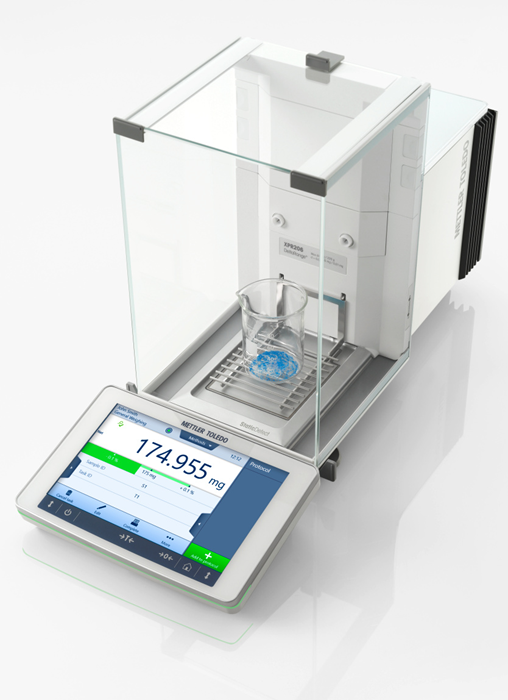
Image Credit: Mettler-Toledo - Titration
Accurate Karl Fischer Titration
EVA Volumetric KF Titrator
Efficient KF Titrator
Speed Meets Reliability
The EVA Volumetric Karl Fischer titrator is built to efficiently calculate water content in a broad range of sample matrices. Its innovative control system accelerates the KF titration process while improving accuracy, ensuring reliable results every time.
Support for Challenging Samples
Various easy-to-use accessories are available for a broad range of use cases.
Comprehensive User Management
Standard with all models, the system provides complete control over access rights and permissions.
Flexible and Modular Design
It is easy to exchange parts, and configuring the system to suit different application needs is easy.
Effortless Balance Integration
Easy connection and communication ensure that precise automatic weight transfer to EVA V1 and V3 titrators eliminates errors and delays.
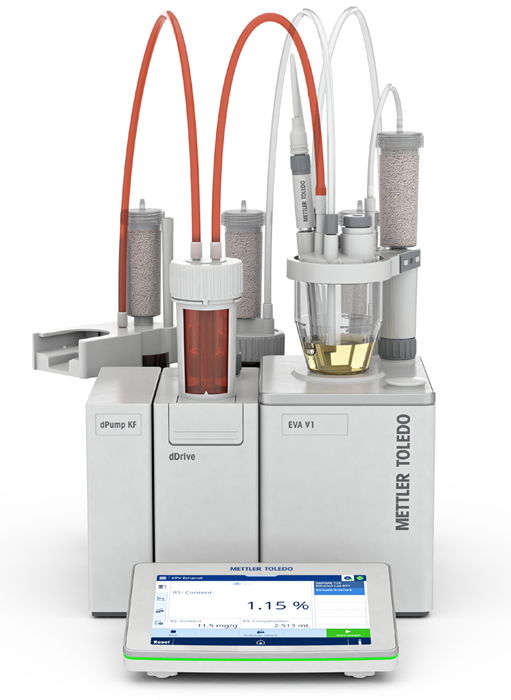
Image Credit: Mettler-Toledo - Titration
Data Management Goes Digital
LabX™ Lab Software
Minimize time-consuming steps in daily work regimens through automatic data management, step-by-step user guidance, and multiparameter analyses.
Laboratory Digitalization
LabX™ lab software is an instrument control and data management software for benchtop instruments. LabX supports users in their digitalization journey, bringing users many steps closer to a paperless lab.
Automated Documentation
Carry out fully guided measurements in the lab directly on the instrument. LabX records data in the background automatically. Reduce transcription errors and save documentation time.
Data Safety and Quality
Comprehensive results, raw data, and associated contextual metadata guarantee complete traceability. This high-quality data is kept in a secure database, making it easily available for future inspections.
Obtain regulatory compliance (21 CFR Part 11, EU Annex 11) and data integrity (ALCOA++) with complete traceability, including audit trail and electronic signatures.
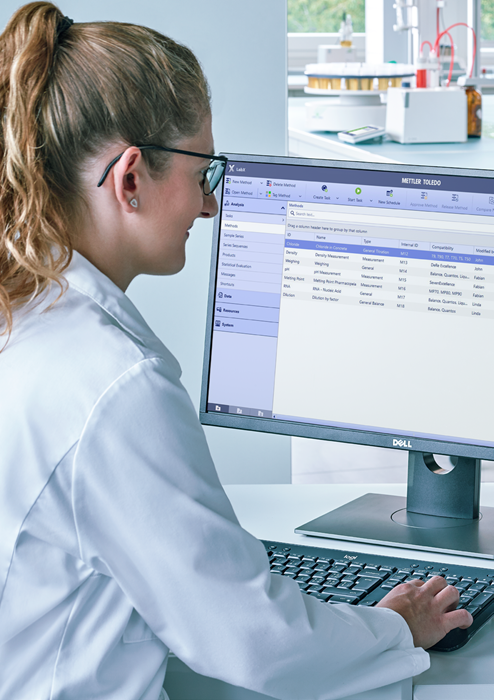
Image Credit: Mettler-Toledo - Titration

This information has been sourced, reviewed, and adapted from materials provided by Mettler-Toledo - Titration.
For more information on this source, please visit Mettler-Toledo - Titration.