The TSu (Thermal Screening Unit) and TSu+ from H.E.L Group enable rapid screening of thermal and pressure hazards in chemical compounds and reaction mixtures. Both systems measure temperature and pressure changes during thermal decomposition, supporting:
- Screening of reaction hazards during process development and scale-up.
- Stability studies of chemicals, reaction intermediates and waste streams.
- Identification of gas generation and over-pressurisation hazards.
Using larger, more representative samples than conventional DSC/DTA techniques, both systems provide valuable data for assessing thermal stability and identifying potential runaway reactions.
The TSu+ extends these capabilities by incorporating an additional open-cell vent evaluation unit for investigating venting behaviour and detecting two-phase flow.
Features and Options
TSu and TSu+ Comparison
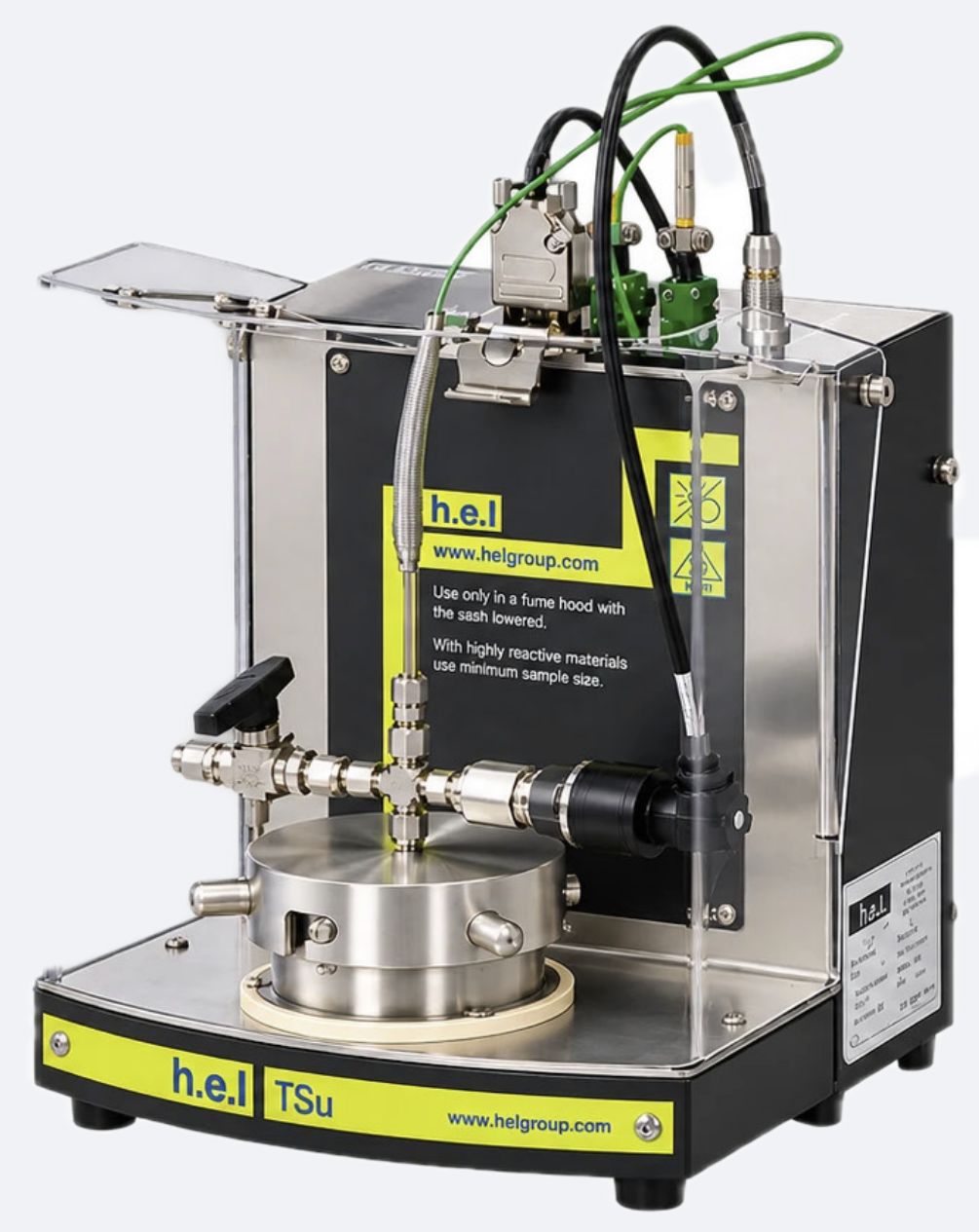 |
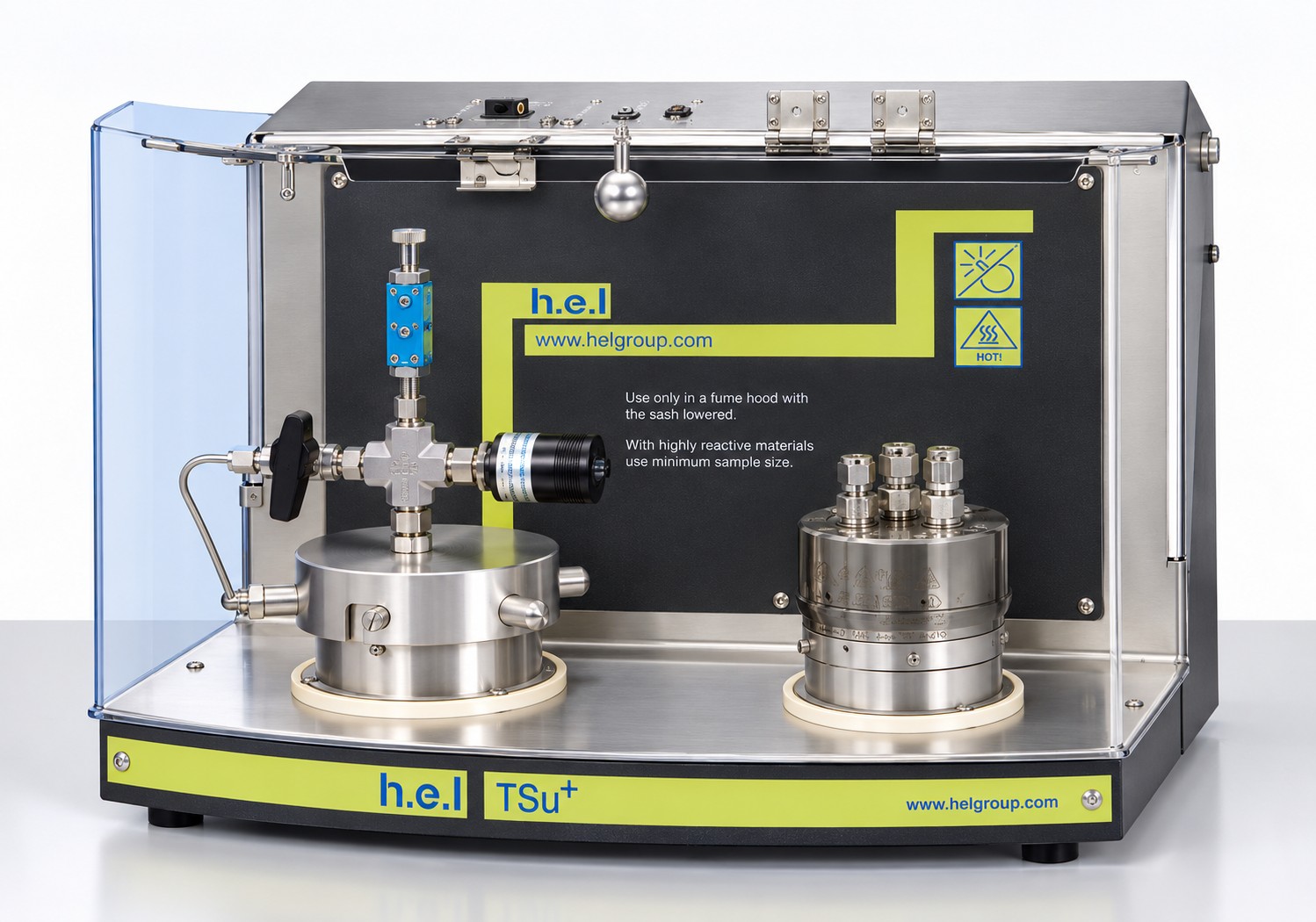 |
| TSu |
TSu+ |
Image Credit: H.E.L Group
|
Feature
|
TSu
|
TSu+
|
|
Open-cell vent evaluation
|
No
|
Yes
|
|
Vent evaluation vessel
|
N/A
|
300 mL
|
|
Vent evaluation conditions
|
N/A
|
Ambient to 250°C, up to 100 bar (absolute)
|
|
Two-phase flow/foaming detection
|
No
|
Yes
|
The following features and specifications apply to both systems, unless otherwise specified.
Test Cell Type and Volume
- Stainless steel, Hastelloy, glass and titanium test cells.
- 10 mL test cells, typically using 0.5–10 mL samples.
- Suitable for liquids, solids and reaction mixtures.
Temperature and Pressure Control
- Screening temperature from ambient to 500°C.
- Screening pressure up to 150 bar (absolute).
- Ramped heating, isothermal and combined testing methods.
- Simultaneous temperature and pressure measurements throughout thermal screening.
Intelligent Software Control and Analysis
- WinISO software provides automated experiment control, data logging and user-configurable test procedures.
- Temperature and pressure measurements allow identification of decomposition onset, self-heating rates and pressure generation.
Safety Features
- Automatic, user-configurable hazard detection and shutdown procedures.
- Hardware and software fail-safes on both systems.