The Impact of Removing Water from Cosmetics
Waxes and Butters Form the Structure
Polymeric Structuring Agents Fine-Tune Texture and Flow
Waterless Products Need Less Preservation but More Oxidation Control
Waterless Cosmetics Need Different Manufacturing Processes
Waterless Products Can Reduce Transport Impact
Why Waterless Cosmetics Affect Manufacturing
References and Further Reading
By removing the ingredient that has traditionally shaped the formula, process, and product itself, waterless cosmetics are transforming cosmetic manufacturing.
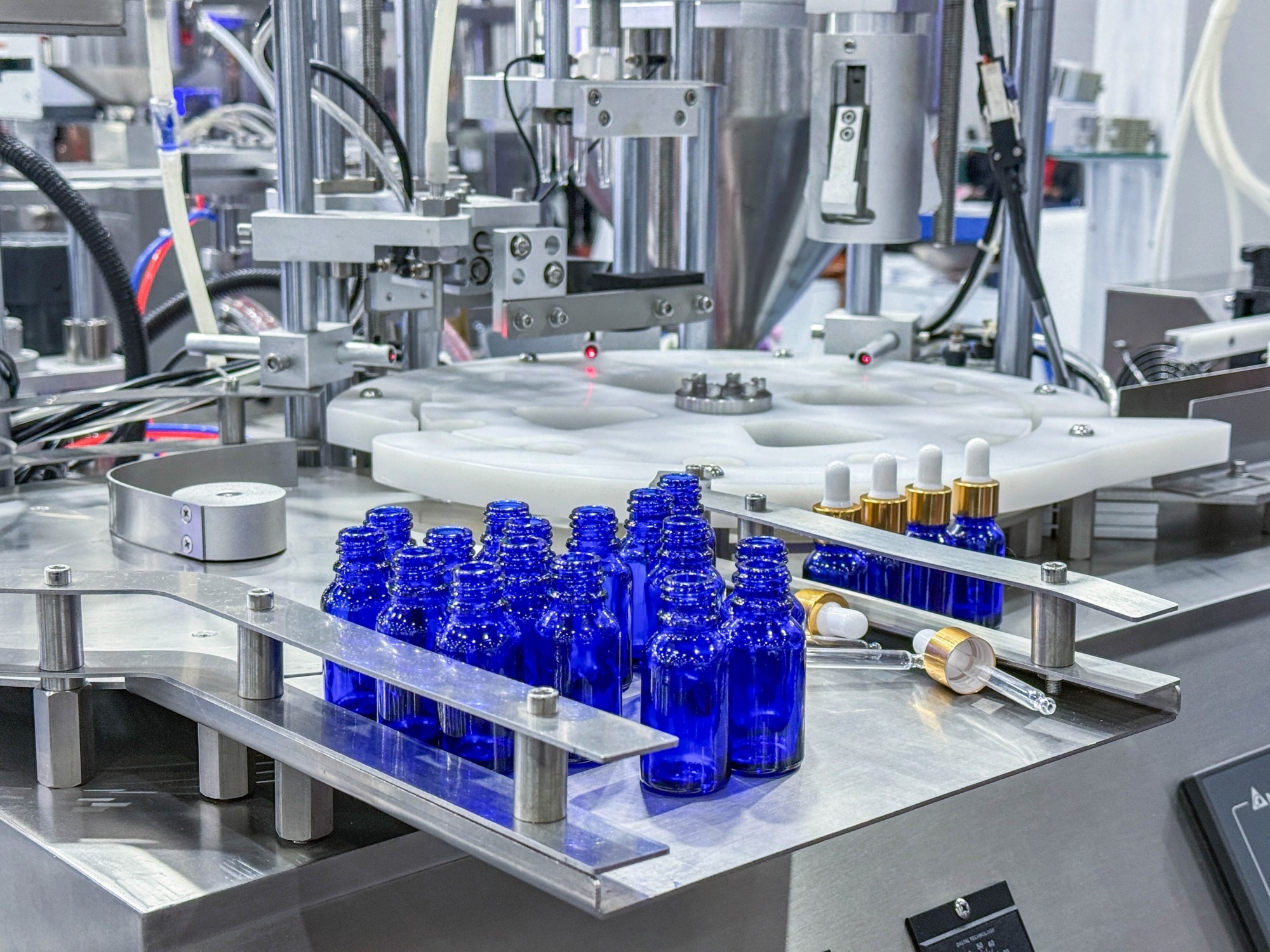 Image Credit: i viewfinder/Shutterstock.com
In most conventional beauty products, water makes up 60 to 80 % of the formula. Taking it out concentrates the product, but even more than that, it changes how ingredients are combined, how texture is built, how stability is managed, and how the product is made at scale.1
Saving this article for later? Download a PDF here.
The Impact of Removing Water from Cosmetics
In emulsions, water does several jobs at once. It acts as a carrier, helps dissolve ingredients, supports texture, and provides the medium through which active compounds are delivered to the skin.
Once water is removed, formulators have to rebuild those functions using oils, waxes, powders, and other dry materials. This is not just about replacing missing volume. It means reworking solubility, viscosity, pigment suspension, and active delivery without the buffering effect that water usually provides.2,3
That is why waterless cosmetics are not one single format. They usually fall into three main groups: oil-based products such as serums and balms, solid products such as bars and sticks, and powder-based products that are activated later.
Each one has its own manufacturing demands, ingredient choices, and stability issues.2,3
Waxes and Butters Form the Structure
In many solid and semi-solid waterless cosmetics, structure comes from waxes and butters.
Waxes such as carnauba, beeswax, and candelilla wax form crystalline networks in anhydrous oil systems. Those networks control hardness, texture, and melt behavior. The ratio between waxes and softer lipids determines whether a product feels firm, smooth, brittle, or too soft.2,3
This makes controlling melting-point especially important. A product has to remain stable in storage and transport, but still soften correctly during use.
Plant butters such as shea, cocoa, and mango butter also shape the formula. They provide both structure and skin feel, especially because they melt close to skin temperature and help the product glide without water-based lubrication.2,3
But these materials introduce variations. A butter rich in more unsaturated fats may feel lighter, but it is also more vulnerable to oxidation. Formulators often have to balance sensory performance against shelf-life stability rather than optimize both at once.
Polymeric Structuring Agents Fine-Tune Texture and Flow
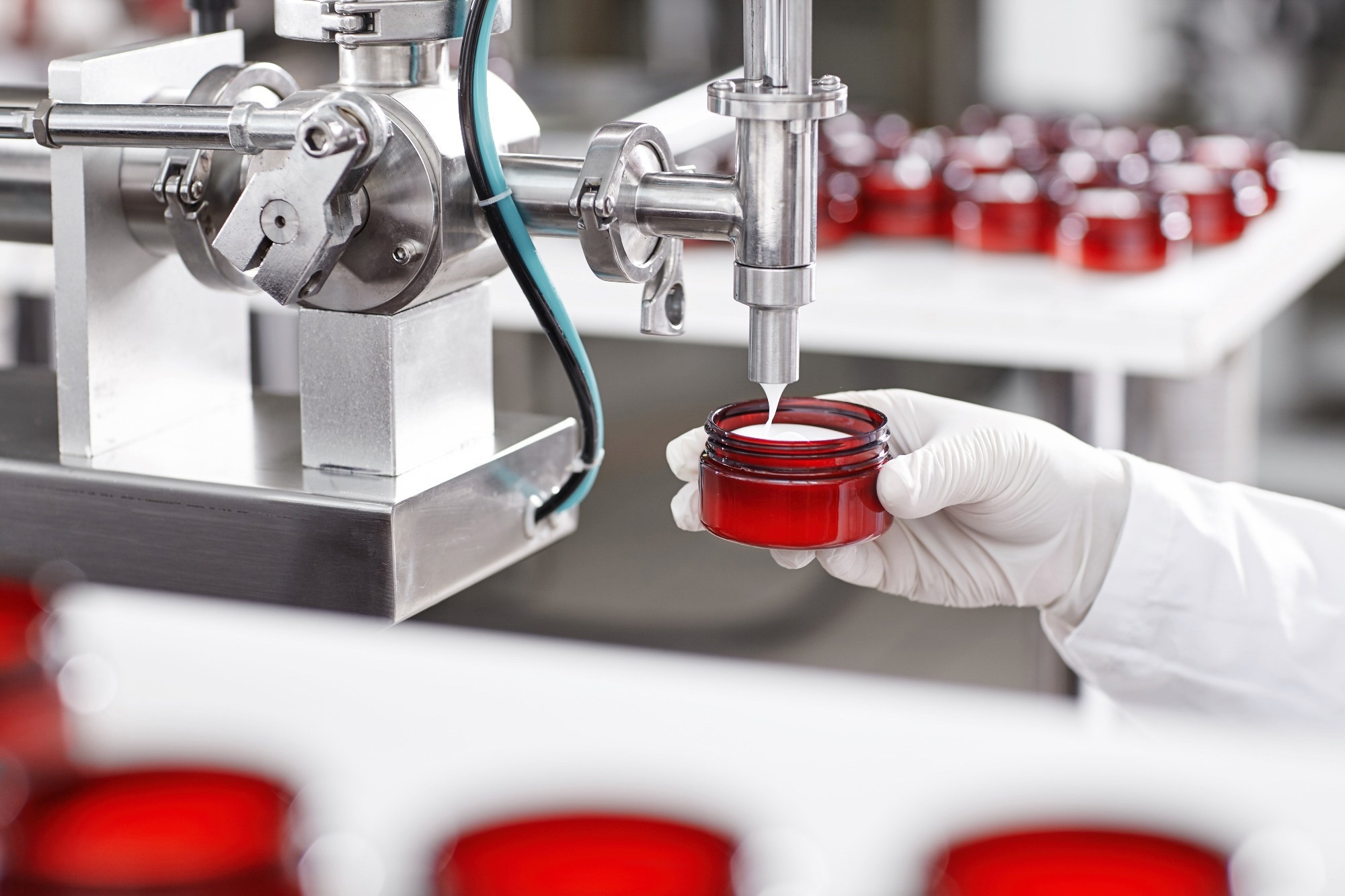 Image Credit: Cast Of Thousands/Shutterstock.com
Natural waxes and butters do not do all the work. Many waterless cosmetics also rely on synthetic or biosynthetic structuring agents to control rheology more precisely.
Materials such as hydrogenated castor oil, ethylene/propylene copolymers, and polyethylene waxes help adjust viscosity, thixotropy, and yield stress. These properties affect how the product spreads, how it deposits on skin, and how well it holds its form during use.2,3
This level of control becomes especially important during scale-up, where small differences in hardness or texture can turn into larger batch-to-batch problems.
Silicone-based materials can also play a role. Silicone waxes and crosslinked siloxane elastomers are often used to create a smoother, silkier feel while staying compatible with a wide range of ingredients.
Their performance is useful, but environmental concerns have led manufacturers to look more closely at plant-based alternatives that can offer similar sensory effects.1,2
Waterless Products Need Less Preservation but More Oxidation Control
One of the clearest manufacturing advantages of waterless formulations is their lower microbial risk.
Bacteria, molds, and yeasts need available water. In anhydrous systems, that risk drops sharply. As a result, formulators often need less of the broad-spectrum preservative systems that are common in water-based cosmetics. This can simplify the formula, reduce ingredient demand, and support cleaner label claims.3
But waterless products are not automatically easier to stabilize. Their main stability problem is different.
Instead of microbial spoilage, the bigger threat is oxidation. Oils and waxes rich in unsaturated fatty acids can become rancid over time, affecting both smell and product performance. To manage that risk, manufacturers use antioxidants such as tocopheryl acetate, rosemary extract, and butylated hydroxytoluene at controlled levels.2,3,4
Testing priorities change as well. In waterless systems, oxidative stability becomes more important, along with temperature cycling tests that show how the product structure responds to storage and transport conditions.
Waterless Cosmetics Need Different Manufacturing Processes
Waterless cosmetics are not made in quite the same way as conventional emulsions.
Solid and semi-solid products are often made through melt-and-pour processing. Waxes and butters are heated above their highest melting point, blended with oils and active ingredients, and then poured into molds or shaped continuously as they cool.3
Cooling is just as important as melting. Crystallization rate and cooling uniformity affect hardness, surface texture, and batch consistency. If cooling is too fast or uneven, the final product may feel grainy or develop internal voids.
Extrusion is another important route, especially for products such as lipsticks and solid deodorants. In this process, a molten blend is pushed through a die under controlled pressure.
Viscosity has to be carefully managed. Too low, and the product can collapse. Too high, and it can swell at the die or develop surface defects.3,5
Powder-based formats have different problems again. These depend on dry blending and compaction, so particle size and blend uniformity become critical to performance.
For more on cosmetic science, click here.
Waterless Products Can Reduce Transport Impact
Removing water also changes the logistics of cosmetic manufacturing.
Because waterless products are more concentrated, they are often lighter and more compact than conventional liquid products. That can reduce packaging demand, lower transport weight, and cut shipping-related emissions.1
That does not make every waterless product sustainable by default. But it does give manufacturers a practical way to reduce environmental impact through formulation and product format, not only through packaging changes.
Why Waterless Cosmetics Affect Manufacturing
Waterless cosmetics change more than an ingredient list. Removing water changes how a product is built, stabilized, processed, and transported.
For manufacturers, this is an opportunity and a challenge. The opportunity lies in more concentrated products, lower microbial risk, and reduced transport impact. The challenge is replacing the many functions that water once performed while still meeting expectations for texture, stability, and skin feel.
References and Further Reading
- Aguiar, J. B. et al. (2022). Water sustainability: A waterless life cycle for cosmetic products. Sustainable Production and Consumption, 32, 35-51. DOI:10.1016/j.spc.2022.04.008, https://www.sciencedirect.com/science/article/pii/S235255092200094X
- Du, X. N. et al. (2024). Decoding Cosmetic Complexities: A Comprehensive Guide to Matrix Composition and Pretreatment Technology. Molecules, 29(2). DOI:10.3390/molecules29020411, https://www.mdpi.com/1420-3049/29/2/411
- Kulawik-Pióro, A. et al. (2025). The Impact of Starches from Various Botanical Origins on the Functional and Mechanical Properties of Anhydrous Lotion Body Bars. Polymers, 17(13). DOI:10.3390/polym17131731, https://www.mdpi.com/2073-4360/17/13/1731
- Springer, A., & Ziegler, H. (2022). The Role of Preservatives and Multifunctionals on the Oxidation of Cosmetic O/W Emulsions. Cosmetics, 9(3). DOI:10.3390/cosmetics9030059, https://www.mdpi.com/2079-9284/9/3/59
- Tambe, S. et al. (2021). Hot-melt extrusion: Highlighting recent advances in pharmaceutical applications. Journal of Drug Delivery Science and Technology, 63, 102452. DOI:10.1016/j.jddst.2021.102452, https://www.sciencedirect.com/science/article/abs/pii/S1773224721001325
Disclaimer: The views expressed here are those of the author expressed in their private capacity and do not necessarily represent the views of AZoM.com Limited T/A AZoNetwork the owner and operator of this website. This disclaimer forms part of the Terms and conditions of use of this website.