What are Diatoms?
Algica® in Natural Beauty Care
Controlled Release and Emerging Applications
Circular Production and Industry Context
Can Swedish Algae Factory Translate Algica® to Commercial Reality?
References and Further Reading
Swedish Algae Factory (SAF), based in Gothenburg, has developed a commercial-scale way to grow diatom microalgae and extract their silica shells. This material, Algica®, is already used in more than 60 personal care products around the world and is now being explored for wound care, battery anodes, solar cells, and filtration membranes.1
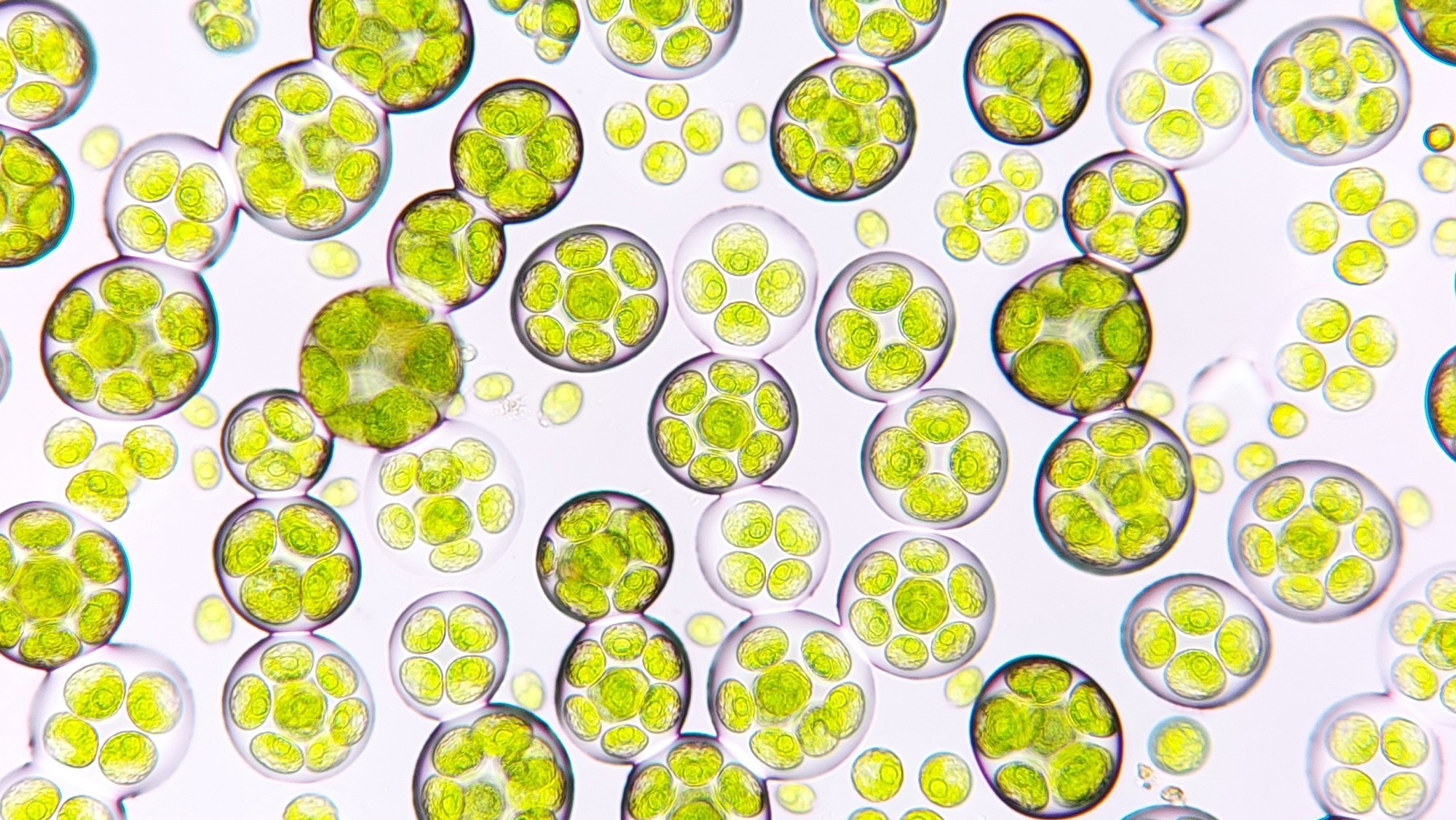 Image Credit: Ekky Ilham/Shutterstock.com
Saving this article for later? Grab a PDF here.
The global cosmetics market was valued at approximately $374 billion in 2023 and is projected to exceed $750 billion by 2032.1 Yet the industry faces growing tension between performance and environmental responsibility, particularly around synthetic silica, microplastics, and fossil-derived carrier materials increasingly subject to regulatory restriction.
SAF was founded in 2016 by Angela Wulff, a professor in marine ecology at the University of Gothenburg, and Sofie Allert, a biotechnical engineer with a postgraduate background in business development. Their collaboration grew from the observation that diatoms can thrive in Antarctic Sea ice - proving the possibility of an algae industry in Nordic climates without energy-intensive warm-weather cultivation.2
Algica® is produced at a dedicated facility in Kungshamn on the west coast of Sweden. In 2025, SAF completed a €3 million funding round backed by Chalmers Ventures and others to scale that facility to full commercial capacity. 4
What are Diatoms?
Diatoms are unicellular eukaryotic algae with a silica cell wall known as a frustule. They've evolved over the past 200 million years and now amass an estimated 20,000 to 2,000,000 species.
Diatom Properties
- Of the total global annual oxygen production, diatoms contribute roughly 20-25 %. 2
- Their mesopore geometry provides specific surface area exceeding 200 m2/g, enabling high-capacity adsorption and controlled molecular release.
- Their frustules consist of amorphous hydrated silica (SiO2·nH2O) arranged in species-specific hierarchical patterns of mesopores (typically 10-1,000 nm), forming natural photonic crystal structures. 5
- The photonic crystal structure traps and guides visible light while blocking UV radiation.6,7
Frustule surfaces carry dense silanol (Si-OH) groups, which facilitate water retention and surface modification. Unlike fossilized diatomaceous earth, which is fragmented, mineralogically contaminated, and has inconsistent pore sizes, Algica® is derived from cultivated, single-species diatoms, yielding uniform, intact shells with defined structural properties.8
Algica® in Natural Beauty Care
Algica® is COSMOS and NATRUE certified, qualifying it for certified natural formulations - a significant commercial distinction as EU Regulation 2023/2055 has initiated phase out of intentionally added synthetic microplastics from cosmetics in stages: microbeads were immediately restricted in October 2023, rinse-off products follow in October 2027, leave-on products in October 2029, and makeup, lip, and nail cosmetics in October 2035.10
A life-cycle analysis in Nature Sustainability identified silica as the most environmentally favourable among 29 candidate alternatives to plastic microbeads. 11
A commissioned in vivo, randomized, and double-blind study found Algica's moisturising performance equivalent to hyaluronic acid, with participants rating it smoother on application and faster-absorbing.2 Its porous structure absorbs 10-20 times more sweat, oil, bacteria, and environmental pollutants than conventional synthetic silica.
This multi-functionality – moisturiser, sensory modifier, SPF booster, anti-pollution agent, and cleanser in a single ingredient – reduces formulation complexity and supports cleaner-label positioning. They have been used commercially by L: A Bruket in its 281 Protective Fluid and Verso in its daily SPF 50. 4
Table 1: Algica® vs Conventional Cosmetic Silica - Comparative Properties
| Property |
Conventional Synthetic Silica |
Diatomaceous Earth |
Algica® (SAF) |
| Source |
Chemical synthesis |
Mined fossil frustules |
Cultivated living diatoms |
| Pore consistency |
Variable / engineered |
Fragmented, inconsistent |
Uniform mesopores (10–1000 nm) |
| Specific surface area |
~50-150 m2/g |
~20-100 m2/g |
>200 m2/g |
| UV-blocking |
No |
Partial |
Yes (photonic crystal) |
| In vivo moisturisation |
No |
No |
Equivalent to hyaluronic acid |
| COSMOS / NATRUE certified |
No |
Varies |
Yes |
| Microplastic regulation risk |
High (polymer-based) |
Low |
None |
| Production CO2 footprint |
High |
Medium (mining) |
Net carbon-negative per kg |
Controlled Release and Emerging Applications
One of the more promising emerging uses for Algica® is controlled release: the ability to encapsulate active substances and release them over a defined period rather than all at once. SAF is now exploring that capability across personal care, wound care, and antifouling applications.
A BioInnovation-funded project with RISE, Sweden’s national research institute, validated proof-of-concept performance from June 2023 to February 2024, including the successful release of retinol from Algica® – a notable result given the technical instability of retinoids.
A follow-on project running from May 2024 to April 2026 is targeting Technology Readiness Level 6, with release windows of eight to 10 hours for skin actives, days to weeks for wound care, and three to five years for antifouling coatings.
Comparable fossil-based or synthetic carriers can generally achieve those windows only with higher environmental and processing costs.9
Circular Production and Industry Context
Circularity is built into SAF’s production model. The company cultivates diatoms using nutrient-rich wastewater from a neighbouring food producer, with the algae removing nitrogen and phosphorus before the water is returned purified. That system not only reduces waste but also creates additional value: each kilogram of Algica® produced traps at least 8 kg of CO2, 1 kg of nitrogen, and 0.1 kg of phosphorus.2
Residual biomass is used to generate thermal energy and eco-fertiliser, while fish-feed applications are being developed with the University of Gothenburg.2 This matters in a broader industry context.
The global algae skincare market is projected to grow from approximately $201 million in 2025 to $310 million by 2031 at a CAGR of 7.48 %, driven by rising demand for marine-derived actives – a market backdrop that favours scalable, circular, certified ingredients with clinical support.13
Can Swedish Algae Factory Translate Algica® to Commercial Reality?
With commercial-scale production operational and validated performance across moisturisation, UV protection, pollutant absorption, and controlled release, Swedish Algae Factory's near-term priorities are to build the regulatory dossiers required to move retinoid encapsulation and wound care prototypes toward market, and expand factory capacity from ~3,500 to ~10,000 sq ft. 4
The battery and solar applications are longer-horizon opportunities that depend on academic and project partners reaching scale. Whether SAF can translate its technical differentiation into sufficient commercial volume at competitive cost, and whether the SUSTBATT and SUNALGAE programmes deliver commercially viable outputs, is another question. These concerns will determine how broadly Algica® penetrates beyond the high-end personal care segment in which it is currently established.5, 8, 14
References and Further Reading
- Swedish Algae Factory. (n.d.). Swedish Algae Factory (Main, circularity, diatoms, story, and new-developments pages). https://www.swedishalgaefactory.com/
- Giustra, M. et al. (2024). Microplastics in cosmetics: Open questions and sustainable opportunities. ChemSusChem,(22), Article e202401065. DOI:10.1002/cssc.202401065, https://chemistry-europe.onlinelibrary.wiley.com/doi/10.1002/cssc.202401065
- Swedish Algae Factory. (n.d.). New developments. https://www.swedishalgaefactory.com/algica/new-developments
- Cosmetics Business. (2025, April 4). Swedish Algae Factory raises €3 million to expand algae production. https://cosmeticsbusiness.com/swedish-algae-factory-raises-%E2%82%AC3million-expand-algica-production-boost-beauty-partnerships
- Min, K. H., Kim, D. H., Youn, S., & Pack, S. P. (2024). Biomimetic diatom biosilica and its potential for biomedical applications and prospects: A review. International Journal of Molecular Sciences, 25(4), Article 2023. DOI:10.3390/ijms25042023, https://www.mdpi.com/1422-0067/25/4/2023
- De Tommasi, E., Rea, I., Ferrara, M. A., De Stefano, L., De Stefano, M., Al-Handal, A. Y., Stamenkovic, M., & Wulff, A. (2024). Multiple-pathways light modulation in Pleurosigma strigosum bi-raphid diatom. Scientific Reports, 14, Article 6476. DOI:10.1038/s41598-024-56206-y, https://www.nature.com/articles/s41598-024-56206-y
- Aguirre, L. E., Ouyang, L., Elfwing, A., Hedblom, M., Wulff, A., & Inganäs, O. (2018). Diatom frustules protect DNA from ultraviolet light. Scientific Reports, 8, Article 5138. DOI:10.1038/s41598-018-21810-2, https://www.nature.com/articles/s41598-018-21810-2
- Sardo, A., Orefice, I., Balzano, S., Barra, L., & Romano, G. (2021). Mini-review: Potential of diatom-derived silica for biomedical applications. Applied Sciences, 11(10), Article 4533. DOI:10.3390/app11104533, https://www.mdpi.com/2076-3417/11/10/4533
- BioInnovation Sweden. (2024). Diatom frustules, a biobased and sustainable carrier structure for controlled release in multiple applications [Project report]. https://www.bioinnovation.se/en/projekt/diatom-frustules-a-biobased-and-sustainable-carrier-structure-for-controlled-release-in-multiple-applications-step-1/
- European Commission. (2023). Commission Regulation (EU) 2023/2055 - Restriction of microplastics intentionally added to products. https://single-market-economy.ec.europa.eu/sectors/chemicals/reach/restrictions/commission-regulation-eu-20232055-restriction-microplastics-intentionally-added-products_en
- Hunt, C. F., Lin, W. H., & Voulvoulis, N. (2020, October 19). Evaluating alternatives to plastic microbeads in cosmetics. Imperial College London News. https://www.imperial.ac.uk/news/210754/silica-best-environmental-alternative-plastic-microbeads/
- Bandara, T. M. W. J., Bandara, H. M. J. C., Jayasundara, W. J. M. J. S. R., Senadeera, G. K. R., Mellander, B.-E., Albinsson, I., & Dissanayake, M. A. K. L. (2023). Nanostructured diatom frustules incorporated into TiO2 photoelectrodes to enhance performance of quasi-solid-state dye-sensitized solar cells. Optical Materials, 146, Article 114514. DOI:10.1016/j.optmat.2023.114514, https://www.sciencedirect.com/science/article/pii/S0925346723006604
- TechSci Research. (2025). Algae skincare products market – Global industry forecast 2021–2031. https://www.giiresearch.com/report/tsci1970984-algae-skincare-products-market-global-industry.html
- Cosmetics & Toiletries. (2025). Swedish Algae Factory scales production of revolutionary diatom-based material. https://www.cosmeticsandtoiletries.com/news/companies/news/22937436/swedish-algae-factory-scales-production-of-revolutionary-diatombased-material-for-beauty-and-tech-industries
- Tramontano, C., Chianese, G., Terracciano, M., de Stefano, L., & Rea, I. (2020). Nanostructured biosilica of diatoms: From water world to biomedical applications. Applied Sciences, 10(19), Article 6811. DOI:10.3390/app10196811, https://www.mdpi.com/2076-3417/10/19/6811
Disclaimer: The views expressed here are those of the author expressed in their private capacity and do not necessarily represent the views of AZoM.com Limited T/A AZoNetwork the owner and operator of this website. This disclaimer forms part of the Terms and conditions of use of this website.