Failures in oil and gas safety mechanisms can be catastrophic. From the Piper Alpha disaster in 1988 to the BP America incident in Texas City, 2005, such accidents have grave consequences.
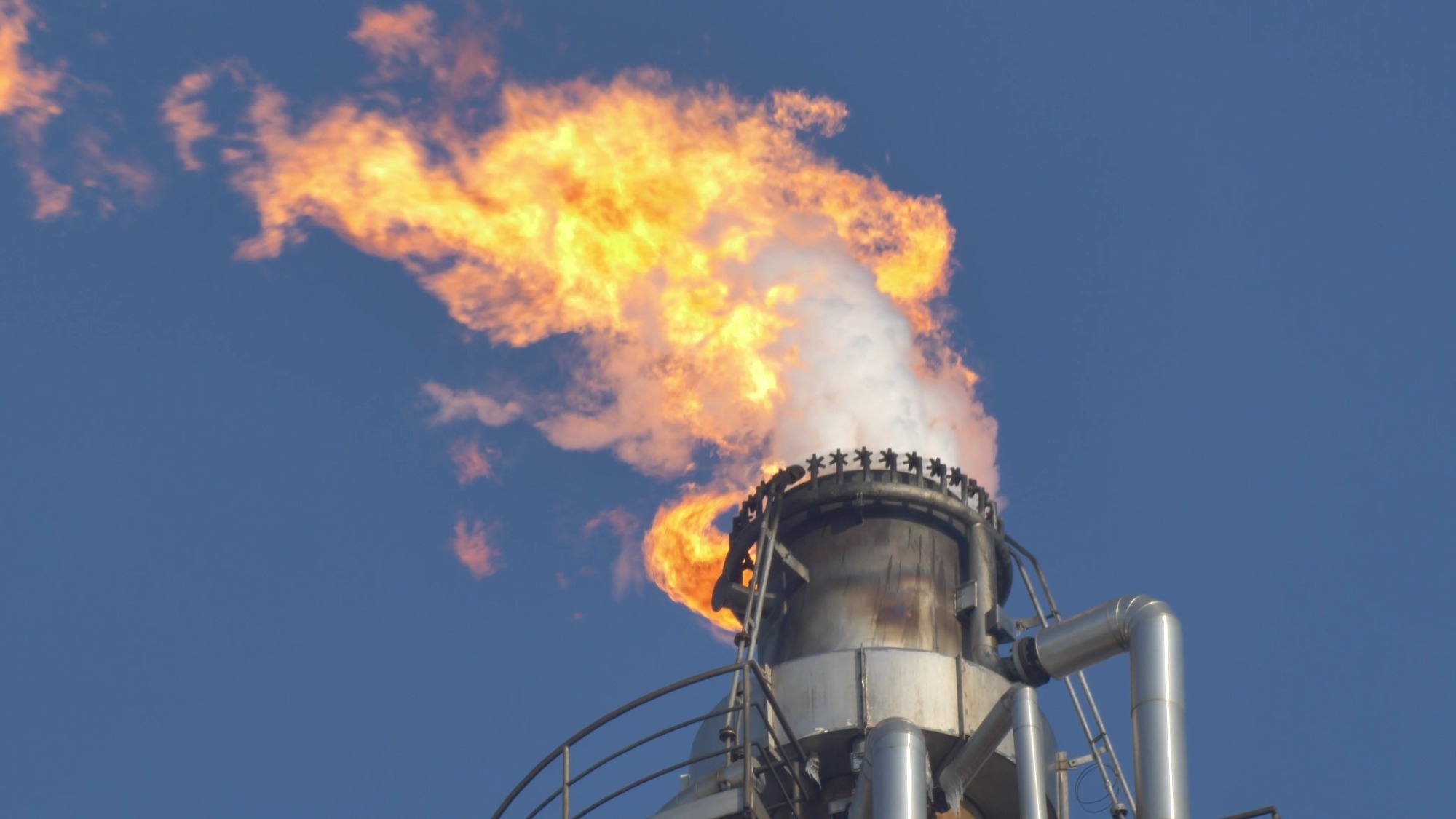 Image Credit: maradek/Shutterstock.com
Flare stacks are one of the most important pieces of safety infrastructure in oil, gas, petrochemical, and refining facilities. But their effectiveness depends on careful design and continuous verification to ensure the flare system works exactly as intended when it’s needed most.
Get all the details: Grab your PDF here!
Flare Stacks in Pressure Relief and Depressuring Systems
In most hydrocarbon processing facilities, pressure relief devices (PRDs), such as safety valves and rupture disks, are installed to prevent equipment from exceeding its maximum allowable working pressure. When these devices open, the relieved fluids are routed to a safe disposal point.
Venting directly to the atmosphere is typically unacceptable for flammable or toxic hydrocarbons. The flare system provides that disposal point. 1
Flare stacks provide a controlled location, away from personnel and critical equipment, for the combustion of hydrocarbons. During emergency depressurization, such as a fire or a major process upset, large hydrocarbon inventories may be intentionally released into the flare system to rapidly reduce pressure and limit escalation.
In such cases, the flare stack acts as the final safeguard in the pressure protection hierarchy. 2
Industry guidance, such as API 521, Pressure-relieving and Depressuring Systems, and the aligned international standard ISO 23251, emphasizes that flare system design begins with defining credible relief scenarios.
These include blocked outlets, control valve failures, thermal expansion, external fires, and emergency depressuring cases. Each scenario establishes required relief rates, compositions, and durations that the flare system must safely handle. 3
System Design Considerations
The flare stack’s safety performance is inseparable from the hydraulics of the flare header and sub-headers from an engineering perspective. When relief valves open, the resulting flow creates backpressure in the flare system. Excessive backpressure can reduce relief valve capacity or cause unstable operation.
API 521 and ISO 23251 outline accepted approaches for evaluating flare header hydraulics, including allowable backpressure limits, two-phase flow considerations, and the impact of simultaneous relief events.
Pressure monitoring within the flare system at headers, sub-headers, or knockout drums helps verify that operating conditions are within the design envelope.
The flare system should ensure that relieved hydrocarbons are ignited reliably, burn stably, and do not expose personnel or equipment to unacceptable thermal radiation. The safe-disposal philosophy influences choices regarding stack height, tip selection, ignition systems, and assist media. 3, 4, 5
Flare System Design
Video Credit: @SuperDanksy/YouTube.com
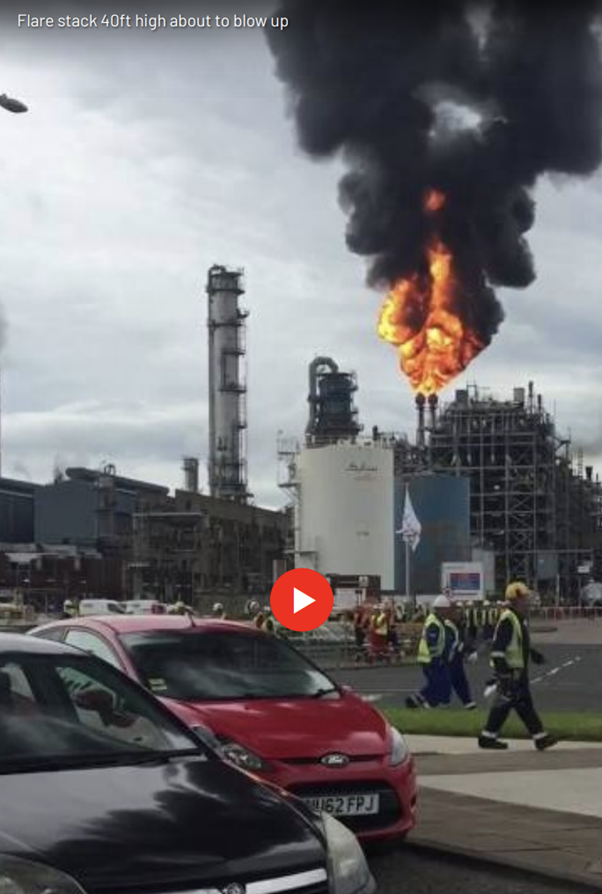
The flare systems may vary by facility and duty, but most include a common set of components.
Flare Tip and Stack
The flare tip is designed for stable combustion across a wide turndown range. Tip design affects flame shape, radiation, noise, and smokeless capacity.
The stack elevates the flame, reducing ground-level radiation and dispersion risks. Stack height is usually determined by radiation calculations tied directly to worst-case relief scenarios.
Pilots and Ignition Systems
Pilots are usually lit continuously and monitored to ensure the flame remains present. Redundant ignition sources and flame detection systems reduce the risk of an unlit flare during a relief event, which would result in direct hydrocarbon release.
Purge Gas and Seals
Purge gas prevents air ingress into the flare system, which could otherwise lead to flashback or internal explosions.
Engineers balance purge gas rates against operating costs and emissions. Molecular seals or velocity seals are used to minimize purge requirements while maintaining safety.
Knockout Drum and Liquid Handling
Upstream of the stack, knockout drums remove entrained liquids from the relief stream. Liquid carryover to the flare tip can cause flame instability or structural damage. As such, pressure and level monitoring in knockout drums is imperative for flare safety.
Assist Media
Steam-assisted or air-assisted flares are used to improve smokeless performance at high hydrocarbon flow rates.
However, assist media introduces trade-offs such as higher noise levels, increased utility demand, and greater control complexity. Improper assist rates can worsen combustion rather than improve it.
Controls and Instrumentation
Modern flare systems incorporate pressure, flow, temperature, and flame monitoring to support safe operation. Pressure monitoring helps detect abnormal restrictions, simultaneous relief loads, or deviations from design assumptions. 6
Design tradeoffs engineers must manage
There are several tradeoffs in flare system design. For instance, achieving smokeless performance requires higher steam or air rates, which can increase noise and operating costs. Increasing stack height reduces radiation at grade but raises capital cost and structural complexity. Similarly, minimizing purge gas reduces emissions but tightens margins against air ingress. 7, 8
Pressure monitoring is important for these tradeoffs. Accurate pressure data allows engineers and operators to understand how close the system is operating to its limits.
It also supports condition-based maintenance by identifying gradual increases in pressure drop that may signal fouling, corrosion, or mechanical damage within the flare header. 7, 8
Similarly, maintainability and inspection are also important. Flare tips, pilots, and seals are located at significant heights and exposed to harsh thermal and environmental conditions. Design choices that simplify inspection and replacement can materially improve long-term safety performance.
What’s Changing
Historically, flare systems were evaluated almost exclusively through a safety lens. Today, they are examined as measurable emission sources. There has been a lot of emphasis on flare efficiency, detection of unlit or poorly performing flares, and accurate measurement, reporting, and verification of emissions.
Real-world flare performance can deviate significantly from assumed destruction efficiencies, particularly under crosswind conditions, low heating value gases, or transient flow rates.
Field studies using optical methods and tracer gases have demonstrated that methane destruction efficiency can vary widely during normal operations and upset events. 9, 10
Machine-learning models are being developed to predict flare performance across a range of assisted and non-assisted flare configurations. These models incorporate variables such as flow rate, gas composition, wind speed, and assist media rates to estimate combustion efficiency and emissions in operating conditions that are difficult to reproduce in laboratory tests. 11
Satellite-based analyses and remote sensing have revealed discrepancies between observed flaring activity and reported data in some regions, as well as cases where flares appear unlit for extended periods.
Case studies combining satellite observations with ground-based data have shown the need for better on-site monitoring to distinguish between lit, unlit, and inefficient flares. 12
These developments reinforce the value of robust pressure and performance monitoring. Detecting abnormal pressure behavior can help identify conditions associated with poor combustion. In this way, pressure monitoring supports both traditional safety objectives and emissions-reduction goals.
References
- Jo, Y. P., Cho, Y., & Hwang, S. (2020). Dynamic analysis and optimization of flare network system for topside process of offshore plant. Process Safety and Environmental Protection. https://doi.org/10.1016/j.psep.2019.12.008
- Melhem, G. A. (2013). A systematic approach to relief and flare systems evaluation. Process Safety Progress. https://doi.org/10.1002/prs.11615
- Zamejc, E. (2014). API Standard 521 new alternative method to evaluate fire relief for pressure relief device sizing and depressuring system design. Journal of Loss Prevention in the Process Industries. https://doi.org/10.1016/j.jlp.2013.10.016
- A. Irshad, H. A. Althaaly, & P. Dhote (2025) Digital Feature: The critical interdependency of relief valve analysis and flare system considerations during HAZOP. Hydrocarbon Processing. https://www.hydrocarbonprocessing.com/news/2025/07/digital-feature-the-critical-interdependency-of-relief-valve-analysis-and-flare-system-considerations-during-hazop/
- Sukairaji, A., Zaria, U. A., & Mohammed, D. I. A. (2021). Modelling and evaluation of the effects of high back pressure (HBP) on refinery Flare System network. Safety Engineering. https://internationalpolicybrief.org/wp-content/uploads/2023/10/ARTICLE9-91.pdf
- B. Karthikeyan. (2020) Manage Change to Flare Systems. AIChE. https://publications.aiche.org/cep/2020/january/manage-change-flare-systems
- Maaroof, A. A., Smith, J. D., & Zangana, M. H. (2024). A New Air-Assisted Flare Tip Design for Managing Gas Flare Emissions (CFD Analysis). Processes. https://doi.org/10.3390/pr12091834
- Almasi A. (2018) Flare gas system design for efficient control and operation. Processing. https://www.processingmagazine.com/process-control-automation/instrumentation/article/55350231/flare-gas-system-design-for-efficient-control-and-operation
- Plant, G., Kort, E. A., Brandt, A. R., Chen, Y., Fordice, G., Gorchov Negron, A. M., ... & Zavala-Araiza, D. (2022). Inefficient and unlit natural gas flares both emit large quantities of methane. Science. https://doi.org/10.1126/science.abq0385
- Lapeyre, P., Miguel, R. B., Nagorski, M. C., Gagnon, J. P., Chamberland, M., Turcotte, C., & Daun, K. J. (2024). Quantifying flare combustion efficiency using an imaging Fourier transform spectrometer. Journal of the Air & Waste Management Association. https://doi.org/10.1080/10962247.2024.2319773
- Pandiyan, M., Stolzman, J., & Wooldridge, M. S. (2025). Predictive Modeling and Analysis of Industrial Flare Performance using Advanced Machine Learning Approaches. Process Safety and Environmental Protection. https://doi.org/10.1016/j.psep.2025.107251
- Seymour, S. P., Aylward, B., Galvin, K. P., Kang, M., & Xie, D. (2025). Gas flaring is likely underestimated by satellites due to undetected small flares. Environmental Science & Technology. https://pubs.acs.org/doi/full/10.1021/acs.est.5c03928
Disclaimer: The views expressed here are those of the author expressed in their private capacity and do not necessarily represent the views of AZoM.com Limited T/A AZoNetwork the owner and operator of this website. This disclaimer forms part of the Terms and conditions of use of this website.