Which Battery Materials Are Worth Recovering?
Battery Recycling Pathways
Self-Healing Battery Materials: Embedding Recycling in Design
What is Slowing Battery Recycling at Scale?
Regulation Is Starting to Push Battery Circularity
Why Battery Recycling Is So Important Now
References and Further Reading
As battery demand scales in parallel with electrification and energy storage use, the question of what happens to cells at the end of life now sits in the center of both sustainability goals and industrial strategy.
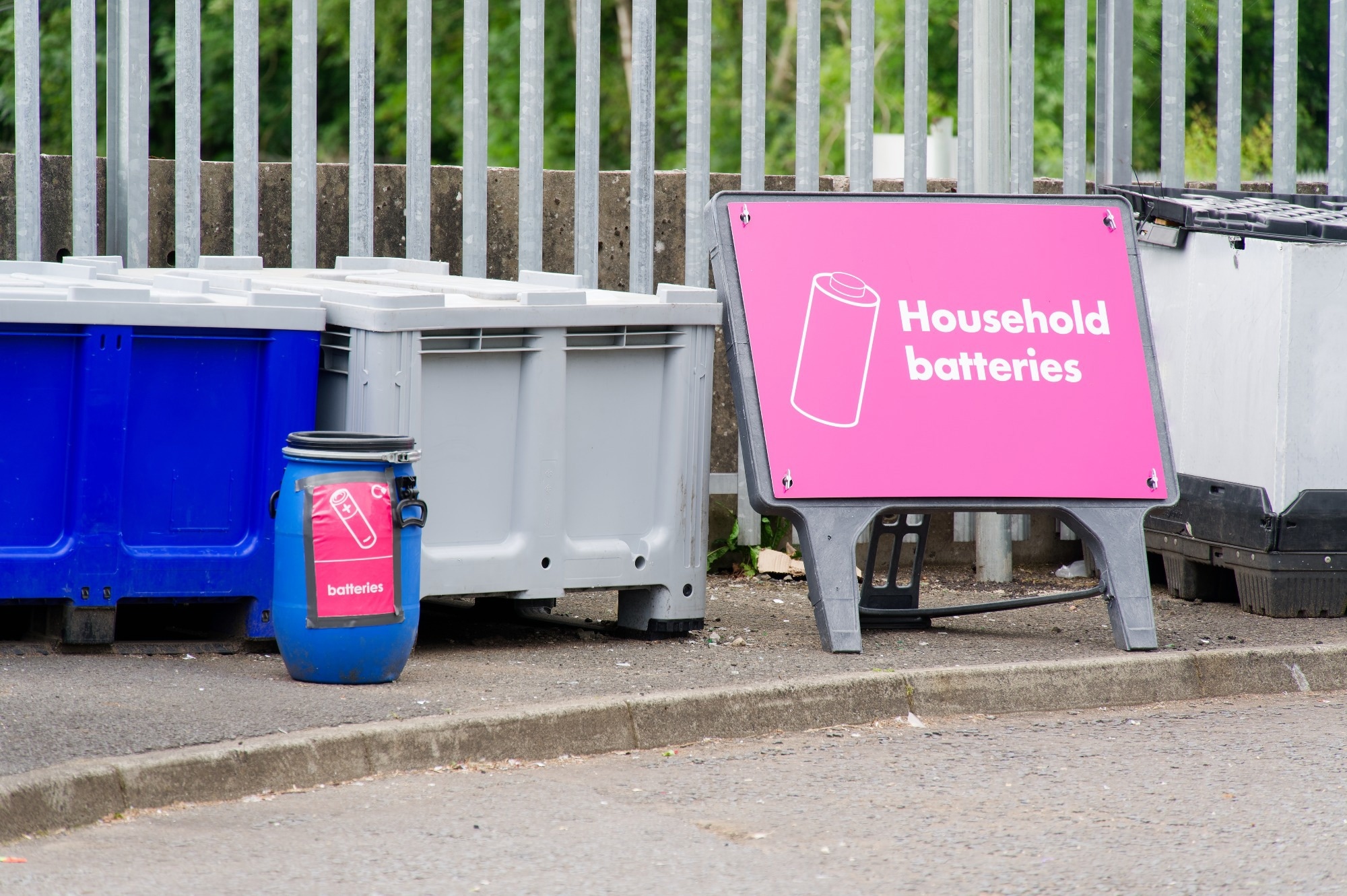 Image Credit: richardjohnson/Shutterstock.com
Batteries are a key component of clean energy and electrification – essential in electric mobility, renewable energy storage, and grid stabilization. Yet, their use is limited by a lack of the necessary raw materials to make them, such as lithium, nickel, and cobalt, as well as by the rising volumes of end-of-life waste.
This pressure is driving industry to look for efficient recycling systems to recover valuable materials and support a more sustainable and circular battery supply chain.
Saving this article for later? Grab a PDF here.
Which Battery Materials Are Worth Recovering?
Not all battery waste streams are equal, as recovery potential depends on chemistry, feedstock quality, and recovery efficiency.
nickel, cobalt, manganese, graphite, copper, and aluminum. Among these, cobalt and nickel are usually the most valuable.
Lead-acid batteries also remain a major recycling stream because lead can be recovered at very high rates and the recycling infrastructure is already well established.
Nickel-based batteries offer moderate recovery value through nickel. Cadmium-containing systems need tighter control because of toxicity. Alkaline and mixed consumer batteries are generally a lower priority because zinc and manganese can be recovered, but often not at a strong economic return.1
Battery Recycling Pathways
Battery recycling processes are divided into two main stages: waste preparation and metallurgical processing.
Waste Preparation
The first stage is sorting and classification. Spent batteries are separated by chemistry using manual methods and automated systems such as mechanical separation, X-ray imaging, and optical recognition.
The batteries are then crushed and broken down so internal components can be separated. Magnetic, electrostatic, and density-based methods help isolate material fractions.
This stage does not recover the valuable metals directly. Its job is to reduce volume, remove contamination, and improve the efficiency of the next step.
Metallurgical Processing
The second stage is where valuable metals are extracted. This is usually done through pyrometallurgical or hydrometallurgical processing, depending on battery chemistry and recovery goals.2
Pyrometallurgical Recycling
Pyrometallurgical recycling is a high-temperature process. It typically operates between 600 and 1350 °C, and recovers metals from spent batteries by decomposition, reduction, and selective volatilization of low-boiling-point components.
Pyrometallurgy is commonly used to recycle zinc-carbon, alkaline, nickel-cadmium, and lead-acid batteries, enabling the separation of metals such as mercury, zinc, and cadmium.
In zinc-based systems, mercury is removed at 450-600 °C and zinc is recovered above 907 °C. Zinc oxide reduction takes place above 920 °C in the presence of carbon, producing zinc vapor while manganese remains as MnO.
For nickel-cadmium batteries, hydroxide decomposition happens at around 230-300 °C. Cadmium can then be recovered as a vapor above 767 °C, typically at around 900 °C, with purities up to 99.9 %.
Pyrometallurgy is industrially mature and widely used, but it is energy intensive and does not preserve complex battery materials in a strongly circular form.
Hydrometallurgical Recycling
Hydrometallurgical recycling is a solution-based process that enables selective recovery of metals from spent batteries, offering higher selectivity and lower energy demand than thermal routes.
It has been widely applied to lithium-ion, nickel-based, and alkaline batteries. It can recover lithium, cobalt, nickel, manganese, zinc, and rare earth elements. Zinc can often be dissolved almost completely, while manganese usually needs reductive conditions for full recovery.
The process starts with sorting and mechanical pretreatment to remove casings and contaminants. The remaining material is then leached using acids such as H2SO4 and HCl, or organic acids such as citric and malic acid. Reducing agents such as H2O2 are often added to improve dissolution.
The resulting solution is then purified using solvent extraction, ion exchange, precipitation, or cementation. Once metals are isolated and concentrated, they can be recovered through electrolysis or crystallization.
Hydrometallurgical recycling is more complex and involves more steps, but it can produce high-purity outputs, reduce emissions, and support closed-loop reagent use. For that reason, it is often better suited to complex battery chemistries and circular recovery goals.1,2
Direct Recycling
Direct recycling is mainly used for lithium-ion batteries and aims to recover battery components, especially cathode materials, with as little chemical change as possible.
This route avoids some of the energy-intensive processing used in pyrometallurgical and hydrometallurgical methods.
It usually begins with electrolyte extraction using supercritical CO2. After pressure and temperature are reduced, the electrolyte can be recovered and reused if it meets quality requirements. Mechanical dismantling then separates the battery components while trying to preserve the cathode structure.
If lithium has been lost, relithiation can restore electrochemical performance. This makes it possible to reuse materials such as lithium iron phosphate.
Direct recycling has clear advantages. It uses less energy, needs fewer reagents, and preserves more of the original material value. The difficulty is scale. Manual disassembly, feedstock variability, and the need for precise sorting and characterization still limit wider adoption.3
Self-Healing Battery Materials: Embedding Recycling in Design
Battery materials are usually engineered for durability and thermal stability. However, this very durability leads to the complicated recycling processes we have today, contributing to the accumulation of toxic battery waste, while increasing resource scarcity and metal costs necessitate circular design strategies.
Recently, Oak Ridge National Laboratory researchers introduced a self-healing battery material based on a vitrimer matrix embedded with gallium-based liquid-metal droplets, enabling reprocessable and recyclable electronic structures.
This structure enables conductivity, flexibility, and self-repair, while allowing recovery of over 94 % of the metal through controlled chemical separation.
Although energy requirements are still a limitation, the approach preserves material quality and supports high-purity reuse. As such, it could be a way toward circular and low-waste battery systems.4
Learn more about recent battery recycling research in this interview
What is Slowing Battery Recycling at Scale?
 Image Credit: Quality Stock Arts/Shutterstock.com
Battery recycling faces connected technical, economic, and logistical problems.
Collection is one of the first barriers. Recovery rates remain low because disposal pathways are fragmented, return incentives are weak, and many consumers store old batteries or discard them with general waste. Transport is also expensive because used batteries are hazardous and often widely dispersed.
Processing brings its own limits. No single recycling route works best for every battery type. Direct recycling depends on careful disassembly and more standardized designs. Pyrometallurgical and hydrometallurgical routes need substantial preprocessing and do not fully preserve materials for direct reuse.
Second-life battery use also adds uncertainty. Thermal instability and continued degradation can affect reliability, while capacity fade of around 2-7 % per year reduces predictability in later applications.5
Economics make all of this harder. High operating costs, uncertain recovery values, and competition from newly produced batteries all reduce the incentive to scale circular battery systems.5
Regulation Is Starting to Push Battery Circularity
Policy is becoming a larger part of battery recycling.
The European Union has adopted rules to harmonize how battery recycling efficiency and material recovery are calculated. The framework includes targets of up to 70 % for lithium-based systems by 2030 and up to 90 % recovery for cobalt, nickel, and related critical materials by 2031.6
The aim is to make reporting more consistent, improve transparency, and strengthen circularity across the battery value chain.
China is also building a more structured battery recycling framework. The model links manufacturers and recyclers through organized collection networks and centralized recycling capacity. It also uses digital traceability systems that assign unique identifiers to batteries so they can be tracked from production to end of life.7
Why Battery Recycling Is So Important Now
Battery recycling is becoming more important because electrification is increasing both material demand and battery waste.
Recycling can help recover critical elements such as lithium, nickel, cobalt, and copper, reducing pressure on raw material supply while supporting cleaner energy systems. Progress in sorting, direct recycling, and digital traceability is improving how these materials are recovered and reused.
The long-term goal is a battery system that depends less on new extraction and makes better use of materials already in circulation. That is what makes battery recycling a central part of resource security as well as sustainability.
References and Further Reading
- de Souza, F. M., & Gupta, R. K. (2022). Battery recycling for sustainable future: Recent progress, challenges, and perspectives. Nano Technology for Battery Recycling, Remanufacturing, and Reusing, 123-138. DOI:10.1016/B978-0-323-91134-4.00014-5, https://www.sciencedirect.com/science/article/pii/B9780323911344000145
- Espinosa, D. C. R., & Mansur, M. B. (2019). Recycling batteries. In Waste Electrical and Electronic Equipment (WEEE) Handbook (pp. 371-391). Woodhead Publishing. DOI:10.1016/B978-0-08-102158-3.00014-8, https://www.sciencedirect.com/science/article/pii/B9780081021583000148
- Baum, Z. J., Bird, R. E., Yu, X., & Ma, J. (2022). Lithium-Ion Battery Recycling-Overview of Techniques and Trends. ACS Energy Letters, 7(2), 712–719. DOI:10.1021/acsenergylett.1c02602, https://pubs.acs.org/doi/10.1021/acsenergylett.1c02602
- Briggs, F. (2025). Rethinking E-Waste: A Conversation on Self-Healing Electronics. AZoM. https://www.azom.com/article.aspx?ArticleID=24807
- Rizos, V., & Urban, P. (2023). Exploring Barriers to the Implementation of Circularity Processes for Batteries. Materials Proceedings, 15(1), 59. DOI:10.3390/materproc2023015059, https://www.mdpi.com/2673-4605/15/1/59
- Directorate-General for Environment. (2025). Circular Economy: New rules to boost recycling efficiency and material recovery from waste batteries. https://environment.ec.europa.eu/news/new-rules-boost-recycling-efficiency-waste-batteries-2025-07-04_en
- Leung, A. (2026). China tightens lithium battery recycling rules, extending EV lifecycle oversight. https://carnewschina.com/2026/04/05/china-issues-new-policy-to-standardise-lithium-battery-recycling-extending-ev-lifecycle-oversight/
Disclaimer: The views expressed here are those of the author expressed in their private capacity and do not necessarily represent the views of AZoM.com Limited T/A AZoNetwork the owner and operator of this website. This disclaimer forms part of the Terms and conditions of use of this website.