Introduction: Why Hydrogen Creates a New Tribology Challenge
How Hydrogen Interacts with Moving Surfaces
How Hydrogen Changes Friction
Hydrogen-Assisted Wear and Surface Damage
Lubricants Can Generate or Block Hydrogen
How Hydrogen Affects Lubricant Additives and Tribofilm Formation
Can Coatings Protect Tribological Components?
Polymers and Seals in High-Pressure and Liquid Hydrogen
Grease Lubrication for Hydrogen Sealing Interfaces
Designing Tribological Systems for Hydrogen Service
Research Gaps and Future Priorities
Conclusion
References
From hydrogen-assisted cracking in steel to cryogenic polymer wear and protective tribofilms, the decisive question is not whether hydrogen changes tribology, but how each interface responds under real service conditions.

3D illustration of Hydrogen H2 molecule model. Image Credit: peterschreiber.media / Shutterstock
Introduction: Why Hydrogen Creates a New Tribology Challenge
Tribology is the study of friction, wear, and lubrication between surfaces that move against each other. Every hydrogen system, from a fuel cell compressor to a refueling connector, depends on interfaces where metal touches metal, metal touches polymer, or a lubricant film separates the two. Compressor bearings, valves, pumps, seals, and dispensing hardware must operate reliably for years under repeated motion.1
Hydrogen interacts with different materials through different transport mechanisms. Atomic hydrogen can diffuse through metals such as steel, while molecular hydrogen can dissolve in and permeate polymers; hydrogen can also penetrate defects or diffuse through coating systems. These processes can change how tribofilms form and how lubricant additives behave. Lubricants that work well in air can generate hydrogen themselves or, under other conditions, form protective tribofilms that reduce hydrogen generation and its ingress into the underlying metal.2,3,7,8
Hydrogen does not elicit a single universal tribological response. Its effects on friction and wear depend on pressure, temperature, the materials in contact, the lubricant chemistry, the surface coating, and trace amounts of water and oxygen. This variability means that data collected from one hydrogen system cannot be assumed to apply to another without direct, representative testing.1,2,4,5,6,7,8
How Hydrogen Interacts with Moving Surfaces
Molecular hydrogen gas behaves differently from the atomic hydrogen generated at active metal surfaces during sliding or rolling contact. When two surfaces move against each other, the thin oxide layer that normally protects steel gets removed, exposing bare, nascent metal that reacts readily with its surroundings. This freshly exposed surface can split hydrogen gas or lubricant molecules into atomic hydrogen.2
Once atomic hydrogen forms, it diffuses through the metal lattice and gathers around dislocations, inclusions, cracks, and other microstructural defects. These trapping sites hold hydrogen at different binding energies, and diffusible or weakly trapped hydrogen is generally considered more capable of migrating to highly stressed regions and contributing to embrittlement than hydrogen immobilized in deep, high-energy traps.3
Tribochemistry describes how pressure, heat, and mechanical contact drive reactions among hydrogen, the exposed surface, and any lubricant present. Small amounts of water or oxygen in the environment still change the outcome, since these trace species compete with hydrogen for reactive sites and can encourage protective oxide films to form instead.3
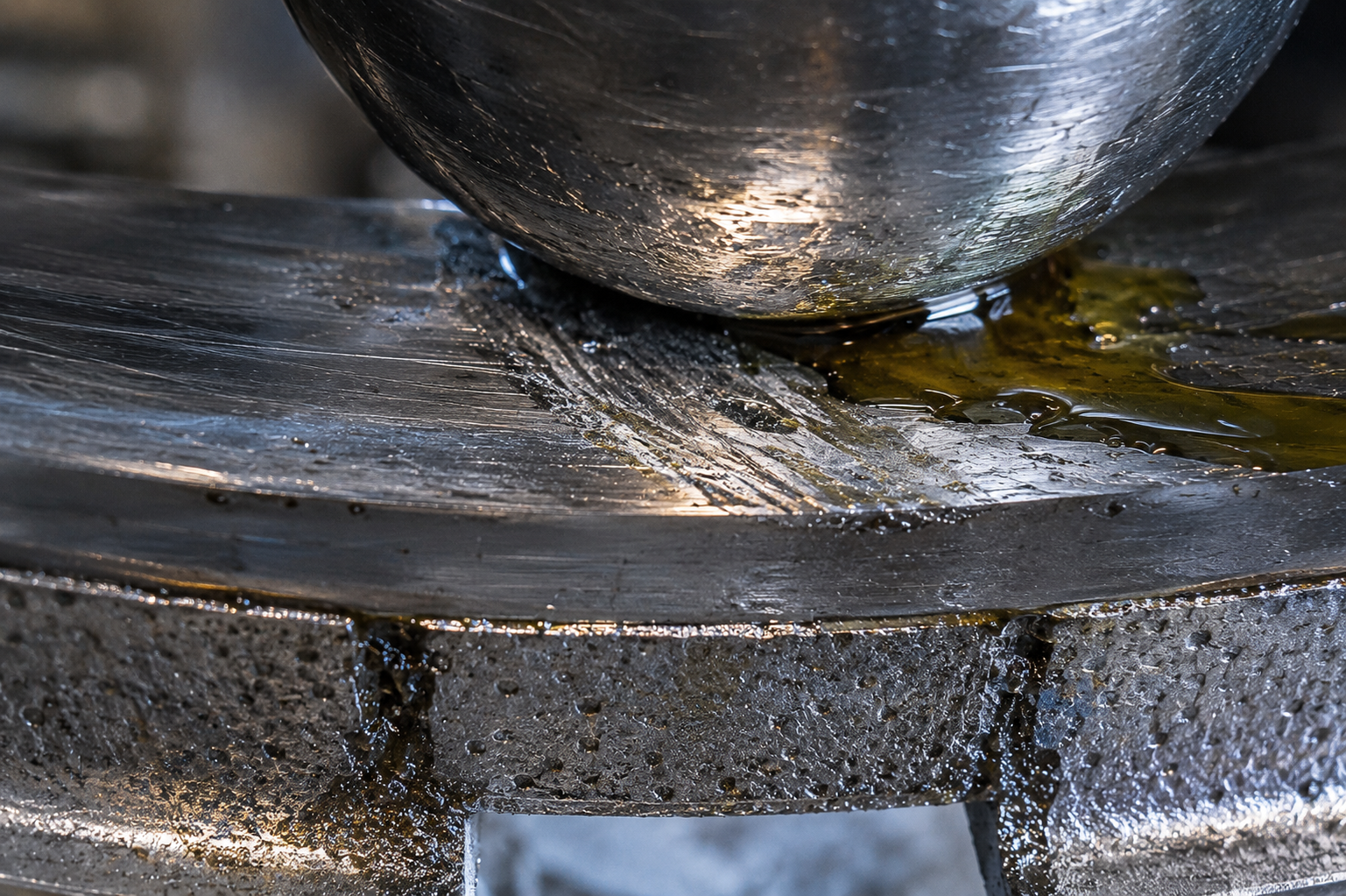
Image credit: AI-generated conceptual image created using ChatGPT/OpenAI
How Hydrogen Changes Friction
The coefficient of friction in hydrogen can rise, fall, or stay close to its air value, depending on the system. Hydrogen alters surface oxidation, lubricant decomposition, and tribofilm formation, so its influence on friction cannot be reduced to the removal of oxide films.1
Tests of PAO-based lubricants containing ZDDP, MoDTC, or GMO at approximately 3 bar hydrogen showed strongly additive-dependent responses. Hydrogen altered ZDDP tribofilm formation, resulting in lower friction but increased wear compared with ambient testing. For MoDTC, reduced tribofilm coverage in hydrogen was associated with increased friction and wear, whereas GMO produced little significant change in friction but a substantial increase in wear.1
Metal-polymer contacts follow their own pattern. Neat polymers sliding against stainless steel in gaseous hydrogen generally showed lower friction than in air, with reductions reaching 80% for polyimide and 65% for polyamide 66, while polyoxymethylene showed higher friction in hydrogen. Composite materials containing graphite fillers benefited most from the hydrogen environment.5
Some of these reductions were also observed in vacuum, indicating that the very low moisture content of dry hydrogen, rather than hydrogen chemistry alone, can strongly influence polymer friction; transfer-film formation on the steel counterface is another important control on sliding behavior.5
Dry rubber sliding against stainless steel behaves differently again, producing a coefficient of friction near 1.3 to 1.4 in both air and pressurized hydrogen, which shows that gas chemistry alone does not always control the result once large-scale rubber deformation and adhesion dominate the contact.6
Hydrogen-Assisted Wear and Surface Damage
Hydrogen service introduces several wear mechanisms, including adhesive wear, abrasive wear, delamination, pitting, and surface fatigue. Rolling contact fatigue tests on bearing steel lubricated with a synthetic base oil showed failure on the ball in a hydrogen atmosphere, while the same tests run in air or argon failed on the raceway disc.2
Hydrogen uptake can reduce ductility and facilitate hydrogen-assisted cracking, and higher hydrogen contents have been associated with reduced rolling contact fatigue life. The ball that failed in hydrogen contained roughly four times more hydrogen than the ball tested in air, and failure occurred after only about one-half to two-thirds of the number of cycles reached in the air and argon tests.2
White etching cracks and related subsurface damage appear in some hydrogen-exposed bearings, though several interacting factors, including friction, lubricant chemistry, and water content, likely contribute to their formation. Even mild rolling and sliding, producing only small scratches and asperity flattening with no visible cracking, shifted the temperature at which hydrogen is released from bearing steel, showing that trapping behavior changes before visible damage appears.3
In that mild rolling/sliding study, however, the tested specimens did not show a statistically significant increase in total hydrogen uptake; the principal finding was a change in hydrogen trapping and de-trapping behavior.3
Lubricants Can Generate or Block Hydrogen
Hydrocarbon lubricants can decompose on freshly exposed metal surfaces created by wear, thereby generating atomic hydrogen that diffuses into the steel. Rolling contact fatigue tests lubricated with polyalphaolefin oil showed hydrogen content generally following the order hydrogen atmosphere > air > argon, consistent with the combined hydrogen sources provided by the lubricant (dissolved or atmospheric water) and the surrounding test gas.2
The same lubricant can also form a protective tribofilm that suppresses further hydrogen generation and limits permeation into the steel. In the hydrogen test, a tribofilm on the disc limited the increase in absorbed hydrogen despite the hydrogen-rich environment, whereas the hydrogen-tested ball lacked a comparable protective film, accumulated much more hydrogen, and failed prematurely.2
Base oil chemistry remains important even when viscosity is closely matched. Comparing polyalphaolefin, polyol ester, and polypropylene glycol oils with closely matched viscosities, researchers found that their distinct chemical structures produced distinct tribofilm characteristics and oil degradation patterns during rolling contact testing.4
Selecting a lubricant for hydrogen machinery, therefore, requires attention to how base oil chemistry and additive packages interact with hydrogen, as well as to how well the oil reduces friction and wear under conventional conditions. Polarity, thermal stability, and the tendency to form chemisorbed layers on the metal surface all influence how much hydrogen a given oil allows through.4
Antiwear additives, friction modifiers, and extreme-pressure additives typically protect surfaces by forming a solid film on the wear track that carries the load and limits direct metal contact. Zinc dialkyldithiophosphate (ZDDP), molybdenum dithiocarbamate (MoDTC), and glycerol monooleate (GMO) were each tested in pressurized hydrogen to see how their tribofilms respond compared with air.1
Hydrogen changed the response of all three additive systems. ZDDP retained the best wear protection among the additives tested in hydrogen, but hydrogen altered tribofilm formation, increasing wear relative to ambient conditions while reducing friction. MoDTC showed reduced tribofilm coverage, accompanied by increased friction and wear, while GMO showed no significant change in friction but substantially greater wear in hydrogen. Surface analysis using Raman spectroscopy and electron microscopy revealed iron oxides and carbonaceous material on the sliding surfaces, which shaped how each additive-derived tribofilm formed and how stable it remained.1
These findings show that additives designed and tested for air or conventional engine conditions can perform quite differently once hydrogen enters the contact zone. Formulating lubricant additives specifically for hydrogen-rich environments, rather than adapting existing chemistries, is a clear research priority for hydrogen combustion engines and related machinery.1
Can Coatings Protect Tribological Components?
DLC coatings form a dense barrier that resists both wear and hydrogen permeation and have been studied as protective surface treatments for components such as hydrogen valve plungers in FCEVs. A thin chromium buffer layer beneath the coating improves its ability to prevent hydrogen from reaching the steel substrate.7
Micro-pores, pinholes, and cracks that form during coating create pathways through which hydrogen molecules, atoms, and ions can enter and become trapped. Once hydrogen accumulates at the coating-buffer interface, it can promote blistering or hydrogen-induced cracking. In accelerated electrochemical hydrogen-charging experiments, surface roughness on a coated specimen increased nearly four times after hydrogen charging.7
As hydrogen exposure increased, the coating delamination ratio rose sharply, reaching nearly 58% at the highest electrochemical charging current density tested (150 mA cm−2), and the exposed substrate width after wear testing grew by more than 4 times. Because this was an accelerated electrochemical charging study rather than direct high-pressure gaseous-hydrogen exposure, the charging conditions should not be interpreted as equivalent to a particular valve service pressure or exposure time. Barrier design also involves a tradeoff: increasing DLC thickness may improve permeation resistance but can increase residual stress and cracking risk, while multilayer structures can help distribute stress and interrupt through-thickness defect pathways.7
Coatings reduce hydrogen penetration into the substrate but do not offer permanent protection once mechanical wear or blistering damages the barrier. Once the coating cracks or peels, the exposed metal beneath becomes vulnerable to the same embrittlement mechanisms the coating was meant to prevent.7
Polymers and Seals in High-Pressure and Liquid Hydrogen
Polymers are used throughout hydrogen infrastructure, including O-rings, piston rings, valve seats, and dynamic seals, because they combine elasticity with corrosion resistance at a low cost. Some sealing polymers and elastomers can dissolve and absorb molecular hydrogen under high pressure; subsequent swelling and rapid gas release during decompression can produce pores, cracks, or blistering, temporarily altering mechanical and tribological properties.8
NBR exposed to hydrogen at 96.6 MPa developed internal pores and cracks, and the size and number of these defects depended on which filler was mixed into the compound. In the formulations examined, carbon-black-filled NBR was more susceptible to blister formation than silica-filled material, while filler content also altered pore development and the subsequent wear response. Because absorbed hydrogen desorbed progressively after decompression, the measured wear response also changed with elapsed time after exposure, rather than representing a fixed post-hydrogen state.8
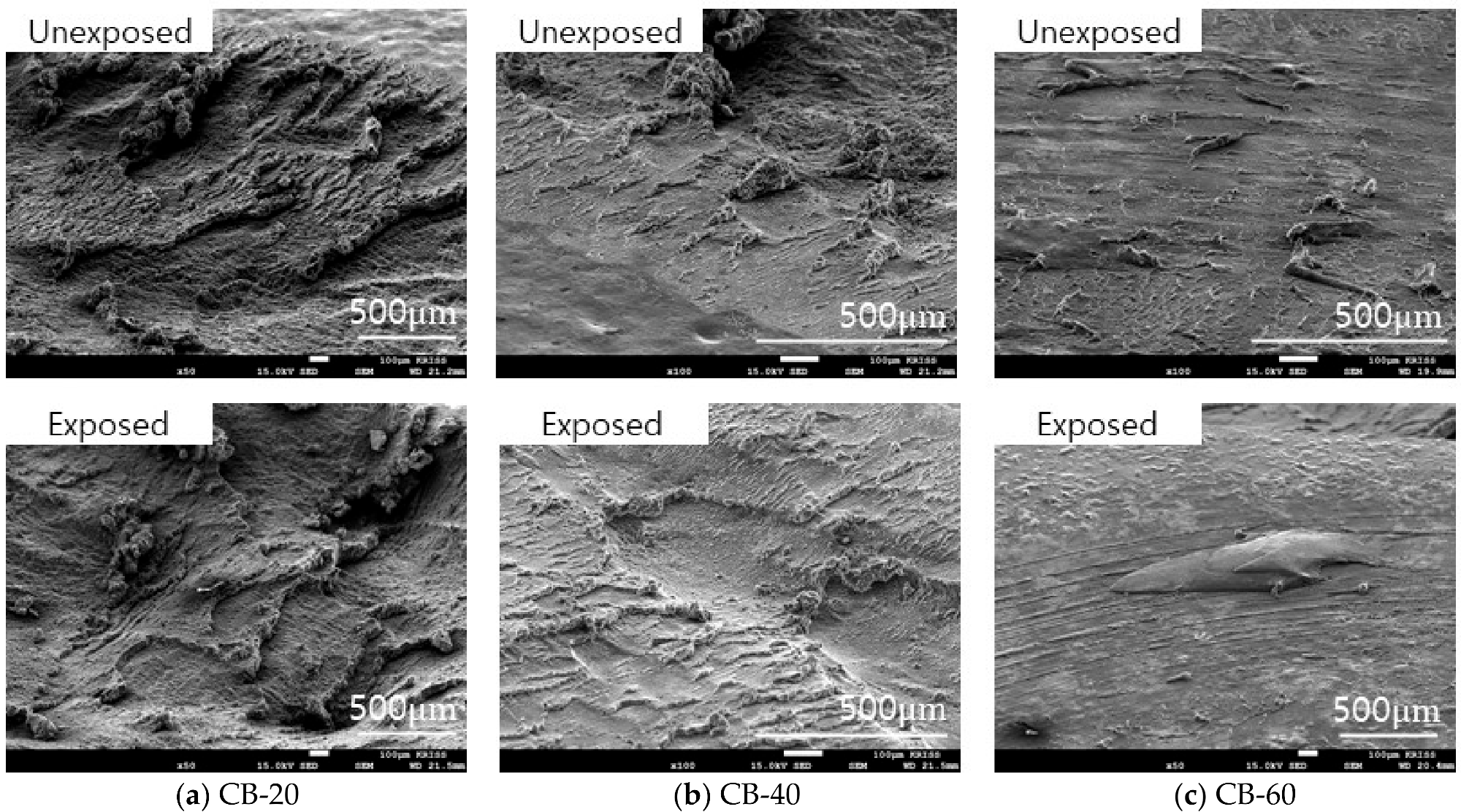
Morphology of the wear track of carbon-black-filled NBR before and after hydrogen exposure.8
Polymer behavior also shifts between gaseous and liquid hydrogen. At cryogenic temperatures, neat polyamides and selected PPS and polyimide composites exhibited the best overall tribological performance among the materials examined, although performance varied substantially among individual polymers and formulations. The transfer film on the counterface steel also changes shape and composition compared with the film formed at room temperature. Liquid hydrogen itself is not acting as a conventional boundary lubricant; its extremely low viscosity makes such lubrication unlikely, so cryogenic hardening, heat removal, wear-debris behavior, and transfer-film changes are more plausible contributors to the observed performance.5
Grease Lubrication for Hydrogen Sealing Interfaces
Coating a rubber seal with grease offers a practical way to reduce friction and prevent adhesive wear without redesigning the polymer. A recent in situ study tested silica-filled nitrile butadiene rubber sliding against a 316L stainless steel ball at hydrogen pressures reaching 50 MPa.6
Under dry sliding, the coefficient of friction in air and hydrogen ranged from about 1.34 to 1.44, with wear volume concentrated between roughly 0.292 and 0.320 mm3 across the dry conditions tested. Applying a polytetrafluoroethylene-based grease dropped the steady-state coefficient of friction to about 0.099 in air and 0.105 at 50 MPa of hydrogen.6
The grease film kept the metal ball from direct contact with the rubber, which suppressed stick-slip motion and changed the wear surface from ridge-like patterns and tear pits into smooth, regular indentations with only slight running marks. These short-duration laboratory results demonstrate strong immediate friction and wear benefits, but longer tests incorporating repeated pressure cycling, temperature variation, and lubricant aging are needed to establish service-life performance.6
Designing Tribological Systems for Hydrogen Service
Engineers evaluating a tribological system for hydrogen service must weigh several interacting factors together. Hydrogen pressure and purity, whether hydrogen is gaseous or liquid, operating temperature, contact load, sliding speed, and the chosen material's susceptibility to hydrogen uptake all influence the outcome.1,5,6,8
Lubricant and additive chemistry, coating integrity, seal swelling during rapid decompression, and trace water or oxygen contamination add further variables that shift results from one hydrogen system to the next. Results generated in air, nitrogen, or with conventional lubricants tested outside of hydrogen cannot be assumed to transfer directly into hydrogen service.1,2,4,6,7,8
In situ testing under representative pressure, temperature, and motion conditions remains the most reliable way to predict how a material-lubricant combination will behave in actual hydrogen equipment. Bench tests conducted in air or inert gas provide a useful starting point, but they cannot substitute for direct measurement inside a hydrogen environment.6
Research Gaps and Future Priorities
The available studies reviewed here are dominated by laboratory-scale experiments rather than long-duration service-life datasets under representative pressurized-hydrogen operation. Standardized testing procedures would let researchers compare results across laboratories and material combinations more directly than the current patchwork of custom rigs allows.1,3,6,7
Lubricants and additives formulated specifically for hydrogen machinery, rather than repurposed from air-based engines, represent a clear opportunity, given how differently existing additives behaved under pressurized hydrogen. A clearer picture of how friction, tribofilm formation, and hydrogen permeation interact would help guide that formulation work.1
Coatings capable of holding their barrier performance after repeated sliding, along with polymer and grease systems tested through pressure cycling and decompression, need further study before hydrogen equipment can rely on them. Component-scale testing of compressors, valves, and refueling equipment would help close the gap between laboratory results and field performance.7
Conclusion
Hydrogen alters the chemistry and mechanics of moving interfaces, extending beyond its known effects on bulk mechanical properties such as ductility and fracture toughness. Sliding and rolling can remove protective surface films, expose reactive metal, and promote atomic-hydrogen generation and ingress, while coating defects and hydrogen sorption and decompression in polymers introduce separate pathways for hydrogen-assisted damage.2,7,8
Lubricants sit at the center of this problem because the same hydrocarbon chemistry that can decompose into atomic hydrogen on a fresh wear track can also form the tribofilm that keeps that hydrogen from reaching the steel. Additive choice, base oil chemistry, and coating design each shift this balance.4
Reliable hydrogen equipment depends on coordinated selection of materials, coatings, polymers, and lubricants, backed by testing under conditions that match the pressure, temperature, and motion the components will see in service. No single material or lubricant alone solves hydrogen tribology, and the interactions among these elements determine how long compressors, valves, pumps, and seals last.3
References
- Sheikh Omar, A. A. et al. (2026). Hydrogen effect on tribological performance of lubricated interfaces. Proceedings of the Institution of Mechanical Engineers, Part J: Journal of Engineering Tribology. DOI:10.1177/13506501261437220. https://journals.sagepub.com/doi/10.1177/13506501261437220
- Ratoi, M. et al. (2020). Hydrocarbon Lubricants Can Control Hydrogen Embrittlement. Scientific Reports, 10(1), 1361. DOI:10.1038/s41598-020-58294-y. https://www.nature.com/articles/s41598-020-58294-y
- Weniger, LM. et al. (2024). Influence of Lubricated Rolling/Sliding Tribotesting on Hydrogen Trapping in 100Cr6 Bearing Steel. Tribol Lett 72, 69. DOI:10.1007/s11249-024-01871-3. https://link.springer.com/article/10.1007/s11249-024-01871-3
- Tanaka, H. et al. (2021). The role of synthetic oils in controlling hydrogen permeation of rolling/sliding contacts. RSC Advances, 11, 726-738. DOI:10.1039/d0ra00294a. https://pubs.rsc.org/ra/article/11/2/726/700410/The-role-of-synthetic-oils-in-controlling-hydrogen
- Theiler, G. and Gradt, T. (2023). Comparison of the Sliding Behavior of Several Polymers in Gaseous and Liquid Hydrogen. Tribology Online, 18(5), 217-231. DOI:10.2474/trol.18.217. https://www.jstage.jst.go.jp/article/trol/18/5/18_217/_article
- Ye, S. et al. (2026). Tribological Performance of Grease-Coated Rubber in High-Pressure Hydrogen Storage Applications. Polymers, 18(2). DOI:10.3390/polym18020284. https://www.mdpi.com/2073-4360/18/2/284
- Shin, D. H., & Kim, S. J. (2024). Effect of hydrogen embrittlement on mechanical characteristics of DLC-coating for hydrogen valves of FCEVs. Npj Materials Degradation, 8(1), 47. DOI:10.1038/s41529-024-00460-y. https://www.nature.com/articles/s41529-024-00460-y
- Choi, B. L. et al. (2022). Effect of Functional Fillers on Tribological Characteristics of Acrylonitrile Butadiene Rubber after High-Pressure Hydrogen Exposures. Polymers, 14(5). DOI:10.3390/polym14050861. https://www.mdpi.com/2073-4360/14/5/861
Disclaimer: The views expressed here are those of the author expressed in their private capacity and do not necessarily represent the views of AZoM.com Limited T/A AZoNetwork the owner and operator of this website. This disclaimer forms part of the Terms and conditions of use of this website.