Introduction: Why Marine Machinery Faces a Combined Surface Problem
What is Tribocorrosion?
Why Seawater Is a Difficult Lubricating Environment
Passive-Film Breakdown and Repassivation
How Speed, Load and Dissolved Oxygen Affect Damage
Flow-Accelerated Corrosion and Particle Erosion
Selecting Alloys for Marine Tribological Contacts
Water-Lubricated Bearings and Polymer Materials
Hard Coatings for Combined Wear and Corrosion Protection
Cathodic Protection and Electrochemical Control
Testing Marine Tribology Under Representative Conditions
Strategies for Controlling Marine Wear and Tribocorrosion
Research Gaps and Future Priorities
Conclusion
References and Further Reading
This article explains how seawater-driven corrosion, mechanical wear, dissolved oxygen, flow, suspended particles, and electrochemical potential interact to control tribocorrosion in marine machinery. It also examines how alloy selection, water lubrication, protective coatings, and representative testing can reduce material loss and improve component durability.
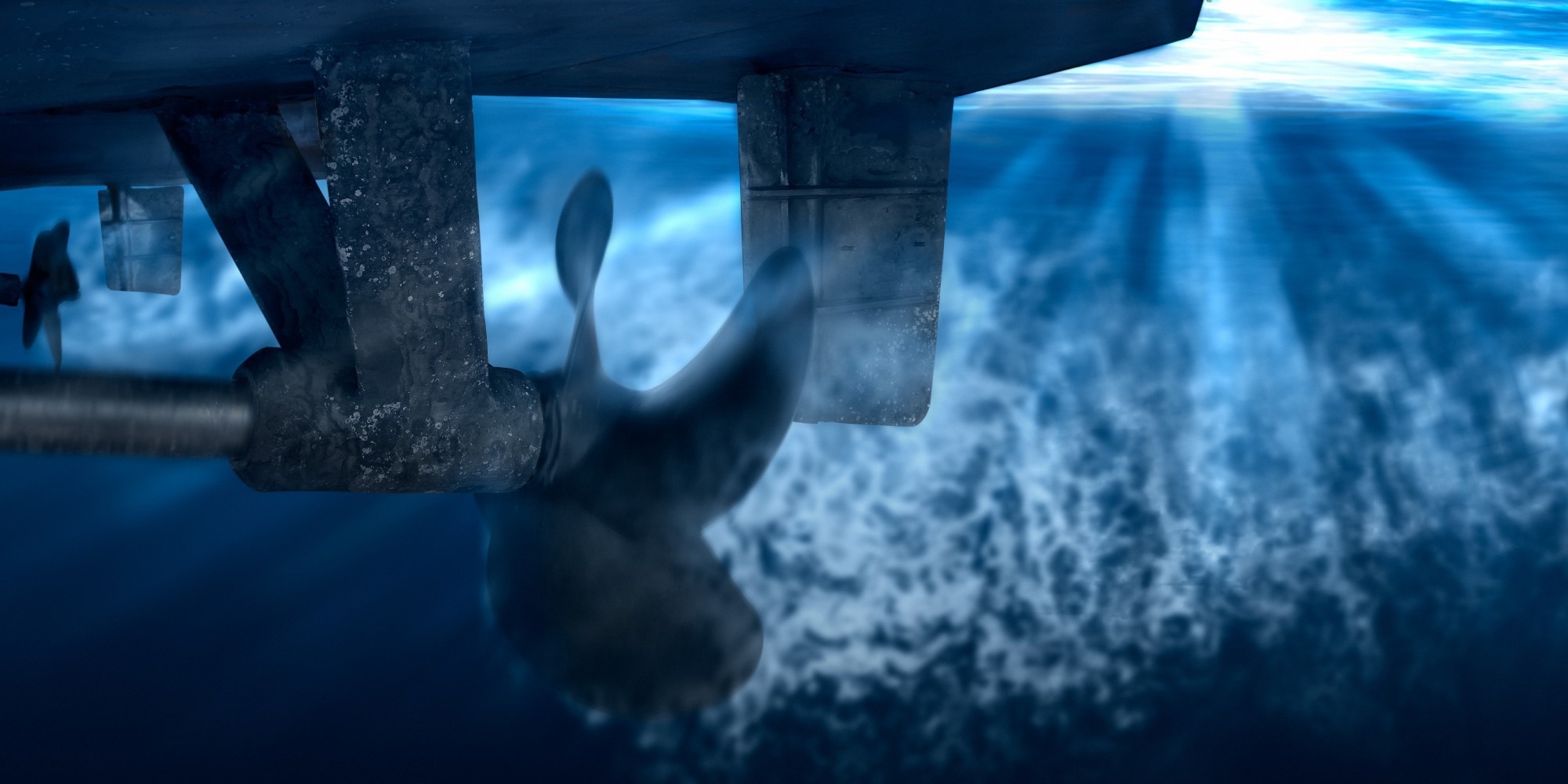
Marine propulsion and bearing components operate where mechanical loading, water lubrication, and corrosion can act simultaneously. Image Credit: Denys Yelmanov / Shutterstock
Introduction: Why Marine Machinery Faces a Combined Surface Problem
Marine tribology studies friction, wear, and lubrication in ships, offshore platforms, and subsea equipment. Every rotating shaft, sliding seal, and pumped fluid line involves surfaces that touch, rub, and separate thousands of times a day. Seawater surrounds those surfaces, and its salt content turns it into a strong natural electrolyte.1
The list of vulnerable contacts is long. Propeller shafts and stern tube bearings carry heavy loads at low rotational speeds. Pumps, valves, seals, turbines, winches, and seawater pipelines all move fluid or transmit force through wetted surfaces. Marine equipment contains numerous friction surfaces that are prone to corrosion and mechanical damage at the same location.1
Seawater plays four roles at once. It conducts current between anodic and cathodic sites, carries heat away from loaded contacts, provides a thin lubricating film, and can transport suspended particles and corrosion debris toward contact or impingement zones.5 Corrosion control is insufficient when a protective surface layer is repeatedly stripped away by sliding, particle impact, or high flow.2
What is Tribocorrosion?
Tribocorrosion is the degradation of materials resulting from the combined effects of mechanical wear and electrochemical corrosion at a specific surface. The two processes influence each other through the condition of the contacting bodies. Total material loss frequently differs from the arithmetic sum of loss measured under pure sliding and loss measured under static immersion, so a design based on separate tests can misjudge service life.3
According to the literature, three interaction patterns are present:
- Sliding can accelerate corrosion by removing a protective film and exposing fresh metal to chloride.4
- Corrosion can accelerate wear by softening the work-hardened layer and creating pits that concentrate stress.4
- Corrosion products can also lower friction, an antagonistic effect confirmed for Monel 400 alloy in artificial seawater.4
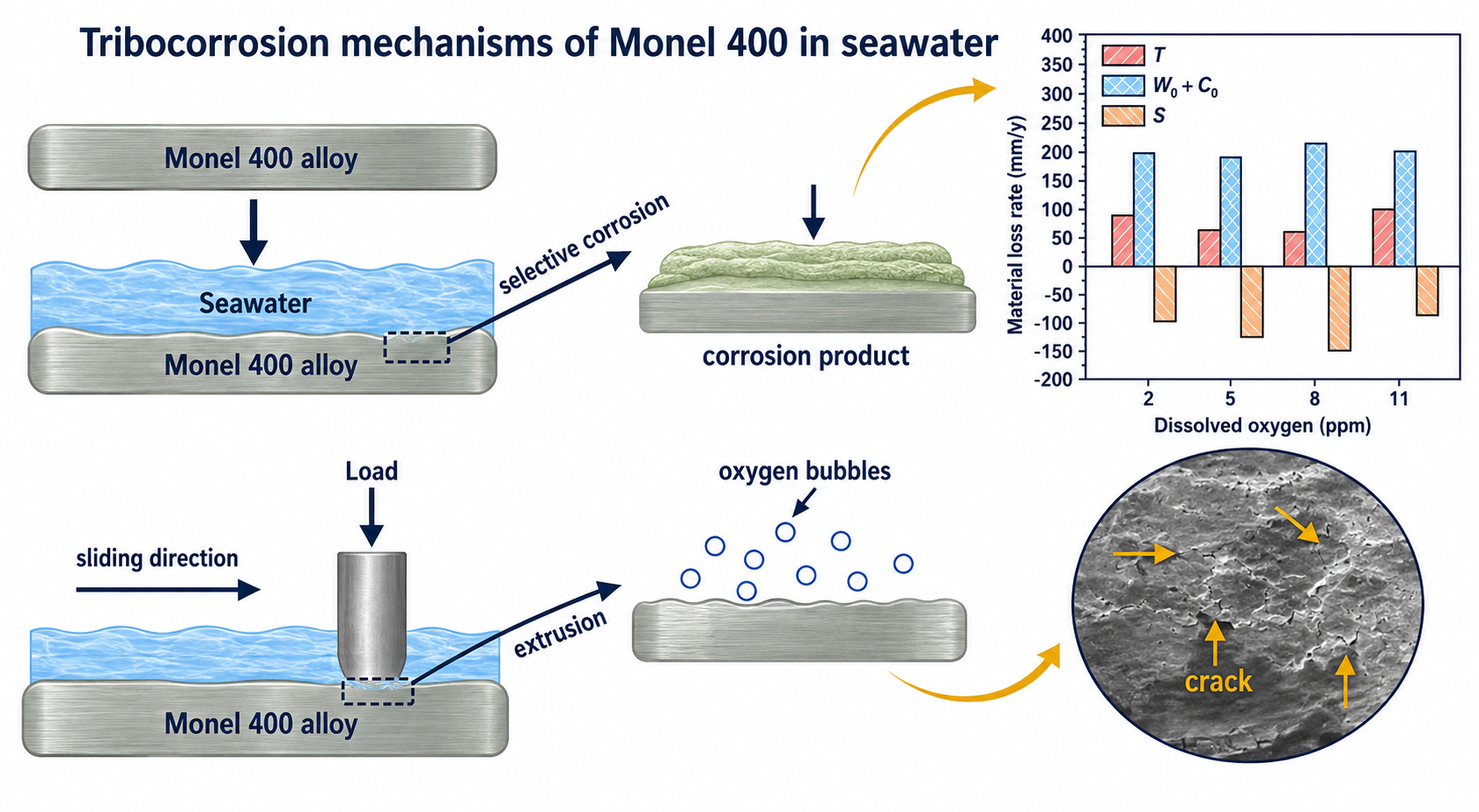
The mechanism diagram of Monel 400 alloy sliding against an Al2O3 pin in seawater.1
The studies considered here distinguish sliding tribocorrosion, in which two solid bodies repeatedly contact and move against one another, from erosion-corrosion, in which suspended particles strike a wetted surface. These modes disrupt protective surface layers in different ways and can produce different balances between mechanical and electrochemical material loss.3,4,5
Why Seawater Is a Difficult Lubricating Environment
Water has a lower viscosity than mineral or synthetic oil, so the pressure generated in a converging gap remains low. Water-lubricated bearings consequently operate in the mixed regime much of the time, where contact between the drive shaft and the bearing sleeve is significant. That behavior places heavy demands on material selection.6
Chloride-containing seawater challenges protective surface films and promotes localized corrosion when those films are damaged.1,2,3 Salinity, pH, temperature, and dissolved oxygen shift the balance between film growth and film breakdown, with dissolved oxygen strongly influencing the cathodic corrosion reaction in Monel 400.1 Suspended sand can also be present in seawater, with particle exposure being especially important in sediment-rich areas such as estuaries.5 These particles can remove protective layers and cause cracks to spread.5
Passive-Film Breakdown and Repassivation
Stainless steels, titanium alloys, and other passivating corrosion-resistant alloys rely on very thin surface films for protection in chloride-containing environments. Titanium alloys used in submarines and deep-sea vehicles depend on this film, and contact stress easily destroys it. Once the film is removed, the freshly exposed wear track becomes electrochemically more active than the surrounding unworn surface until repassivation occurs.2,3
A recent work published in Metals showed that open-circuit potential tracks this process in real time. For a CoCrNi medium-entropy alloy in 3.5 wt.% NaCl solution, the potential shifted sharply negative as soon as sliding began, indicating that the rupture rate of the passive film exceeded its regeneration rate. The worn track served as the anode, while the surrounding intact surface provided the cathodic reaction.3
On the other hand, research published in Coatings argued that recovery is as important as breakdown. Laser-clad Ti-Al-(C, N) coatings showed a rising potential after sliding stopped, indicating good repassivation capability. Fast film reformation limits the charge passed and thus limits corrosive metal loss over a sliding cycle. Mechanical removal by ploughing, adhesion and delamination continues regardless of how quickly the oxide returns to the exposed metal.2
How Speed, Load and Dissolved Oxygen Affect Damage
Sliding velocity changes the outcome substantially. For Monel 400 alloy, tested with a pin-on-disk device coupled to an electrochemical workstation, both the friction coefficient and the material loss rate increased with rotational velocity. Higher speeds promoted crack nucleation in the subsurface, which fed delamination of the worn layer.4
Speed also governs how much corrosion product survives on the surface. According to the study published in Metals, the corrosion product layer on Monel 400 thinned from about 50 nm to about 30 nm across that velocity range. The thinner layer lubricated the contact less effectively, which explains the steep rise in friction and material loss at the highest velocity tested.4
Dissolved oxygen exerts a comparable influence. Tests on Monel 400 at dissolved-oxygen concentrations of 2, 5, 8, and 11 mg/L under a 75 N load showed that corrosion increased with oxygen content, leading to thicker product layers. Those layers, composed mainly of Ni(OH)2, Cu2O, CuO, and Cu(OH)2, provided a lubricating effect that inhibited mechanical wear.1 Once corrosion was suppressed electrochemically, oxygen content no longer affected wear.1
Flow-Accelerated Corrosion and Particle Erosion
Flowing water can damage metal, even without solid particles. Wall shear stress and fluid impact energy grow with velocity, stripping corrosion products away, while faster flow enhances mass transfer of reactants toward the wall. In the natural seawater experiments on EH32 marine carbon steel, however, fluid shear did not completely remove the corrosion products; increasingly compact rust developed at higher velocities. In natural seawater, a compact rust layer forms on EH32 marine carbon steel under flow, shifting the attack pattern from broad flow marks to discrete pits.5
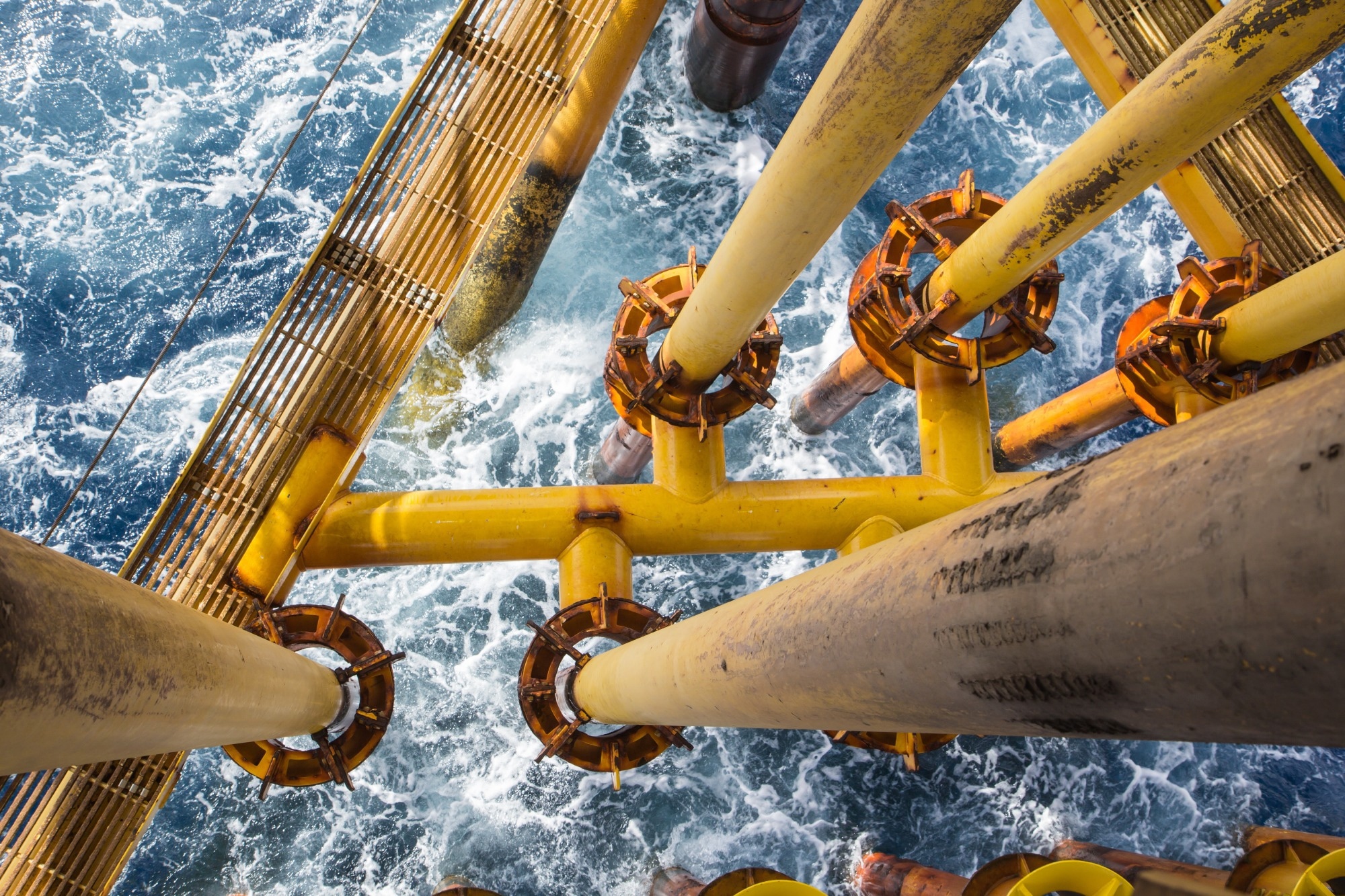
Flow, corrosion products, and suspended particles can interact to produce localized and accelerated surface degradation. Image Credit: noomcpk / Shutterstock
Xu, Y. et al. demonstrated that the velocity dependence of corrosion is nonlinear. Raising the flow from 1 to 5 m/s increased the corrosion rate. A further rise to 8 m/s produced little additional increase in the overall FAC rate, indicating that the development of the relatively compact rust layer substantially modified the expected effect of increasing flow velocity. Sand changed that picture, since pure erosion followed a power-law dependence on particle impact velocity, expressed as We0 = Kvα; the study used α = 3 for its fit. Degradation shifted from corrosion-dominated to erosion-dominated as impact energy increased.5
Corrosion products accumulating in impingement craters helped establish stable pits, while deposits at the pit bottom could reduce direct erosive attack. The combined action peeled steel away at the pit boundaries. At 3–5 m/s, the measured degradation was largely controlled by the synergy of erosion and corrosion, whereas at 8 m/s, erosion accounted for about 63% of the total steel loss. The results demonstrate why sediment-bearing flows can produce damage mechanisms quite different from flow-accelerated corrosion in particle-free seawater.5
Carbon steel remains common in ocean engineering for its low cost and mechanical strength. Its low nickel and chromium content prevents the formation of a passive film, leading to active corrosion in seawater. Precipitation-hardened and super duplex stainless steels, nickel-aluminum bronze, and nickel-base alloys are used where higher strength and chloride resistance are required in friction parts.1
Monel 400 illustrates the limits of corrosion resistance as a single criterion. The single-phase nickel-copper alloy performs well in static seawater exposure. However, its friction coefficient and material loss rate under sliding depend strongly on velocity and on the presence of a lubricious corrosion product. The conditions within the contact govern its tribological behavior.4
CoCrNi contains high levels of chromium and nickel and offers superior chloride resistance compared to common stainless steels. In the cited simulated seawater experiments, it displayed superior passivity to both 316L stainless steel and Inconel 600, although total tribocorrosion loss increased markedly as applied potential became more positive. Above the pitting potential, total material loss was about an order of magnitude greater than under pure mechanical wear.3
Water-Lubricated Bearings and Polymer Materials
Water-lubricated bearings replace oil in stern tubes, eliminating the risk of lubricant leaking into the sea. Designs use polymer composites selected for low friction, low wear, and strong deformation adaptability. The Stribeck curve describes how these bearings transition between regimes, since a full-film lubrication separates the surfaces only when speed and load are favorable.6
Startup, shutdown, and heavy loading thin the film until asperities touch. Block-on-ring tests conducted on Tenmat, Thordon SXL, and BTG rubber at low speeds and under heavy loads simultaneously measured friction, wear rate, and vibration. Under the conditions investigated, BTG rubber showed the best overall combination of tribological and vibration performance and the lowest wear rate at low speed. The study also identified stick-slip behavior of the rubber contact as an important contributor to abnormal vibration under low-speed, heavy-load operation.6
Hard Coatings for Combined Wear and Corrosion Protection
A marine coating must resist abrasion, withstand cyclic loading, block chloride transport, and remain chemically stable. Research shows that multi-arc ion plating of CrTiBN onto 316 stainless steel produces a compact structure containing hexagonal titanium diboride and amorphous boron nitride, yielding a steady-state friction coefficient of 0.16, compared with 0.22 for plain chromium nitride.7
Surface engineering can combine wear resistance with a barrier against corrosive seawater. Image Credit: Shutterstock AI
The coating has a wear rate of 8.18 x 10⁻⁷ mm3/N⋅m and maintains the highest open-circuit potential during combined friction and corrosion testing. Electrochemical testing also gave the CrTiBN coating a polarization resistance of 2470 kΩ·cm2 and a corrosion current density of 1.94 × 10⁻⁸ A/cm2, the best corrosion performance among the CrN, CrTiN, and CrTiBN coatings compared.7 In contrast, laser cladding on TC4 titanium produces Ti2AlC and Ti2AlN MAX phases, which serve as solid lubricants, effectively helping to keep the average friction coefficient low.2,7
Moreover, silicon-doped diamond-like carbon films on 304 stainless steel form a SiOx passivation film and a hydrated silica-gel lubricating layer. The film containing 9.26 at.% Si reached a friction coefficient of 0.0217 and showed the lowest self-corrosion current density and smallest volume loss among the tested DLC-Si films. Excess doping increases the volume loss again. The results therefore indicate an optimum intermediate Si content rather than a simple improvement with increasing dopant concentration.8
Cathodic Protection and Electrochemical Control
Applying a sufficiently negative potential suppresses anodic dissolution of the metal surface. Researchers use this deliberately. In the cited laboratory protocols, rather than as universal operating potentials, cathodic polarization was used to isolate the mechanical-wear contribution: Monel 400 was tested at a strongly negative potential, and the Ti-Al-(C, N) coatings were tested at -1.0 V. Plowing, adhesion, and particle impact continued under protection.1,2
Choosing the potential is crucial. For CoCrNi, total tribocorrosion volume loss increased as the applied potential shifted in the positive direction, and at potentials above the pitting potential, the total loss was about an order of magnitude greater than under pure mechanical wear. Pits formed in the wear track then became preferred locations for further material removal.3 Thus, electrochemical potential is not merely a corrosion variable: it can alter the mechanical consequences of surface damage during sliding.3
Testing Marine Tribology Under Representative Conditions
Reliable data are obtained using a tribometer connected to a potentiostat, with the specimen serving as the working electrode in a three-electrode cell. A reference electrode and counter electrode complete the electrochemical cell; the exact reference system varies between protocols - for example, the Ti-Al-(C, N) study used a saturated calomel reference electrode and a platinum-sheet counter electrode.2 Protocols monitor the open-circuit potential before, during, and after sliding, run potentiodynamic polarization to obtain the corrosion current, and then measure the wear volume with a surface profiler.3
Electrolyte choice changes the answer. In the Monel 400 rotational-velocity study, artificial seawater was prepared according to ASTM D1141-98; by contrast, the CoCrNi study used 3.5 wt.% NaCl as simulated seawater.3,4 These test media should not be treated as chemically interchangeable with natural seawater.4,5 Carbon steel corrodes far more slowly in flowing natural seawater than in 3.5% w/w sodium chloride solution at the same hydrodynamic conditions due to a denser layer of rust.5
It is also essential that test conditions accurately reflect the intended service environment. Factors such as flow velocity, contact load, oxygen concentration, suspended particle load, and electrolyte composition can all impact the results. The dissolved-oxygen study demonstrates the value of actively controlling oxygen concentration rather than treating it as an uncontrolled property of the test solution.1 Likewise, the natural seawater FAC study shows that results obtained in simple NaCl solutions cannot automatically be transferred to natural seawater because corrosion-product-layer development can differ substantially.5 Long-term effects, such as biological growth and seasonal water-chemistry changes, were outside the scope of these eight studies and therefore require separate evidence before being incorporated into service-life predictions.
Strategies for Controlling Marine Wear and Tribocorrosion
Practical control begins with material selection that balances wear resistance and electrochemical behavior, since the two interact within the contact. Maintaining a stable water or lubricant film keeps surfaces apart, and reducing the duration of startup, shutdown, and low-speed operation shortens the periods when boundary contact dominates in water-lubricated bearings.6
Surface engineering supplies the second layer of defense. Hard, adherent, low-permeability coatings such as CrTiBN combine a compact barrier structure with high hardness, low friction, and high electrochemical resistance.7 For DLC-Si, moderate silicon addition additionally promotes SiOx passivation and hydrated-silica lubrication while increasing the diffusion path available to corrosive species.8 Both coating studies also show the importance of maintaining coating integrity, because local wear or substrate exposure compromises the barrier against the corrosive medium.7,8
System design completes the approach. A direct practical implication of the erosion-corrosion results is to reduce severe particle impingement wherever operating conditions permit, because erosion loss rises steeply with impact velocity. In the EH32 experiments, increasing the flow from 5 to 8 m/s increased pure erosion from 0.60 to 7.21 mm/year. Flow management and sediment control therefore complement alloy and coating selection where seawater carries abrasive particles.5
Research Gaps and Future Priorities
The eight studies reviewed here are dominated by laboratory-scale sliding, electrochemical, coating, and bearing tests; Xu et al. provide an important exception by examining EH32 steel for 12 h in flowing natural seawater.5 Consequently, long-duration coupling of wear, corrosion-product evolution, coating degradation, sediment exposure, and changing natural-water chemistry remains less well represented by this evidence base.1,5,7,8
Real components experience several mechanical and electrochemical influences that laboratory rigs generally simplify or isolate. Comparisons across the reviewed papers are also complicated by differences in electrolyte composition, applied potential, contact geometry, load, sliding speed, flow conditions, and test duration.1,2,3,4,5,6,7,8 This variation indicates the value of more harmonized reporting and test conditions when results from different laboratories are compared. Longer-duration studies in natural seawater and experiments that progressively combine realistic mechanical and environmental variables would strengthen translation from laboratory results to marine service.
Conclusion
Marine component failure usually arises where mechanical and electrochemical processes reinforce one another at the same surface. Velocity, load, dissolved oxygen, applied potential, and suspended solids each shift the balance among them, and the resulting material loss can exceed or fall short of what separate wear and corrosion measurements predict for the same component.1,3,4,5
Seawater cools contacts and provides a thin lubricating film while simultaneously delivering chloride to passive surfaces and potentially carrying abrasive particles into loaded or impinged regions.5,6 Controlling wear and tribocorrosion in seawater, therefore, calls for coordinated action across alloy selection, lubrication regime, surface coatings, electrochemical protection, and laboratory testing that reflects the conditions the equipment actually meets at sea.1,2,3,4,5,6,7,8
References and Further Reading
- Zhu, Y. et al. (2024). Effect of Dissolved Oxygen Content on Tribo-Corrosion Behavior of Monel 400 Alloy in Seawater. Metals, 14(1). DOI: 10.3390/met14010006. https://www.mdpi.com/2075-4701/14/1/6
- Feng, J., & Xiao, H. (2022). Tribocorrosion Behavior of Laser Cladded Ti-Al-(C, N) Composite Coatings in Artificial Seawater. Coatings, 12(2). DOI: 10.3390/coatings12020187. https://www.mdpi.com/2079-6412/12/2/187
- Wang, X. Z. et al. (2022). Tribocorrosion Behavior of CoCrNi Medium Entropy Alloy in Simulated Seawater. Metals, 12(3). DOI: 10.3390/met12030401. https://www.mdpi.com/2075-4701/12/3/401
- Zhu, Y. et al. (2022). The Tribo-Corrosion Behavior of Monel 400 Alloy in Marine Environment at Varied Rotational Velocities. Metals, 12(9). DOI: 10.3390/met12091503. https://www.mdpi.com/2075-4701/12/9/1503
- Xu, Y. et al. (2021). Flow accelerated corrosion and erosion-corrosion behavior of marine carbon steel in natural seawater. npj Materials Degradation, 5(1), 56. DOI: 10.1038/s41529-021-00205-1. https://www.nature.com/articles/s41529-021-00205-1
- Wu, K. et al. (2020). Tribological and Vibration Properties of Three Different Polymer Materials for Water-Lubricated Bearings. Materials, 13(14). DOI: 10.3390/ma13143154. https://www.mdpi.com/1996-1944/13/14/3154
- Li, M. et al. (2023). Study on Friction and Corrosion Performance of CrTiBN Coating in Artificial Seawater Environment. Coatings, 13(11). DOI: 10.3390/coatings13111837. https://www.mdpi.com/2079-6412/13/11/1837
- Li, X. et al. (2026). Study on the Tribocorrosion Behaviors of DLC-Si Films in a Seawater Environment. Lubricants, 14(5). DOI: 10.3390/lubricants14050196. https://www.mdpi.com/2075-4442/14/5/196
Disclaimer: The views expressed here are those of the author expressed in their private capacity and do not necessarily represent the views of AZoM.com Limited T/A AZoNetwork the owner and operator of this website. This disclaimer forms part of the Terms and conditions of use of this website.