Screening Before Synthesis
Closing the Loop in the Laboratory
From Automation to Autonomy
A Necessary Correction
What Comes Next for AI Materials Discovery?
References and Further Reading
Taking a new material from idea to product can take more than 10 years, with manual, labor-intensive experimentation contributing significantly to the timeline.1 Over the past three years, two technologies have converged on that bottleneck, including machine learning models that propose candidate compounds computationally, and robotic laboratories that make and measure them with little human input.
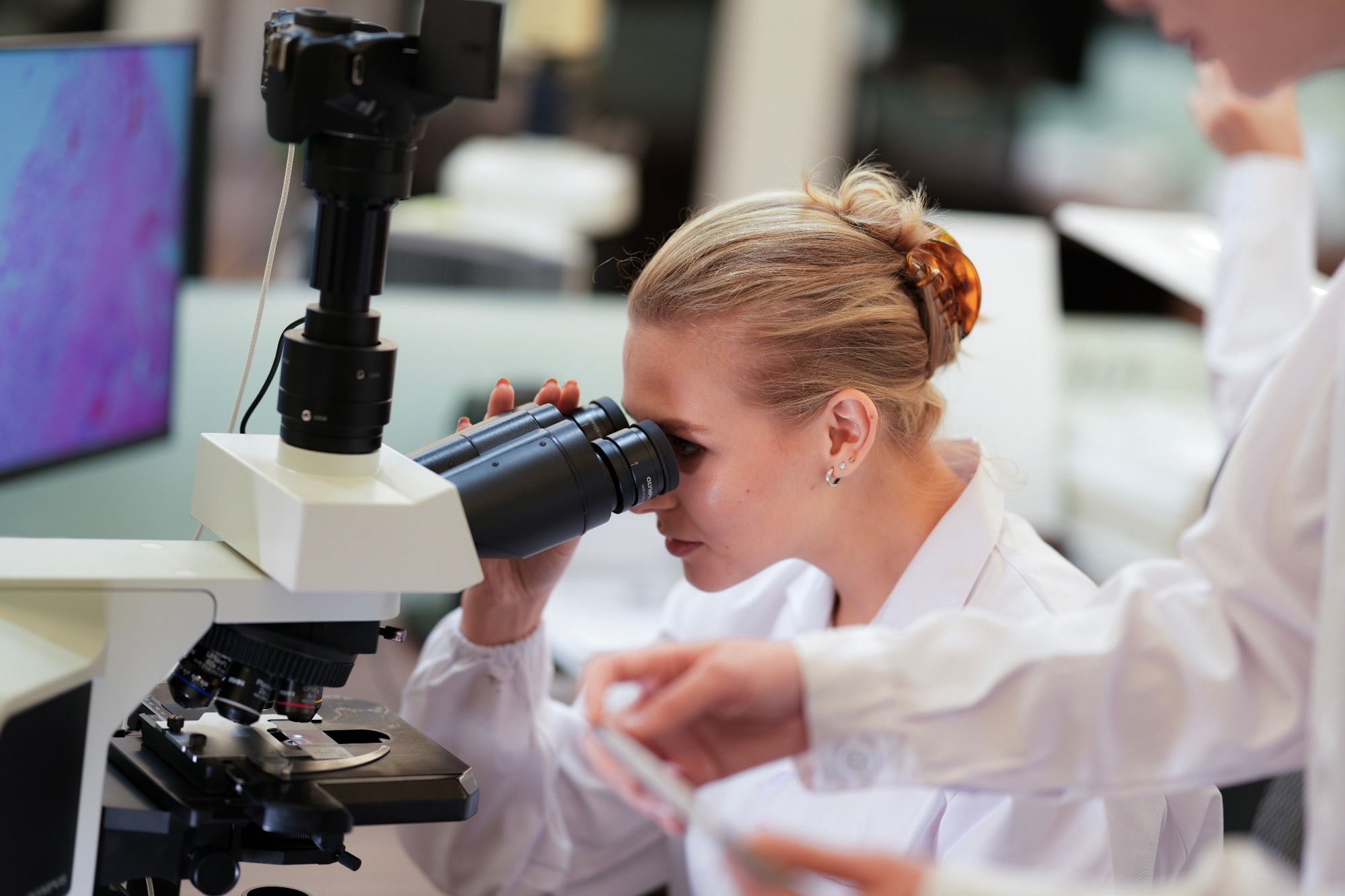
Image Credit: ultramansk/Shutterstock.com
Researchers at the University of California, Berkeley, and Lawrence Berkeley National Laboratory aim to reach discovery rates 10 to 100 times faster than the current standard by combining the two.1 The field has also just had its first significant credibility test.
This article looks at how AI and automation are reshaping materials discovery by helping identify new candidates and test and refine them in the laboratory.
Screening Before Synthesis
Google DeepMind's Graph Networks for Materials Exploration (GNoME) used large-scale graph neural networks, filtered by density functional theory, to identify 2.2 million crystal structures, of which around 381,000 were predicted to be stable.2
Microsoft's MatterGen inverts the problem rather than screening existing candidates. Their diffusion model, trained on roughly 608,000 stable structures from the Materials Project and Alexandria databases, generates crystals conditioned on a target property, such as bulk modulus, band gap, or magnetic density. Its outputs were reported to be more than twice as likely to be novel and stable as those of earlier generative models.3 The practical consequence is that proposing plausible compounds is now cheap but making them is not.
Click here to download a free PDF copy of this page
Closing the Loop in the Laboratory
The A-Lab at Berkeley integrates three functions into one closed loop, including robotic execution of solid-state synthesis and characterization, machine-learned interpretation of diffraction data, and AI-driven decisions about what to try next.1
Its algorithms select precursors dynamically, using active learning to revise a synthesis route when the first attempt fails rather than repeating it.4
Similar principles apply beyond inorganic powders. A mobile robotic chemist at the University of Liverpool ran 688 experiments over eight days to optimize a photocatalyst mixture, moving between conventional instruments in a standard laboratory rather than a bespoke rig.5
Commercial platforms follow the same cycle. Berlin-based Dunia Innovations runs a Design-Make-Test-Analyze loop in which physics-informed models propose formulations and robotics execute electrochemical experiments.
In one campaign, the company reports more than 2,500 electrochemical tests on supercapacitor additives, yielding a 45% capacitance increase for the best formulation.
Similarly, in another campaign, machine-learning-guided design identified catalyst ink formulations for anion exchange membrane electrolysis within months.6
From Automation to Autonomy
The next step is systems that reason rather than merely execute.
Liu and Yao argue that the field is shifting from automation, where machines repeat defined protocols, to autonomy, where multimodal models integrate images, text, and numerical data to decide what an experiment means.7
A recent example is CRESt (Copilot for Real-world Experimental Scientists), which combines a large multimodal model that takes in chemical compositions, literature text embeddings, and microstructural images with knowledge-assisted Bayesian optimization and robotic experimentation.
The platform was used to identify and optimize a multi-element electrocatalyst for formate oxidation.8 Related work has shown large language models autonomously planning and executing chemical experiments.9
The appeal is partly driven by the volume of scientific research. Gerbrand Ceder, the principal scientist behind the A-Lab, told MIT Technology Review that researchers publish around 50 papers every day in the solid-state battery field alone. He also noted that AI could help gather and make use of the large amount of scientific data already available. Investors have responded to this opportunity as Periodic Labs launched in 2025 with $300 million in seed funding, while Lila Sciences has raised $550 million to build AI-run autonomous laboratories.10
A Necessary Correction
In 2023, the A-Lab was reported to have synthesized dozens of new compounds in 17 days.11
Two independent analyses disputed the novelty claims. Cheetham and Seshadri examined the GNoME outputs and found scant evidence of compounds that fulfill the trifecta of novelty, credibility, and utility, arguing that a proposed composition becomes material only when it demonstrates some function.12
Leeman and colleagues re-examined all 43 A-Lab products, identified four recurring shortfalls in the automated diffraction analysis, and concluded that no genuinely new materials had been made.13
In January 2026, Nature published an author correction. The authors acknowledged that their novelty claims were open to misinterpretation and that they meant the materials were new to the prediction platform, not necessarily new to science.
A peer-reviewed manual re-analysis confirmed that the platform reached the correct conclusion in 36 of its 40 reported successes, with four inconclusive, as one compound was removed because it had mistakenly been included in the training data. The paper's title was changed from novel materials to inorganic materials.14
The episode is less a failure than a calibration. Automated phase identification from powder X-ray diffraction is difficult, disordered structures are easily mistaken for ordered ones, and databases of known compounds are incomplete. None of that invalidates the closed-loop approach, but it defines what the approach still must prove.
What Comes Next for AI Materials Discovery?
A 2026 review in Nature Reviews Chemistry frames the next phase around three requirements: scalability, generalizability, and provenance-complete experimentation that captures full data and metadata from precursor preparation through performance testing.
Meeting them will require interoperable data standards, modular hardware that transfers between laboratories, and AI agents that reason reliably under uncertainty.15
Models trained on published literature inherit its publication bias and missing experimental detail, which is why platforms such as Dunia's emphasize full traceability from measurement back to sample.6
Materials discovery has genuinely changed through screening at a scale no human could manage, laboratories that run overnight, and models that read the literature faster than any research group can. Whether that yields a better battery electrode or a higher-temperature superconductor is now an experimental question, which is arguably where it belongs.
Continue Reading: Machine Learning Approaches for Accelerated Materials Discovery
References and Further Reading
- Ceder Group. Autonomous experimentation for accelerated materials discovery. University of California, Berkeley; Lawrence Berkeley National Laboratory. Retrieved August 2026, from https://ceder.berkeley.edu/research-areas/autonomous-experimentation-for-accelerated-materials-discovery/
- Merchant, A., Batzner, S., Schoenholz, S. S., Aykol, M., Cheon, G., & Cubuk, E. D. (2023). Scaling deep learning for materials discovery. Nature, 624, 80–85. https://doi.org/10.1038/s41586-023-06735-9
- Zeni, C., Pinsler, R., Zügner, D., et al. (2025). A generative model for inorganic materials design. Nature, 639, 624–632. https://doi.org/10.1038/s41586-025-08628-5
- Szymanski, N. J., Nevatia, P., Bartel, C. J., Zeng, Y., & Ceder, G. (2023). Autonomous and dynamic precursor selection for solid-state materials synthesis. Nature Communications, 14, 6956. https://doi.org/10.1038/s41467-023-42329-9
- Burger, B., Maffettone, P. M., Gusev, V. V., Aitchison, C. M., Bai, Y., Chawla, A., Deng, J., Dyer, T., Eastman, P., Fejer, M., Gregoire, J. M., Hattrick-Simpers, J., Huskins, A., Hwang, Y., Kahn, A., Kearnes, S., Kramer, S., Li, J., Li, Y., ... Aspuru-Guzik, A. (2020). A mobile robotic chemist. Nature, 583, 237–241. https://doi.org/10.1038/s41586-020-2442-2
- Dunia Innovations. Platform. Retrieved August 2026, from https://dunia.ai/platform
- Liu, H., & Yao, Y. (2026). From automation to autonomy: Embracing multimodal intelligence in materials discovery. The Innovation Materials, 4(1), 100178. https://doi.org/10.59717/j.xinn-mater.2026.100178
- Zhang, Z., Ren, Z., Hsu, C.-W., et al. (2025). A multimodal robotic platform for multi-element electrocatalyst discovery. Nature, 647, 390–396. https://doi.org/10.1038/s41586-025-09640-5
- Boiko, D. A., MacKnight, R., Kline, B., & Gomes, G. (2023). Autonomous chemical research with large language models. Nature, 624, 570–578. https://doi.org/10.1038/s41586-023-06792-0
- Rotman, D. (2025, December 15). AI materials discovery now needs to move into the real world. MIT Technology Review. https://www.technologyreview.com/2025/12/15/1129210/ai-materials-science-discovery-startups-investment/
- Szymanski, N. J., Rendy, B., Fei, Y., et al. (2023). An autonomous laboratory for the accelerated synthesis of inorganic materials. Nature, 624, 86–91. https://doi.org/10.1038/s41586-023-06734-w
- Cheetham, A. K., & Seshadri, R. (2024). Artificial intelligence driving materials discovery? Perspective on the article: Scaling deep learning for materials discovery. Chemistry of Materials, 36(8), 3490–3495. https://doi.org/10.1021/acs.chemmater.4c00643
- Leeman, J., Liu, Y., Stiles, J., Lee, S. B., Bhatt, P., Schoop, L. M., & Palgrave, R. G. (2024). Challenges in high-throughput inorganic materials prediction and autonomous synthesis. PRX Energy, 3, 011002. https://doi.org/10.1103/PRXEnergy.3.011002
- Szymanski, N. J., Rendy, B., Fei, Y., et al. (2026). Author correction: An autonomous laboratory for the accelerated synthesis of inorganic materials. Nature, 650, E1. https://doi.org/10.1038/s41586-025-09992-y
- Abolhasani, M. (2026). The past, present and future of self-driving laboratories. Nature Reviews Chemistry, 10, 523–537. https://doi.org/10.1038/s41570-026-00847-2
Disclaimer: The views expressed here are those of the author expressed in their private capacity and do not necessarily represent the views of AZoM.com Limited T/A AZoNetwork the owner and operator of this website. This disclaimer forms part of the Terms and conditions of use of this website.