From AVSReviewed by Ify IsiborOct 9 2026
In this interview, AZoMaterials sat down with Mark Losego to discuss his role as Program Chair for AVS 72, the priorities shaping this year’s technical program, and the value of bringing together researchers from across disciplines. He also highlights emerging research areas, networking opportunities, and what attendees can expect from this year’s symposium.
To begin, could you introduce yourself, tell us a little about your background, and explain your role as Program Chair for AVS 72?
My name is Mark Losego. I’m a Professor of Materials Science and Engineering at Georgia Tech, where I’ve worked for the past 12 years. I’ve been an AVS member for about 15 years and an active member of the Thin Film Division’s symposium programming committee for about a decade.
I still remember when, about 10 years ago, one of my colleagues invited me to join my first Thin Film Division programming committee dinner; never did I think that that “free meal” would eventually lead to me running the entire program! But in some ways, that story really captures the AVS community; it’s always been incredibly welcoming and encouraging.
A few years after joining the programming committee, another colleague reached out to ask if I’d be interested in joining the Thin Film Division’s executive committee. That role led to me serving as Secretary/Treasurer, Division Chair, and eventually the AVS 72 Program Chair.
Serving as Program Chair is an important responsibility, but it would be impossible without the outstanding efforts of the more than 200 programming committee members! I really see my role as having two parts: setting the broad strategy and then helping this incredible team achieve their goals of creating vibrant technical sessions.
The team is made up of so many world-class experts in their respective disciplines that my job is really just about giving them the resources and support they need to bring their communities together to discuss the state-of-the-art research happening in their fields.
As Program Chair, what has gone into shaping the technical program for AVS 72, and what are you most excited for attendees to experience this year?
We did some rethinking at the beginning of the planning process, with an effort to reset the mini-symposia and focus topics. We tried to reorganize the mini-symposia to combine topics addressed across multiple divisions, such as advanced microelectronic materials and advances in battery engineering.
This allowed us to bring these talks together into more coherent sessions that would definitely not overlap elsewhere in the program. We also went out looking for new focus topics that we thought were important to the AVS community and could find a long-term home at the Symposium. We’ve been very pleased with the response to many of these topics, including fusion energy, temperature sensing, EUV lithography, and AI/ML and autonomous experimentation in thin-film processing.
We also tried to be cognizant of communities that have important connections and to sequence their sessions in the same room, sometimes with shared sessions between them.
For example, we have fusion energy sessions scheduled back-to-back with vacuum technology sessions because those technologies have such an important symbiotic relationship. Similarly, we have the EUV sessions leading into the atomic-scale processing sessions, because these processes are so important to modern semiconductor manufacturing.
AVS 72 brings together researchers and professionals from academia, industry, and government laboratories. What makes that multidisciplinary mix so valuable for advancing materials, surfaces, interfaces, and device technologies?
Diverse communities like AVS are always a strength because they bring together many different ideas and perspectives. The mix of academia, government laboratories, and industry is particularly valuable because it helps us identify the important problems and challenges facing our fields from different perspectives.
We get the practical perspective of what is commercially relevant, while also having the opportunity to dig deeper into the underlying technical challenges that prevent technological progress.
Moreover, AVS brings together researchers from all over the world, along with a great mix of student researchers, early-career researchers, and well-known senior research leaders. That confluence of perspectives is really powerful. It not only advances science and technology but also creates a welcoming, collaborative atmosphere that makes the AVS Symposium such a special meeting.
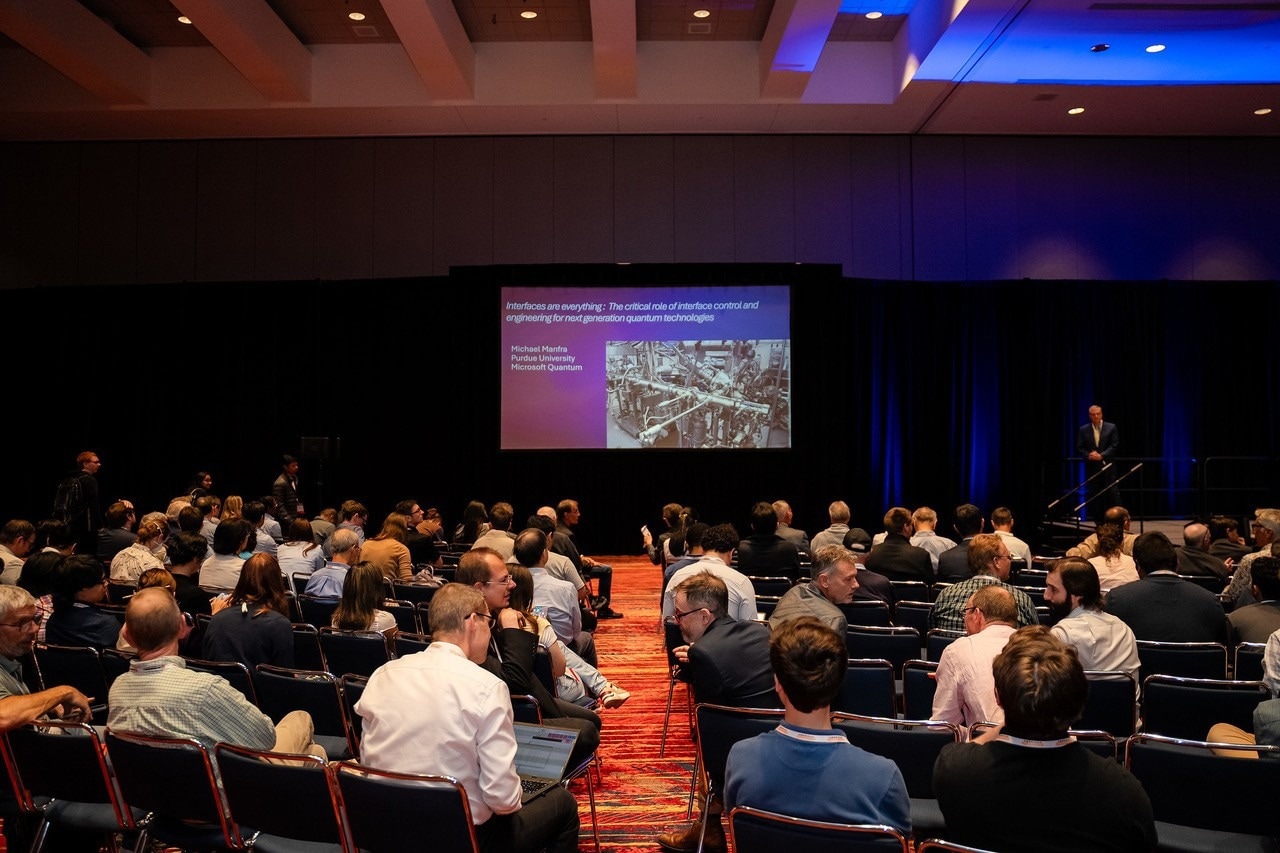 Image Credit:AVS
This year's program highlights emerging areas including EUV lithography, advanced packaging, fusion-energy materials, AI and autonomous experimentation, and the future of temperature sensing. Which developments do you think will generate particularly exciting conversations at AVS 72?
I think all these areas are going to generate exciting conversations, in part because they bring together communities that don’t always have the opportunity to interact at the same meeting.
What I’m particularly excited about is seeing how these fields are tackling some of the same fundamental challenges: how do we make materials and processes more precisely, how do we measure them at increasingly small scales and extreme conditions, and how do we accelerate the development of new technologies?
EUV lithography and advanced packaging are pushing materials processing and characterization to increasingly demanding scales, while fusion energy and temperature sensing are tackling materials and measurement challenges in extreme environments. At the same time, AI and autonomous experimentation are giving us new tools to accelerate our approach to these problems.
Rather than singling out one area, I’m most excited about the conversations between these communities. Some of the most interesting ideas may come from researchers discovering that a problem in one field has already been approached in a completely different way by someone working in another.
Alongside these emerging topics, AVS 72 continues to feature established communities such as thin films, plasma science, surface science, atomic-scale processing, biomaterials, and quantum science. How does the program balance new research directions with these core areas?
This balance is really important. Those established divisions and groups provide the AVS with a strong, persistent community, while the newer focus topics provide an avenue to continue to grow and highlight different areas of emerging interest.
To strike that balance requires some honest conversations. Many of AVS’s core divisions and groups are so foundational to the science and technology covered at the Symposium that these emerging topics can often fit naturally within our existing programming.
At the same time, highlighting these newer areas as focus topics gives them greater visibility and creates opportunities for those communities to grow, which can ultimately strengthen AVS as a whole.
When we considered new focus topics for this year, we thought carefully about which areas weren’t already being adequately covered and whether a new topic could bring new participants to the symposium, rather than simply shifting people out of an existing division or group.
When there was significant overlap, we reached out to the relevant divisions and groups to get their input. In some cases, we decided that partnering on a mini-symposium made more sense than creating a standalone focus topic.
Ultimately, the goal is to build a program with vibrant session rooms, engaged attendees, and connections between both established and emerging communities.
For someone considering attending AVS for the first time, what opportunities does the symposium offer beyond hearing technical presentations, particularly for networking, collaboration, and discovering new technologies?
I think one of the biggest benefits of AVS is that the opportunities go well beyond the technical presentations. Because the community brings together researchers from academia, industry, and government labs, and spans so many different areas, you’re constantly encountering people who approach materials and technology from very different perspectives.
There are also a lot of opportunities for informal conversations that can often lead to collaborations, new research ideas, or simply connections that become valuable later in your career. And the exhibition is another great opportunity to discover new technologies and capabilities that you may not even know exist.
For someone attending AVS for the first time, I’d encourage them not to just go to the talks that are directly in their area. Explore a session that’s a little outside your field, walk through the exhibition, and introduce yourself to people. The AVS community is very welcoming, and you never know where that next conversation might lead.
The exhibition is also a major part of the meeting, bringing together more than 200 participating companies. How important is that connection between scientific research, instrumentation, technology providers, and manufacturing?
It’s incredibly important. Nearly all the research and technology translation happening across the AVS community relies on sophisticated equipment and instrumentation. While you can make some progress by simply “pushing buttons” on that equipment, having a deeper understanding of how the equipment works and what it’s capable of can really transform both your research and your approach to product development. The vendors at our exhibition really know their equipment and can often help attendees consider what’s possible beyond standard applications.
There have also been many times when I’ve talked with an exhibitor and learned that something existed that I never knew existed before. Those conversations have completely changed the kinds of experiments I could imagine doing. That’s one of the things I really enjoy about the exhibition: it’s all about discovering technologies that open up new possibilities!
I also love that we build 60-minute breaks, and sometimes longer, into the program so attendees have time to wander the exhibition floor, talk with vendors, and discover what new equipment and instrumentation is available. I think that’s an important part of the AVS experience.
AVS 72 is being held in Pittsburgh, a city you know especially well having grown up there. What makes Pittsburgh a fitting location for this year's meeting, both scientifically and as a destination for attendees?
I’m obviously a little biased, but I think Pittsburgh is a great fit for AVS 72, both scientifically and as a place to visit. Pittsburgh has a long history of materials, manufacturing, and industrial innovation.
It grew from the steel industry, but the city has continued to evolve into a major center for technology, advanced manufacturing, robotics, and research. With universities like Carnegie Mellon and the University of Pittsburgh, there’s a really strong scientific and engineering community here.
As for the city itself, Pittsburgh is a very walkable, approachable city, with the convention center right downtown along the Allegheny River. There’s great food, lots of history, and plenty to explore within a short distance of the meeting.
What I’m most excited about is having the AVS community experience a little bit of Pittsburgh’s culture. It grew from the many immigrant communities that came to the region to work in the steel mills and other industries, and you can still see and hear those roots today; you’ll hear the Pittsburgh accent, see a lot of black and gold, hopefully eat some pierogies and Primanti Brothers sandwiches, and experience the friendliness of its residents.
I’m really looking forward to welcoming everyone to my hometown and sharing a little bit of what makes Pittsburgh special.
What unique events might you want to highlight in the program?
We have a number of special technical symposia recognizing the career-spanning contributions of well-known researchers, including Professors Gabor Somorjai and Gary Rubloff. There are also a number of special award talks throughout the week, including the Welch Award (Paul Weiss), Gaede-Langmuir Award (Sefik Suzer), Peter Mark Memorial Award (Naihao Chiang), and, new this year, the Messier Mid-Career Award (Per Eklund).
I’m also very excited about some of the fun activities planned throughout the week, including the Early Career Professionals Mimosa Bar on Monday morning, the Mentoring Game Show on Tuesday afternoon, the annual AVS 5K on Wednesday, and the BARK PARK in the Exhibition Hall that features rescue dogs available for petting and play.
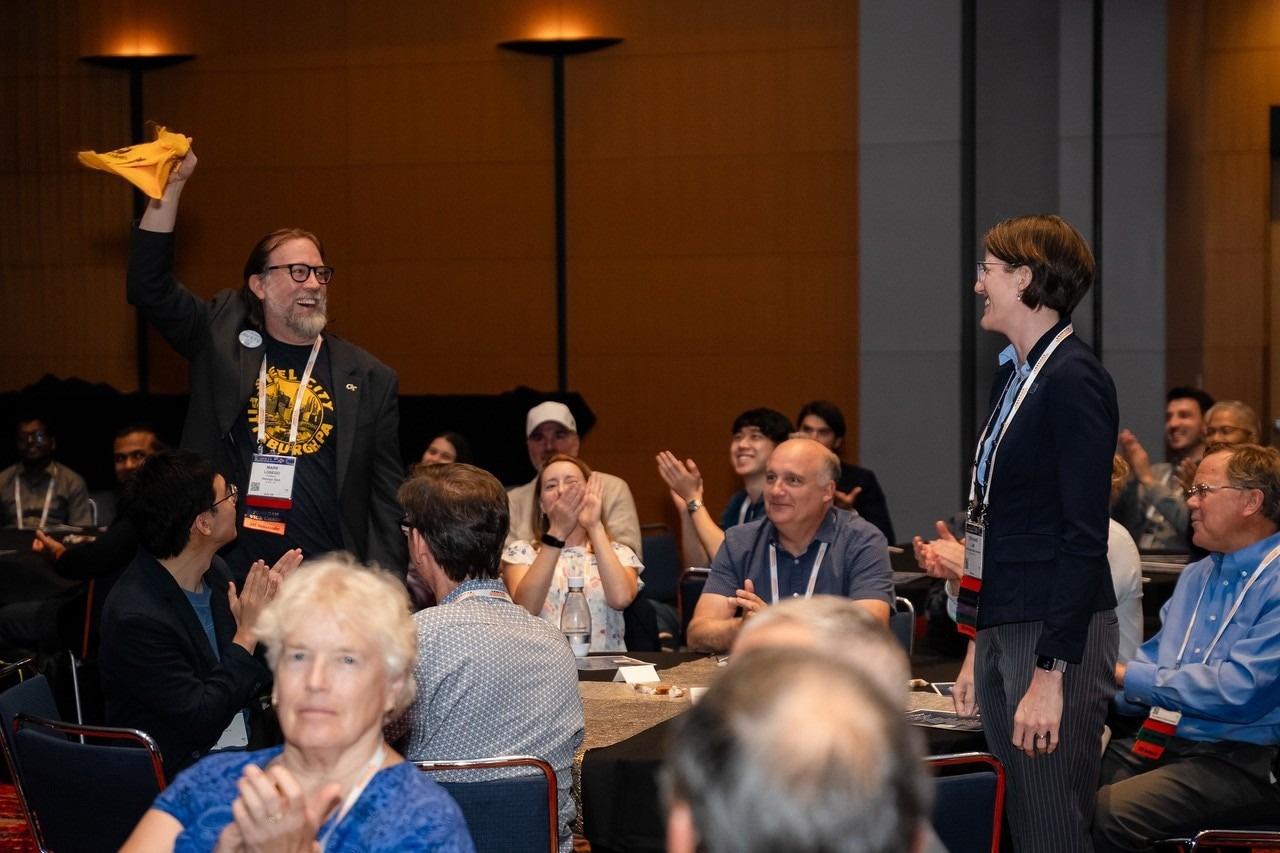 Image Credit: AVS
If you were speaking directly to someone who is still deciding whether to attend AVS 72, what would you tell them they can expect to gain from being part of the meeting this November?
I’d tell them they can expect to leave AVS 72 with something that’s hard to find elsewhere: a broad perspective on where materials, processing, interfaces, and devices are headed.
With more than 25 technical communities represented, 200 companies exhibiting, and more than 1100 oral and poster presentations expected, there will be an enormous breadth of research and technology to explore. Hopefully, along the way, they’ll make some unexpected connections, discover something new, and come away with ideas that they can bring back to their own research and work!
About Mark D. Losego
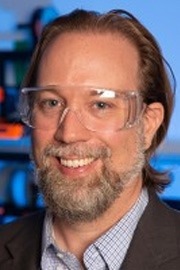
Mark D. Losego is a Professor of Materials Science and Engineering and the College of Engineering’s Education Innovation Professor at the Georgia Institute of Technology (Georgia Tech). The Losego Lab conducts research on vapor phase processing to develop novel organic-inorganic hybrid materials for sustainable energy, national security, and technical textile applications. Mark has over 125 peer-reviewed publications that have been cited over 8000 times. He is a Fellow of the AVS and has received awards for outstanding service and student mentorship at Georgia Tech. As a member of AVS, Mark has been on the Thin Film Division’s leadership team since 2016 and has served as AVS Symposium vice-chair and chair for AVS71 and AVS72, respectively. He received his B.S. degree from Penn State University and his M.S. and Ph.D. from North Carolina State University, all in materials science. Prior to joining the materials science and engineering faculty at Georgia Tech in 2014, he was a postdoctoral researcher at the University of Illinois and a research professor in Chemical & Biomolecular Engineering at North Carolina State University.
This information has been sourced, reviewed, and adapted from materials provided by AVS.
For more information on this source, please visit AVS.
Disclaimer: The views expressed here are those of the interviewee and do not necessarily represent the views of AZoM.com Limited (T/A) AZoNetwork, the owner and operator of this website. This disclaimer forms part of the Terms and Conditions of use of this website.