A simulation-led study has identified an idealised path to 40.17 % efficiency in lead-free CH3NH3SnI3 perovskite solar cells, while also setting out a more realistic 28 % to 32 % performance range once non-ideal losses are included.
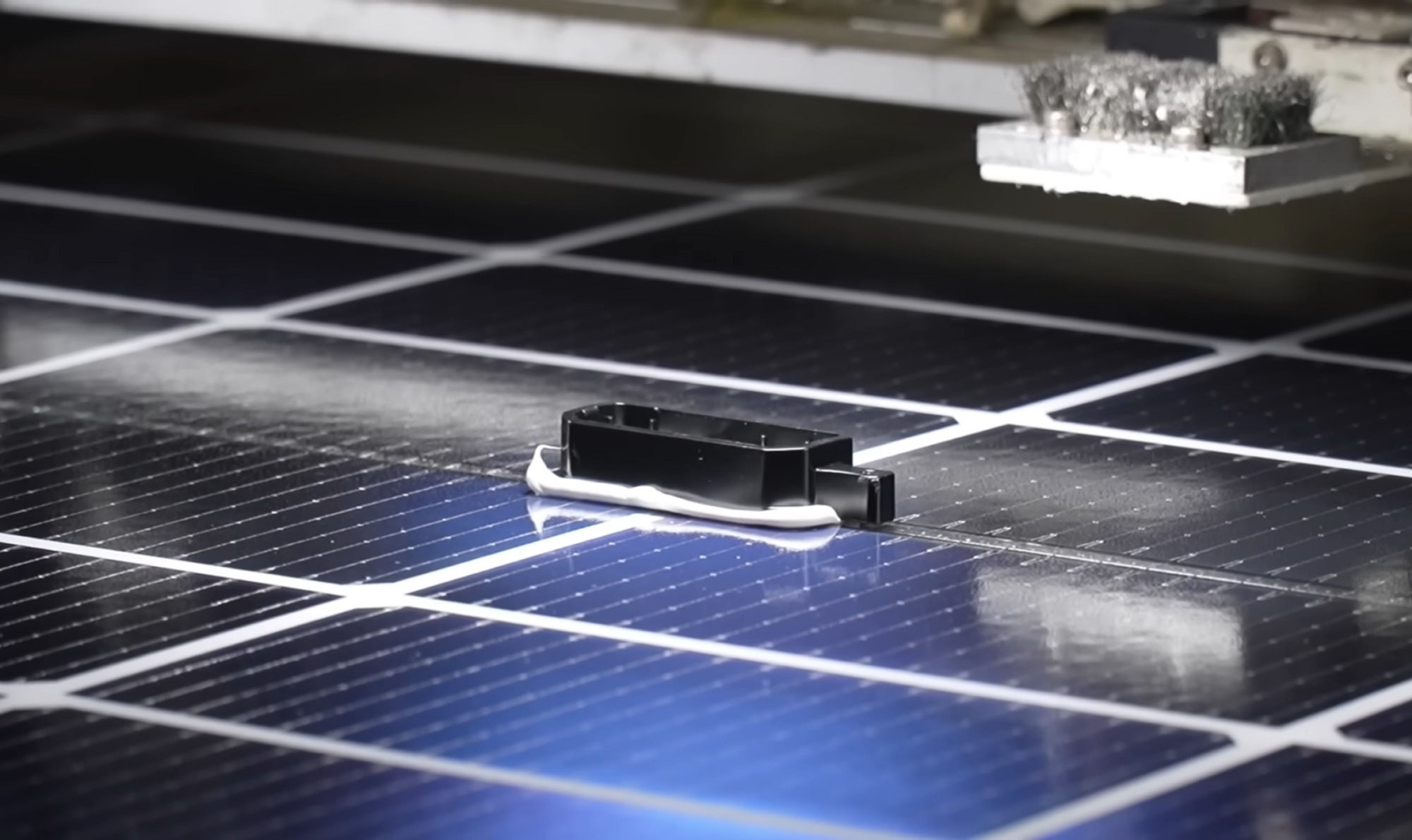 Study: Machine learning–guided SCAPS-1D design of lead-free CH3NH3SnI3 perovskite solar cells with 40.17 % simulated PCE. Image Credit: harhar38/Shutterstock.com
Recent advances in photovoltaic research have drawn renewed attention to lead-free perovskite solar cells, especially those based on methylammonium tin iodide (CH3NH3SnI3).
A new study in the Journal of Materials Science: Materials in Engineering uses machine learning alongside the SCAPS-1D simulator to map out how these devices could be designed for stronger performance.
The headline result is striking: simulated power conversion efficiency (PCE) reached 40.17 %. This high figure shows an idealised upper limit prediction from SCAPS-1D under highly favourable assumptions, not the measured efficiency of a fabricated solar cell.
Saving this for later? Download a PDF here.
Perovskite solar cells have become a major area of interest due to their strong light absorption, tunable band gaps, and relatively simple fabrication processes.
Lead-based versions have already achieved high efficiencies, but concerns about toxicity prompted researchers to seek safer alternatives.
CH3NH3SnI3, a tin-based perovskite, is a promising candidate. Such solar cells could reduce environmental concerns while retaining many of the optoelectronic properties that make perovskites attractive in the first place.
Conducting the CH3NH3SnI3 Study
The researchers used SCAPS-1D to simulate the electrical and optical behaviour of lead-free CH3NH3SnI3 solar cells, then paired the results with machine learning to identify better-performing designs.
Rather than testing only a small set of variables, the study examined a design space spanning 35,585 device configurations. This included absorber selection, hole-transport-layer choice, layer thickness, doping, defect density, metal work function, and parasitic resistance. That broad search allowed the team to identify which combinations mattered most and which changes delivered the largest gains.
The Best-Performing Cell
The top simulated structure was FTO/WS2/CH3NH3SnI3/V2O5/Pt, with a predicted PCE of 40.17 % under ideal conditions.
The study also found that performance was strongly shaped by the design of the electron and hole transport layers, as well as by absorber thickness, doping, and defect density. An absorber thickness of about 0.80 µm emerged as one useful design target, and the results reinforced the importance of interface passivation in limiting recombination losses.
Just as importantly, the analysis showed that interfacial energetics and defect landscapes matter more than simply pushing single parameters to extreme values. Better solar cells are likely to come from balancing the full device architecture, not from maximizing one variable in isolation.
A Cautious 40.17 % Efficiency
The paper does not present 40.17 % as a realistic near-term outcome for manufactured devices. The authors note that once more realistic interface traps and parasitic resistances are introduced, projected performance falls to a more practical range of 28 % to 32 %.
This distinction is important, but nonetheless, the 40.17 % optimized figure represents an ideal upper boundary. The study is valuable for identifying and understanding the parameters most likely to matter in experimental work.
Machine learning helped clarify that absorber doping, series resistance, shunt resistance, and defect density are among the most influential factors governing predicted device performance.
What This Means For Solar Research
The work points to a useful route for speeding up solar-cell design. By combining device simulation with machine learning, researchers can screen thousands of possible structures before moving to more expensive, time-consuming experimental testing.
That could be especially valuable in lead-free perovskite research, where the challenge is to improve efficiency while managing issues such as defect control, interface quality, and the chemical instability associated with tin.
What Comes Next
The next step is to test these predictions experimentally. The paper highlights several priorities: stronger interface passivation, tighter control of Sn2+ oxidation, long-term stability testing, and scalable manufacturing for larger-area devices.
Taken together, the results offer a clearer picture of how lead-free CH3NH3SnI3 solar cells might be improved. The study does not show that 40.17 % efficiency has been achieved in practice. It does, however, provide a detailed roadmap for how researchers could move closer to high-performance, lower-toxicity perovskite photovoltaics.
Journal Reference
Rahman, M.A., Alam, M.J. (2026). Machine learning-guided SCAPS-1D design of lead-free CH3NH3SnI3 perovskite solar cells with 40.17% simulated PCE. J Mater. Sci: Mater Eng. DOI: 10.1186/s40712-026-00426-9
Disclaimer: The views expressed here are those of the author expressed in their private capacity and do not necessarily represent the views of AZoM.com Limited T/A AZoNetwork the owner and operator of this website. This disclaimer forms part of the Terms and conditions of use of this website.