Trace carbon contamination on oxide surfaces can determine how those materials exchange charge on contact, helping explain why even two nominally identical surfaces can end up electrically different.
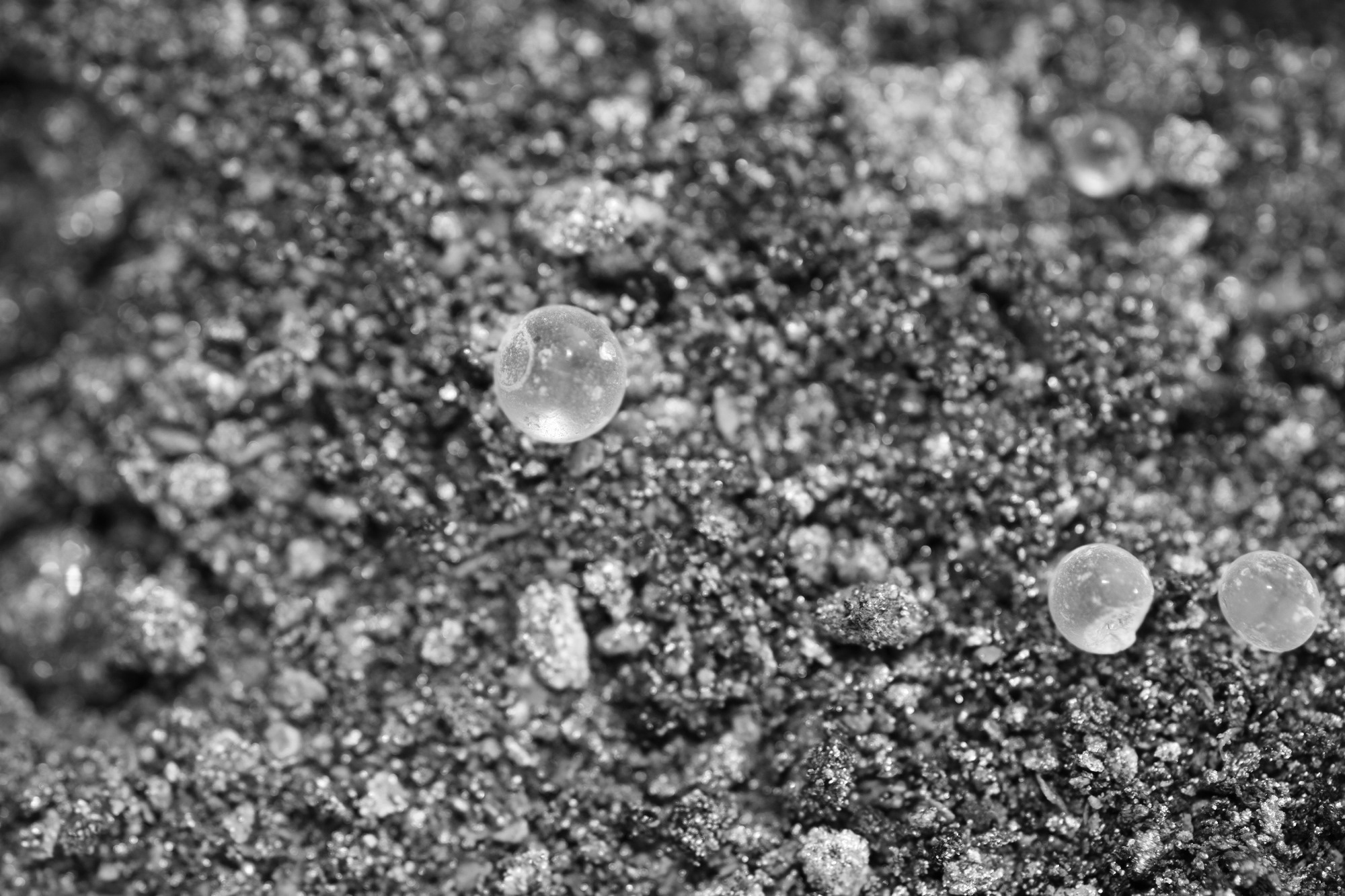 Study: Adventitious carbon breaks symmetry in oxide contact electrification. Image Credit: taffpixture/Shutterstock.com
Contact electrification (CE) happens when two materials touch and then separate, leaving one or both electrically charged. It is a familiar effect, but the underlying physics remains difficult to pin down, especially in insulating materials such as oxides.
That matters because oxides are common in both natural and engineered environments. They are found in dust, ceramics, glass, and planetary surfaces, and their charging behaviour can affect everything from volcanic plumes and dust storms to spacecraft operations.
Silicon dioxide (SiO2), one of the most abundant oxides in Earth’s crust and also present on the Moon and Mars, has been widely used to study CE. One of the field’s unresolved questions is why two samples of the same oxide can still charge differently after contact. In principle, identical materials should behave symmetrically. In practice, they often do not.
The new study points to a key reason: adventitious carbon, a thin layer of carbon-containing contamination that builds up naturally on surfaces exposed to air.
How The Team Investigated The Effect
The researchers studied high-purity ultraviolet-fused SiO2 spheres and plates. Using acoustic levitation, they suspended individual silica spheres and allowed them to collide in a controlled way with a silica plate.
Before each experiment, both surfaces were neutralized and cleaned using sonication and baking. The amount of charge transferred during contact was then measured by applying an alternating current (AC) electric field and tracking the levitated sphere's motion with a high-speed camera.
To examine surface composition, the team used time-of-flight secondary ion mass spectrometry (ToF-SIMS), low-energy ion scattering (LEIS), and infrared spectroscopy.
Across repeated tests, each sphere tended to acquire a consistent charge sign when paired with a particular plate. But the outcome varied from one sphere-plate pair to another, even though the materials were nominally identical. That pointed to differences in surface condition rather than bulk composition.
Carbon, Not Just Water
The researchers found a strong link between charging behaviour and the amount of adventitious carbon on the surface.
When carbon coverage was altered using plasma treatment or baking, the charging behaviour changed as well. Plasma-treated surfaces tended to become more negative relative to untreated ones, while baking shifted charging polarity depending on the treatment conditions.
The effect also changed over time. After treatment, the charging behaviour gradually relaxed over roughly one to 10 hours, in step with the re-adsorption of carbon from the surrounding environment.
That result strengthens the case that adventitious carbon is the symmetry-breaking factor in same-material oxide contact electrification.
The study also sharpens an earlier debate over the role of water. Water has often been treated as the main explanation for asymmetry in oxide charging. But the new findings suggest the picture is more complex. The results argue against water alone being responsible, while still leaving open the possibility that water contributes in other ways, such as by affecting charge mobility.
Effects Extend Beyond Silica
The researchers found similar behaviour in other oxides, including alumina and zirconia, suggesting that the effect is not unique to silica.
They also showed that changing surface carbon coverage could systematically influence charging behaviour in different-oxide pairings. In some cases, removing carbon even reversed the direction of charge transfer. That suggests adventitious carbon can compete with, and sometimes outweigh, underlying material-specific tendencies.
Conclusion and Future Work
The findings offer a clearer explanation for why contact electrification experiments on oxides can appear inconsistent, even when the materials themselves seem well matched.
They also matter beyond the laboratory. Electrostatic charging plays a role in oxide-rich systems such as desert sands, volcanic ash, and planetary dust. On the Moon and Mars, for example, dust can cling to equipment and interfere with operations.
By identifying carbon contamination as a hidden but important variable, the study gives researchers a more precise way to interpret and compare charging experiments on oxide surfaces.
The paper makes a strong case that adventitious carbon shapes charging outcomes, but it does not settle the deeper atomic-level mechanism of oxide contact electrification.
That remains an open question. Future work will need to examine how carbon interacts with humidity, temperature, and other surface species, and how those factors together govern charge transfer.
Journal Reference
Grosjean, G., et al. (2026). Adventitious carbon breaks symmetry in oxide contact electrification. Nature 651, 626-631. DOI: 10.1038/s41586-025-10088-w
Disclaimer: The views expressed here are those of the author expressed in their private capacity and do not necessarily represent the views of AZoM.com Limited T/A AZoNetwork the owner and operator of this website. This disclaimer forms part of the Terms and conditions of use of this website.