From flexible electrodes to biodegradable architectures, researchers are redesigning battery materials so that electrochemical reactions can do far more than supply power.
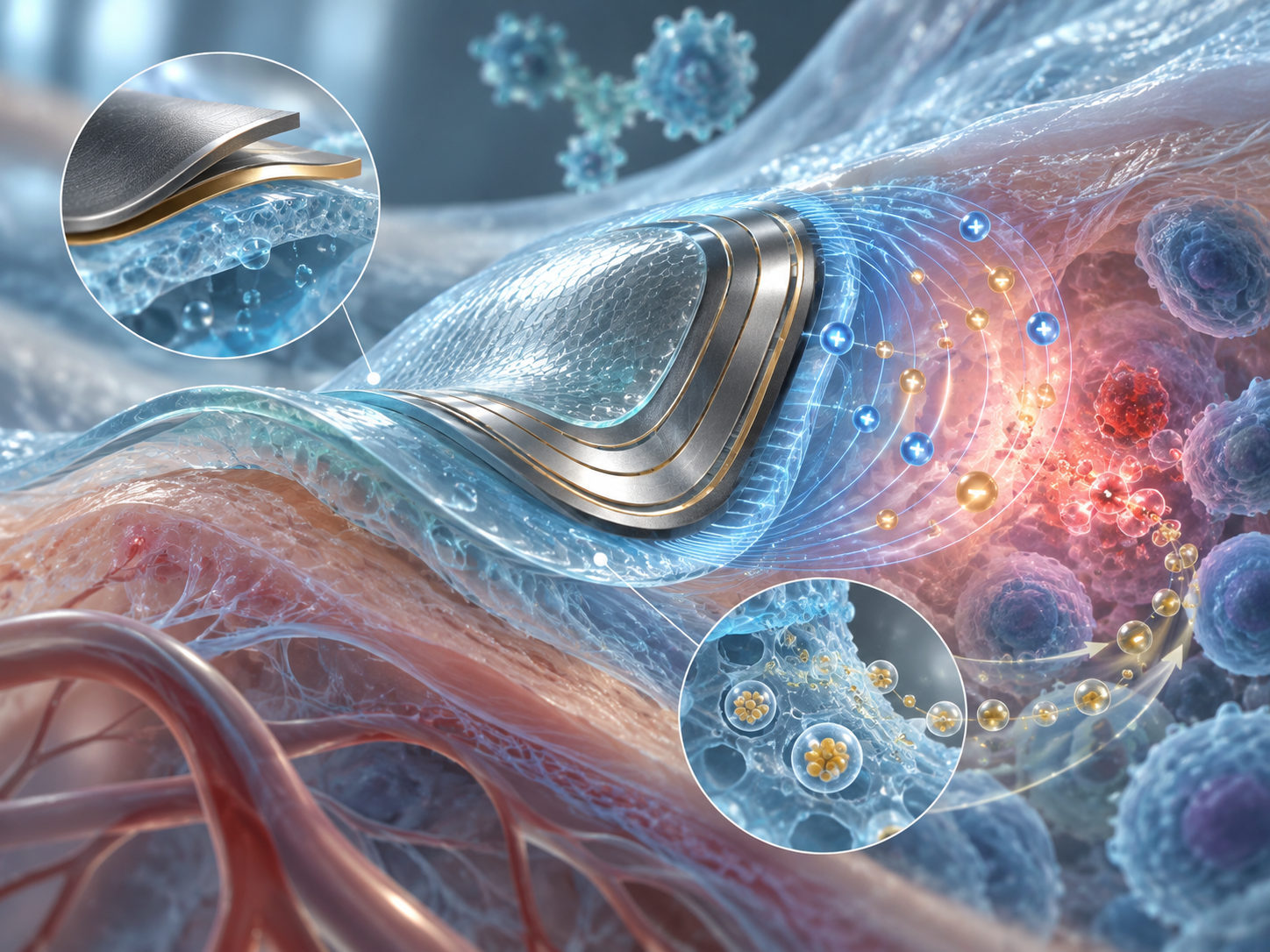
Paper: Biointegrated Battery-Based Electroceuticals. AI-generated abstract conceptual image created using ChatGPT/OpenAI
A recent review in the journal Advanced Materials examines how biointegrated batteries can function as therapeutic platforms. The review covers battery-based electroceuticals for tissue regeneration, cancer therapy, cardiac pacing and defibrillation, antimicrobial treatment, and precision drug delivery. These systems combine electrochemical energy storage with localized electrical stimulation, therapeutic ion and reactive oxygen species release, gas generation, and controlled drug administration.
The Need for Biointegrated Electroceuticals
Electroceuticals use electrical or electrochemical signals to regulate biological processes and produce therapeutic effects. Conventional implantable systems use batteries to power separate therapeutic components such as stimulators, sensors, or drug-delivery devices. This separation increases device complexity and limits miniaturization. It also creates additional interfaces between the energy source and therapeutic component.
The biointegrated batteries highlighted in the review offer a different approach. Their electrochemical reactions can generate therapeutic outputs directly at the treatment site. During discharge, these systems can produce electric fields, reactive oxygen species, gases, and metal ions that influence biological processes. The battery acts as both an energy source and an active therapeutic component.
Successful biointegration requires careful control of battery materials and architecture. Electrodes, electrolytes, and supporting structures must provide sufficient electrochemical performance while maintaining biocompatibility, mechanical flexibility, and, where required, controlled biodegradation. Metals and their alloys, conductive polymers, carbon-based materials, hydrogels, and physiological fluids provide different options for constructing these systems.
Evaluating Battery-Based Therapeutic Applications
The review examines three major therapeutic functions of biointegrated batteries: electrical stimulation, electrochemical regulation of the tissue microenvironment, and controlled drug delivery. Researchers have developed flexible, miniaturized, and biodegradable battery architectures using materials such as Zn, Mg, Ag, Cu, and MnO2, together with conductive polymers and hydrogel-based electrolytes.
Zn–Ag and Zn–Cu batteries can generate electric fields that reproduce aspects of the endogenous electrical environment around damaged skin. Flexible Zn–MnO2 batteries and hydrogel-based systems provide additional strategies for sustained stimulation. The rechargeable Zn–MnO2 design discussed in the review requires external charging and metal-wire stimulation electrodes, which limits portability and autonomous operation. Researchers have also developed tubular battery structures for nerve regeneration, which can maintain close contact with damaged nerves and deliver electrical signals locally.
Cardiac applications require precise control over electrical output. For pacing, biointegrated batteries can supply low-voltage current that integrated electronics shape into controlled pulses, while some designs use the battery electrodes directly for stimulation. For defibrillation, a higher-current battery output can charge high-voltage capacitors, which then deliver the therapeutic discharge. These examples demonstrate how researchers can adapt battery architecture, output, and geometry to the requirements of different tissues and therapeutic targets.
These systems can also use their electrochemical reactions to alter the local biological environment. Electrode reactions can generate reactive oxygen species, gases, and metal ions with therapeutic effects. Controlled generation of reactive oxygen species (ROS) can contribute to cancer treatment and antibacterial activity, while hydrogen and nitric oxide can influence oxidative stress, cellular signaling, and tissue regeneration. Depending on the electrode chemistry, batteries can release Zn²+, Mg²+, Mn²+, Cu²+, and Li+ for applications including antimicrobial therapy, tissue repair, neuromodulation, and cancer treatment.
Materials and Mechanisms Shape Therapeutic Performance
Electrical stimulation is a key mechanism in battery-based electroceuticals. Skin injury can disrupt endogenous transepithelial potentials, producing electric fields that guide cell migration and proliferation. Battery-generated fields can mimic these signals and influence membrane transport, calcium signaling, mitochondrial activity, metabolism, and gene expression.
Electrical stimulation can support wound healing, nerve regeneration, and bone repair. It can guide cell migration, promote Schwann-cell activity and axonal growth, and promote osteogenic differentiation. These effects show how battery-generated signals can regulate cellular behavior.
ROS-generating batteries can create localized oxidative conditions to target cancer cells and bacteria. Gas-generating systems can produce hydrogen or nitric oxide at the treatment site. Metal-ion-generating batteries can release controlled concentrations of biologically active ions. Treatment outcomes depend on electrode chemistry, reaction kinetics, product concentration, release rate, and tissue interactions.
These devices can also enable controlled drug delivery. Conductive polymers can act as both electrochemical materials and drug reservoirs. Redox reactions can regulate drug release. Battery-generated electric fields can drive therapeutic molecules through tissues using iontophoresis. Other systems can open drug reservoirs through electrochemical reactions. Joule heating can also activate thermoresponsive drug carriers.
Overall, treatment performance depends on key material and device parameters. These include electrode composition, electrochemical potential, current output, ion and ROS release, mechanical flexibility, degradation behavior, and tissue–device interactions. Understanding these relationships can help develop more precise and effective electroceutical therapies.
Enabling Future Bioelectronic Therapies
Biointegrated battery-based electroceuticals integrate energy storage, electrical stimulation, chemical regulation, and drug delivery into compact therapeutic systems. Miniaturization creates a trade-off because reducing battery size can limit energy output. Future architectures must provide sufficient therapeutic performance while reducing implantation trauma and maintaining mechanical compatibility with soft tissues.
Long-term stability and safety also remain important challenges. Battery reactions that release therapeutic ions or ROS must stay within controlled ranges. This helps prevent unwanted effects on healthy tissues. Biodegradable systems must also function throughout the required treatment period. They should then degrade at a predictable rate. Interface stability, biofouling, and the changing biological response during degradation also require careful evaluation.
Future systems could combine biosensors, flexible electronics, stimuli-responsive materials, and artificial intelligence to create closed-loop electroceuticals. These systems could detect biomarkers or physiological changes and adjust electrical stimulation, drug release, or electrochemical activity in response.
Overall, the review highlights the potential of biointegrated batteries to combine energy storage with therapeutic functions. The field will require closer integration of materials science, electrochemistry, bioelectronics, and biological engineering. Researchers must establish quantitative links between electrochemical parameters and biological responses, improve long-term safety evaluation, develop reproducible manufacturing methods, and validate implantable systems in rigorous preclinical models.
Disclaimer: The views expressed here are those of the author expressed in their private capacity and do not necessarily represent the views of AZoM.com Limited T/A AZoNetwork the owner and operator of this website. This disclaimer forms part of the Terms and conditions of use of this website.