A laser-based acoustic technique tracks subtle stiffness changes in aging Fe-Cr alloys, offering a new way to probe nanoscale phase separation without cutting into the material.
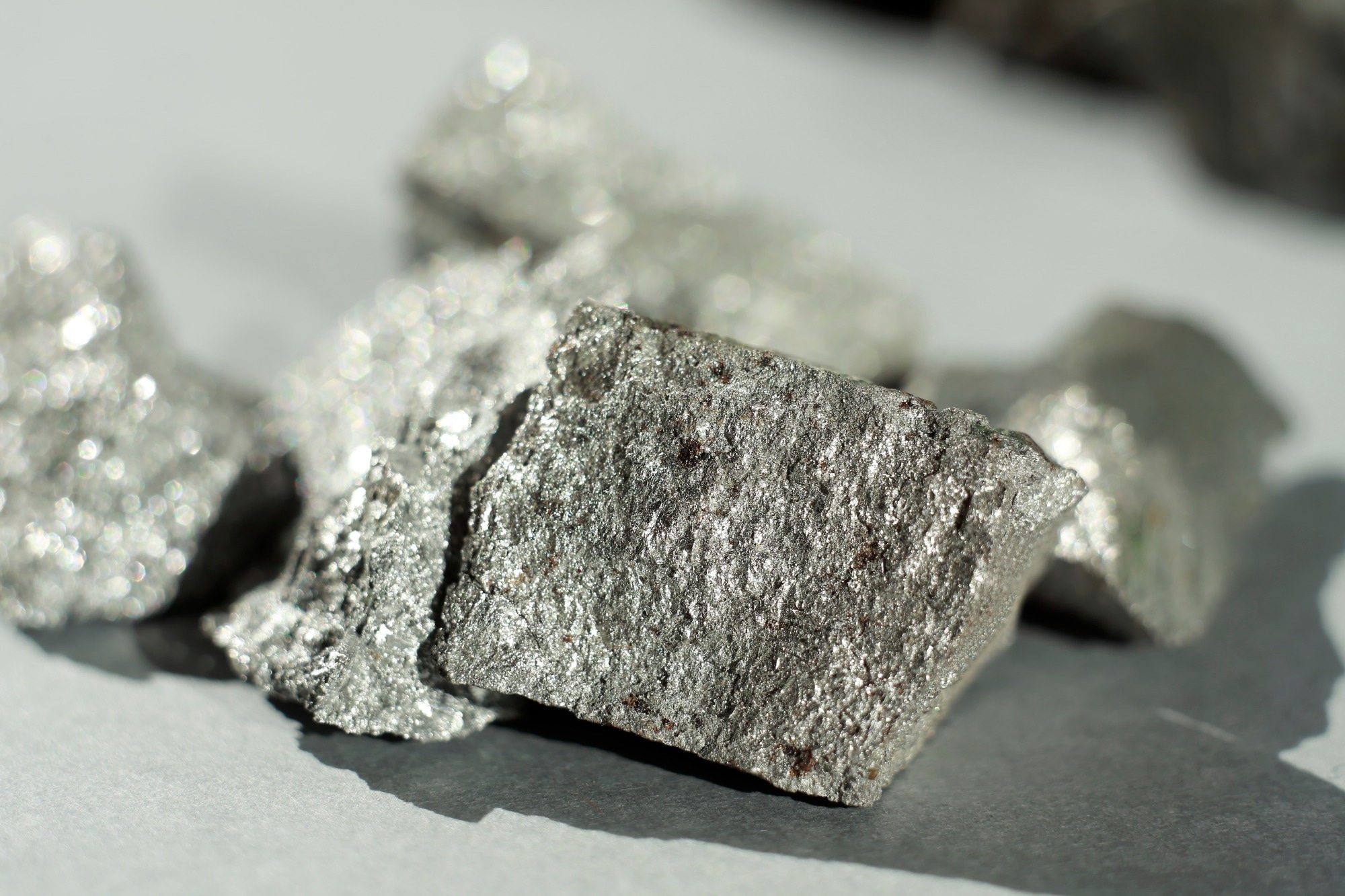
Paper: Detecting the onset and progression of spinodal decomposition using transient grating spectroscopy. Image Credit: Wojmac / Shutterstock
*Important notice: This news reports on an unedited version of an accepted paper and is awaiting final editing. Therefore, the paper should not be regarded as conclusive or treated as established information.
In a recent research article published in the journal npj Materials Degradation, researchers used transient grating spectroscopy to non-destructively detect spinodal decomposition in iron-chromium alloys by monitoring composition-dependent changes in elastic properties, including modulus stiffening in Fe-36Cr.
Spinodal decomposition in Fe-Cr
Spinodal decomposition is a phase-separation process in certain alloys, including iron-chromium (Fe-Cr) systems, in which a single-phase solid solution spontaneously separates into two distinct phases without nucleation.
This phenomenon can degrade structural materials, especially those used in energy and power infrastructure, where spinodal decomposition-induced embrittlement and reduced corrosion resistance can seriously limit service life.
In duplex stainless steels, for example, spinodal decomposition within the δ-ferrite phase causes chromium-depleted regions that compromise corrosion resistance and can shift ductile-to-brittle transition temperatures toward room temperature.
Extensive experimental characterization of spinodal decomposition at the nanoscale has used atom probe tomography (APT) and microscopy methods such as scanning transmission electron microscopy (STEM), but no practical, non-destructive technique directly measures a material property mechanistically linked to this process.
Previous studies show that the elastic properties of iron-chromium alloys depend nonlinearly on chromium content, particularly because of magnetic-moment contributions. This nonlinearity offers a potential pathway to detect spinodal decomposition through changes in elastic modulus.
The study uses transient grating spectroscopy (TGS), a laser-based method that probes elastic stiffness via surface acoustic wave (SAW) speeds, as a non-destructive tool to detect spinodal decomposition in Fe-Cr alloys.
Transient grating spectroscopy techniques
The investigation focused on binary iron-chromium alloys with 26 at.% and 36 at.% chromium. Spinodal decomposition at 500 °C is well established at the higher chromium concentration, while the phase-separation mechanism near 26 at.% Cr is less certain.
Samples underwent thermal treatments designed to induce phase separation, and TGS measurements were performed both ex situ and in situ to track changes in elastic properties with heat exposure time.
To tie the measured stiffness response to crystallography, electron backscatter diffraction (EBSD) was used to determine the orientation of the Fe-36Cr grain used for detailed inverse elastic-constant analysis.
The TGS technique involved intersecting two pulsed laser beams at the sample surface to launch counter-propagating surface acoustic waves. The speed of these waves, sensitive to elastic moduli and density, was measured by monitoring the diffracted probe-laser intensity over time at micron-scale depths, effectively sampling a single grain due to the technique's spatial resolution.
Complementary APT measurements characterized the nanoscale composition modulation in aged Fe-36Cr, confirming the formation of distinct chromium-rich and chromium-poor regions and enabling quantitative estimates of their compositions.
Molecular dynamics/Monte Carlo hybrid atomistic simulations were also conducted to reproduce Fe-rich and Cr-rich regions at the atomic scale and to predict changes in elastic stiffness tensors and density associated with thermal equilibration. Differential scanning calorimetry (DSC) and hardness tests provided additional indirect evidence consistent with phase separation in Fe-36Cr.
Elastic modulus stiffening analysis
The Fe-36Cr alloy showed clear evidence of spinodal decomposition after aging at 500 °C: APT revealed nanoscale phase separation into chromium-rich and chromium-poor regions, consistent with literature observations of the δ-ferrite phase in duplex stainless steels.
TGS measurements revealed progressive elastic stiffening with aging. Detailed inverse analysis of an EBSD-characterized Fe-36Cr grain indicated a 5.4 ± 0.5% increase in the C′ modulus after 10 hours at 500 °C.
A separate TGS rotation study on the APT-sampled grain also found direction-dependent stiffening. The researchers then compared that experimental result with a composition-based model. The APT-informed model, which incorporated the nonlinear dependence of C′ on chromium composition, predicted a 7.1 ± 0.2% increase, agreeing with the experiment in direction and approximate magnitude.
The authors note uncertainty from the simplified mixture treatment, zero-temperature calculations, and the APT estimate of composition modulation.
Atomistic simulations produced Cr-rich and Fe-rich regions and predicted higher elastic stiffness after thermal equilibration. Simulated elastic stiffness components (C11, C12, and C44) increased by roughly 2.5–5.7% across the two alloy compositions, alongside a slight density increase.
For Fe-26Cr, TGS measured a small but statistically significant average SAW-speed decrease of 0.7 ± 0.3% after 20 hours at 500 °C, while simulations predicted stiffening.
No microstructural characterization was performed on Fe-26Cr, so the same processing-structure-property link could not be established for that alloy.
By examining large individual grains with characterized crystallographic orientations, the study reduced uncertainties previously encountered when correlating elastic measurements with spinodal decomposition in complex alloys, including cast austenitic stainless steels.
The authors attribute the observed Fe-36Cr response mainly to the nonlinear dependence of elastic constants on chromium concentration, which prior calculations link strongly to magnetic effects. C′ reaches a local minimum near 35 at. % Cr,% Cr, where spinodal decomposition can increase the effective modulus through compositional modulation. Near 20 at.% Cr, decomposition is predicted to reduce the modulus.
The study shows that the elastic response to spinodal decomposition depends on alloy composition and crystallographic direction.
TGS for spinodal detection
This study shows that transient grating spectroscopy can non-destructively track elastic changes associated with spinodal decomposition in the Fe-36Cr model alloy. In situ Fe-36Cr measurements also detected progressive increases in SAW speed at about 500 °C and a change in the rate of increase after roughly one hour.
The findings suggest that TGS could support future monitoring of thermal aging in high-chromium ferritic phases in steels. Applying the method to complex engineering alloys or operating components will require separating spinodal effects from other sources of elastic change, accounting for grain orientation, and validating measurements under component-relevant conditions.
The work links nanoscale compositional changes measured by APT with micrometer-scale elastic responses measured by TGS and identifies steps needed before the method can support materials assessment and lifetime prediction.