From powering smartphones to enabling breakthroughs in artificial intelligence, high-performance computing, and emerging quantum devices, semiconductors have become the invisible engine of the modern world.
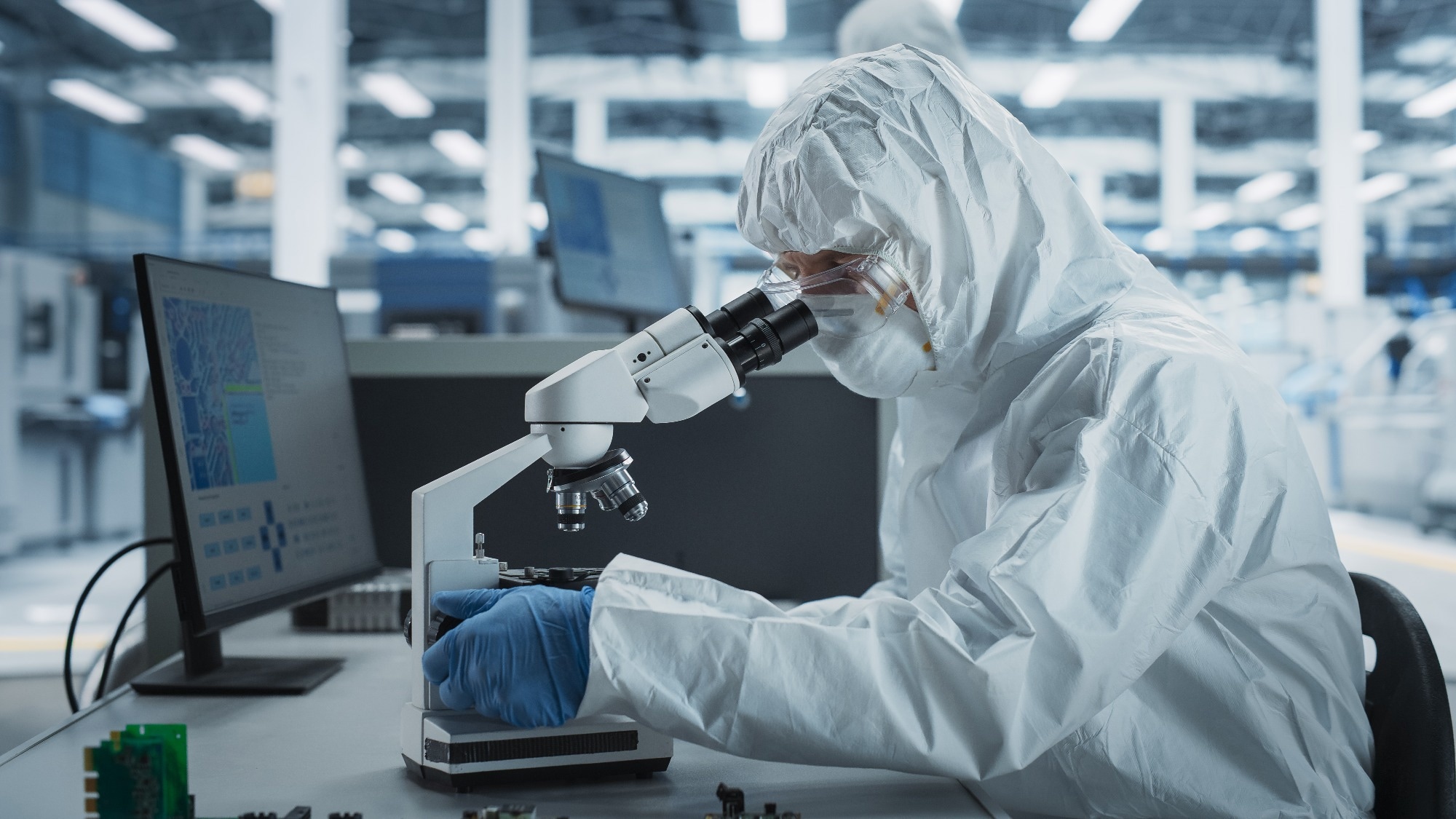 Image Credit: Gorodenkoff/Shutterstock.com
Every advancement in computing, communication, or energy technology relies on the precision and performance of these tiny electronic components. At the heart of this revolution is atomic-scale precision in the materials that make these devices possible.1
This is where ultra-pure materials play a critical role.
Silicon wafers, specialty gases, and chemical precursors are refined to extraordinary levels of cleanliness to ensure that every layer of a chip functions exactly as intended. Achieving this precision requires immense effort, because even the tiniest impurity can alter performance, reduce yield, or shorten device lifetime.
In semiconductor manufacturing, purity is not a luxury. It is a necessity and a top priority. These materials ultimately determine what engineers can achieve. In today’s competitive landscape, controlling purity is a decisive advantage that shapes device performance, reliability, and global supply resilience.
Saving this article for later? Download a PDF here.
Define Ultra-Pure Materials
Ultra-pure materials are substances refined to extreme levels of cleanliness, where almost no unintended atoms remain. In semiconductor manufacturing, this typically means purities from 6N (99.9999 %) up to 11N, with impurities controlled at parts per billion (ppb) or even parts per trillion levels.2
Silicon wafers, the backbone of most chips, are usually refined to 9N or higher, equivalent to 99.9999999 % pure, to ensure flawless electronic behavior. Other critical materials include Gallium for power electronics and LEDs, Germanium for photonics, and ultra-clean process gases and specialty chemicals used throughout fabrication.
At these levels, purity becomes more than removing visible contaminants, requiring the elimination of atomic-scale defects that can interfere with how a device functions.
Semiconductors rely on precisely engineered regions created by adding tiny amounts of dopants to control current flow. Any undesired impurity, even one that seems chemically inert, can act as a charge trap, scattering center, or recombination site, upsetting this delicate balance and reducing performance, yield, and reliability.
What Counts as an Impurity, and Why Are They Harmful?
Impurities are any undesired atoms, molecules, or particles introduced during material production or processing.
In semiconductors, these can include metallic contaminants such as iron, copper, sodium, nickel, oxygen, or carbon trapped in crystal lattices, or microscopic particles shed from equipment surfaces.
At the atomic scale, even tiny amounts of contamination can have a dramatic impact. Metallic atoms in silicon can trap electrical charges, increase leakage currents, or accelerate device degradation.
Oxygen clusters can create crystal defects, weakening reliability. In compound semiconductors such as gallium nitride or gallium arsenide, used in high-frequency or high-power devices, trace impurities can reduce carrier mobility, lower efficiency, or cause early device failure.
As transistors shrink, the effects of impurities become even more severe. At advanced technology nodes, where a transistor gate may span only a few dozen atoms, the distance an electron travels is comparable to the spacing between impurity atoms.
A few undesired atoms can shift operating voltages, distort electric fields, or create faulty circuits. Material purity is therefore critical not only for electrical performance but also for manufacturing yield, process stability, and long-term reliability.
Even a small drop in yield can translate into millions of dollars in lost revenue at multi-billion-dollar fabrication plants.
Achieving Ultra-Purity
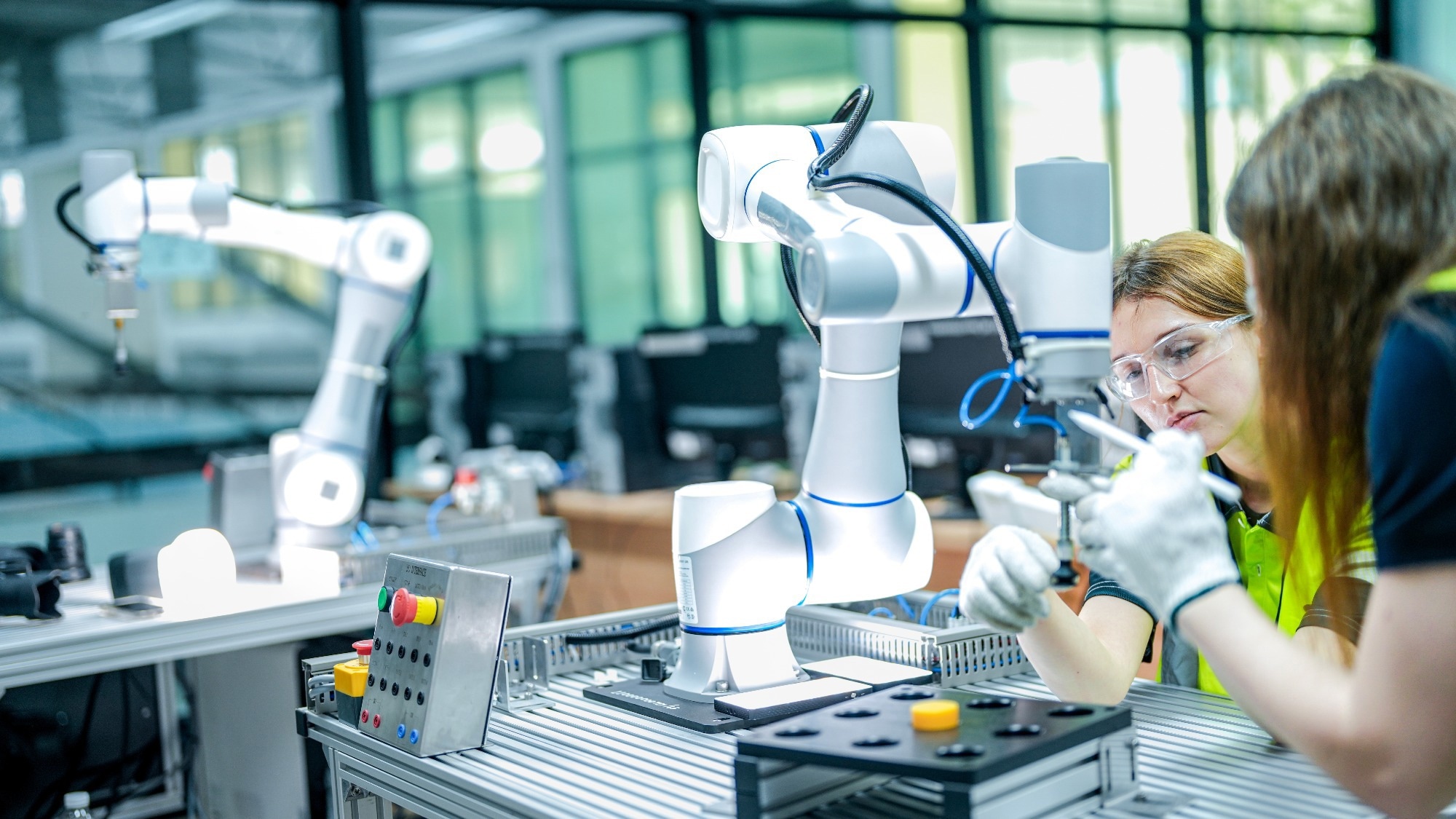 Image Credit: ultramansk/Shutterstock.com
Producing ultra-pure materials involves highly controlled techniques.
Silicon is often purified using zone-refining or float-zone methods, which remove metallic and oxygen impurities through repeated melting and solidification. Gallium is purified via multiple passes of zone-refining, while specialty gases and metal-organics are filtered and distilled repeatedly.
These processes are costly and energy-intensive but essential for eliminating atomic-scale defects and achieving the performance required for advanced devices.
Key Ultra-Pure Materials and Their Applications
Ultra-pure materials form the foundation of modern semiconductor devices, enabling maximum performance and reliability.
Silicon (Si): Silicon is the foundation of most chips and solar cells, grown as large single crystals for CPUs, memory devices, and photovoltaic cells. Ultra-pure silicon minimizes carrier scattering and leakage, maximizing speed and yield.
For advanced applications such as quantum bits, even isotopic purity matters. Silicon-28, which lacks nuclear spins, is used to prevent qubit decoherence.3
Gallium (Ga) and III-V Semiconductors: Pure Gallium is the starting material for GaAs, GaN, InP, and related compounds used in lasers, LEDs, high-speed transistors, and power electronics. These materials require 5N to 7N purity, equivalent to 99.999–99.99999 % pure.
For example, refining 99.9992 % Gallium to approximately 99.999992 %, known as 7N2 purity, reduces total impurities to about 78 parts per billion. Ultra-pure gallium prevents transition-metal contaminants from trapping carriers and pinning the Fermi level, enabling GaAs and AlGaAs devices to achieve electron mobilities above 10 million cm2/V·s.4
Germanium (Ge) and Other Semiconductors: Germanium is used in high-speed transistors, infrared sensors, and high-performance photodetectors.5 Ultra-pure Germanium, with purities above 7N, is required to avoid charge trapping and electronic noise.
Emerging wide-bandgap materials such as SiC and Ga2O3 also demand high-purity feedstocks to prevent deep-level defects that compromise high-voltage or high-frequency operation.
Chemical Precursors and Substrates: Beyond elemental crystals, semiconductor fabrication relies on ultra-pure chemicals such as silane, metal-organics, and process gases, along with ultrapure water and substrates such as sapphire and quartz. Even trace contamination in these materials can disrupt fabrication processes and device performance.
Learn more about the modern world of semiconductors by clicking this link.
Current Challenges and Future Outlook
Producing ultra-pure materials is technically demanding and expensive. Silicon crystals, gallium, and other critical materials are refined in ultra-clean environments and monitored with instruments capable of detecting contaminants at parts-per-trillion levels.
Meeting these standards increases costs, energy consumption, and supply-chain complexity, making it challenging to scale production without compromising quality.
Global supply chains present additional difficulties. Key raw materials such as high-purity quartz for silicon crucibles or gallium for compound semiconductors are concentrated in a few regions. Trade restrictions, geopolitical tensions, or production disruptions can quickly affect global chip manufacturing.
Sustainability is also a growing concern, as producing ultra-pure materials consumes significant energy. Recycling high-purity feedstocks from manufacturing scrap and end-of-life devices is emerging as both an environmental and strategic necessity.6
Looking ahead, purity requirements will tighten as the industry advances toward smaller nodes, three-dimensional architectures, wide-bandgap semiconductors, and quantum-grade devices.
Companies that master material purity, invest in advanced monitoring, and secure resilient supply chains will define the next generation of electronics while maintaining global relevance.7
References and Further Reading
- Huang X, Liu C, Zhou P. 2D semiconductors for specific electronic applications: from device to system. npj 2D Materials and Applications. 2022;6(1):51.
- (Oxford) S. High-Purity Silicon Market and Price Drivers.
- Zou X, Ji L, Ge J, Sadoway DR, Yu ET, Bard AJ. Electrodeposition of crystalline silicon films from silicon dioxide for low-cost photovoltaic applications. Nature Communications. 2019;10(1):5772.
- Ghosh K, Mani VN, Dhar S. Numerical study and experimental investigation of zone refining in ultra-high purification of gallium and its use in the growth of GaAs epitaxial layers. Journal of Crystal Growth. 2009;311(6):1521-8.
- Michel J, Liu J, Kimerling LC. High-performance Ge-on-Si photodetectors. Nature Photonics. 2010;4(8):527-34.
- Ou S, Yang Q, Liu J. The global production pattern of the semiconductor industry: an empirical research based on trade network. Humanities and Social Sciences Communications. 2024;11(1):750.
- Zhang K, editor 1.1 Semiconductor Industry: Present & Future. 2024 IEEE International Solid-State Circuits Conference (ISSCC); 2024 18-22 Feb. 2024.
Disclaimer: The views expressed here are those of the author expressed in their private capacity and do not necessarily represent the views of AZoM.com Limited T/A AZoNetwork the owner and operator of this website. This disclaimer forms part of the Terms and conditions of use of this website.