 By Owais AliReviewed by Ben StibbsApr 13 2026
Foodborne Illness and the Limits of Conventional Packaging
Active Packaging as a Materials-Engineered Concept
Types of Active Packaging Materials
Recent Research and Development
Design and Regulatory Considerations
References and Further Reading
Deterioration of packaged food is a huge issue for global suppliers. It is a major contributor to the spread of foodborne illnesses, which, according to the WHO, affect one in 10 people worldwide each year. Conventional food packaging tries to prevent deterioration through passive barrier performance, but this is only effective within defined operating conditions.
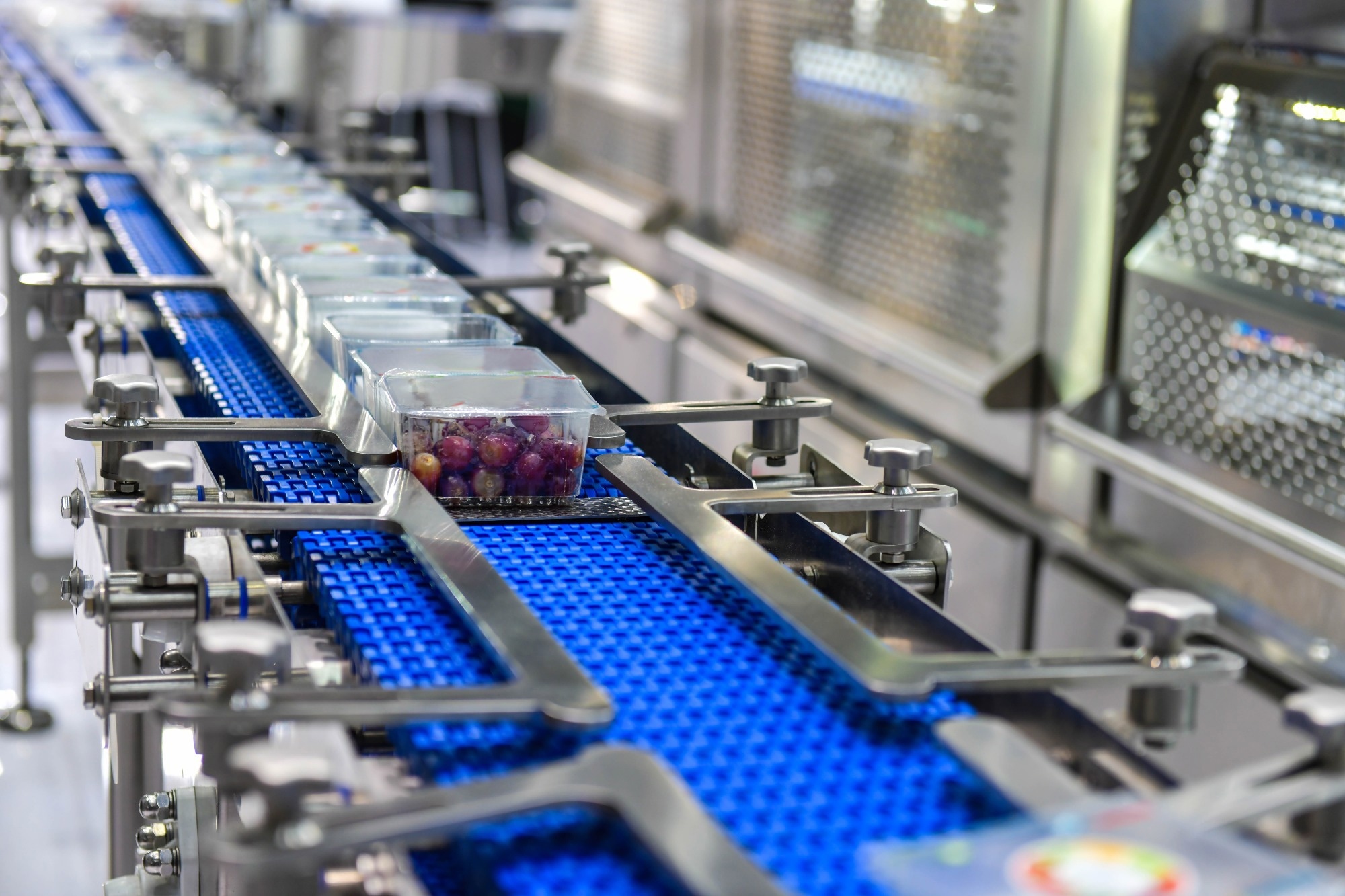 Image Credit: i viewfinder/Shutterstock.com
Addressing modern food safety requirements may take a different paradigm: active food packaging materials.
Saving this article for later? Download a PDF here.
Foodborne Illness and the Limits of Conventional Packaging
Foodborne illness is caused by contamination with pathogenic microorganisms and chemical hazards like heavy metals. Exposed consumers may suffer from acute gastrointestinal disease or more serious outcomes like chronic neurological, carcinogenic, and immunological effects.
According to World Health Organization assessments, foodborne illness results in an estimated 420,000 deaths annually, with disproportionate impacts on vulnerable populations, including pregnant women, children, and immunocompromised individuals.
Producers naturally risk substantial economic losses as a result of product contamination.
Food deteriorates through four dominant mechanisms: oxidation, moisture imbalance, microbial activity, and chemical instability. Oxidative and moisture-driven processes progressively degrade nutritional and sensory quality, while chemical instability accelerates the formation of undesirable or potentially harmful by-products during storage. Microbial activity presents the most direct safety threat, as pathogen growth can occur despite refrigeration, particularly when environmental conditions fluctuate during distribution.
Conventional packaging typically uses polymer films and multilayer laminates to limit oxygen and water vapor transmission, slowing deterioration rather than actively suppressing it. However, it provides no adaptive response to temperature excursions, variable respiration rates, or residual reactive species present at sealing, so deterioration progresses once barrier limits are exceeded.
This gap underscores the need for packaging that goes beyond passive containment, incorporating materials that can actively regulate oxygen, moisture, and microbial activity. Such active systems are essential for maintaining product stability and extending shelf life under variable storage and distribution conditions.1
Active Packaging as a Materials-Engineered Concept
Active packaging integrates reactive functionality into the package structure. This means preservation is achieved through controlled interaction with the product and its surrounding atmosphere rather than solely through barrier resistance.
The defining feature of this concept is the materials’ ability to absorb or release specific chemical species under controlled conditions, embedding preservation functionality directly at the material level, even when the package appears physically identical to conventional systems.
These materials are designed and engineered based on their specific mode of interaction, such as scavenging reactive species, releasing functional compounds in a controlled manner, or employing immobilized surface activity to inhibit microbial growth without migration.
Effectiveness depends on factors like reaction kinetics, mass transport, and interfacial stability, directly connecting preservation performance to material composition, loading, and compatibility with the packaging substrate.1,2
Types of Active Packaging Materials
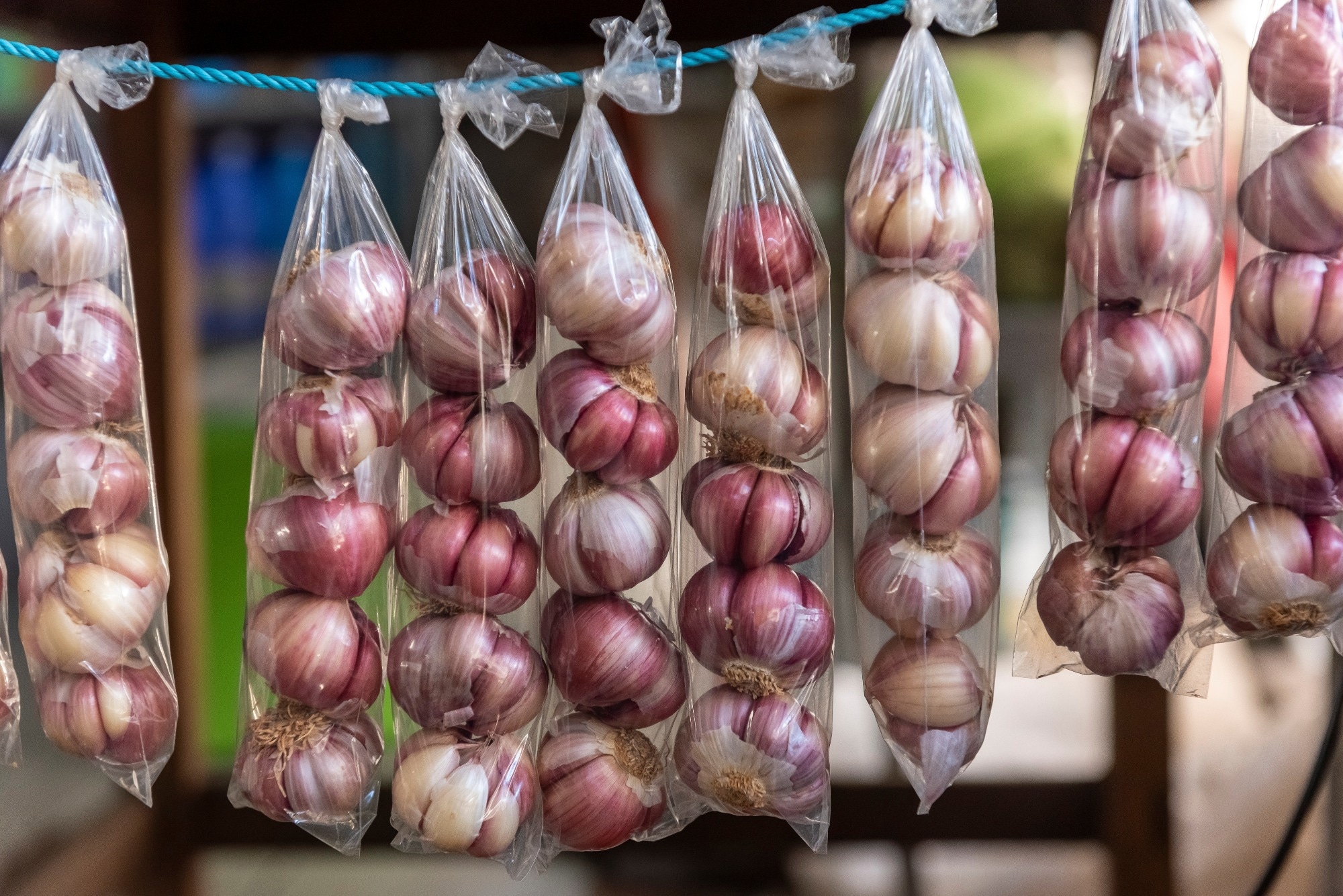 Image Credit: Cacio Murilo/Shutterstock.com
Oxygen Scavenging Materials
Oxygen scavengers are one of the most established active packaging technologies. They target oxidative spoilage in products such as high-fat snacks, nuts, meat, dairy items, and fresh produce.
Common approaches include:
- Iron-based scavengers:
- Use oxidation of elemental iron in the presence of moisture to form stable iron oxides
- Historically supplied as sachets or pads inside packages
- Increasingly integrated into film structures to provide more uniform scavenging and remove ingestion risks
- Enzymatic scavengers:
- Rely on enzymatic systems such as glucose oxidase, often combined with catalase
- Convert glucose to gluconic acid while consuming oxygen and decomposing the hydrogen peroxide produced
- Suitable for iron-sensitive products where metal migration or discoloration is a concern
- Nanocomposite scavengers:
- Incorporate zero-valent iron nanoparticles onto high–surface–area supports, such as kaolinite or bentonite clays
- Offer enhanced activity under both humid and relatively dry conditions
- Applicable to dry foods such as coffee, bakery products, and dried meats
- Deployment is guided by regulatory bodies, such as EFSA to ensure safe use3
Moisture-Regulating Materials
Water activity (a_w) is a critical parameter for microbial stability, enzymatic reactions, and texture. Moisture-active packaging components are engineered to manage local water activity and condensate.
Examples include:
- Desiccants and absorbent pads:
- Remove excess moisture from headspace or exudate from fresh meat, fish, and poultry
- Superabsorbent films and layers:
- Based on cross-linked polyacrylates, carboxymethyl cellulose, or other hydrophilic networks
- Take up and retain significant amounts of water as a gel, stabilizing the micro-environment around the product
- By maintaining water activity below approximately 0.85, these materials can inhibit the growth of most foodborne pathogens and extend shelf life in high-moisture applications such as fresh produce and ready-to-cook meat products3
Antimicrobial Materials
Antimicrobial packaging is designed to reduce or prevent the growth of spoilage and pathogenic microorganisms on the food surface. Two main strategies are implemented:
- Controlled-release antimicrobials:
- Protein-based bacteriocins, such as nisin and natamycin, are incorporated into films or coatings
- Target species include Listeria monocytogenes and Staphylococcus aureus
- Formulations are tuned to meet regulatory migration limits while maintaining antimicrobial efficacy
- Contact-active inorganic systems:
- Use materials such as silver-loaded zeolites dispersed in polyolefins or polyamides
- Provide long-term antimicrobial activity on the packaging material's surface
- Designed to minimize leaching into the food matrix, helping to maintain safety and compliance over the product life cycle
These systems can be particularly valuable for ready-to-eat foods, minimally processed products, and applications where post-processing contamination is a concern.4,5
Antioxidant and Chemical Stabilization Materials
Antioxidant-releasing packaging complements oxygen scavengers by directly intercepting radical and non-radical species that drive oxidation.
Common functional additives include:
- Natural extracts (e.g., rosemary):
- Demonstrated to inhibit hydroperoxide formation in lipid-rich foods such as processed meats
- Tocopherols and ascorbic acid:
- Interrupt radical chain reactions and quench singlet oxygen
- Can enhance the performance of other antioxidants present in the product
These compounds may be delivered to the food surface or act within the vapor phase, offering targeted protection in high-fat foods, nuts, and snacks where oxidative rancidity is a major quality issue.6
Sensors play a key role in food safety: Read about it here.
Recent Research and Development
Fresh Inset’s MCPBag for Longer-Lasting Pears
Fresh Inset’s MCPBag is an active packaging solution that extends the shelf life of pears by gradually releasing 1-MCP to inhibit ethylene, slowing ripening and softening.
Trials by IDC Patagonia showed pears in MCPBag produced 60% less ethylene and remained firm and colorful, achieving a shelf life four to eight days longer than standard bags.
The system works without specialized infrastructure, offering growers and retailers a scalable solution that could reduce global fruit and vegetable waste by up to 9.46 million tons annually.7
Stretchable Antimicrobial Active Packaging for Real-time Monitoring and Preservation
Recently, Korean researchers designed the stretchable, antimicrobial NSSAW wrapper, an active packaging solution that combines preservation with real-time monitoring.
The wrapper incorporates a curcumin-TPU matrix that inhibits 99.99% of Staphylococcus aureus and 99.9% of Escherichia coli, along with a nanostructured SERS sensor that enables non-destructive detection of nutrients, pesticides, and spoilage markers.
This dual-function active packaging supports continuous freshness tracking, shelf-life extension, and quality management across cold chain logistics, retail, and consumer applications.8
Design and Regulatory Considerations
Designing active packaging materials takes an integrated, system-level approach that combines multiple functional components without compromising mechanical, optical, or barrier properties.
Performance depends not only on the individual activity of each component but also on its interactions, which must be characterized to ensure compatibility and predictable behavior under storage and distribution conditions. For instance, moisture-activated oxygen scavengers may require minimum headspace humidity levels that conflict with the product's desired water activity, necessitating careful balancing of component functions within the package architecture.
Active compounds must also comply with approved migration limits established by regulatory frameworks, including European Union Regulations No. 10/2011 and 450/2009 and U.S. FDA guidelines, to ensure consumer safety and prevent harmful exposure from packaging materials.
The global active and intelligent packaging market is projected to grow from 14.9 billion USD in 2025 to 41.4 billion USD by 2035. However, this can only be achieved through characterization, predictive modeling, and adherence to regulatory standards, ensuring that active packaging meets its functional goals without compromising consumer safety while also supporting scalable manufacturing and consistent performance across commercial production.3,9
References and Further Reading
- Hu, X., Lu, C., Tang, H., Pouri, H., Joulin, E., & Zhang, J. (2022). Active Food Packaging Made of Biopolymer-Based Composites. Materials, 16(1), 279. https://doi.org/10.3390/ma16010279
- Jiang, Y., Zhang, Y., & Deng, Y. (2022). Latest Advances in Active Materials for Food Packaging and Their Application. Foods, 12(22), 4055. https://doi.org/10.3390/foods12224055
- Kadirvel, V., Palanisamy, Y., & Ganesan, N. D. (2025). Active Packaging System - An Overview of Recent Advances for Enhanced Food Quality and Safety. Packaging Technology and Science, 38(2), 145-162. https://doi.org/10.1002/pts.2863
- Sultana, A., Kathuria, A., & Gaikwad, K. K. (2022). Metal–organic frameworks for active food packaging. A review. Environmental Chemistry Letters, 20(2), 1479–1495. https://doi.org/10.1007/s10311-022-01387-z
- Popa, E. E., et al. (2021). Antimicrobial Active Packaging Containing Nisin for Preservation of Products of Animal Origin: An Overview. Foods, 11(23), 3820. https://doi.org/10.3390/foods11233820
- Djenane, D., Sánchez-Escalante, A., Beltrán, J. A., & Roncalés, P. (2002). Ability of α-tocopherol, taurine and rosemary, in combination with vitamin C, to increase the oxidative stability of beef steaks packaged in modified atmosphere. Food Chemistry, 76(4), 407-415. https://doi.org/10.1016/S0308-8146(01)00286-2
- Yates, S. (2025). Active Packaging innovation extends shelf life of pears, reducing waste in supply chains. https://www.foodbev.com/news/active-packaging-innovation-extends-shelf-life-of-pears-reducing-waste-in-supply-chains
- Ha, J. H., et al. (2025). SERS Sensor Integrated in Stretchable and Antimicrobial Wrapper for Food Quality Monitoring and Preservation. Small, 21(38), 2501808. https://doi.org/10.1002/smll.202501808
- GMI. (2026). Active & Intelligent Packaging Market 2026 – 2035. https://www.gminsights.com/industry-analysis/active-and-intelligent-packaging-market
Disclaimer: The views expressed here are those of the author expressed in their private capacity and do not necessarily represent the views of AZoM.com Limited T/A AZoNetwork the owner and operator of this website. This disclaimer forms part of the Terms and conditions of use of this website.