BTEX (benzene, toluene, ethylbenzene, and xylene) compounds are naturally occurring volatile organic compounds (VOCs) found in crude oil. These compounds are widely used in industrial processes and are found in petroleum-based products such as solvents and gasoline.
BTEX compounds are especially prevalent in fuel production, storage, and distribution settings. Their volatility and high solubility mean that BTEX compounds can easily leach into groundwater and rapidly evaporate into the atmosphere.
The persistence of BTEX compounds in water is particularly problematic for aquatic ecosystems. Benzene is a carcinogen, meaning that even trace amounts in drinking water can pose a significant risk.
Groundwater pollution from BTEX is also a significant concern. The infiltration of these compounds into drinking water sources can lead to long-term exposure risks for communities dependent on groundwater.
This article outlines the effective BTEX analysis in water using either the SCION Instruments 8300 GC or the 8500 GC equipped with two FIDs and the EST Evolution and Centurion Purge and Trap Autosampler (Figure 1).
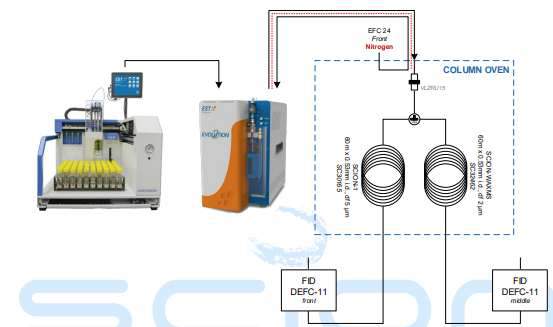
Figure 1. Flow diagram of instrument set up. Image Credit: SCION Instruments UK Ltd
Recent global shortages have seen many companies move away from the use of helium (He) as the standard carrier gas for GC applications.1 To this end, nitrogen (Ni) was used as the carrier gas in this study.
Experimental
Benzene, toluene, ethylbenzene, and xylene were purchased to run individual standards and confirm components’ elution order. Fifteen individual standards were used to determine linearity.
Two different phase columns were used for analyte confirmation.
Table 1. Analytical method parameters. Source: SCION Instruments UK Ltd
| Part |
Settings |
| Column |
SCION-1
60 m x 0.53 mm x 5 μm
SCION-WAXMS
60 m x 0.53 mm x 2 μm |
| Carrier Gas |
Nitrogen 3.5 mL/minute |
| Oven Program |
35 °C (hold 8 minutes),
5 °C/minute to 150 °C (hold 0 minutes),
30 °C/minute to 260 °C (hold 10.33 minutes) |
| Run Time |
45 minutes |
| Detectors |
Front/middle FID, 300 °C
Make-up N2: 25 mL/minute |
| Software |
CompassCDS |
| EST Evolution |
Settings |
| Sample Type |
Water |
| Transfer Line |
140 °C |
| Valve Oven |
140 °C |
| Trap ready |
35 °C |
| MoRT ready |
39 °C |
| Purge flow |
40 mL/minute |
| Purge time |
11 minutes |
| Desorb Preheat |
250 °C |
| Desorb |
250 °C |
| Bake |
110 °C |
| EST Centurion |
Settings |
| Sample type |
Water |
| Sample Loop Fill Time |
35 seconds |
| Sample Transfer Time |
50 seconds |
| Water heater temperature |
85 °C |
Sample Preparation
BTEX standards were initially prepared separately from benzene, toluene, ethylbenzene, and xylene standards to determine elution order. Next, a BTEX mixture was created and diluted in MeOH to reach a concentration of 0.15 ng/mL.
Five sets of calibration standards were prepared at 0.05, 2, and 5 ng/mL to determine BTEX linearity. Fluorobenzene was used as an internal standard (IS) and added to all samples at a concentration of 1.575 ng/mL.
In order to check for carryover and confirm method performance, blank injections of HPLC-grade water were performed between samples.
Results
Linearity results were acquired and calculated using the ratio of the peak area of the target analyte to that of the IS. This was performed using CompassCDS for both the front (SCION-1) and the middle (WAXMS) channels (Table 2).

Table 2. Linearity results. Source: SCION Instruments UK Ltd
| Compound |
Front (SCION-1) R2 |
Middle (WAXMS) R2 |
| Benzene |
0.9996 |
0.9996 |
| Toluene |
0.9997 |
0.9998 |
| Ethylbenzene |
0.9975 |
0.9973 |
| p-m-Xylene |
0.9987 |
- |
| p-Xylene |
- |
0.9992 |
| m-Xylene |
- |
0.9980 |
| Styrene |
0.9996 |
0.9995 |
| o-Xylene |
0.9993 |
0.9995 |
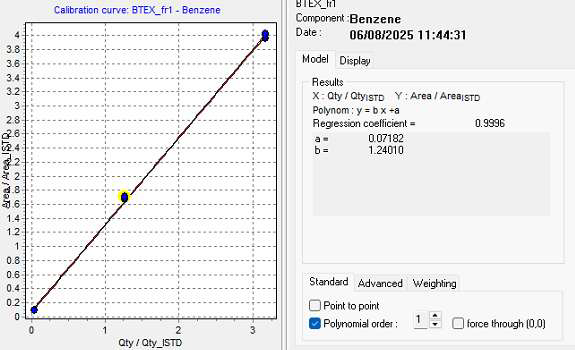
Figure 2. Benzene linearity results shown in CompassCDS. Image Credit: SCION Instruments UK Ltd
Figures 3 and 4 show chromatograms highlighting good separation on both columns. It was not possible to separate p-Xylene and m-Xylene on the SCION-1 column, however, so these analytes were calculated as a SUM. It was possible to separate the Xylenes on the WAXMS column.
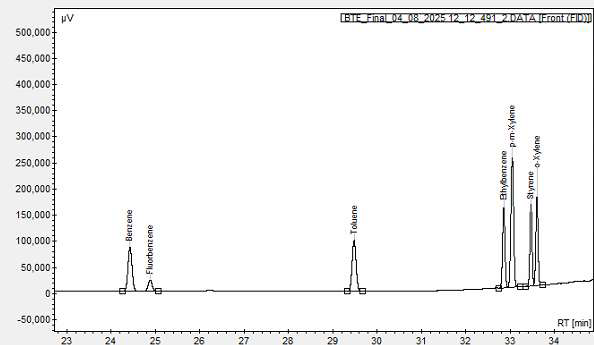
Figure 3. Example chromatogram (SCION-1) at 5 ng/mL. Image Credit: SCION Instruments UK Ltd
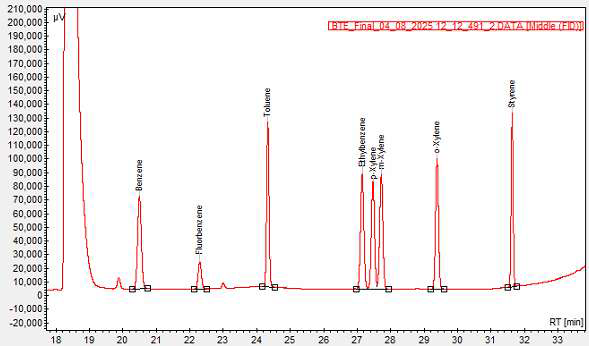
Figure 4. Example chromatogram (WAXMS) at 5 ng/mL. Image Credit: SCION Instruments UK Ltd
Conclusion
The study presented here highlights how the EST Purge and Trap Evolution and Centurion, used in conjunction with a SCION Instruments 8500 GC with two FIDs, is an ideal solution for the determination of BTEX components in water.
Two columns (SCION-1 and SCION-WAXMS) were employed in analyte confirmation, showing good separation of the BTEX compounds and good resolution.
It was possible to achieve excellent linearity, as calculated using the CompassCDS software.
References and Further Reading
- Thomas, J. (2023). Helium Shortage 4.0: What caused it and when will it end?. Innovation News Network. Available at: https://www.innovationnewsnetwork.com/helium-shortage-4-0-what-caused-it-and-when-will-it-end/29255.

This information has been sourced, reviewed and adapted from materials provided by SCION Instruments UK Ltd.
For more information on this source, please visit SCION Instruments UK Ltd.