In this interview, Kirsten Kinneberg-Mihalik discusses how Omniseal Solutions' advanced polymer sealing technologies address PFAS regulation challenges in life science equipment.
What are the main sealing and tribological challenges facing life science device manufacturers today?
Life science equipment design is converging on a set of demands that create real difficulty for sealing engineers, including smaller form factors, higher operating pressures, chemically aggressive media, material certifications, and service life expectations with minimal tolerance for maintenance or seal replacement. Individually, these requirements are not new. However, accommodating them concurrently within a single system presents significant engineering and manufacturing challenges.
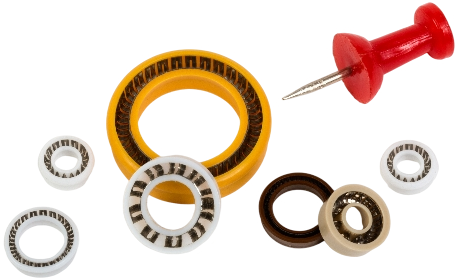
Omniseal® Spring-Energized Seals. Image Credit: Omniseal Solutions
Three application areas illustrate this dilemma well:
- In miniaturized medical devices, such as surgical robotics, drug delivery systems, and endoscopic instruments, component geometries have become increasingly small and complex, pushing the limits of conventional manufacturing processes and driving the adoption of advanced microfabrication and assembly techniques. To overcome these technical challenges, manufacturers focus on handling and assembly while integrating machine vision, and in more advanced cases, AI-assisted inspection to ensure components meet tight dimensional and quality requirements.
- In analytical systems such as UHPLC equipment, pressures routinely exceed 1000 bar (~ 14,500 psi), which pushes seal materials to the limits of both wear resistance and friction stability.
- In clinical diagnostic instruments, the bearings and motion components inside carousel and loader mechanisms typically run without lubrication, possibly in contact with biological fluids, and for service intervals measured in years rather than months.
What connects these challenges together is that solving them requires more than selecting a material from a datasheet. The interaction between material, geometry, surface finish, and operating conditions determines whether a component works reliably or fails early. Determining the right design requires close collaboration between the OEM and the engineer designing the seal.
To see how these challenges are solved in real-world environments, visit the Omniseal Solutions' Life Science page, where you will find industry case studies, material guides, and a handbook with solutions and applications: www.omniseal-solutions.com/industries/life-science.
PFAS restrictions are creating significant pressure on seal design. How is Omniseal Solutions approaching the reformulation challenge for life science applications?
Given the evolving nature of global regulations and the technical challenges associated with trace-level detection, our first objective is to eliminate intentionally added PFAS while maintaining transparency around supply chain realities. With this approach, “PFAS-free” claims are grounded in practical, verifiable criteria rather than absolute guarantees.
From a technical standpoint, our strategy is to focus on performance-based substitution rather than direct material replacement. Fluoropolymers provide a unique combination of chemical resistance, lubricity, and thermal stability that currently cannot be replicated by a single alternative material. As a result, a best practice is to develop application-specific material solutions, selecting from our portfolio of thermoplastic elastomers, specialty thermoplastics, and high-performance polymers depending on the primary functional requirement(s). This portfolio-based approach enables tailored solutions, with the specific goal of reliable device performance. Developing PFAS alternatives will require iterative development, diversified material platforms, and close collaboration with OEMs to help ensure a technically sound transition away from PFAS without compromising critical application requirements.
What makes polymer bearings well suited to clinical diagnostic instruments, and what are the limits of this approach?
In-vitro diagnostic (IVD) instruments operate in environments where cleanliness, low noise, and highly repeatable motion are essential to system performance. Polymer bearings are often utilized because they are self-lubricating, which eliminates or minimizes grease migration near test samples or equipment optics. This self-lubricating property also reduces (or even eliminates) equipment downtime typically required for preventative maintenance of ball bearings.
Polymer materials such as Meldin® polyimides and Rulon® fluoropolymers offer intrinsic lubricity, broad chemical resistance, and good dimensional stability under thermal cycling. These materials can be machined or molded into compact geometries, which supports the trend toward smaller instrument footprints without sacrificing bearing performance.
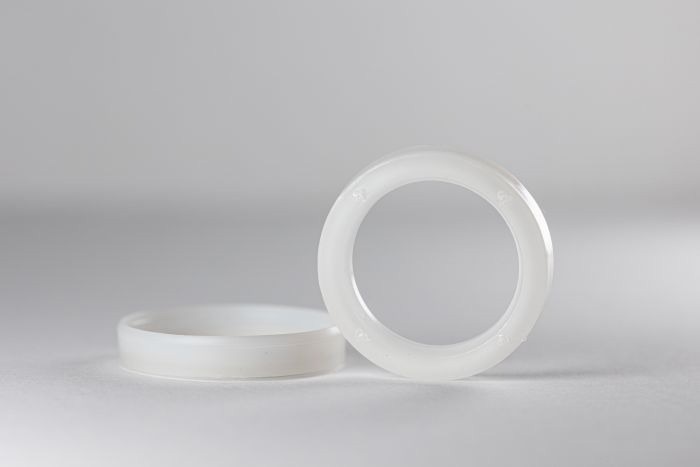
Meldin® Polyimides 601 Life Science Seals. Image Credit: Omniseal Solutions
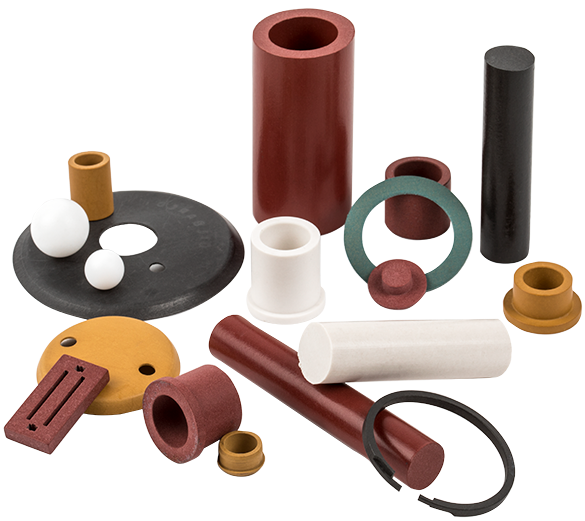
Rulon® Fluoropolymers. Image Credit: Omniseal Solutions
While polymer bearings are often preferred, there are clear boundary conditions where traditional metal or ball bearings become necessary. The decision typically comes down to load, precision, motion profile, and environmental constraints. Polymer bearings offer advantages in chemical resistance and cleanliness operations. Their use can be limited in high-load, high-speed, or precision-critical applications where stiffness, low friction, and long-term dimensional stability are required.
Looking across the life science sector, what material or engineering trends do you expect to drive the sealing and wear control agenda over the next five to ten years?
Miniaturization continues to shape the life science sector, both in reduced device size and the ability to analyze smaller sample volumes, from microliter to nanoliter scales. In wearable and minimally invasive devices, sealing solutions must operate reliably within highly compact and often dynamic systems, while meeting stringent performance and reliability requirements. As systems handle smaller volumes with higher precision, they often require higher pressures and tighter tolerances. For sealing and wear components, this creates a challenge: smaller geometries must maintain reliable performance under demanding conditions, including controlled wear and friction, minimal leakage, and long-term stability within increasingly narrow design margins.
Material compliance and evolving regulatory requirements will also shape sealing and wear control strategies over the next five to ten years. Design engineers across the spectrum of OEMs, CMs, and component manufacturers will need to balance performance with stricter expectations around extractables and leachables, PFAS restrictions, and the transition away from legacy standards such as USP Class VI toward more comprehensive frameworks like ISO 10993. Material selection will require deeper collaboration between engineering and material science teams to ensure chemical resistance, durability, and regulatory alignment without compromising performance.
About Kirsten Kinneberg-Mihalik 
Kirsten Kinneberg-Mihalik is a Global Business Development Manager at Omniseal Solutions (part of Saint-Gobain), where she supports growth initiatives across the life science sector. With a background in biomedical engineering and experience spanning market development, product management, and commercial roles, she brings a strong understanding of sealing technologies and material selection in demanding environments. Kirsten works closely with OEMs across analytical instrumentation, medical devices, and bioprocessing to address technical challenges related to sealing performance, wear and friction control, regulatory requirements, and evolving system design trends.

This information has been sourced, reviewed and adapted from materials provided by Omniseal Solutions.
For more information on this source, please visit Omniseal Solutions.
Disclaimer: The views expressed here are those of the interviewee and do not necessarily represent the views of AZoM.com Limited (T/A) AZoNetwork, the owner and operator of this website. This disclaimer forms part of the Terms and Conditions of use of this website.