Aged bacteria can still drive strong carbonate formation in microbial-induced carbonate precipitation systems when their apparent viability is measured properly and built into the treatment design, according to a study published in Materials.
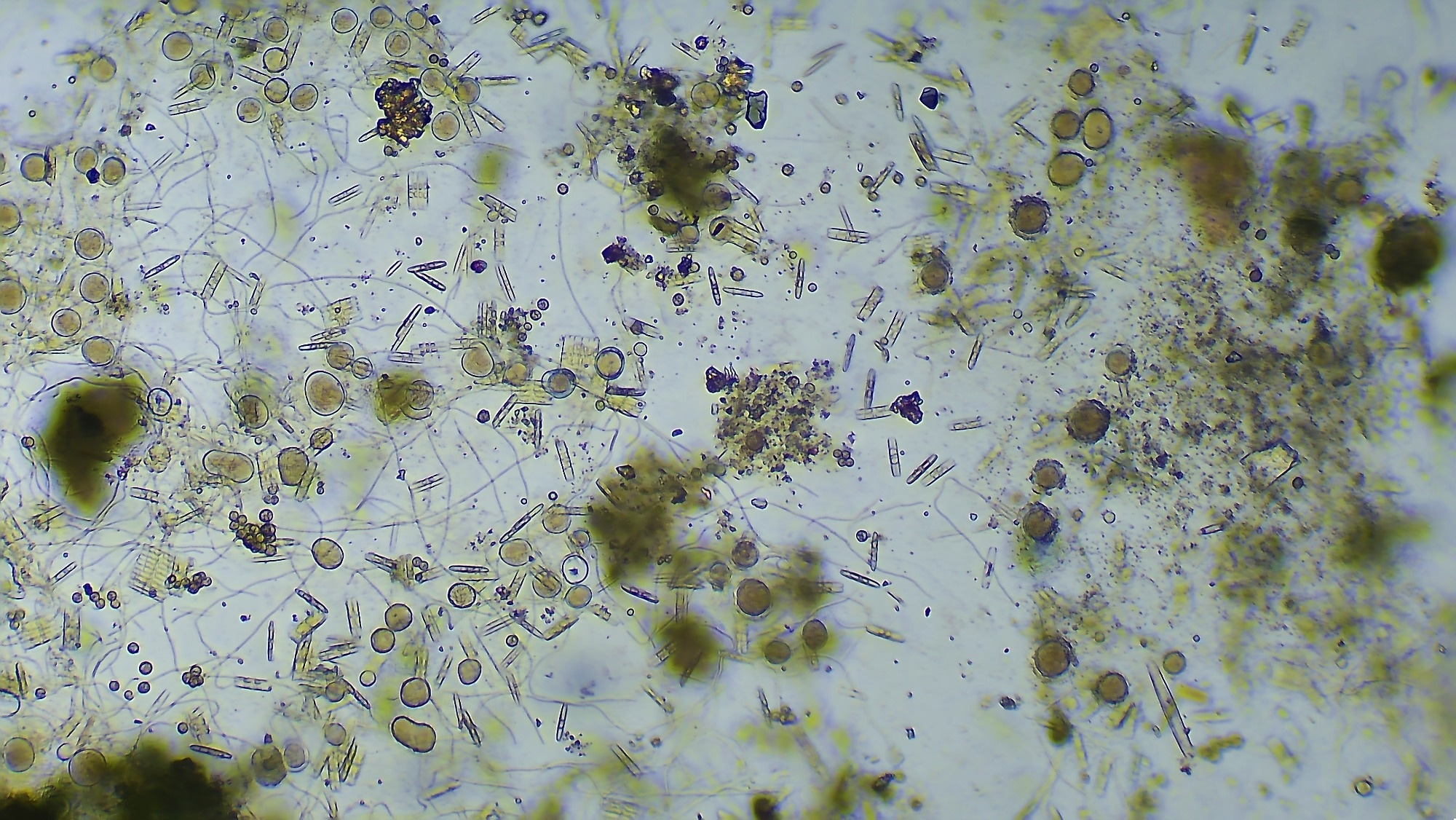 Study: Evaluation and Utilization of Aged Bacteria in MICP Technology. Image Credit: Videologia/Shutterstock.com
Microbial-induced carbonate precipitation, or MICP, is a bio-based method for improving soil and supporting more sustainable construction. It relies on urease-producing bacteria to hydrolyze urea, generating carbonate ions that react with calcium ions to form calcium carbonate. The mineral acts like a cementing phase, helping soils become stiffer and stronger.
This process has drawn interest as a lower-impact alternative to some conventional cement-based methods. But one persistent problem is that researchers often estimate bacterial concentration using optical density, or OD, even though OD alone does not reliably show how active the bacteria are or how much carbonate they can produce. So results are harder to compare, and process design is harder to control.
A second challenge is aging. Bacteria lose activity during storage and handling, reducing their ability to catalyze urea hydrolysis and support carbonate precipitation.
Saving this for later? Download a PDF here.
Targeting Activity and Concentration
The study addressed those problems by introducing apparent viability, or Rcv, and linking it to carbonate precipitation rate, or CPR.
The aim was to create a more practical way to evaluate both fresh and aged bacteria and to connect microbial condition directly to engineering performance.
The researchers used the urease-producing NO-A10 strain as the biological catalyst. In their framework, Rcv represents the fraction of active bacteria in a population. It also allows measured OD to be converted into viable OD, giving a more meaningful estimate of bacterial capacity.
A key part of the study is the distinction between viable OD and measured OD*. OD* represents the measured optical density and can include nonviable cells, while OD is used to represent viable bacterial concentration. That distinction is central to the paper’s design logic.
Experimental Design
The team used CPR as a core performance metric and established linear and nonlinear relationships between OD, OD*, and CPR to capture both optimal reaction conditions and retardation effects.
They then prepared a bio-cement solution (BCS) using a mass-balance approach in which bacterial volume depended on OD*, Rcv, and centrifugation concentration factors. This allowed the researchers to adjust bacterial dosage more precisely when working with aged cells.
The experiments included batch tests and soil infiltration tests using natural sand. Carbonate content was measured using acid-dissolution methods, and digital microscopy was used to observe microstructural changes.
Those methods worked together, linking reaction chemistry, microbial kinetics, and transport in porous media.
Effect of Aged Bacteria
The results show that aged bacteria can still support substantial carbonate formation when their activity is quantified and appropriately incorporated into the design.
Even at low Rcv values, optimized BCS blending produced effective precipitation. Samples with Rcv values below 0.03 achieved carbonate production levels comparable to systems with much higher bacterial activity.
The study also found that carbonate production often exceeded theoretical values based on calcium input alone. The authors suggest this may point to hydrated carbonate phases and more complex reaction pathways than simple stoichiometric precipitation, but they stop short of treating that explanation as settled.
Microscopy and the authors’ physicochemical interpretation also suggest that carbonate formation may occur in association with bacterial cells. The images showed dispersed aggregates made up of bacteria, amorphous calcium carbonate, and crystalline phases such as calcite.
The researchers propose that electrostatic interactions within the diffuse double layer around negatively charged bacterial surfaces help drive that process.
What Happened In Sand Columns
In the soil infiltration experiments, carbonate content decreased approximately exponentially with depth as the bio-cement solution moved through the sand.
The paper links that trend to dilution and adsorption of solution components during flow, although the profile deviated near the surface and bottom boundaries.
The study also established relationships between carbonate content, CPR, and OD. Those relationships could allow researchers to estimate bacterial distribution from measured carbonate profiles, adding a predictive element to MICP design.
Why The Paper Stands Out
Rather than treating microorganisms as passive biological agents, the study frames them as quantifiable engineering materials. More specifically, it shows that blending design depends on distinguishing viable OD from measured OD* when calibrating bacterial dosage and expected carbonate production.
This offers a practical method for using aged bacteria rather than treating them as unusable once activity declines. The framework also helps explain why process performance can vary so widely when OD is used without accounting for viability.
The paper does not claim to have fully resolved the underlying chemical mechanism behind excess carbonate formation. It also does not directly measure the strength of treated soils, so any implications for mechanical performance remain indirect.
Even so, the work gives a clearer basis for designing MICP treatments and for interpreting how bacterial condition, chemistry, and transport interact during bio-cementation.
Aged Bacteria in MICP Systems Going Forward
The study shows that aged bacteria can remain useful in MICP systems when their apparent viability is measured and incorporated into treatment design.
By linking Rcv, OD, OD*, and CPR, the researchers offer a more reliable method for predicting carbonate formation and improving the consistency of bio-cementation in soils.
Journal Reference
Fukue, M., et al. (2026). Evaluation and Utilization of Aged Bacteria in MICP Technology. Materials,19(6), 1122. DOI: 10.3390/ma19061122
Disclaimer: The views expressed here are those of the author expressed in their private capacity and do not necessarily represent the views of AZoM.com Limited T/A AZoNetwork the owner and operator of this website. This disclaimer forms part of the Terms and conditions of use of this website.