Metal demand will surge as clean energy expands, but new modeling suggests the environmental cost is dwarfed by the climate damage avoided through a faster transition to net zero.
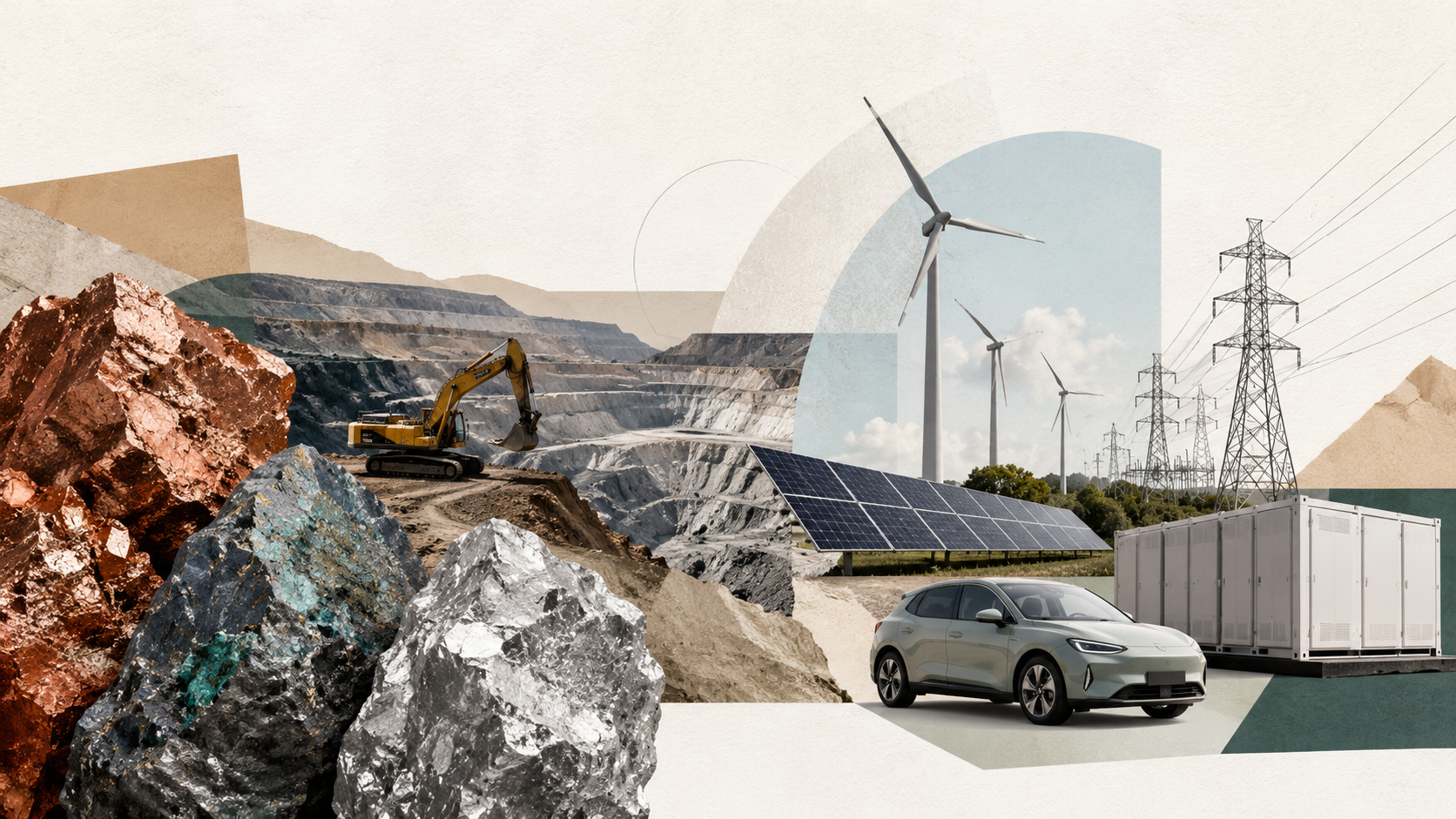
Paper: Does the metal footprint of net-zero delegitimize the energy transition? A prospective LCA and comparison with economy-wide demand and avoided climate damages. AI-generated conceptual image created using ChatGPT/OpenAI
In a recent research article posted to the SSRN preprint* server, researchers conducted a prospective life cycle assessment to determine whether the metal footprint of net-zero energy technologies materially undermines the environmental case for the energy transition by quantifying damages to human health and ecosystem quality from 37 metals.
Unpacking Metal Burden Concerns
Achieving carbon neutrality is essential for limiting climate change, but the transition to clean energy will require large quantities of metals for renewable energy technologies and infrastructure. This growing demand has raised concerns that some environmental impacts may shift from fossil fuel production to metal mining and processing.
Although mining can cause local environmental damage and social challenges, the overall scale of these impacts remains unclear. Most previous studies have focused on individual metals, specific technologies, regions, or environmental effects, making it difficult to understand the broader picture. This study addresses that gap by examining the environmental impacts of key metals needed for the energy transition from a wider, economy-level perspective.
By comparing these impacts within the broader context of global production and consumption, the research aims to provide a clearer understanding of the environmental costs associated with the materials required to support the transition toward a low-carbon future.
Prospective LCA & Damage Mapping
The study used a prospective life cycle assessment (pLCA) to examine the environmental impacts of the metals required for a global transition to net-zero energy. The analysis covered 37 metals and considered their production from mining and beneficiation through to refining. It mainly assessed impacts on human health and ecosystem quality. Energy-transition metal demand was estimated up to 2050 using the International Energy Agency’s Net Zero Emissions (NZE) and Stated Policies (STEPS) pathways, while demand from the rest of the economy for 35 metals with sufficient production data was estimated from 2023 refined-metal production and scaled using projected economic growth. The prospective modeling accounted for expected changes in electricity systems, energy efficiency, and selected metal-production processes, although several non-climate environmental impact mechanisms remained largely static over time.
The analysis focused on three main comparisons. First, it identified which metals, low-carbon technologies, and environmental impact categories contributed most to the overall damage. Second, it compared the metal demand specifically associated with the energy transition to the total metal demand across the wider economy. This helped distinguish the impacts of decarbonization from those caused by other industries and consumer activities.
Finally, the study compared the environmental burden of increased metal production with the climate benefits of reducing CO2 emissions. It contrasted the IEA’s Stated Policies Scenario (STEPS) with the more ambitious Net Zero Emissions (NZE) scenario. This provided a balanced view of whether the additional environmental costs of metal production are significant compared with the benefits of deep decarbonization.
400:1 Avoided CO2 Damage-to-Metal Burden Ratio
The study shows that the environmental impact of metals used in the energy transition is significant, with annual metal-related damage under the NZE pathway peaking around 2035 at nearly three times the 2023 level before declining. By 2050, annual ecosystem-quality and human-health impacts are projected to be about 2.5 and 2.2 times higher than in 2023, respectively. Among the 37 metals examined, copper, nickel, and aluminum contributed most to environmental damage due to their widespread use in electric vehicles, power grids, and other low-carbon technologies. Major impacts were linked to toxicity, acidification, particulate pollution, and greenhouse gas emissions from metal production. For ecosystems, freshwater ecotoxicity and terrestrial acidification contributed 36% and 31% of cumulative damage, respectively, while human-health damage was dominated by non-cancer toxicity (36%), particulate matter (31%), and climate-related effects (25%).
Across 2023–2050, metals used specifically for the energy transition are expected to account for around 26–28% of total metal-related damage to human health and ecosystems. Their share peaks around 2035 at approximately 30% of human-health damage and 33% of ecosystem-quality damage before declining. The remaining 72–74% would come from other sectors of the economy. This suggests that improving mining and metal production practices across all industries is just as important as addressing the demand created by clean-energy technologies.
More importantly, under the scenarios and impact-assessment assumptions tested, the avoided damage associated with lower direct energy-system CO2 emissions under NZE greatly outweighed the additional metal-related damage compared with STEPS. The study estimated a benefit-to-burden ratio of about 400:1, meaning the avoided damage from direct CO2 emissions is roughly 400 times greater than the additional metal-related damage associated with pursuing NZE rather than STEPS.
The authors caution that this comparison does not include avoided methane and other indirect fossil-fuel impacts, but it also excludes some transition-system burdens, including iron, concrete, and other manufacturing inputs. Iron and steel are absent from the IEA metal-demand dataset used in the analysis, while aluminum demand is represented only for electricity networks. These limitations mean the exact magnitude of the ratio remains dependent on the scenarios, datasets, and impact-assessment assumptions used.
However, these impacts are not distributed equally. The authors note that the burdens of metal production can be highly localized and may fall disproportionately on communities in the Global South, raising concerns about environmental justice. A fair energy transition therefore requires responsible mining, stronger supply-chain governance, and better protection for affected communities. The study also highlights the need for improved data on metal demand from sectors such as defense, aerospace, medical, and digital technologies.
Net-Zero Benefits Prevail
This study examines the environmental and health impacts of producing 37 metals needed to support a net-zero energy system by 2050. It finds that the shift to low-carbon technologies will increase demand for metals, particularly copper, nickel, and aluminum, which are widely used in power networks and electric vehicles. However, metals specifically required for the energy transition are expected to account for only about one-quarter of total metal-related environmental damage over the 2023–2050 study period, despite their contribution peaking at around one-third near 2035.
More importantly, the additional environmental cost of producing more metals under the NZE pathway than under STEPS is very small compared with the modeled damage avoided through reductions in direct energy-system CO2 emissions. The study estimates a benefit-to-burden ratio of around 400:1, showing that, under the modeled assumptions, the aggregate environmental benefits of deeper decarbonization greatly outweigh the additional metal-related burden.
At the same time, the impacts of metal production are often concentrated in particular regions and communities, raising concerns about fairness and environmental justice. The findings therefore highlight the need for responsible supply chains, cleaner production, efficient resource use, and better management of metals across the entire economy.
*The manuscript has not yet undergone peer review.
Source:
- de Bortoli, A., Pellan, M., et al. (2026). Does the metal footprint of net-zero delegitimize the energy transition? A prospective LCA and comparison with economy-wide demand and avoided climate damages. SSRN. DOI: 10.2139/ssrn.7269653, https://papers.ssrn.com/sol3/papers.cfm?abstract_id=7269653