Nickel is the 22nd most abundant element in the Earth’s crust and the seventh among the transition metals. How does nickel’s unique combination of strength, corrosion resistance, and heat stability drive critical innovation across industries?
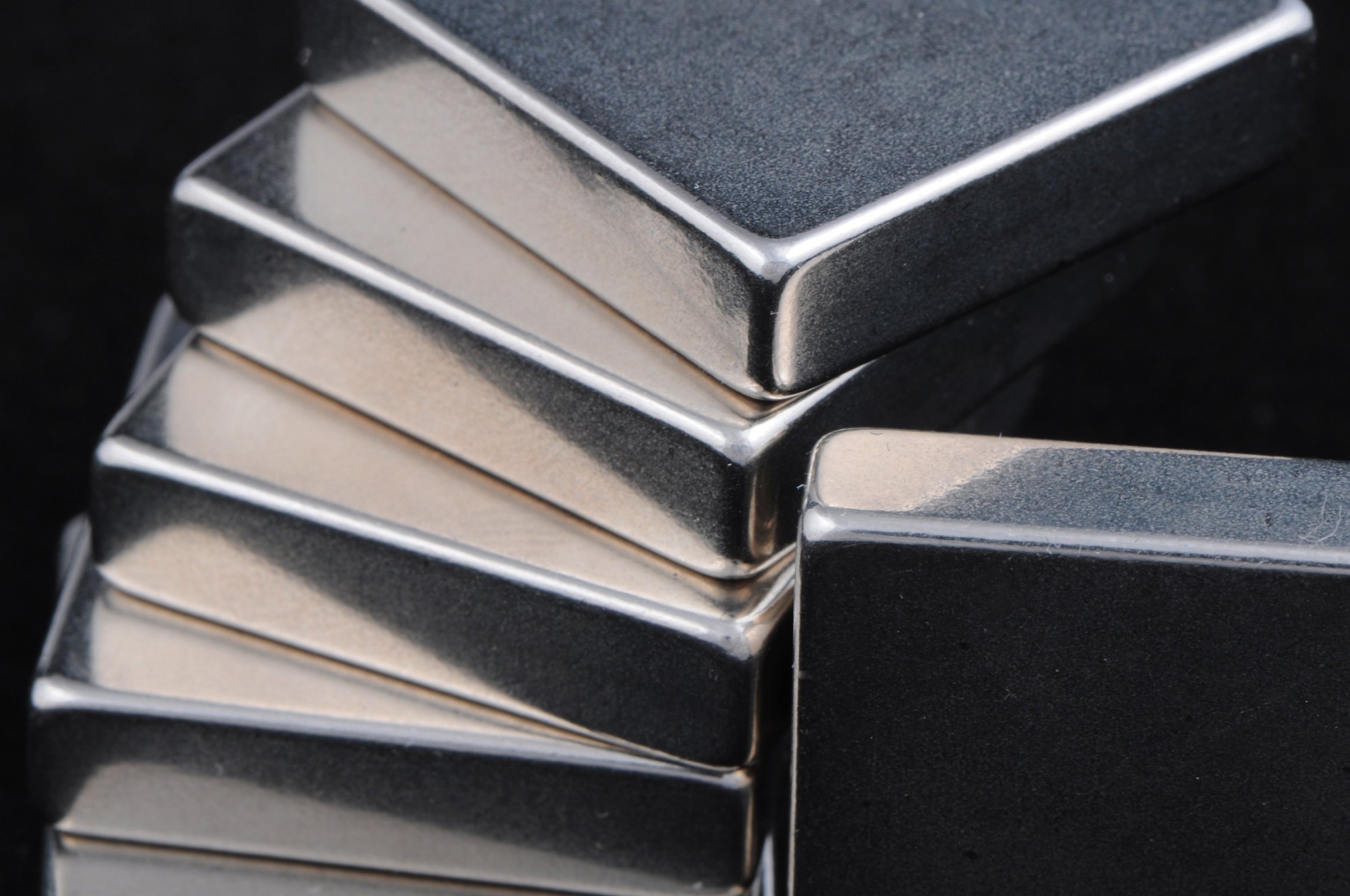 Image Credit: Dan Hanscom/Shutterstock.com
Mined chiefly from two ore families, sulfides and laterites, nickel is a shiny, silver-white, face-centred cubic transition metal that is hard, ductile, and easily alloyed.1
Several features make it industrially important: resistance to oxidation and alkaline environments, retention of strength at high temperatures, good formability, and the ability to impart both corrosion resistance and toughness to steels and superalloys.1
Nickel Metal: Key Properties
|
Property
|
Value
|
|
Crystal structure
|
FCC
|
|
Density
|
8902 kg m-3
|
|
Melting/Boiling point
|
1453 °C/2732 °C
|
|
Electrical conductivity
|
~22 % IACS (vs annealed Cu = 100 %)
|
|
Hardness
|
~3.8 Mohs
|
Table 1: Nickel metal properties.1
These baseline characteristics underpin nickel’s dual role as a corrosion-resistant base metal and as an austenite stabilizer in steels and superalloys.
Mechanical Characteristics
Nickel metal in wrought, high-purity form (for example, Nickel 200/201) exhibits moderate strength and high ductility.
Its hallmark in alloys is toughness preservation over a wide temperature range, including cryogenic service and creep resistance in γ′-strengthened superalloys (Ni-based).2
Adding Ni to steels raises toughness and hardenability. In Ni-based superalloys (for example, Inconel/Alloy 718, 625), the metal's precipitation hardening and solid solution strengthening deliver high tensile strength and creep-rupture life for hardware.
Nickel superalloys can substantially improve turbine efficiency, for instance, by improving high-temperature performance.2
Thermal and electrical properties
Nickel’s thermal conductivity is moderate (well below Cu/Al but higher than many stainless steels), and its relatively low electrical conductivity (≈22 % IACS) is nevertheless stable and useful in controlled-resistivity alloys and electrical contacts.
Its face-centered cubic lattice and diffusion kinetics underpin excellent high-temperature stability when Ni is the matrix (superalloys), enabling service at well beyond 600 °C.2
Corrosion resistance and chemical behaviour
Nickel forms a dense, self-healing oxide in many environments. As an alloying element, it stabilizes the austenitic phase and significantly enhances resistance to general, pitting, and crevice corrosion, particularly in chloride-bearing media.
When combined with chromium and molybdenum, Ni alloys extend this resistance even to reducing acids.3
Cu-Ni alloys show superior seawater resistance. Ni-Ti “memory” alloys exploit corrosion resistance alongside shape-memory functionality. Nickel’s catalytic surface chemistry is widely used across industry (hydrogenation, reforming, etc.).3
Processing routes and alloying practice
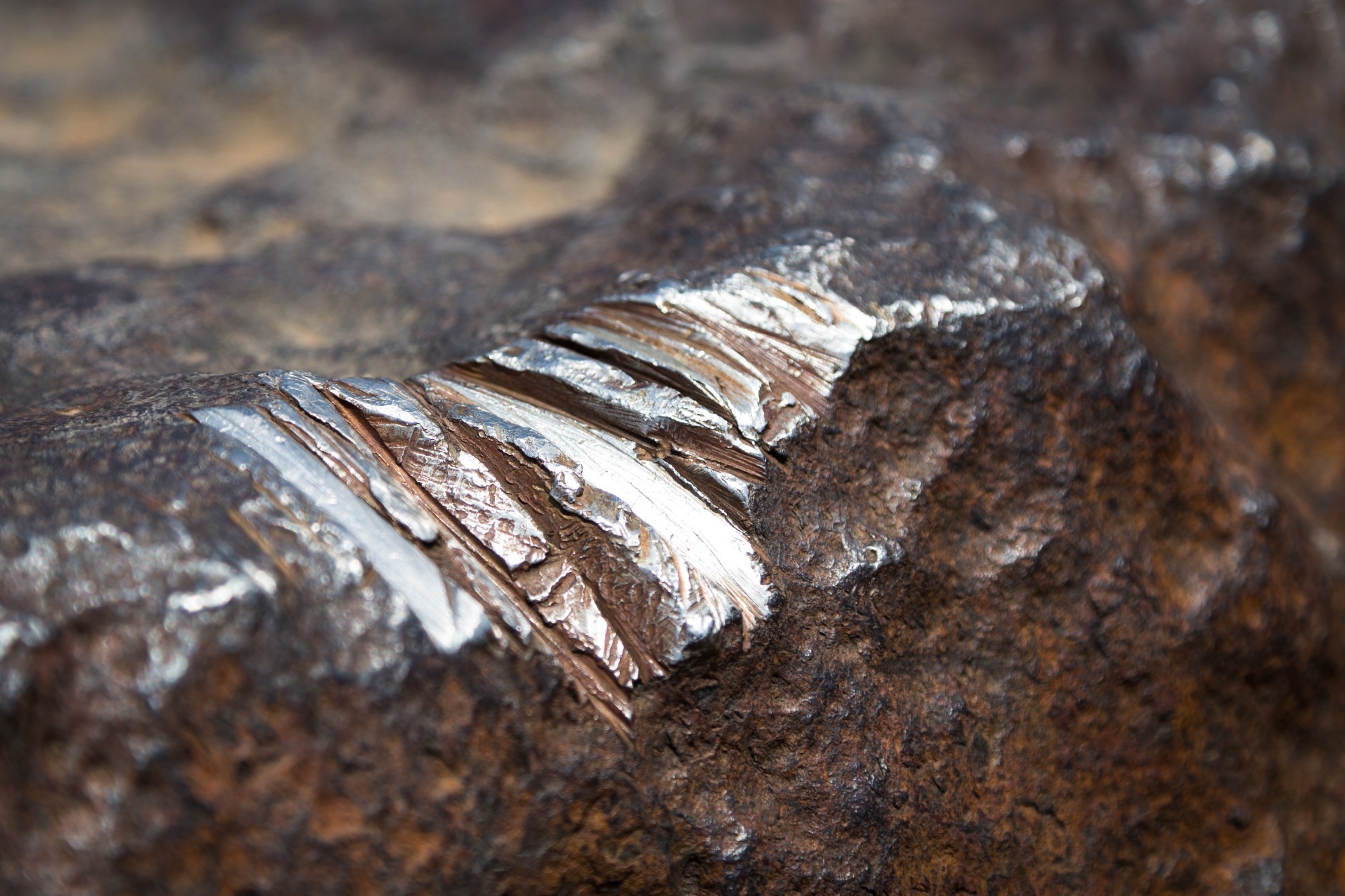 Image Credit: TheLearningPhotographer/Shutterstock.com
Processing routes and alloying practice begin with the ore type and the resulting intermediates that feed alloy production.
Economically important orebodies are sulphides that are pentlandite bearing and laterites that include garnierite and limonite, with typical grades of about 0.2 to 3 % nickel for many sulphides and about 0.9 to 3 % for laterites.4-5
Sulphide feeds are crushed and ground, then concentrated by flotation into copper and then nickel streams, smelted in units such as flash furnaces to a nickel cobalt matte at roughly 70 % nickel, and refined by pyrometallurgical or hydrometallurgical routes, including ammonia leach and electrowinning.
Newer flowsheets combine ultra-fine grinding, pressure oxidation, solvent extraction, and electrowinning to shorten or bypass conventional smelting.4-5
Laterites are distinguished by their mineralogy. Saprolites are treated by electric furnace smelting to produce ferronickel, typically between 20-38 %, or to matte. Limonites have a more complex procedure, processed by the Caron reduction and ammonia leach route or by pressure acid leach in autoclaves using sulfuric acid, followed by solution purification, metal or sulphide precipitation, and electrowinning.4
Other approaches include heap leaching and vapometallurgical (carbonyl) processing.
End products, ferronickel, refined nickel, and nickel salts, feed into alloying for stainless steels, Cu-Ni systems, nickel chromium and nickel chromium molybdenum corrosion-resistant alloys, and precipitation-strengthened nickel-base superalloys.4
Commercial Nickel Forms
- Nickel matte (intermediate, ~70 % Ni)
- Nickel oxide sinter (74-90 % Ni)
- Refined nickel (≥99 % Ni by HS definition)
- Ferronickel (∼20-38 % Ni; laterite-derived)
- Nickel pig iron (NPI) (3-5 % Ni; low-grade alternative used mainly in 200-series stainless)
- Nickel chemicals (sulphate, hydroxide, oxide, etc.) for plating, batteries, and catalysts.
Get all the details: Grab your PDF here!
Classifications and Classes of Nickel
Commercially Pure Nickel (CP Ni): Nickel 200 (low impurity) and Nickel 201 (low-C for elevated-T to mitigate graphitisation). Used for caustics, HF catalysts, and electronics where high conductivity and corrosion resistance are required.6
Stainless steels (Fe-Cr-Ni): Ni (typically 8–12 wt%) stabilises austenite and improves formability and corrosion resistance - most first-use Ni ends up here (cutlery, process equipment, buildings, transport).6
Cu-Ni (Cupronickel) and Cu-Ni-Zn: Cu-Ni 90-10 and 70-30 for seawater systems, condensers, desalination, and coinage; electrode potentials can be tuned for marine stability.
Ni-based corrosion-resistant alloys: Ni-Cr and Ni-Cr-Mo families (e.g., Alloys 600/625/C-276 class) for strong resistance in chloride/acidic environments (chemical processing, flue-gas desulphurisation linings).6
Ni-based superalloys: Precipitation-strengthened (γ/γ′ microstructures) for turbine disks/blades, combustors, and hot-section hardware; enable higher turbine inlet temperatures and notable efficiency gains.1
Functional alloys: Ni-Ti (shape-memory/SE), controlled-expansion Fe-Ni (Invar-type) for cryogenic tanks and precision instruments; various Ni soft-magnetic and electroplating materials.1
Standards and Identifiers (UNS, ASTM, ISO, SAE)
UNS (Unified Numbering System)
- Commercially pure nickel: Nickel 200 - UNS N02200; Nickel 201 - UNS N02201.
- Electrical grade CP nickel: Nickel 205 - UNS N02205.
- Cu-Ni: 90-10 - UNS C70600; 70-30 - UNS C71500.
- Monel-type Cu-Ni: UNS N04400.
- Ni-Cr-Fe corrosion alloys: Alloy 600 - UNS N06600; Alloy 625 - UNS N06625.
- Ni-Fe-Cr superalloy: Alloy 718 - UNS N07718.
Typical ASTM product
- CP nickel: ASTM B160 (rod/bar/wire), B162 (plate/sheet/strip), B163 (seamless tube), B725/B729 (welded/seamless pipe), B366 (wrought fittings).
- Nickel alloys: ASTM B446 (Alloy 625 rod/bar), B443 (Alloy 625 plate/sheet/strip), B637 (precipitation-hardening Ni alloys incl. 718), B165 (Monel 400 pipe), B127 (Monel 400 plate/sheet/strip), B423/B167 (Alloy 625/600 tubing).
- Cu-Ni: ASTM B466/B467 (seamless/welded Cu-Ni pipe), B111 (tube).
Selected ISO references
- Piping and pressure service: ISO 15156 (materials for H2S-containing environments - parts cover Ni-based alloys), ISO 6207/6208 family (Cu-Ni tubes/condensers; regional adoption varies).
- Fasteners/alloy grades: ISO grade listings often cross-reference UNS; many product standards defer to ASTM/ASME for Ni alloys.1
SAE / AMS
AMS 5662/5663 (Alloy 718 bar/forgings), AMS 5599 (Alloy 718 sheet/plate), AMS 5666 (Alloy 625 bar), AMS 5596 (Alloy 625 sheet/plate).
Aerospace practice relies heavily on AMS plus OEM specs; procurement typically cites UNS + AMS/ASTM with heat-treat condition.
Application of Nickel
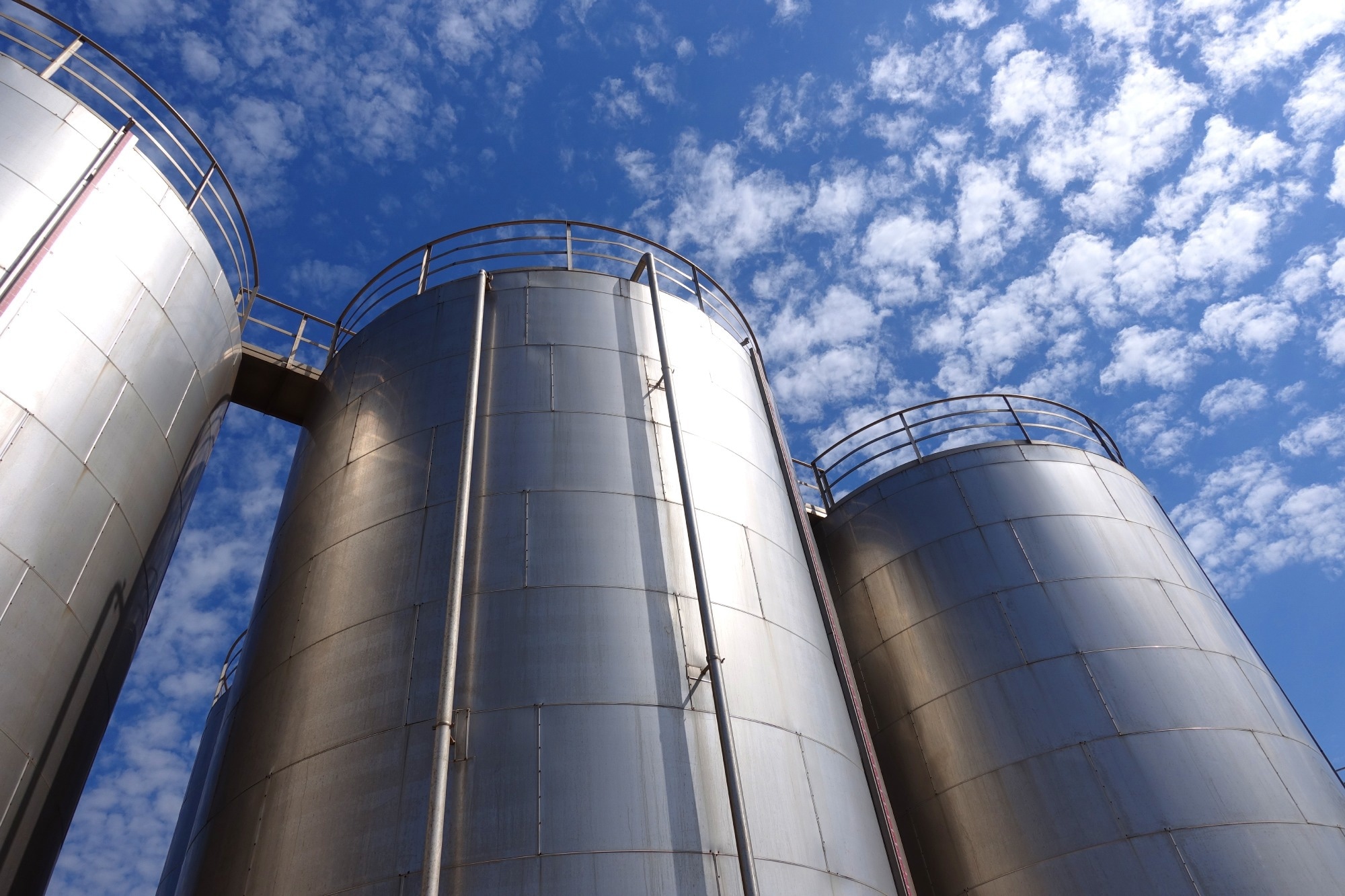 Image Credit: Aerial-motion/Shutterstock.com
Chemical processing
Plants handling aggressive chloride-bearing or mixed acid media rely on nickel-chromium-molybdenum alloys, such as Alloy 625 and C276.
Nickel provides resistance to pitting, crevice corrosion, and chloride-induced stress corrosion cracking, along with good weldability and useful allowable stress at elevated temperatures.7
Typical identifiers include UNS N06625 and UNS N10276 with product specifications like ASTM B444, ASTM B446, and ASTM B622, and ISO 15156, where sour service applies.
One example is flue gas desulphurization, where nickel-based alloy cladding is widely used to line absorber vessels and ducts because it withstands hot, acidic condensates that contain chlorides.8
Power generation and aerospace
Gas turbines and aero engines rely on nickel-base superalloys, such as Alloy 718, for disks, and compositions like 625, 617, 720, and single-crystal gamma prime-strengthened alloys for blades and vanes.8
Nickel supports precipitation hardening and oxidation resistance, which together deliver creep strength and permit higher turbine inlet temperatures, thereby increasing thermodynamic efficiency.
Field experiences attribute substantial improvements in energy output and fuel efficiency to the adoption of these advanced nickel systems in hot sections.8
Food hygiene and medical hardware
Austenitic stainless steels, such as 304 and 316, contain approximately eight to 12 % nickel to stabilize the austenite phase. The nickel content improves deep draw formability, enhances general and localised corrosion resistance, and facilitates the production of clean, smooth surfaces.
As a result, these grades are preferred for cutlery, sinks, fermenters, sanitary process lines, and a wide range of surgical and clinical equipment, illustrating the central role of nickel in maintaining high hygiene standards.9
Energy storage and plating
Commercially pure nickel, such as Nickel 200 and Nickel 201, as well as electroplated nickel, nickel salts, and nickel metal hydride chemistries, are widely used across various electronic and electrochemical applications.10
Nickel offers controlled resistivity and magnetic behavior, forming stable and adherent base layers for subsequent plating on components such as hard disk substrates, and supports electroforming processes that produce precise molds and tooling.
In batteries, nickel participates directly in electrode reactions and provides a robust current collector in alkaline systems.10
Practical selection guidance
- Strong alkalis/caustics (NaOH, KOH): Nickel 200/201 (watch carbon content at ≥300 °C)
- Seawater systems: Cu-Ni 90-10/70-30; consider 70-30 in higher velocity/temperature service
- Hot acids / mixed chloride-acid service: Ni-Cr-Mo (e.g., 625, C-276 class)
- >600 °C structural: Ni-based superalloys; specify UNS + AMS/ASTM and heat-treat condition
- General fabrication and hygiene: Austenitic stainless (304/316); nickel content ensures austenite stability and formability.
A Note on Sustainability
Nickel is highly recyclable. Stainless and Ni-alloy scrap are routinely remelted into equivalent grades (closed-loop where possible).
However, process choices matter: for example, NPI enables substitution in low-Ni stainless steel, but with a higher environmental intensity than refined Ni.
Using heap/biological leaching can unlock low-grade resources while lowering some capital barriers, making nickel production more sustainable.
References and Further Readings
- Bide, T.; Hetherington, L.; Gunn, G., Nickel. 2008.
- Everhart, J., Engineering Properties of Nickel and Nickel Alloys; Springer Science & Business Media, 2012.
- Sequeira, C. A.; Cardoso, D. S.; Amaral, L.; Šljukic, B.; Santos, D. M., On the Performance of Commercially Available Corrosion-Resistant Nickel Alloys: A Review. Corrosion Reviews 2016, 34, 187-200.
- Sampath, S.; Ravi, V. P.; Sundararajan, S., An Overview on Synthesis, Processing and Applications of Nickel Aluminides: From Fundamentals to Current Prospects. Crystals 2023, 13, 435.
- Wu, Y.; Wu, X.; Yang, Z.; Wang, J.; Jiang, F., Processing Explosively-Welded Age-Hardenable Cu-Ni-Si-Cr Alloy Composite. Journal of Materials Research and Technology 2025.
- Schaumlöffel, D., Nickel Species: Analysis and Toxic Effects. Journal of trace elements in medicine and biology 2012, 26, 1-6.
- Application of Nickel Alloys in the Chemical Industry. https://www.ronscosteel.com/newsdetail/application-of-nickel-alloys-in-the-chemical-industry.html.
- Inconel 625 / Nickel Alloy 625 / Uns N06625 Pipe and Tube. https://www.octalsteel.com/resources/inconel-625-nickel-alloy-625-uns-n06625-pipe/.
- Anchidin-Norocel, L.; Savage, W. K.; Gutt, G.; Amariei, S., Development, Optimization, Characterization, and Application of Electrochemical Biosensors for Detecting Nickel Ions in Food. Biosensors 2021, 11, 519.
- Ong, T. C.; Sarvghad, M.; Lippiatt, K.; Bell, S.; Will, G.; Steinberg, T. A., Investigation of the Corrosion of Electro-Less Nickel-Plated Alloys in Molten Salt and Its Effect on Phase Change Properties for Energy Storage Applications. Solar energy 2022, 236, 512-521
Disclaimer: The views expressed here are those of the author expressed in their private capacity and do not necessarily represent the views of AZoM.com Limited T/A AZoNetwork the owner and operator of this website. This disclaimer forms part of the Terms and conditions of use of this website.