Fed on straw, sawdust, cardboard, and leftover coffee grounds, root-like mycelium networks knit scraps into lightweight foams, boards, and fabrics that are beginning to challenge traditional materials.1
 Ritvars/Shutterstock.com
What is Mycelium?
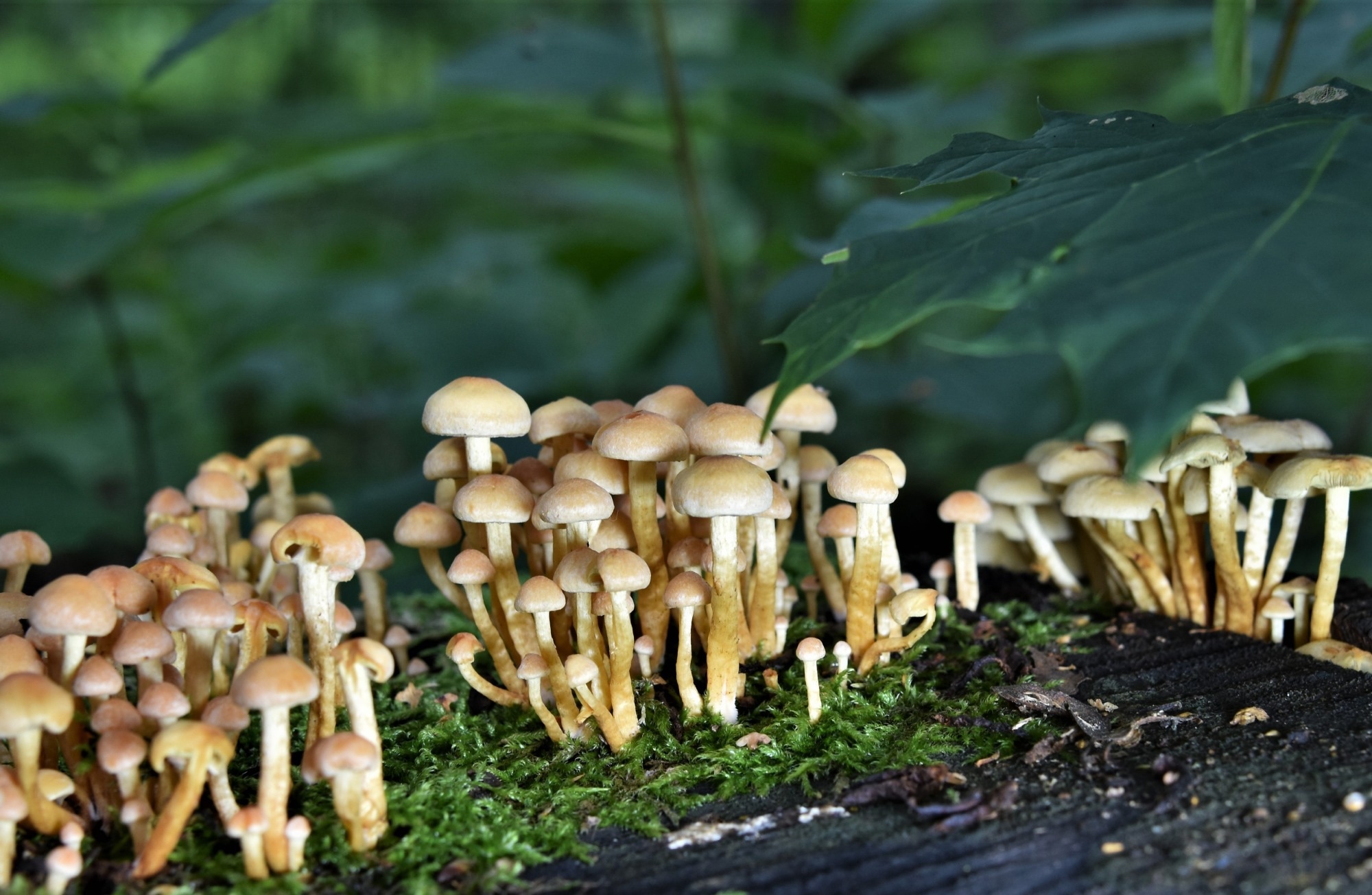
Mycelium is the vegetative body of filamentous fungi. It consists of a dense three-dimensional network of microscopic tubes called hyphae that branch, fuse, and weave through organic substrates. As these hyphae grow, they secrete enzymes like cellulases and ligninases that break down complex biopolymers, including cellulose and lignin, into smaller, simpler nutrients.2
This combined chemical digestion and physical colonization equips mycelium with two key functions. Biologically, it allows the fungus to feed and eventually form mushrooms; materially, it acts as a natural, self-assembling glue.2
As the hyphae ramify, they wrap around and bond particles of waste together, turning loose fibers into a cohesive bio-composite. Under the microscope, these composites reveal a fibrous matrix in which lignocellulosic particles are embedded within a continuous fungal network.2
Get all the details: Grab your PDF here!
Turning Agricultural Waste into Feedstock
Mycelium-based materials typically form from organic substrates that are abundant, inexpensive, and often considered problematic as waste. Studies have demonstrated growth on sawdust, cardboard and paper waste, coconut coir (cocopith), and hay, as well as on agro-industrial residues such as coffee grounds, coffee chaff, hemp dust, and cereal by-products.1
In one packaging-oriented study, researchers reported on substrates including cardboard, paper, sawdust, cocopith, and hay, which were chopped, soaked, and sterilized before inoculation with spores of Pleurotus ostreatus (oyster mushroom) or Ganoderma lucidum.
The mixture was then packed into moulds and incubated for about two weeks at 25 to 30 °C, during which the mycelium colonised the substrate and formed a dense white skin on the surface. Finally, the composites were dried at 50 °C to stop growth and stabilize the material.3
A parallel line of work by DG Barta et al., aimed at acoustic panels, used a blend of spent coffee grounds, coffee chaff, hay straw, hemp dust, and cereal mix (approximately 90 % of the composite by mass) with 10 % spores of Ganoderma lucidum. This mixture was pressed into 100 × 100 mm moulds, incubated at around 24 °C in several growth stages to ensure uniform colonisation, and finally dried at 60 to 70 °C.4
In both cases, processes are low-temperature and low-pressure, in stark contrast to the high-energy, petrochemical routes that produce expanded polystyrene (EPS), expanded polyethylene (EPE) foams, and synthetic resins.
From Living Material to Lightweight Foam
 Narong Khueankaew/Shutterstock.com
Once dried, these mycelium composites can behave like lightweight foams or fibreboards, whose properties can be tuned by selecting the appropriate fungal species and substrate.
In packaging-oriented work, cardboard-based composites grown with Ganoderma lucidum reached compressive strengths around 2.49 MPa, an order of magnitude higher than EPS (≈0.28 MPa) and EPE (≈0.07 MPa).5
Water-related properties are an important factor in designing mycelium materials for packaging and construction. Water absorption tests show that substrate choice and hyphal density govern how rapidly composites take up moisture.
Meanwhile, water-contact-angle measurements reveal that many formulations are hydrophobic, with contact angles exceeding 90 ° and, in some cases, surpassing those of EPS. This hydrophobicity is attributed to hydrophobin proteins that coat aerial mycelium.6
Most importantly, these materials are genuinely biodegradable. When buried in soil, mycelium composites can lose up to 80 % of their mass within six weeks, in sharp contrast to petroleum foams that persist for centuries and readily fragment into microplastics.3, 6
Replacing Plastic Foams and Packaging
Given this array of properties, including low density, thermal insulation, and controlled water uptake, mycelium biocomposites are natural candidates to replace plastic foams in secondary packaging.3
Experimental work directly compares them with EPS and EPE for compressive performance. One study shows that, with appropriate combinations of substrate and fungus, mycelium can equal or exceed the stiffness of foam while providing similar shock-absorbing behavior.3
Industrial actors are already exploring this transition: mycelium packaging is used to protect electronics and food products. It has been adopted by major computer manufacturers for shipping laptops, demonstrating that the technology can meet real-world logistics demands.
Because the material is grown in molds, it can be tailored to cradle specific products, much like custom EPS inserts. But instead of going straight to a landfill once discarded, it can be composted.3
Can Mycelium Replace Plastic Packaging?
The same growth principle can be extended well beyond boxes and corner blocks. The acoustic study using coffee-based substrates fabricated panels 25–30 mm thick and measured their sound absorption between 50 and 3150 Hz using an impedance tube.4
Composites grown with Ganoderma lucidum displayed particularly strong absorption at low frequencies (<700 Hz), a notoriously difficult range for thin materials. Such panels could line interiors of offices, restaurants, studios, or vehicles, offering both noise control and a visibly bio-based aesthetic.4
Another study by Elsacker et al. highlights opportunities in thermal insulation, architectural elements, and sandwich-panel cores, where mycelium serves as a structural yet compostable core in combination with stronger facings. This aligns with a broader movement towards mycelium bricks, blocks, and boards for low-load-bearing walls and interior finishes.7
In fashion, mycelium grown as dense, sheet-like mats is being developed as an alternative to animal leather and synthetic PU leathers. These “mushroom leathers” can be engineered to have tailored thickness, grain, and flexibility, offering designers a route to vegan, biodegradable accessories without petrochemical coatings.8
Why Mushrooms are Starting to Replace Everything
Video Credit: Undecided with Matt Ferrell/YouTube.com
Environmental Benefits and Challenges
The environmental benefits of mycelium materials rest on three main pillars, but challenges remain. Mycelium composites turn residues such as sawdust, rice straw, coconut coir, hay, paper scraps, and coffee waste into useful products, reducing open burning, air pollution, and pressure on landfills while creating value from agricultural byproducts.9
The fungal biomass is renewable and grows at moderate temperatures and normal pressure, allowing for production with lower energy demand and a smaller carbon footprint compared to many conventional plastics and foams. At the end of their life, mycelium products are compostable and can safely return carbon and nutrients to the soil, rather than contributing to persistent plastic waste.9
However, scaling these materials requires consistent control of substrate quality and growth conditions to achieve reliable mechanical performance, along with improved water resistance for demanding construction applications.9
Meeting fire safety, hygiene and structural standards, and building cost effective supply chains for waste collection and processing, remain major hurdles, even as regulations on single use plastics and interest in low carbon materials create favourable conditions for wider adoption.9
Saving this article for later? Grab a PDF here.
From Waste to Future Materials
Seen this way, mycelium is not a niche curiosity but a versatile manufacturing platform that can grow protective foams, acoustic panels, insulation, and even leather-like sheets from simple feedstocks such as chopped straw, cardboard, and coffee residues.
Emerging research, from studies of hyphal structure to comparisons with conventional foams like EPS and EPE, shows that these bio-based materials can meet practical performance demands while closing waste cycles.5
As substrates, fungal strains and processing methods continue to improve, mycelium is moving beyond experimental packaging into mainstream product design and architecture, pointing towards a future where new materials are grown from agricultural waste rather than from fossil hydrocarbons.
References and Further Studies
- Team, S. D. E. Utilizing Mycelium to Replace Plastics for Sustainable Packaging. https://www.digicomply.com/blog/utilizing-mycelium-to-replace-plastics-for-sustainable-packaging.
- Vandelook, S.; Elsacker, E.; Van Wylick, A.; De Laet, L.; Peeters, E., Current State and Future Prospects of Pure Mycelium Materials. Fungal biology and biotechnology 2021, 8, 20.
- Biby, S. R.; Surendran, V.; Kundanati, L., Mycelium Biocomposites from Agricultural and Paper Waste: Sustainable Alternative to Plastic Foam Based Secondary Packaging. Bioresource Technology Reports 2025, 102177.
- Barta, D. G.; Simion, I.; Tiuc, A. E.; Vasile, O., Mycelium-Based Composites as a Sustainable Solution for Waste Management and Circular Economy. Materials (Basel, Switzerland) 2024, 17.
- Sivaprasad, S.; Byju, S. K.; Prajith, C.; Shaju, J.; Rejeesh, C., Development of a Novel Mycelium Bio-Composite Material to Substitute for Polystyrene in Packaging Applications. Materials Today: Proceedings 2021, 47, 5038-5044.
- Lee, T.; Choi, J., Mycelium-Composite Panels for Atmospheric Particulate Matter Adsorption. Results in Materials 2021, 11, 100208.
- Elsacker, E.; Vandelook, S.; Van Wylick, A.; Ruytinx, J.; De Laet, L.; Peeters, E., A Comprehensive Framework for the Production of Mycelium-Based Lignocellulosic Composites. Science of The Total Environment 2020, 725, 138431.
- Kniep, J.; Graupner, N.; Reimer, J. J.; Müssig, J., Mycelium-Based Biomimetic Composite Structures as a Sustainable Leather Alternative. Materials Today Communications 2024, 39, 109100.
- Ghazvinian, A.; Gürsoy, B., Challenges and Advantages of Building with Mycelium-Based Composites: A Review of Growth Factors That Affect the Material Properties. Fungal biopolymers and biocomposites: prospects and avenues 2022, 131-145.
Disclaimer: The views expressed here are those of the author expressed in their private capacity and do not necessarily represent the views of AZoM.com Limited T/A AZoNetwork the owner and operator of this website. This disclaimer forms part of the Terms and conditions of use of this website.