The BeSEC is a dual-angle light-scattering detector designed to determine the absolute molecular weight of proteins, synthetic polymers, and natural polymers, and to measure molecular size as the radius of gyration (Rg).
How to Operate BeSEC for Molecular Weight Measurements
How to Operate BeSEC for Molecular Weight Measurements. Video Credit: Bettersize Instruments Ltd.
Fundamentals of BeSEC Series | Absolute Molecular Weight Analyzer
Fundamentals of BeSEC Series | Absolute Molecular Weight Analyzer. Video Credit: Bettersize Instruments Ltd.
Overview
Features
BeSEC - Advanced Light Scattering Detector for SEC/GPC Systems
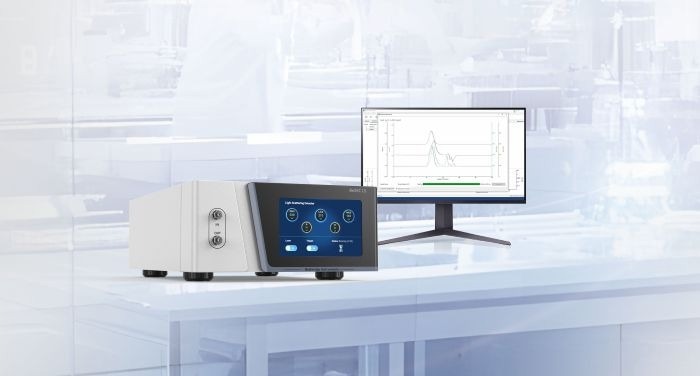
Image Credit: Bettersize Instruments Ltd.
Enter the next era of chromatography with the BeSEC Series. Engineered as a next-generation light scattering detector, the BeSEC converts conventional SEC/GPC workflows into robust systems for absolute molecular weight determination.
In contrast to traditional approaches based on retention time, the BeSEC provides first-principles data, delivering exceptional accuracy for researchers in biopharmaceuticals, advanced polymer science, and food chemistry - helping to speed the journey from discovery to market.
Features
- Detection angles: 7 ° and 90 °
- Homopolymer and protein modes
- Molecular weight range: 1 kDa to 2 GDa
- Supports radius of gyration Rg > 12 nm
- 18 μL flow cell minimizes band broadening
- Acquires RI, UV, and start signals
- Intuitive software with real-time analysis
Benefits
- Proteins: Determination of molecular weight, oligomeric state, and aggregates
- Polymers and polysaccharides: Analysis of molecular weight distribution and size
- Column calibration not required, as Mw is independent of elution volume
- Low-angle detection allows accurate molecular weight measurement
- Compatible with all GPC or SEC systems
Why Dual-Angle Detection Matters?
By capturing light-scattering data at both 7° (low angle) and 90° (right angle), the system eliminates inaccuracies associated with traditional column calibration and enables the determination of absolute molecular weight and molecular size with exceptional sensitivity, even for complex or branched polymers.
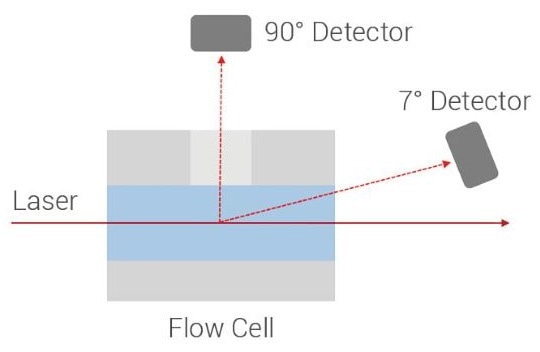
Image Credit: Bettersize Instruments Ltd.
- Direct measurement using low-angle light scattering (LALS) at 7 °
- Direct measurement using right-angle light scattering (RALS) at 90 °
- LALS provides high accuracy for larger macromolecules
- RALS offers high sensitivity for smaller macromolecules
Measurement Parameters
Mn - Number-average molecular weight
Mw - Weight-average molecular weight
Mz - Z-average molecular weight
Mp - Peak molecular weight
Rg - Radius of gyration
Pd - Polydispersity index
dn/dc - Refractive index increment
Conc. - Concentration
Model Selection
Source: Bettersize Instruments Ltd.
| |
BeSEC LS1 |
BeSEC LS2 |
| Detection Angle 90 ° |
√ |
√ |
| Detection Angle 7 ° |
× |
√ |
| Mw Range |
1 kDa to 20 MDa |
1 kDa to 2 GDa |
| Radius of Gyration (Rg) |
× |
√ |
Workflow
Universal Integration
Coupling with any SEC/GPC Platforms Seamlessly
The BeSEC Series is engineered for universal compatibility, enabling seamless integration downstream of any third-party SEC/GPC system.
Chromatography workflows typically comprise two stages: the separation stage, which includes the solvent delivery pump, inline degasser, autosampler or manual injector, and SEC columns; and the detection stage, which employs a combination of detectors - most commonly Refractive Index (RI), UV-Visible, and Light Scattering - to characterize molecular properties in real time.
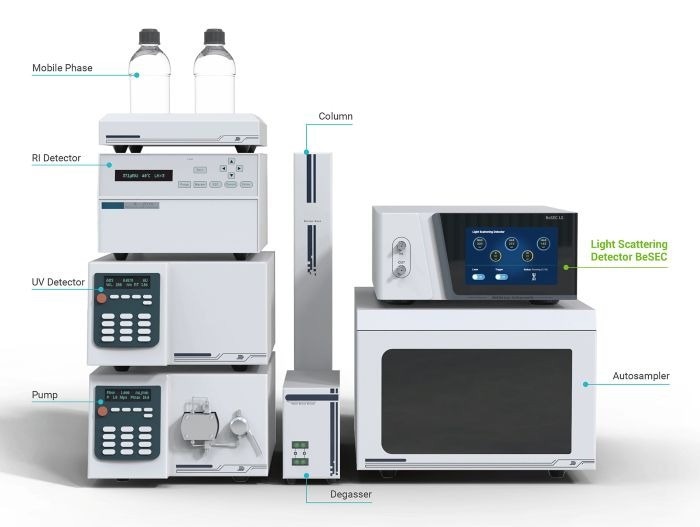
Image Credit: Bettersize Instruments Ltd.
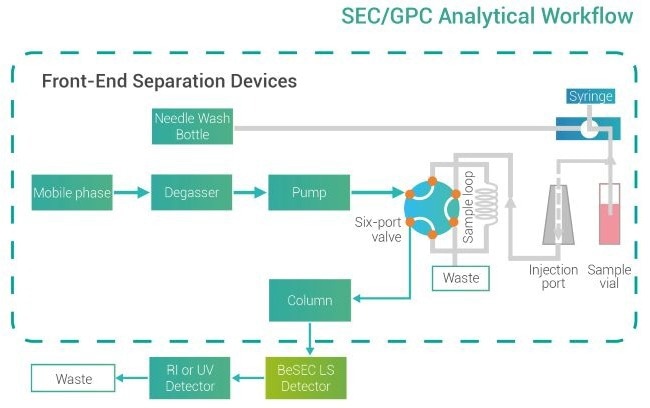
Image Credit: Bettersize Instruments Ltd.
Technology
Determining Absolute Molecular Weight with the Light Scattering Detector
In size exclusion chromatography (SEC), separation depends solely on the hydrodynamic size of the molecules. Larger molecules are unable to enter the pores of the stationary phase and therefore elute earlier, whereas smaller molecules penetrate the pores and elute later. The separation mechanism is entirely physical, with no chemical or adsorptive interactions occurring between the solute and the stationary phase.
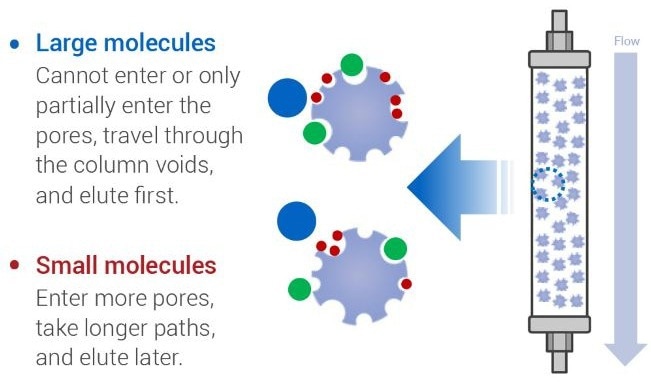
Image Credit: Bettersize Instruments Ltd.
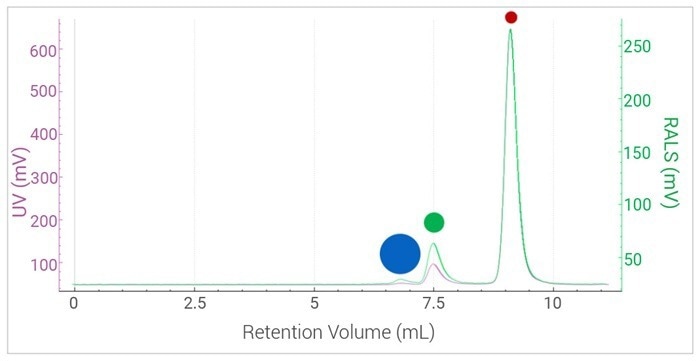
UV & RALS Responses versus Retention Volume. Image Credit: Bettersize Instruments Ltd.
Mathematical Definitions of Average Molecular Weight
Source: Bettersize Instruments Ltd.
| |
|
| Number-average molecular weight (Mn) |
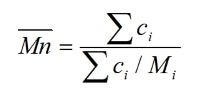 |
| Weight-average molecular weight (Mw) |
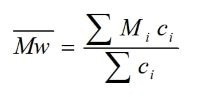 |
| Z-average molecular weight (Mz) |
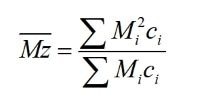 |
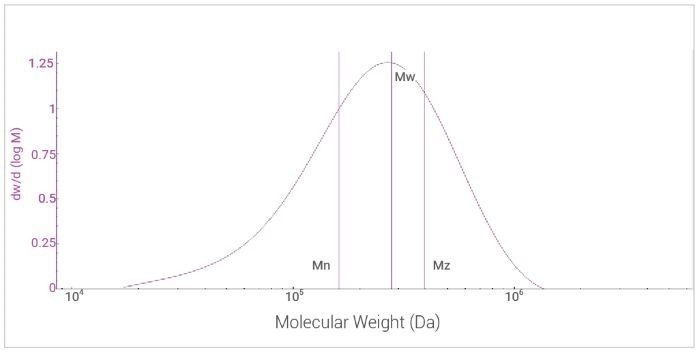
Image Credit: Bettersize Instruments Ltd.
Principle of Static Light Scattering (SLS)
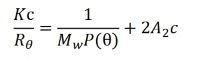
SLS measures the intensity of light scattered by macromolecules in solution. By applying the Rayleigh equation to scattering data collected at specific angles, this technique establishes a direct relationship between scattered intensity, the absolute molecular weight, and the second virial coefficient (A2), allowing accurate characterization of molecular properties.
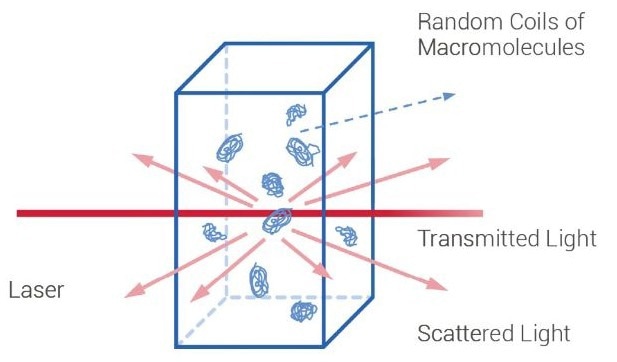
Image Credit: Bettersize Instruments Ltd.
Breaking Free from Column Calibration
How the BeSEC Improves SEC/GPC Workflows
Traditional SEC/GPC systems without light scattering detection provide only relative molecular weight.
These systems require calibration with a series of polymer standards to establish a calibration curve correlating molecular weight with retention volume.
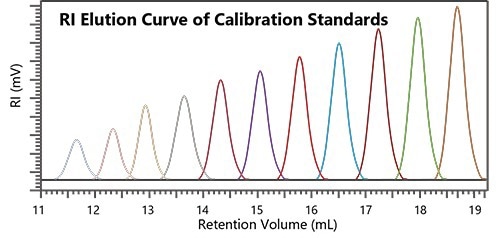
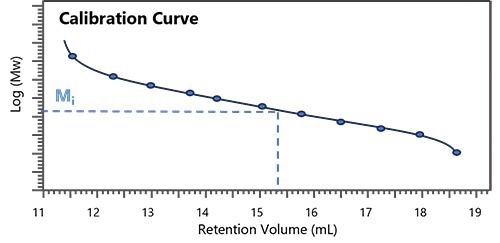
Image Credit: Bettersize Instruments Ltd.
Conventional methods that rely on retention volume introduce significant bias.
Polymers with similar hydrodynamic sizes can elute simultaneously while differing substantially in molecular weight due to structural variations. Without light scattering detection, these differences remain hidden, making it impossible for traditional SEC or GPC to accurately differentiate between such samples.
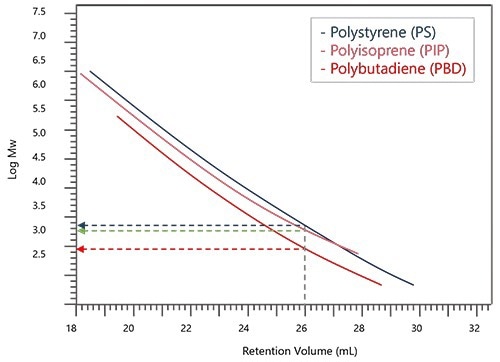
Image Credit: Bettersize Instruments Ltd.
Source: Bettersize Instruments Ltd.
| Advantages of Light Scattering Detector BeSEC |
VS |
Limitations of Conventional SEC/GPC |
| ✓ No Calibration Curve Required BeSEC measures molecular weight directly from light scattering, eliminating reliance on polymer standards and avoiding errors caused by structural differences between standards and samples. |
|
× Calibration is time-consuming and must cover the full elution range |
| |
× Limited availability of suitable standards reduces accuracy |
| |
× Molecular weight remains relative to chosen standards |
| ✓ Independent of Retention Time When coupled with SEC/GPC, the BeSEC determines the absolute molecular weight for each eluting species, even in the presence of chromatographic anomalies such as adsorption, shear, or peak overlap. |
|
× Structural effects such as branching or aggregation are often missed |
| |
× Results depend strongly on column performance, which degrades over time |
Software
BeSEC Workstation Software
Research-Grade Chromatography Software
BeSEC software is a specialized chromatography workstation designed for light scattering detectors.
It offers an intuitive, easy-to-navigate interface with simple operation, while providing a comprehensive range of application-specific reports and results.
Features and Benefits
- Compatible with any third-party GPC or SEC system, enabling acquisition of RI, UV, and start signals
- Enables reliable multi-peak integration
- Supports automated sequence measurements
- Provides dn/dc determination and concentration calculation
- Allows baseline and integration settings to be applied simultaneously across all detector signals
- Offers statistical reports for clear comparison between measurements
- Delivers more than 20 output parameters to support research, quality control, and production
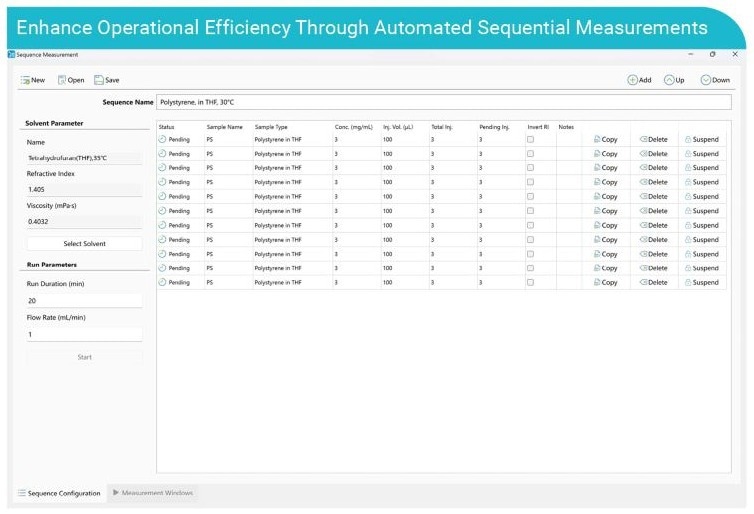
Image Credit: Bettersize Instruments Ltd.
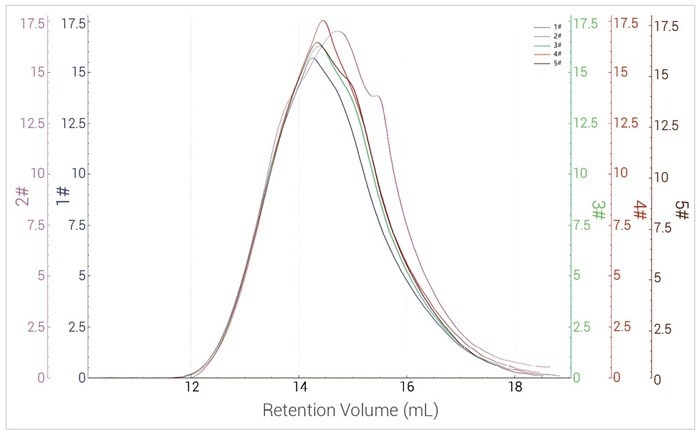
Integrated Statistical Analysis for Comprehensive Data and Curve Comparison. Image Credit: Bettersize Instruments Ltd.
Source: Bettersize Instruments Ltd.
| |
1# |
2# |
3# |
4# |
5# |
| Mn |
80,512 |
94,839 |
89,895 |
78,859 |
86,202 |
| Mw |
146,949 |
141,931 |
148,299 |
140,964 |
149,332 |
| Mz |
236,621 |
215,152 |
227,991 |
222,878 |
230,188 |
| Pd |
1.8252 |
1.4965 |
1.6497 |
1.7875 |
1.7324 |
| Rg |
23.6687 |
24.1895 |
25.0780 |
23.0802 |
25.7980 |
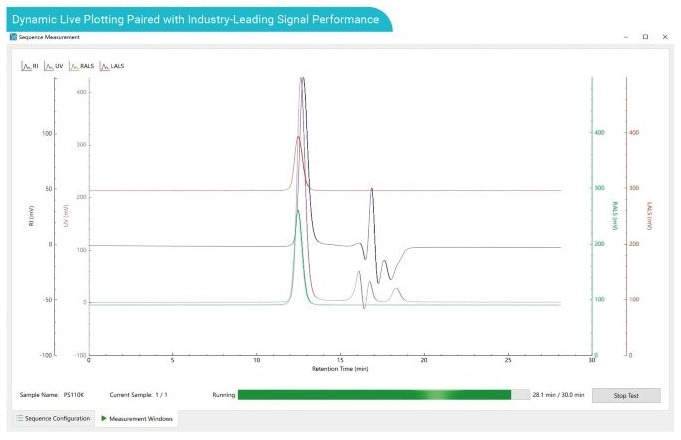
Image Credit: Bettersize Instruments Ltd.
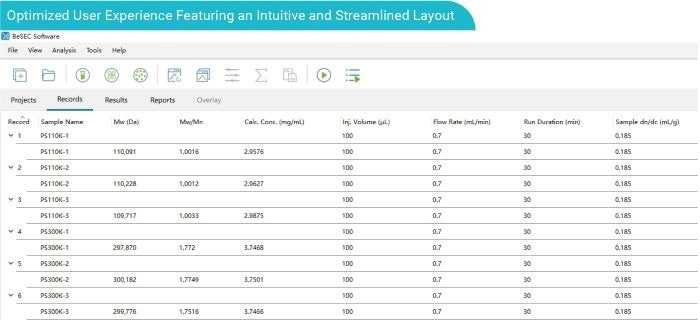
Image Credit: Bettersize Instruments Ltd.
Simplify the Testing with the BeSEC Workstation
Experience industry-leading signal performance and real-time data analysis through a streamlined, user-friendly interface that delivers clear and reliable results from start to finish.
Application
Application Examples
Polymers and Plastics
Molecular weight plays a critical role in determining both the mechanical strength and processing behavior of polymers such as PET. Traditional methods, such as intrinsic viscosity, provide only an average value and do not reveal the full molecular weight distribution.
By integrating light-scattering signals with an SEC system, researchers can directly measure absolute molecular weight and determine the full molecular-weight distribution. This capability supports enhanced process control and product optimization, ensuring consistent quality and performance.
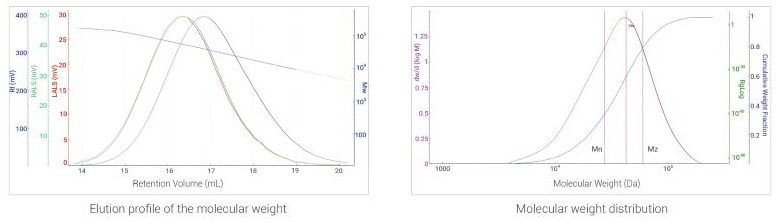
Image Credit: Bettersize Instruments Ltd.
Proteins and Biologics
In biopharmaceuticals, aggregates affect therapeutic efficacy and patient safety, as large aggregates may trigger immune responses. Understanding the type and level of aggregates in protein formulations is therefore essential.
The BeSEC system can effectively differentiate monomers, dimers, and higher-order species while accurately quantifying their content. This information is critical for ensuring formulation stability and compliance with stringent regulatory standards.
Source: Bettersize Instruments Ltd.
| Peak |
Mw (Da) |
Ratio of Peak n/Peak 1 |
Area (%) |
| Peak 1 |
149,776 |
1.00 |
75.8 |
| Peak 2 |
295,157 |
1.97 |
17.4 |
| Peak 3 |
450,351 |
3.01 |
3.8 |
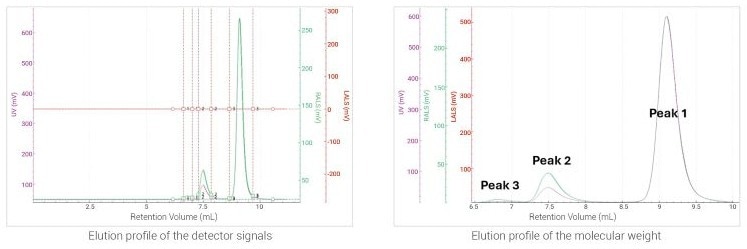
Image Credit: Bettersize Instruments Ltd.
Specifications
Source: Bettersize Instruments Ltd.
| |
BeSEC LS1 |
BeSEC LS2 |
| Measurement |
| Molecular Weight Range |
1 kDa to 20 MDa* |
1 kDa to 2 GDa* |
| Rg |
N/A |
> 12 nm* |
| System |
| Detection Angle |
RALS (90 °) |
LALS (7 °) and RALS (90 °) |
| Laser Source Type |
Diode laser |
| Laser Power |
10 mW |
| Laser Wavelength |
640 nm |
| Sample Cell Volume |
18 µL |
| Acquisition Rate |
5 Hz |
| Dynamic Range |
+/- 2500 mV |
| Connection to PC |
USB |
| Measurement Modes |
Homopolymer mode, protein mode |
| Output Results |
Mn, Mw, Mz, Mp, Pd, dn/dc,
Concentration, Mw distribution |
Mn, Mw, Mz, Mp, Pd, dn/dc,
Concentration, Mw distribution, Rg |
| Analog Inputs |
RI, UV and start signals |
| Solvent Compatibility |
Aqueous and organic solvents |
| Wetted Parts |
PTFE, PEEK, glass, stainless steel |
| Power Supply |
AC 100-240 V, 50-60 Hz, 4.0 A |
| Dimensions (L × W × H) |
450 × 325 × 157 mm (= 17.7″ × 12.8″ × 6.2″) |
| Weight |
11 kg (= 24.2 lbs) |
* Depending on sample and options