What Gives Stainless Steel Corrosion Resistance?
Grade 304: The Versatile Standard
304 Performance is Limited in Chloride-rich Environments
Grade 316: For Marine and Chemical Service
The Practical Difference Between 304 and 316 Stainless Steel
Specialized Stainless Steels
How Engineers Choose the Right Grade of Stainless Steel
Limitations of 304 and 316
Lifecycle Thinking
Selecting for Fit Above All
References and Further Reading
From kitchen counters to skyscrapers, stainless steel grades shape much of modern engineering. Among them, 304 stainless steel and 316 stainless steel are the best known, used in everything from food equipment to marine structures.1
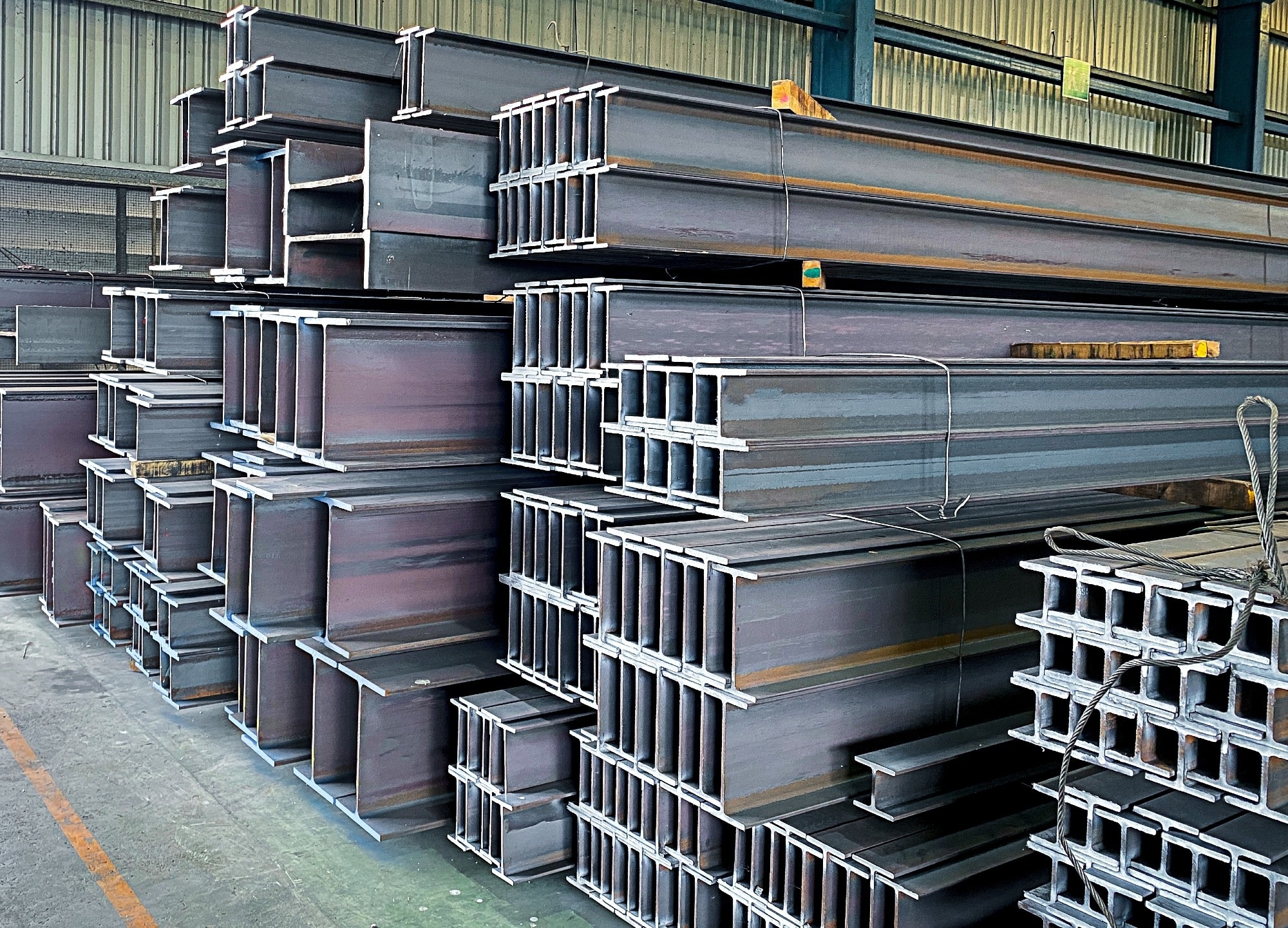 Image Credit: saweang.w/Shutterstock.com
Choosing the right grade means looking beyond the numbers to composition, corrosion resistance, strength, fabrication, and the environment the material will encounter over time.
Saving this article for later? Download a PDF here.
What Gives Stainless Steel Corrosion Resistance?
All stainless steels share one defining feature: chromium. When at least 10.5 % chromium is added to iron, the alloy forms a thin, invisible layer of chromium oxide on its surface. This self-healing film acts as a barrier to oxygen and moisture, which is why stainless steel resists rust far better than ordinary carbon steel.2
From there, engineers can adjust its chemistry by adding elements like nickel, molybdenum, manganese, nitrogen, or titanium. Each addition edits the material's core properties of corrosion resistance, strength, ductility, weldability, and cost.
Among the broad family of alloys that are used today, austenitic stainless steels are the most widely used. Grades 304 and 316 are at the center of that group and remain the standard reference points for many engineering decisions.1,2
Grade 304: The Versatile Standard
304 stainless steel is often described as 18/8 stainless as it contains approximately 18 % chromium and 8 % nickel. It is the baseline against which most other grades are measured.
Grade 304 is broadly appealing due to its versatility, formability, and solid corrosion resistance for general use. This is the alloy you will find in kitchen sinks, architectural facades, brewing tanks, and countless factory components.3
For many indoor and moderately exposed environments, 304 performs well. It resists atmospheric moisture and many common chemicals, and it can be formed and welded without unusual processing demands.3
That broad usefulness, though, can make it easy to over-specify. 304 stainless steel is good in many settings, but it is not the right answer everywhere.4,5
The main weakness of 304 is its performance in the presence of chlorides, especially saltwater. In coastal air, marine settings, or process environments with chloride exposure, the passive layer can break down locally.6
When that happens, small pits may begin to form. Over time, pitting corrosion can spread and weaken the material, even when the surface still looks acceptable at first glance.
This is where many stainless steel selection mistakes begin. A grade that performs well in a kitchen or indoor plant may not hold up on an exposed coastal façade or in a salt-laden industrial system.6
Grade 316: For Marine and Chemical Service
316 stainless steel is often the next step up from 304. Its key difference is the addition of about 2-3 % molybdenum, which improves resistance to chlorides and a range of industrial chemicals.
That small compositional change makes a practical difference: 316 stainless steel is widely used in marine equipment, coastal structures, desalination systems, chemical plants, and medical equipment. It comes into play here with better resistance to pitting and stains than 304.6
It also tends to resist tea staining and surface discoloration better during prolonged outdoor exposure. In harsh service conditions, this can mean better appearance as well as longer life.
However, because of its higher alloy content, 316 is usually more expensive than 304, often by 20-30 %. On a large project, this cost becomes a key consideration.6
In many indoor, architectural, and food-processing applications, 304 is entirely adequate. For chloride-heavy or chemically aggressive service, 316 is often the safer choice.6
The Practical Difference Between 304 and 316 Stainless Steel
 Image Credit: saweang.w/Shutterstock.com
For engineers, specifiers, and buyers, the choice between 304 and 316 stainless steel usually comes down to service conditions.
304 is Best When:
- Food, architectural, or general industrial use does not involve strong chloride exposure
- The environment is indoor, dry, or only mildly corrosive
- Good formability and weldability are needed
- Cost control is rigid
316 is Suited To:
- Longer-term corrosion resistance matters more than initial material cost
- The material will face saltwater, coastal air, or chloride-bearing cleaners
- The application is marine, medical, or chemical-processing related
- Chemical exposure is more severe
Both grades are closely related, but not interchangeable for every service environment.
Specialized Stainless Steels
Although 304 and 316 dominate general discussion, they represent only part of the stainless steel family. Once engineers move into more demanding conditions, they often turn to more specialized grades.3
316L: A low-carbon version of 316 with better weldability and resistance to sensitization (intergranular corrosion caused by carbide precipitation). It is used in pharmaceutical, food, and marine systems where welding is frequent.
317 and 904L: These are higher-alloy stainless steels with added molybdenum and nickel. They provide stronger corrosion resistance in acidic or chloride-rich environments than standard 316. 904L, for example, is used in chemical reactors, marine heat exchangers, and even luxury watch cases where long-term exposure to seawater is unavoidable.
321 and 347: These grades use titanium or niobium as stabilizers to resist carbide formation at high temperatures, making them ideal for exhaust systems, turbines, and high-temperature piping.
2205 Duplex: A blend of austenitic and ferritic structures, duplex steels offer greater strength with improved resistance to stress corrosion cracking. They shine in oil and gas operations, desalination plants, and structural components where both strength and corrosion resistance matter.
Ferritic and Martensitic Grades (430, 410, 420): These are magnetic stainless steels with lower nickel levels, often chosen when moderate corrosion resistance is sufficient but high hardness or specific magnetic properties are required, such as for appliance panels, cutlery, and mechanical parts.
Super Duplex and High-Performance Alloys: When process temperatures climb, or corrosive chemicals intensify, engineers may specify super duplex grades (like 2507) or high-nickel alloys such as Alloy 625 or Hastelloy C-22. These alloys push the limits of corrosion resistance, but at steep material and processing costs.3
How Engineers Choose the Right Grade of Stainless Steel
Selecting the right stainless steel is always a careful balancing act. Engineers consider the corrosion resistance required for the environment, mechanical demands such as tensile strength and toughness, and the ease with which the material can be formed or welded.1, 7
For architectural uses, aesthetics and maintenance are key, while cost and availability ultimately determine whether a grade is practical for large-scale or long-term projects.
The following examples show how this works in practise:
- A coastal building façade might use 316 or even duplex steel for external cladding, since airborne salt can attack 304 over time
- A food-processing plant might rely on 304 or 316L; both are hygienic and easy to clean, but 316L handles more aggressive detergents and sanitizers
- A petrochemical heat exchanger could require 317L or 904L because of constant contact with hot, acidic solutions, where both 304 and 316 fail prematurely 7
Each case reflects a trade-off among corrosion risk, load requirements, ease of fabrication, and long-term durability.
Limitations of 304 and 316
Even these reliable grades have their limits: In warm, stagnant seawater, both 304 and 316 can experience crevice corrosion, which develops in narrow spaces where oxygen exchange is restricted.8
At higher temperatures, above roughly 500 °C, they may lose strength and undergo oxidation. In reducing acids such as hydrochloric acid, neither performs well, so more specialized nickel-based alloys are required.8
Stress corrosion cracking is another issue - a form of failure that occurs when tensile stress combines with a corrosive environment. Chloride-induced stress cracking, for instance, is a notorious problem in austenitic steels like 304 and 316 under heat and tension. Duplex grades were developed largely to overcome this susceptibility.5
Explore more steel-related content here.
Lifecycle Thinking
As sustainability and lifecycle costs become more important in engineering, stainless steel selection is shifting accordingly.
A grade that looks expensive at the point of purchase may turn out to be cheaper over the decades if it reduces maintenance, replacement, and downtime. That is especially true in infrastructure, marine systems, and industrial plants where corrosion-related failures are disruptive and expensive.
At the same time, materials research continues to push toward lean duplex steels and high-strength, lower-nickel variants. The aim is to deliver better performance with more efficient use of alloying elements and a more stable long-term cost.
Selecting for Fit Above All
From kitchen counters to deep-sea pipelines, stainless steel is an adaptable family whose chemistry and structure can be adjusted to perform across a wide range of environments.
Understanding the nuances among 304, 316, and their advanced relatives allows modern engineers to build systems that both resist corrosion and stand as testaments to practical, sustainable design.
References and Further Reading
- Masteel UK Ltd., Stainless Steel 304 and 316 – The Differences. AZoMaterials 2018.
- Radojkovic, B.; Jegdic, B.; Pejic, J.; Erakovic Pantovic, S.; Marunkic, D.; Simovic, A.; Miloševic, M.; Alic, B., Passive film properties and corrosion resistance of AISI 304L stainless steel. Corrosion Engineering, Science and Technology 2025, 60 (4), 233-249.
- Uyaelumuo, E. I.; Okafor, O. C.; Nwobi-Okoye, C. C.; Ezechukwu, V. C., Advances in Solid-State Boriding of AISI 304, 316, and 316L Stainless Steels: Progress and Challenges. 2026.
- Ali, M.; Al-Asadi, N. K. F.; Mohmmed, J. H., Corrosion-induced mechanical properties deterioration in 304L and 316L stainless steels under simulated physiological conditions: A comparative study. Advances in Science and Technology. Research Journal 2025, 19 (12), 91-99.
- Agarwal, A.; Mohite, S. A.; More, P. B.; Dewangan, S., Impact of temperature changes on the microstructure and mechanical characteristics of AISI 304 submerged in 5% HCl solution. Scientific Reports 2025, 15 (1), 8203.
- Vinoth, V.; Sathiyamurthy, S.; Prabhakaran, J.; Sanjeevi Prakash, K.; Mohamed Suhail, H.; Sundaravignesh, S., TENSILE, IMPACT AND NON-DESTRUCTIVE ANALYSIS OF 316 L STAINLESS STEEL FOR MARINE APPLICATIONS. Journal of Manufacturing Engineering 2023, 18 (4), 130-135.
- Suhail, A., Food Grade Stainless Steel: 304 vs 316. AZoMaterials 2025.
- Yazdanpanah, A.; Pezzato, L.; Dabala, M., Stress corrosion cracking of AISI 304 under chromium variation within the standard limits: Failure analysis implementing microcapillary method. Engineering Failure Analysis 2022, 142, 106797. DOI:10.1016/j.engfailanal.2022.106797, https://www.sciencedirect.com/science/article/pii/S135063072200470X
Disclaimer: The views expressed here are those of the author expressed in their private capacity and do not necessarily represent the views of AZoM.com Limited T/A AZoNetwork the owner and operator of this website. This disclaimer forms part of the Terms and conditions of use of this website.