Findings That Changed Practice
From Chemistry to Material Design
Bakelite and the First Synthetic Plastic
Nylon and the Textile Revolution
Ziegler-Natta Catalysts Brought Much Greater Control
Polymers Moved from Substitutes to Engineered Materials
Biodegradable Polymers Changed the Brief
Biomimicry and the Next Generation
References and Further Readings
Inside the Findings that Shaped Materials Science
Polymers today have a bad reputation – the word brings to mind microplastics, pollution, sustainability concerns. But polymers changed materials science by showing that molecular structure could be engineered to produce entirely new kinds of performance.
 From Bakelite to biodegradable plastics, the history of polymers is studded with discoveries that have reshaped manufacturing, medicine, textiles, packaging, and sustainability.1
Saving this article for later? Download a PDF here.
From Chemistry to Material Design
Before the abundance of polymers we know today, many useful materials came from nature. Rubber, cellulose, silk, and shellac were widely used, but they were understood mainly as substances with practical value, not as examples of a broader molecular idea.2
That changed when scientists recognized that many materials are made of long, repeating molecular chains. Once that idea was crystallized, a new possibility opened up: if the chain could be changed, the material could be changed too.
This altered the way chemists and engineers approached materials. Instead of treating a material as fixed, they could ask how chain length, branching, ordering, and crosslinking affect strength, flexibility, heat resistance, and durability.2
This was a real shift. Structure was no longer a hidden detail behind performance, it had become the source of performance.
Bakelite and the First Synthetic Plastic
One of the first discoveries to change industrial materials development was Leo Baekeland’s development of Bakelite in 1907. It was the first fully synthetic plastic, and it showed that a useful industrial material could be made through chemistry rather than extracted from nature.3,4
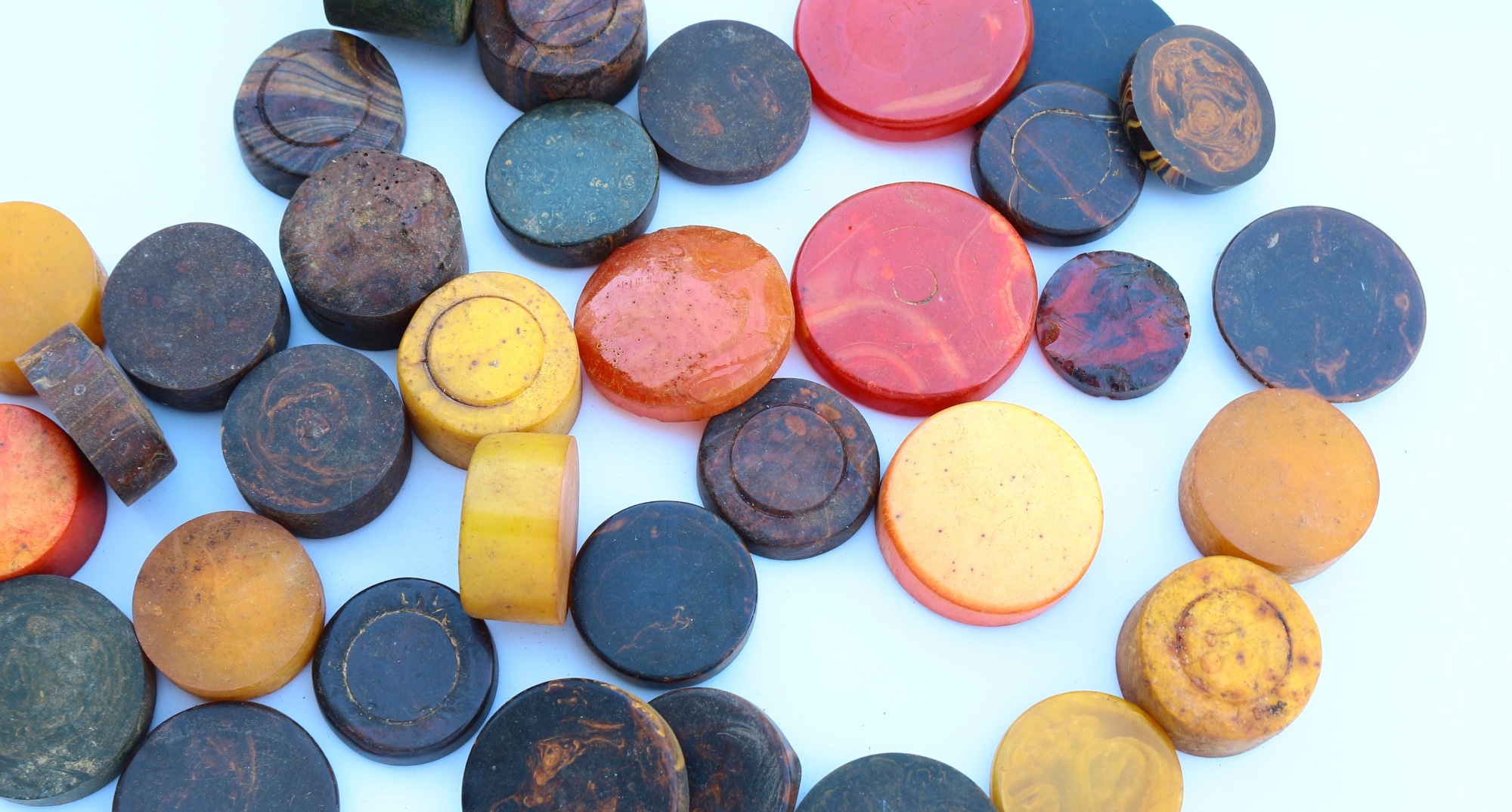 Image Credit: ziedonis/Shutterstock.com
Bakelite was hard, heat resistant, electrically insulating, and easy to mold. That made it well suited to electrical components, household goods, and the needs of early mass production.
Bakelite changed how manufacturers thought about design. Parts no longer had to follow the limits of wood, metal, or natural resin. Switches, housings, handles, and fittings could now be made with consistency and at scale.3
Bakelite was one of the first materials in which chemistry directly changed everyday manufacturing.
Nylon and the Textile Revolution
If Bakelite proved the value of synthetic plastics, nylon showed that polymers could compete with natural fibers. Wallace Carothers and his team at DuPont developed nylon as a strong, elastic, and processable synthetic polymer that could be spun into filaments and woven into textiles.5,6
Nylon changed clothing, parachutes, ropes, and industrial fabrics. It also helped make an important scientific point clearer: polymer performance depends not only on which atoms are present, but on how those atoms are linked into chains and how those chains pack together.
That made polymer chemistry easier to study in a systematic way. Scientists could now connect structure to properties such as strength, flexibility, and melting behavior more directly.5,6
Ziegler-Natta Catalysts Brought Much Greater Control
A second major turning point came in the 1950s with Ziegler-Natta catalysis. Karl Ziegler and Giulio Natta showed that polymers could be made under milder conditions and with much better control over chain structure than before. Their methods enabled high-density polyethylene and stereoregular polypropylene, both of which became central to modern plastics manufacturing.7
This changed practice because it improved control over molecular arrangement. In turn, that meant better control over crystallinity, density, toughness, and thermal resistance.7
In practical terms, polymers became easier to tailor for specific uses. Materials could now be engineered for their target application, instead of being made to work as best they could.
Polymers Moved from Substitutes to Engineered Materials
As control improved, polymers spread quickly into new industries. Polyethylene became central to packaging and consumer products. Polypropylene moved into car parts, household goods, and medical items. Other polymers followed in coatings, cables, membranes, adhesives, and higher-performance applications.8
This changed how engineers selected materials. The question became which polymer offered the right balance of flexibility, durability, chemical resistance, density, and processing behavior for a specific use.8
Biodegradable Polymers Changed the Brief
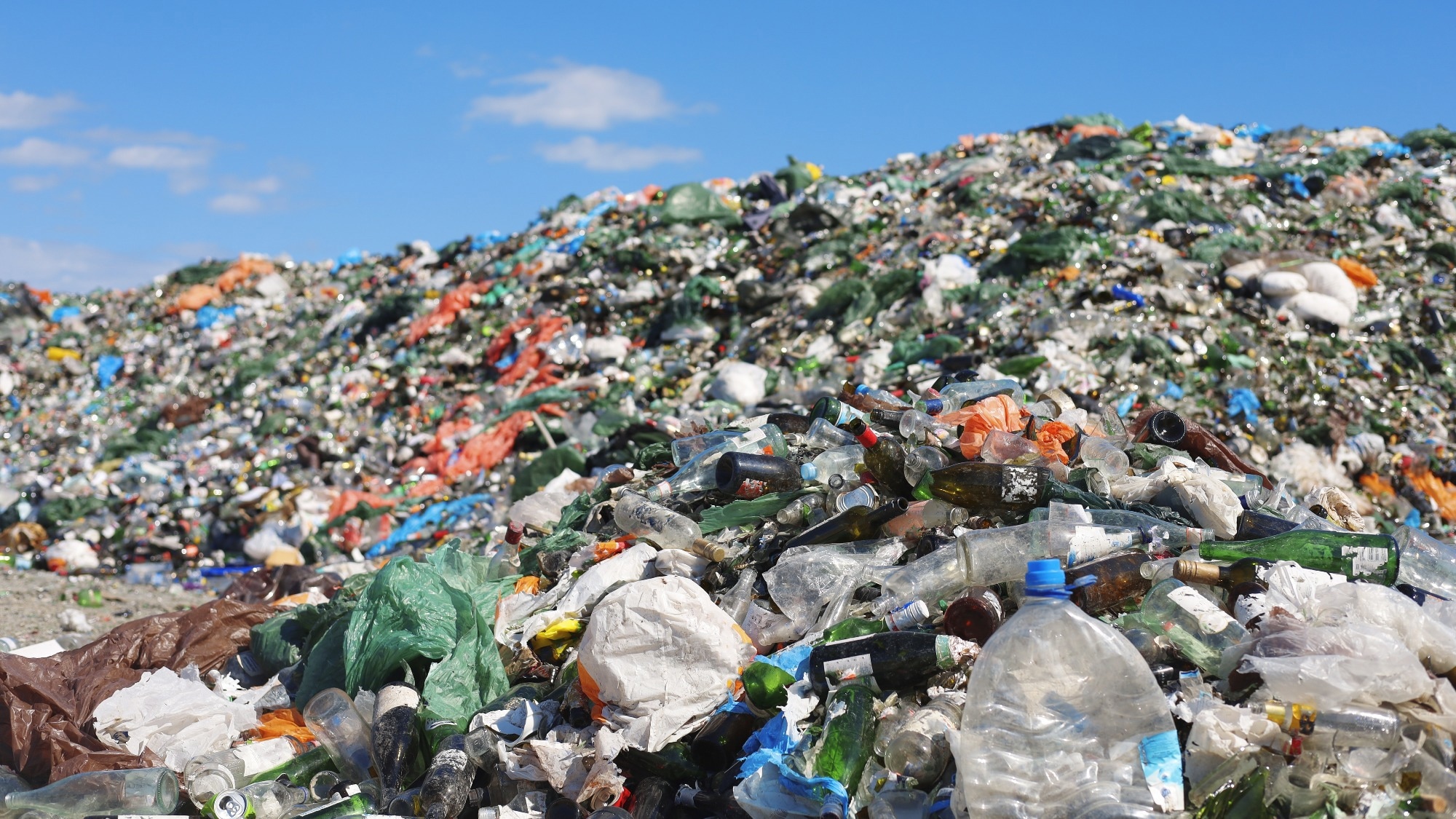 Image Credit: M.IWA/Shutterstock.com
In recent decades, another set of findings has changed things again. Biodegradable polymers showed that a useful material did not have to last forever. It could be designed to do a job and then break down through biological or environmental processes.9,10
This is important in packaging, agriculture, and medicine. In packaging, biodegradable plastics are being explored as one response to long-term waste. In medicine, biodegradable polymers are especially useful in temporary implants, drug delivery systems, and resorbable devices that disappear after use.9
However, biodegradation is not automatically beneficial in every setting. Performance, degradation rate, and environmental conditions all have to match. A material that works well in one application may behave very differently in soil, seawater, or the body.9,10
Biomimicry and the Next Generation
More recent polymer research has moved toward biomimetic and bio-based design. Scientists are borrowing ideas from nature to create films, scaffolds, and surfaces that behave more like biological systems than older plastics did.10,11
This is especially important in biomedical materials, where compatibility with tissue, fluids, and enzymes can matter as much as strength or shape. In these cases, a polymer may need to interact with its environment rather than simply hold form.
A polymer is no longer judged only by whether it is strong or cheap. It may also be judged by whether it can respond to stress, work with cells, break down at the right time, or reduce environmental burden after use.11
At the same time, biomass-derived monomers and more sustainable synthesis routes are pushing the field toward lower-impact production. The result is a new generation of polymers that aims to combine performance with environmental responsibility.11
Learn how semiconductors transformed materials science here.
References and Further Readings
- Getzler, Y. D.; Mathers, R. T., Sustainable polymers: our evolving understanding. Accounts of Chemical Research 2022, 55 (14), 1869-1878. DOI:10.1021/acs.accounts.2c00259, https://pubs.acs.org/doi/10.1021/acs.accounts.2c00259
- Pan, T.; Dutta, S.; Kamble, Y.; Patel, B. B.; Wade, M. A.; Rogers, S. A.; Diao, Y.; Guironnet, D.; Sing, C. E., Materials design of highly branched bottlebrush polymers at the intersection of modeling, synthesis, processing, and characterization. Chemistry of Materials 2022, 34 (5), 1990-2024. DOI:10.1021/acs.chemmater.1c03733, https://pubs.acs.org/doi/10.1021/acs.chemmater.1c03733
- Bijker, W. E., The social construction of Bakelite: Toward a theory of invention. MIT press Cambridge, MA: 1987.
- Baekeland, L. H., The synthesis, constitution, and uses of Bakelite. Industrial & Engineering Chemistry 1909, 1 (3), 149-161. DOI:10.1021/ie50003a001, https://pubs.acs.org/doi/10.1021/ie50003a001
- Mostafizur Rahman, M.; Shamsuzzaman, M.; Das, D.; Abdus Shahid, M.; Hoque, M. B., Introduction to textiles and textile fibers. In Advanced technology in textiles: fibre to apparel, Springer: 2023; pp 1-29. DOI:10.1007/978-981-19-1088-1_1, https://link.springer.com/chapter/10.1007/978-981-19-1088-1_1
- Wolfe, A. J., Nylon: A Revolution in Textiles. Distillations Magazine 2008.
- Shamiri, A.; Chakrabarti, M. H.; Jahan, S.; Hussain, M. A.; Kaminsky, W.; Aravind, P. V.; Yehye, W. A., The influence of Ziegler-Natta and metallocene catalysts on polyolefin structure, properties, and processing ability. Materials 2014, 7 (7), 5069-5108. DOI:10.3390/ma7075069, https://www.mdpi.com/1996-1944/7/7/5069
- Desidery, L.; Lanotte, M., Polymers and plastics: Types, properties, and manufacturing. In Plastic waste for sustainable asphalt roads, Elsevier: 2022; pp 3-28. DOI:10.1016/B978-0-323-85789-5.00002-5, https://www.sciencedirect.com/science/article/pii/B9780323857895000025
- Dallaev, R.; Papež, N.; Allaham, M. M.; Holcman, V., Biodegradable polymers: properties, applications, and environmental impact. Polymers 2025, 17 (14), 1981. DOI:10.3390/polym17141981, https://www.mdpi.com/2073-4360/17/14/1981
- Samir, A.; Ashour, F. H.; Hakim, A. A.; Bassyouni, M., Recent advances in biodegradable polymers for sustainable applications. Npj Materials Degradation 2022, 6 (1), 68. DOI:10.1038/s41529-022-00277-7, https://www.nature.com/articles/s41529-022-00277-7
- Jha, S.; Akula, B.; Enyioma, H.; Novak, M.; Amin, V.; Liang, H., Biodegradable biobased polymers: a review of the state of the art, challenges, and future directions. Polymers 2024, 16 (16), 2262. DOI:10.3390/polym16162262, https://www.mdpi.com/2073-4360/16/16/2262
Disclaimer: The views expressed here are those of the author expressed in their private capacity and do not necessarily represent the views of AZoM.com Limited T/A AZoNetwork the owner and operator of this website. This disclaimer forms part of the Terms and conditions of use of this website.