Researchers have developed a reduced graphene oxide (rGO) film that produces rapid electrical signals when exposed to temperature changes, which could be transformative for self-powered thermal sensing.
 Study: Fast Thermoelectric Responses from Unconventional Na-I Stoichiometry in Reduced Graphene Oxide Films. Image Credit: bartu/Shutterstock.com
Reported in Advanced Science, the work shows how an unusual sodium-iodine arrangement inside stacked graphene layers can cause an exceptionally fast thermoelectric response suitable for detecting both extreme heat and cryogenic cooling.
Thermoelectric materials convert heat into electrical energy, yet many 2D materials respond too slowly for real-world sensing.
The Na-I@rGO film overcomes this limitation by forming two chemically distinct regions within the graphene sheet – one enriched in Na2I-like composition and the other closer to NaI.
This asymmetry enhances the interface-driven Seebeck effect, enabling the material to respond quickly and reliably to temperature changes.
Get all the details: Grab your PDF here!
Making the Na-I@rGO Film
The team used a straightforward layer-by-layer approach. Graphene oxide, prepared by a modified Hummers’ method, was deposited on a polyimide substrate and briefly exposed to a dilute sodium iodide solution.
As the material dried, gravity drew the ions downward at different rates, creating an asymmetric Na: I ratio across the sheet. After further drying, this process produced freestanding Na-I@rGO films around ten micrometres thick.
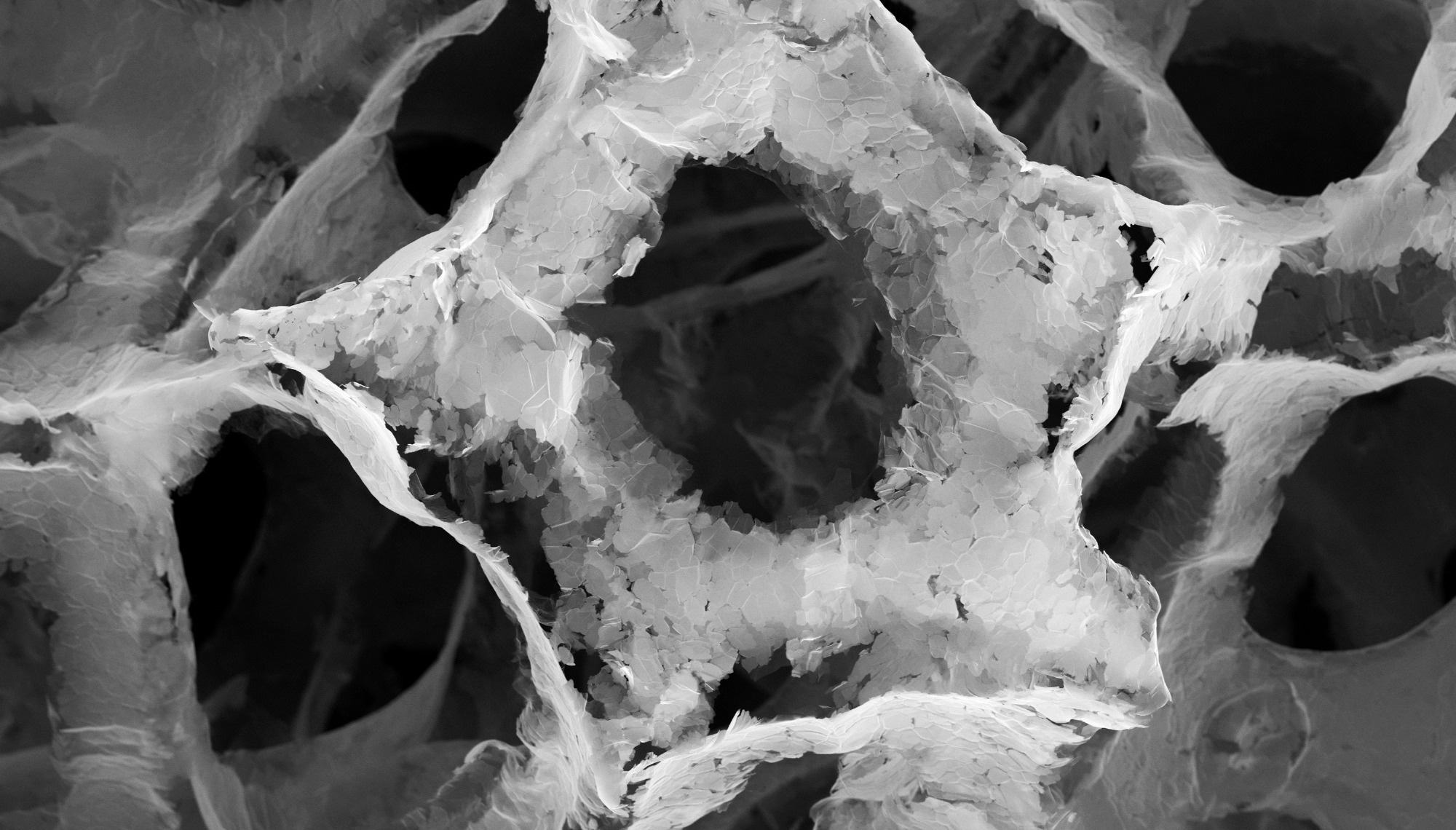
Analyses using SEM-EDS confirmed the uneven Na: I distribution, while UV-Vis spectroscopy indicated strong cation-π interactions between the ions and the graphene framework.
XRD and XPS measurements verified that the ions were structurally integrated into the reduced graphene oxide network.
Device Design and Testing
To create functional sensors, the researchers placed the Na-I@rGO film between copper electrodes in a vertical configuration and encapsulated it in polyimide.
In this arrangement, charge carriers must move through multiple Na2I rich and NaI rich regions, which enhances the Seebeck effect and produces a clear current when a temperature difference is applied.
The devices delivered a peak current of about 650 nanoamperes at a temperature difference of 40 kelvin, with a measured Seebeck coefficient of roughly 22.7 microvolts per kelvin.
The authors noted that the true value is likely slightly higher because the temperature difference was estimated from heater-to-air measurements. The sensors responded in just 0.6 seconds, recovered in about 1.2 seconds, and maintained stable behaviour for more than 100 heating and cooling cycles.
Control samples made from graphene oxide, reduced graphene oxide alone, or sodium iodide alone produced negligible signals, confirming that the asymmetric Na-I structure is essential for the effect.
Detection with the Na-I@rGO Sensors
The films reacted immediately to a wide range of thermal conditions, from warm water to direct exposure to an open flame at around 300 °C.
They also responded to rapid cooling with liquid nitrogen at -196 °C. In every case, the direction of the current flipped when the hot and cold sides were reversed, showing that the signal comes from fast electron transport rather than sluggish ion movement.
The films remained flexible and functionally stable during repeated bending and thermal cycling.
Future Self-Powered Sensors?
The study demonstrates that carefully controlled ion stoichiometry within graphene can produce fast, reliable thermoelectric signals without complicated manufacturing.
Although the films are not designed for high-efficiency energy generation, they offer a promising foundation for flexible, low-cost temperature sensors that can track sudden or extreme thermal events.
The findings also highlight how subtle chemical asymmetry can alter thermoelectric behavior in 2D materials and could inform future research on ion-modulated interfaces.
Journal Reference
Xia, X. et al. (2025). Fast Thermoelectric Responses from Unconventional Na-I Stoichiometry in Reduced Graphene Oxide Films. Advanced Science, e15896. DOI: 10.1002/advs. 202515896
Disclaimer: The views expressed here are those of the author expressed in their private capacity and do not necessarily represent the views of AZoM.com Limited T/A AZoNetwork the owner and operator of this website. This disclaimer forms part of the Terms and conditions of use of this website.